Over the years, I’ve noticed that few topics spark as much heated debate as politics or religion. But nothing compares to the passionate arguments that erupt when music fans try to decide who the greatest guitarists of all time are. Recently, BBC’s Steve Wright did just that, and he limited his list to the top 31.
That led my coworker at Audiophix, StevieMac, to suggest five classic rock artists who also deserved to be considered. Both StevieMac and the original writer made good points, and I found myself agreeing with at least three of the artists StevieMac mentioned.
This inspired me to contribute my own guitar picks alongside StevieMac’s. To make things a bit more interesting, I decided to group the guitarists into different categories.
5 musicians who established the foundation of rock guitar
Let’s start by looking at the key figures who laid the groundwork for rock and roll. While it makes sense that Wright focused on artists after the pre-rock era, many important musicians bridged the gap between blues, folk, gospel, and the birth of rock & roll in the 1950s.
Here are five of the greatest.
Sister Rosetta Tharpe
Sister Rosetta Tharpe is widely considered a guitar pioneer. She transformed the instrument from a simple rhythm player in gospel music to a featured solo voice, and played a key role in the very beginning of rock and roll.
She popularized gospel music outside of church, successfully bringing it to nightclubs and demonstrating that a slight move towards secular themes could attract a wider audience. While not a rock artist herself – her influence peaked in R&B – she profoundly shaped the development of the genre.
Sister Rosetta Tharpe played a key role in making the electric guitar central to popular music after World War II. Many of the first major rock and roll artists acknowledge her profound influence. In fact, pioneers like Chuck Berry, Little Richard, and Johnny Cash – artists who essentially shaped the sound of rock and roll – all credit her as an inspiration.
Seminal tracks: “That’s All,” “Rock Me”
Merle Travis
Travis played a key role in the early days of country music, writing well-known songs like “Sixteen Tons,” “Nine Pound Hammer,” and “Dark As a Dungeon.” He found success performing these songs with his relaxed, natural style. However, other singers, like Tennessee Ernie Ford—who had a bigger hit with “Sixteen Tons”—were often stronger vocalists.
Randy Travis’s guitar playing was unmatched in early country music. While others used intricate fingerpicking styles, he mastered it to a degree no one else had before.
I mean, it’s no surprise they created a whole guitar style named after Merle Travis! His 1955 album, The Merle Travis Guitar, really showed everyone what the electric guitar could do. And then, 14 years later, Strictly Guitar came out and proved he wasn’t just someone who got things started – he was honestly one of the greatest guitarists ever.
Seminal tracks: “Blue Smoke,” “Cannon Ball Rag”
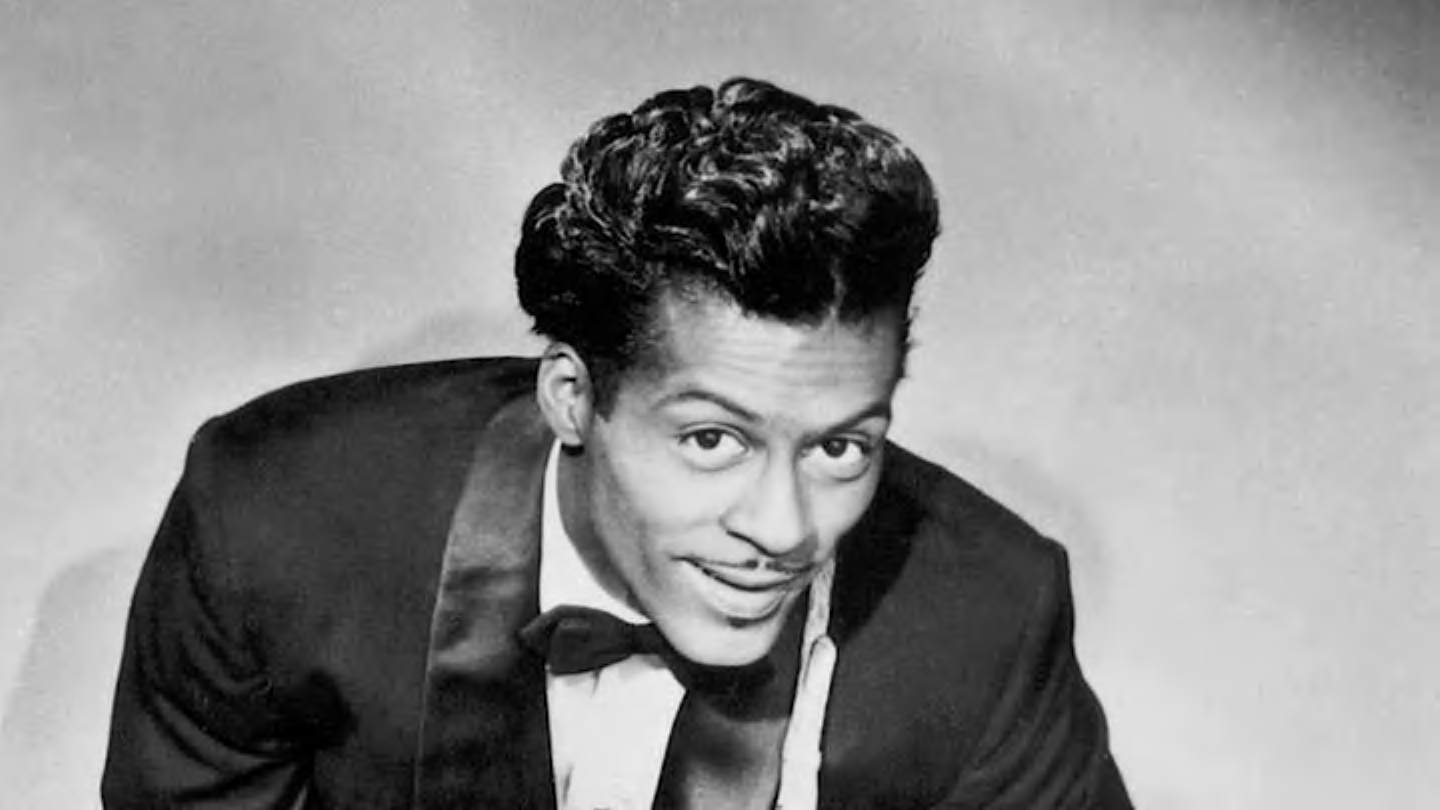
Chuck Berry
While Sister Rosetta Tharpe and Travis laid the groundwork, Chuck Berry demonstrated the electric guitar’s potential to become the foundation of a new popular music genre. Future guitar heroes might have been quicker and more innovative, and arguably more skilled, but none were as influential. They all built upon the innovations of Chuck Berry.
As a guitarist myself, I always knew the riff was king in rock and roll, but Chuck Berry showed everyone. He blended this super energetic, almost jazzy feel with that raw, country sound, and honestly, it completely changed music. The fact that he even wrote one of the first big rock songs about playing guitar just proves how important he was – he put the guitar front and center, and we’ve been feeling it ever since.
Seminal tracks: “Johnny B. Goode,” “Roll Over Beethoven”
Bo Diddley
We often judge guitarists based on their riffs and solos – how fast they play and the quality of their sound. That’s perfectly reasonable, and many of the guitarists Wright highlighted, as well as those we’ve added, are incredibly skilled technically.
If I broaden this article to include different musical styles, we’ll start looking at guitarists who were more focused on rhythm than creating riffs. Bo Diddley was a master of rhythm, especially early on. In fact, a fundamental rock rhythm – known as the “Bo Diddley beat” – is named after him and has been used in countless rock and blues classics.
Seminal tracks: “Bo Diddley,” “Road Runner”
Scotty Moore
As a guitarist myself, I’ve always been blown away by Scotty Moore. Seriously, next to Chuck Berry, he defined the sound of early rock and roll. He was Elvis’s main guitarist during all those amazing years, and honestly, he was just as crucial to the birth of rockabilly as anyone. You can hear his influence all over the place!
Scotty Moore’s energetic guitar playing and smooth solos brought a thrilling dimension to Elvis’s music, especially during the more boisterous vocal performances. While Elvis often played rhythm guitar and welcomed other musicians, Scotty Moore was primarily responsible for the memorable melodies on most of Elvis’s biggest hits.
Seminal tracks: “That’s All Right” (with Elvis), “Milk Cow Blues” (solo)
As I finished writing, I realized I’d left out some important inspirations – people like Mother Maybelle Carter, jazz guitarist Django Reinhardt, and Link Wray, who created the song “Rumble.” I guess that means I might need to write some follow-up pieces to cover everything!
Read More
- ‘Project Hail Mary’s Unexpected Post-Credits Scene Is Worth Sticking Around
- Beyond Accuracy: Gauging Trust in Human-AI Teams
- Gold Rate Forecast
- The most surprising Hannah Montana cameos: From John Cena to Dwayne Johnson and even a Coronation Street soap star as show celebrates its 20th anniversary
- Limbus Company 2026 Roadmap Revealed
- EMEA Masters Winter 2026 introduces official Qualifier for Esports World Cup
- Genshin Impact Version 6.5 Leaks: List of Upcoming banners, Maps, Endgame updates and more
- Brawl Stars Sands of Time Brawl Pass brings Sandstalker Lily and Sultan Cordelius sets, along with chromas and more
- Total Football free codes and how to redeem them (March 2026)
- Brawl Stars Brawl Cup Pro Pass arrives with the Dragon Crow skin and Chroma, unique cosmetics, and more rewards
2026-04-04 16:00