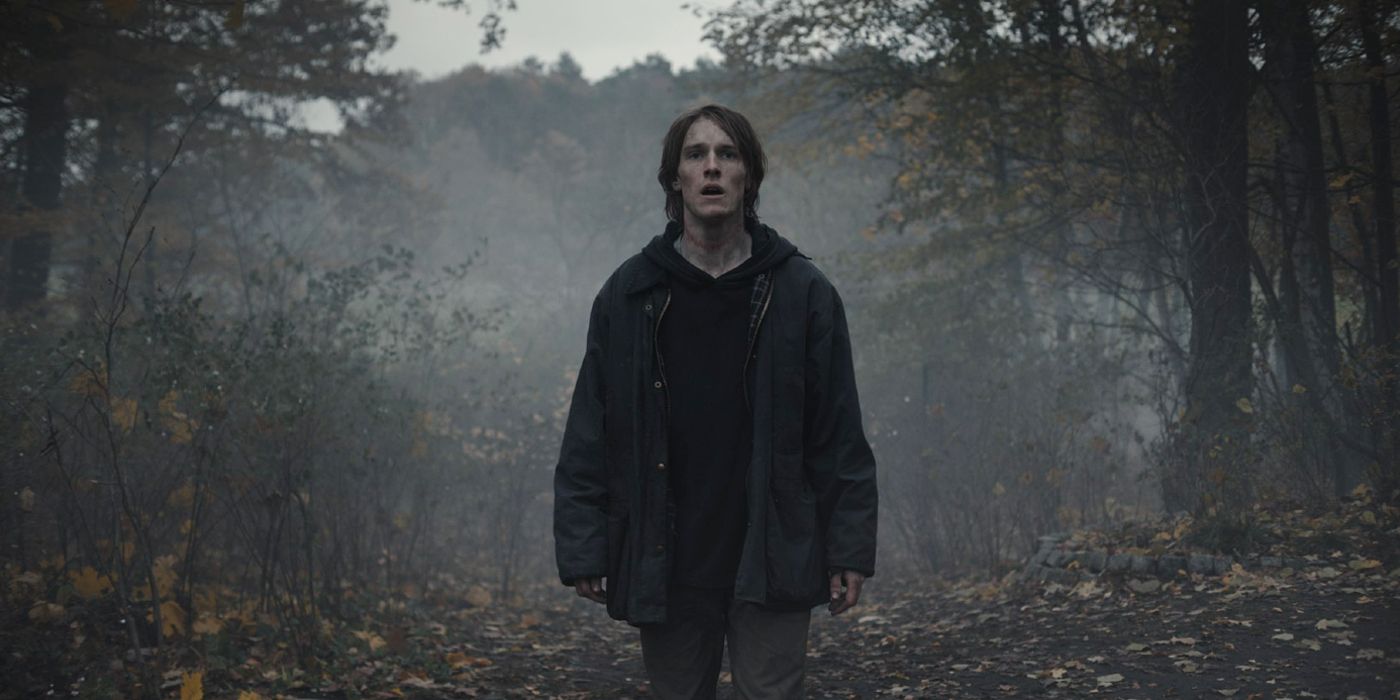
Many TV shows stumble when it comes to their final episodes, but the ending of Netflix’s Dark is widely considered a triumph. While the series as a whole boasts a 95% score on Rotten Tomatoes, the final episode, “The Paradise,” is among the highest-rated finales ever on IMDb, scoring a remarkable 9.6.
Unlike shows like Stranger Things that relied on familiar nostalgia, Dark embraced a complex, cyclical narrative. The show’s three seasons weren’t a meandering story, but a carefully constructed, unsettling loop. Even five years later, its ending is considered one of the most thoughtful and genuine conclusions in science fiction.
Dark Knew Its Ending Before It Knew Its Audience
The show’s successful and satisfying conclusion is largely due to the creators having a well-defined plan from the beginning. They already knew how the story and characters would end, which allowed them to stay true to their vision and avoid being swayed by fan expectations or outside influences.
The creators of the show, Jantje Friese and Baran bo Odar, had a clear vision for its entire run. They presented Netflix with a plan for three seasons, designed as a complete story with a beginning, middle, and end. Unlike some series that evolve without a fixed conclusion, this show was fully mapped out from start to finish – they knew how it would end before they even began filming.
The show’s clever writing included subtle hints that weren’t obvious until later. Things established in the first season – like details about the Kahnwald house or how characters described feeling déjà vu – weren’t just background details. They were actually crucial pieces that supported the major events of the third season’s finale.
You know, as a total movie and TV buff, I always appreciate something that keeps you guessing. Director Baran bo Odar hit the nail on the head when he said straight-forward stories can get dull fast. We all grew up loving shows like Twin Peaks – stuff that feels like a beautifully complex puzzle. But what’s really cool about Dark is that it wasn’t just a puzzle for the sake of it. Every twist, every tangled family connection, and every time loop actually had an answer. It was designed to be figured out, and that’s what made it so satisfying.
The show smartly avoided getting bogged down in complicated backstory by focusing on one core idea: the bootstrap paradox. Essentially, the story argues that the start and finish are the same, creating a self-contained and consistent narrative.
As a movie fan, what really struck me about this story was how the characters were trapped. They couldn’t just solve their problems because trying to fix things actually created the mess in the first place! It was totally committed to the idea that everything is predetermined, which was brilliant because the writers didn’t need to worry about what audiences wanted or what was popular. They didn’t pull any last-minute saves just because we liked a character; if the story’s logic demanded a character fall, they fell. It was harsh, but it felt incredibly consistent and powerful.
Dark Took Its Sci-Fi Concept and Characters Very Seriously
What truly set Dark apart was its portrayal of time travel as a cause of problems, not a way to fix them. This made the story more captivating, suspenseful, and puzzling, and it also gave the show a unique depth. The creators established a harsh sense of morality: any attempt to alter time had damaging consequences for both the traveler and the world itself.
Ulrich Nielsen, portrayed by Oliver Masucci, perfectly embodies the show’s bleak themes. He starts as a troubled detective desperately searching for his son, but unlike many characters, he never gets a chance to be a hero or find redemption. Instead, time travel only makes his situation worse, leading to his imprisonment, a lonely existence in a mental institution, and ultimately, his death without ever finding lasting peace with his family.
Honestly, watching Louis Hofmann as Ulrich was heartbreaking, especially towards the end. It felt like every single scene brought more and more tragedy for his character – he was always suffering, and it was tough to watch. The creators didn’t seem to want to give Ulrich any real victories, and I think it was intentional. They explained it wasn’t about punishing him, but that his personality – being impulsive and reactive – meant he was always destined to get caught in the loop. It wasn’t a writing choice, it was just how things had to play out given the rules of their world and who Ulrich was.
Hannah Kahnwald was a character who seemed to unravel as the time loop continued. Already struggling with heartbreak, her husband’s death, and the mysterious reappearance of her son from the future, she remained focused on her own problems. Even after traveling back in time, she repeated the same errors. This realistic portrayal of flaws also applied to the main characters, Jonas and Martha.
The show didn’t shy away from the disturbing truth of their family history—that they were aunt and nephew, and their son was the terrifying figure responsible for continuing a pattern of suffering. By acknowledging the incestuous nature of the time loop, Dark made viewers confront the truly awful reality of the situation. It wasn’t simply a puzzle to be solved; it was a horrific genetic and temporal problem that needed to be destroyed, not just fixed.
The series’ central idea comes from the philosopher Arthur Schopenhauer, who believed that human suffering comes from endless wanting. The show suggests that characters are imprisoned by their own motivations – things like love, sadness, or simply trying to survive. For example, Jonas’s wish to rescue Mikkel actually leads to the events that keep Mikkel stuck in the first place.
True freedom comes from letting go of all desires and the will to live. That’s why the character of Adam isn’t evil; he simply understands that the only way to escape suffering is to cease to exist.
Why Dark’s Ending Feels Bold Where Others Choose Safety
The ending of Dark is effective because it untangles the show’s intricate plotlines without making them feel overly simple. For two seasons, the story relied heavily on closed time loops where cause and effect were fixed. Then, the third season added the idea that reality isn’t fixed and can actually split into different possibilities.
Rather than embracing endless possibilities, the show cleverly used the multiverse to resolve its core mystery. The discovery of the “Origin World” is central to this. Claudia Tiedemann realizes that the worlds of Adam and Eva aren’t natural – they’re essentially growths stemming from an error in a first, original world. This explanation – a knot with three connected points instead of two – is known as the “Triquetra” solution.
The story reveals that H.G. Tannhaus, a clockmaker from the original world, created a device hoping to save his family from a fatal car accident.
The disasters, like the apocalypse and constant rain, hint at a broken world that shouldn’t be. Saving the characters isn’t about giving them a good life within this repeating cycle, but about ending their existence altogether. The story builds to a moment where Jonas and Martha go back to the beginning to stop the car accident that started it all. When they succeed, the result isn’t dramatic or explosive—instead, it’s a quiet, sad fading away, as they dissolve into golden dust.
The series concludes with Adam, Eva, and Claudia fading away, representing the end of all timelines. In a simple, powerful exchange, Martha wonders if anything will be left of them. Jonas responds with a phrase repeated throughout the show: “We are a perfect match. Never believe anything else.” As they vanish, they hold hands, symbolizing their connection.
While not a traditionally happy ending, it’s peaceful in a philosophical way. The characters have achieved a victory over suffering by choosing non-existence – a concept strongly inspired by Schopenhauer’s philosophy. By denying their will to live, they’ve saved a world they won’t experience. The final scene, showing a dinner party in the rebuilt Origin World, emphasizes this with a powerful image: half the seats are empty. The Nielsens and the Dopplers are missing because their existence depended on the time loop being active.
Despite the events of the show, a feeling of lost worlds remains. Hannah, looking at a yellow raincoat, has a strong sense of déjà vu, remembering a dream about the end of the world – a dark, but strangely peaceful, end. When she considers names for her baby, she chooses “Jonas,” hinting that even though the original Jonas is gone, something of his spirit – the core of the strange events – lives on.
The show wasn’t meant to offer comfort or be endlessly extended; its goal was to feel finished. The creator stayed true to the original vision, delivering a conclusive ending. While the finale was filled with sadness and regret, it ultimately honored the story’s promise and brought the concept to a satisfying close.
2026-05-26 23:39