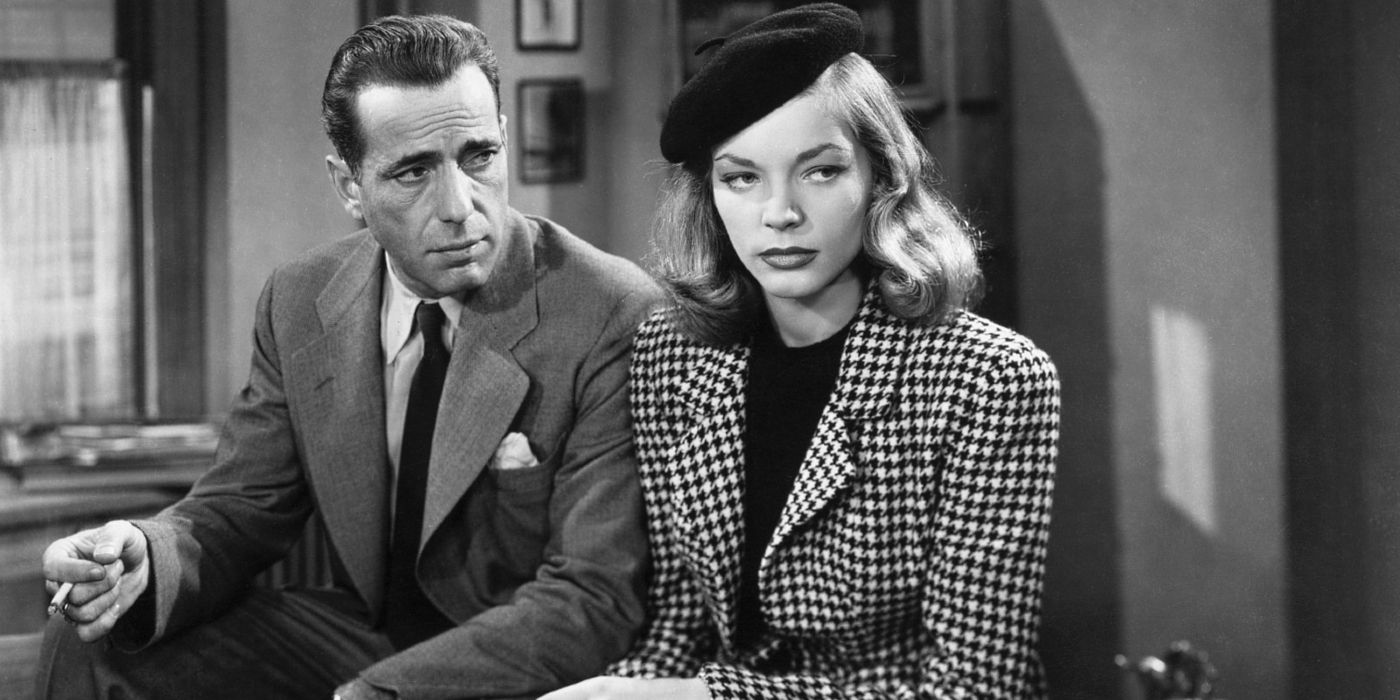
When film noir became popular in America, Hollywood started adapting gritty novels like Dashiell Hammett’s The Maltese Falcon and Raymond Chandler’s The Big Sleep. Despite creating some of the best mystery films during cinema’s golden age, filmmakers faced censorship and had to make changes to their work. In 1946, one particularly captivating mystery had to be shortened to appeal to a broader audience.
For nearly a century, detective thrillers have been a consistent favorite in Hollywood, from iconic films like The Maltese Falcon to more recent hits like Sin City. Whether it’s Sam Spade, Hercule Poirot, or modern detectives like Benoit Blanc from Knives Out and J.J. Gittes, there’s something truly captivating about watching a private investigator unravel a complicated mystery. In 1946, Humphrey Bogart continued his box office success, teaming up once again with Lauren Bacall in a thrilling crime story. However, due to the strict censorship of the Hays Code at the time, the film wasn’t a completely faithful adaptation of Raymond Chandler’s The Big Sleep.
The Big Sleep Continued Humphrey Bogart’s 1940s Dominance
Humphrey Bogart became a major star in the 1940s, known for his role as Sam Spade in The Maltese Falcon and becoming the iconic face of film noir. He revisited the world of tough detectives in 1946, playing Raymond Chandler’s famous private investigator, Philip Marlowe, in Howard Hawks’ The Big Sleep.
The story centers around Marlowe’s visit to General Sternwood, a wealthy older man with two daughters, Carmen and Vivian. Sternwood is world-weary and frustrated with his daughters’ behavior, particularly Carmen’s recent troubles – she owes a significant amount of money to a bookstore owner named Arthur Geiger.
I was really gripped when Marlowe started tailing Geiger, the antique dealer. He followed him all the way back to his place, and then – bam! – a gunshot. Marlowe bursts in to find Geiger dead and Carmen completely out of it, like she wasn’t even there. Amidst all the chaos, he notices a camera is missing its film, and his priority shifts to getting Carmen safe and sound. It’s a classic setup, but it immediately pulls you in.
He secretly dropped her off, avoiding her father, and then went back to where the crime happened, only to discover Geiger’s body was gone. The discovery of a second body quickly made the situation much worse.
While investigating the murders, Marlowe finds himself drawn to Vivian and gets caught up in the mystery surrounding her missing husband, Sean Regan. He begins to suspect Regan’s involvement, turning what started as a straightforward blackmail case into a much more complicated and deadly series of events.
When a dangerous gangster named Eddie Mars enters the scene, the detective quickly finds himself in a situation he can’t handle. He discovers that everyone around him is hiding a secret, leaving him completely in the dark and facing betrayal at every step.
Why The Big Sleep Was Too Risky for a True Adaptation
In the 1940s, television programming was heavily influenced by a desire to align with traditional American values. This was largely achieved through the Hays Code, a strict set of rules that all movies and television shows had to follow to be distributed and rated. These rules limited depictions of crime, violence, and any sexual content.
Because of these restrictions, filmmakers had to find clever ways to tell stories through editing, relying on techniques like quick cuts and fades to suggest things instead of showing them directly. This was especially true for the film The Big Sleep, which required many concessions.
Known for its suggestive content, The Big Sleep faced significant issues with the Hays Code. Beyond the inclusion of gay characters like Arthur Geiger and a storyline involving pornography, the character of Carmen Sternwood presented obstacles that made a faithful movie adaptation impossible.
Throughout the story, she repeatedly tries to seduce Marlowe, and her sexual nature is central to who she is. This culminates in a scene where she appears nude in his bed, becoming furious when he rejects her advances.
The story reaches its peak when it’s revealed Carmen has a rare condition: when a man rejects her advances, she violently attacks him, then suffers a seizure that causes amnesia. This is what happened with both Regan and Marlowe – she killed Regan after he refused her, and attempted the same thing with Marlowe.
The detective suspected Carmen was dangerous, so he gave her a pistol loaded with blanks to test her. His suspicion proved correct when she tried to shoot him, but the gun only fired blanks, causing her to have a seizure from the shock. This entire scene was cut from the final movie, with the filmmakers choosing to concentrate instead on the relationship between Marlowe and Vivian.
Early crime stories often fixated on the ideas of excessive female sexuality – sometimes labeled “nymphomania” – and its connection to violent crime. Films like Double Indemnity and The Postman Always Rings Twice built their mysteries around female desire, which is particularly striking considering the time period was known for being socially conservative and sexually repressed.
In The Big Sleep, the filmmakers really emphasized the common trope of the femme fatale, but they took it to an extreme with the character of Carmen. The movie constantly focuses on her sexuality – she’s either naked, being taken advantage of, or people are talking about her sex life. This was particularly shocking for the time, and it significantly reduced her importance compared to how she’s portrayed in the original novel.
Howard Hawks Turned a Cynical Crime Story into a Dark Romantic Thriller
Beyond its suggestive content, the film The Big Sleep needed a more optimistic ending according to the studio. Though dark stories were popular at the time, audiences were increasingly drawn to the chemistry between Humphrey Bogart and Lauren Bacall, a connection that first sparked in To Have and Have Not (1944).
Knowing fans wanted to see them together again, the story shifted from sadness and loneliness to suggest a possible romance between Marlowe and Vivian. The scene culminates with both characters confessing their love, followed by Marlowe questioning Vivian’s hesitation, to which she replies cryptically, “Nothing you can’t fix,” before the scene fades to black.
As a big fan of the book, I was really disappointed by how the movie handled the big reveal. In the novel, the confrontation between Carmen and Marlowe was explosive and definitive. But on screen, finding out Carmen was the killer just…fell flat. It was almost like they didn’t quite commit to it, leaving room for the audience to doubt what Mars was saying. And then Marlowe’s decision…it felt like a cop-out. In the book, he goes to deal with the gangster, and we’re left wondering what happened, which is brilliant! But the movie just leaves Mars’s fate up in the air without that same sense of mystery or consequence. It lost a lot of the impact the book had.
The film dealt with censorship rules by having the villain, Mars, killed off – ensuring he faced consequences for his crimes and avoiding problematic themes related to the character Carmen. This approach echoes Alfred Hitchcock’s film Suspicion, which never explicitly confirmed the villain’s guilt, instead hinting at it through subtle cues like a suspicious gesture. Many films of that era had to suggest darker elements without directly showing them, due to restrictions on content.
The Big Sleep Is Overdue for a Good Remake
The 1978 version was more faithful to the original novel, but it still didn’t capture the magic of the classic film starring Humphrey Bogart. The story really needs a modern adaptation that truly honors Chandler’s writing, free from the restrictions of older censorship.
The initial review failed to recognize that the novel’s shocking and provocative content actually contributed to its power. It successfully drew readers into the hidden, unsettling world of the Sternwood family.
Often credited with inspiring countless crime films and shaping the genre, The Big Sleep remains a classic. While Humphrey Bogart and Lauren Bacall star in a captivating adaptation, fans of Raymond Chandler’s original novel often point out how much of the book had to be left out for the 1940s movie.
Found an error? Send it so it can be corrected.
Read More
- ‘Project Hail Mary’s Unexpected Post-Credits Scene Is Worth Sticking Around
- Beyond Accuracy: Gauging Trust in Human-AI Teams
- Gold Rate Forecast
- The most surprising Hannah Montana cameos: From John Cena to Dwayne Johnson and even a Coronation Street soap star as show celebrates its 20th anniversary
- Limbus Company 2026 Roadmap Revealed
- EMEA Masters Winter 2026 introduces official Qualifier for Esports World Cup
- Genshin Impact Version 6.5 Leaks: List of Upcoming banners, Maps, Endgame updates and more
- Brawl Stars Sands of Time Brawl Pass brings Sandstalker Lily and Sultan Cordelius sets, along with chromas and more
- Total Football free codes and how to redeem them (March 2026)
- Brawl Stars Brawl Cup Pro Pass arrives with the Dragon Crow skin and Chroma, unique cosmetics, and more rewards
2026-02-01 22:39