
The Western is a foundational American film genre. From the earliest days of cinema, it’s been used for all kinds of stories – adventures, love stories, comedies, dramas, and everything in between. These films have ranged from simple entertainment to artistic statements, and have often explored themes of history, morality, and the American frontier, all with budgets big and small. They’re usually set in the vast, untamed landscapes of the American West.
1939 was a huge year for Westerns. While John Ford’s “Stagecoach” launched John Wayne’s career, Roy Rogers and Gene Autry were also incredibly popular – and a staggering 120 Westerns came out that year, according to some sources. When television arrived, both Roy and Gene transitioned to the small screen, helping to create classic shows like “Bonanza,” “Gunsmoke,” “The Rifleman,” and many more. Today, we’re still seeing a resurgence of the genre with films like “American Primeval” and “Ransom Canyon,” the acclaimed series “Dark Winds,” and the ongoing work of Taylor Sheridan.
It’s not surprising that many movies and TV shows revisit the same ideas, especially after over a century of storytelling. The new western, “The Abandons,” premiering on Netflix Thursday, relies heavily on familiar plots and characters (based on the seven episodes available for review). While creator Kurt Sutter has put a fresh spin on things with two strong, competing female leads – played by Gillian Anderson and Lena Headey – the core elements of the story feel very predictable.
The year is 1854, and we find ourselves in Angel’s Ridge, Washington Territory. Constance Van Ness and Fiona Nolan are both widows – independent women who run their own businesses and raise their families. Constance, from a wealthy background, is a cool, ambitious woman who owns a silver mine. Her children include Willem, a troublemaker; Garret, her younger, more competent son who always dresses sharply; and Trisha, a seemingly delicate daughter with a surprisingly colorful vocabulary. A detail about her playing Schubert on the piano feels a little forced, but it does add a touch of personality.
Fiona is the complete opposite of polished and refined; she’s a down-to-earth rancher who has raised four adopted adult children, and is still grieving the loss of her husband. She built her ranch on land her late father left to her and her brother, Elias, and sister, Dahlia, believing God led her to this purpose. Along the way, she met Albert and Lilla Belle, two people she describes as lost and in need of a family, and welcomed them into her life. Together, these five people, all with difficult pasts, have become a chosen family, and they call their ranch ‘The Abandons’.
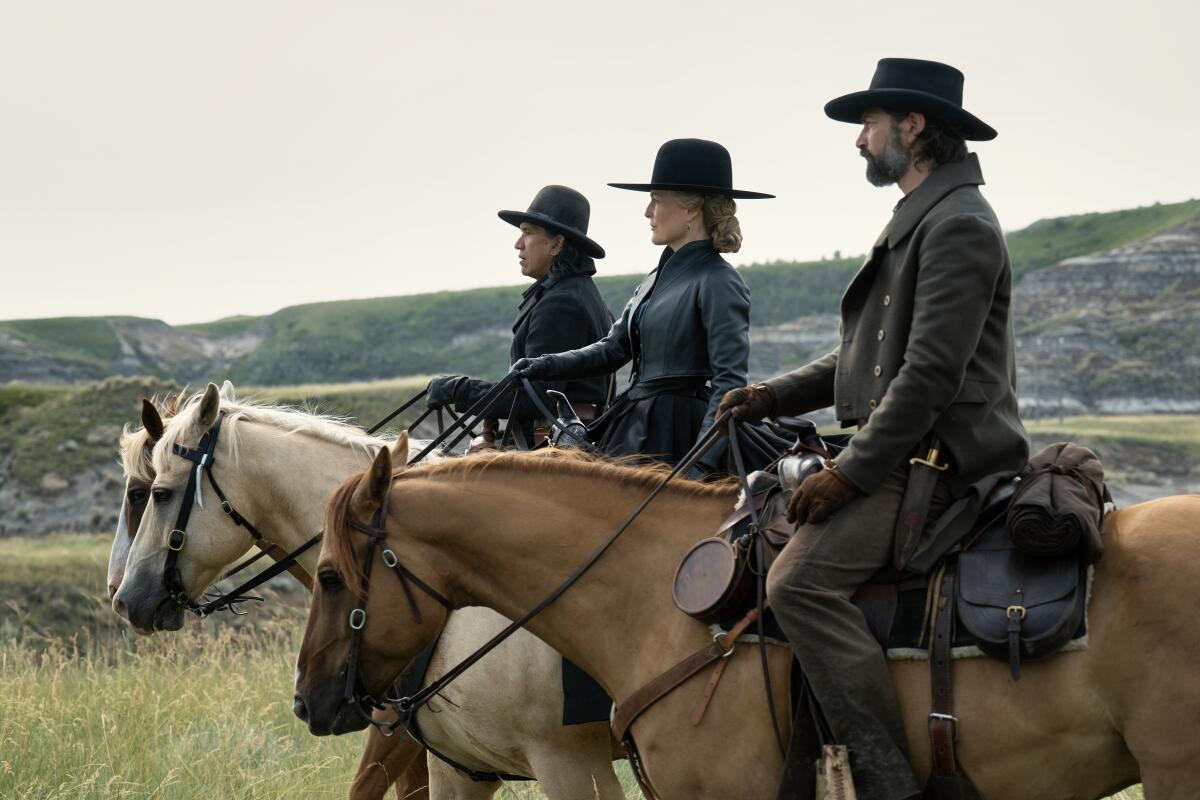
The mine isn’t producing as much as it used to, and Constance is worried this will cause Cornelius Vanderbilt, a major investor, to pull his money. This would likely ruin Angel’s Ridge – a town she essentially owns, according to even the sheriff – and leave her in a difficult position. As a result, she desperately wants to acquire a suspected silver deposit located under Jasper Hollow, where Fiona’s ranch and three other families live. However, these families are refusing to leave, despite Constance offering them money and even resorting to sabotage to try and force them out. They’re now discussing whether to involve the authorities or take matters into their own hands, and because they prefer to make decisions democratically, they’ve decided to vote on it.
Many Western stories center around conflicts between powerful, wealthy people – often those involved in industry – and the everyday farmers and ranchers who work the land. We’re naturally inclined to root for the farmers and ranchers, who are presented as protectors of the environment, rather than those who exploit it. Willem’s prejudiced comment calling Isaac the blacksmith a derogatory name reveals a negative side to the Van Nesses family, and hints at even worse behavior to come – ultimately, Willem won’t survive the first episode.
Fiona is quite eccentric, and surprisingly, Constance often seems almost sensible by comparison. There are moments when it looks like they might actually connect as mothers, perhaps even find common ground, but their strong dislike for each other, and the terrible things they both end up doing to one another, always pulls them apart.
“Our struggle, Fiona,” says Constance, “is a matter concerning property, not children.”
“All matters concern my children,” replies Fiona.
But do our children actually need this level of attention, or are we unintentionally creating it because of our own desire to be mothers? That’s the real question, and it makes you wonder why these kids don’t simply leave and start a new life somewhere like Portland. Constance, who isn’t particularly nurturing, thinks her maternal instincts are stronger than Fiona’s, claiming they come from a deeper, biological connection. Fiona counters that love isn’t determined by blood relation.
The story also includes a romantic subplot reminiscent of “Romeo and Juliet,” focusing on characters named Elias and Trisha. Considering the author previously drew inspiration from “Hamlet” in his show “Sons of Anarchy,” a Shakespearean influence here feels probable. Beyond that, the narrative features bandits, gunfights, and a conflict involving the Cayuse tribe, who are on the verge of signing a treaty, and a group trying to prevent it.
Even with strong performances from the main actors, the characters feel flat and underdeveloped – like outlines without depth. The old-fashioned dialogue doesn’t help, actually making them seem less believable. Interestingly, the supporting actors are more convincing. Michael Greyeyes and Michiel Huisman both deliver solid performances as Constance’s workers, and Ryan Hurst is effective as a reserved, mysterious gunslinger in Jasper Hollow – a familiar Western archetype.
While the series is packed with action and occasional impressive scenes, “The Abandons” often feels forced and predictable. The characters fall into neat categories – good characters experience genuine intimacy, while bad ones are depicted with sleazy, though not explicit, sexuality. Even a short clip from “Deadwood” or a single image from a Western movie feels more authentic to the era, regardless of how historically accurate it is. Despite a well-designed town and a good number of background actors, the setting of Angel’s Ridge never truly feels alive. Patton Oswalt makes a brief appearance as the mayor, mainly to deliver necessary explanations. The actual silver mining that drives the story is never shown, and the practical details of ranch life are ignored, as everyone is too preoccupied with drama and conflict. Cornelius Vanderbilt appears briefly and then vanishes, likely to reappear in the final episodes, which seem to be building towards a dramatic cliffhanger.
To be honest, I wasn’t particularly invested in what happened to Jasper Hollow or Constance’s silver mine, beyond simply wanting to see bad people face consequences and good people succeed – something I always root for.
Read More
- Clash Royale Best Boss Bandit Champion decks
- Vampire’s Fall 2 redeem codes and how to use them (June 2025)
- Mobile Legends January 2026 Leaks: Upcoming new skins, heroes, events and more
- World Eternal Online promo codes and how to use them (September 2025)
- How to find the Roaming Oak Tree in Heartopia
- Best Arena 9 Decks in Clast Royale
- Clash Royale Furnace Evolution best decks guide
- Clash Royale Season 79 “Fire and Ice” January 2026 Update and Balance Changes
- Brawl Stars December 2025 Brawl Talk: Two New Brawlers, Buffie, Vault, New Skins, Game Modes, and more
- Clash Royale Witch Evolution best decks guide
2025-12-04 11:32