The Eurovision Song Contest is currently happening in Austria, celebrating its 70th year! It’s still too early to say who will win, but loyal fans can look forward to some special moments.
During the show, eight famous past Eurovision performers will be back on stage for a special performance celebrating 70 years of the contest. Digital Spy is here to tell you who they are and share a bit about their history with Eurovision.
Alexander Rybak
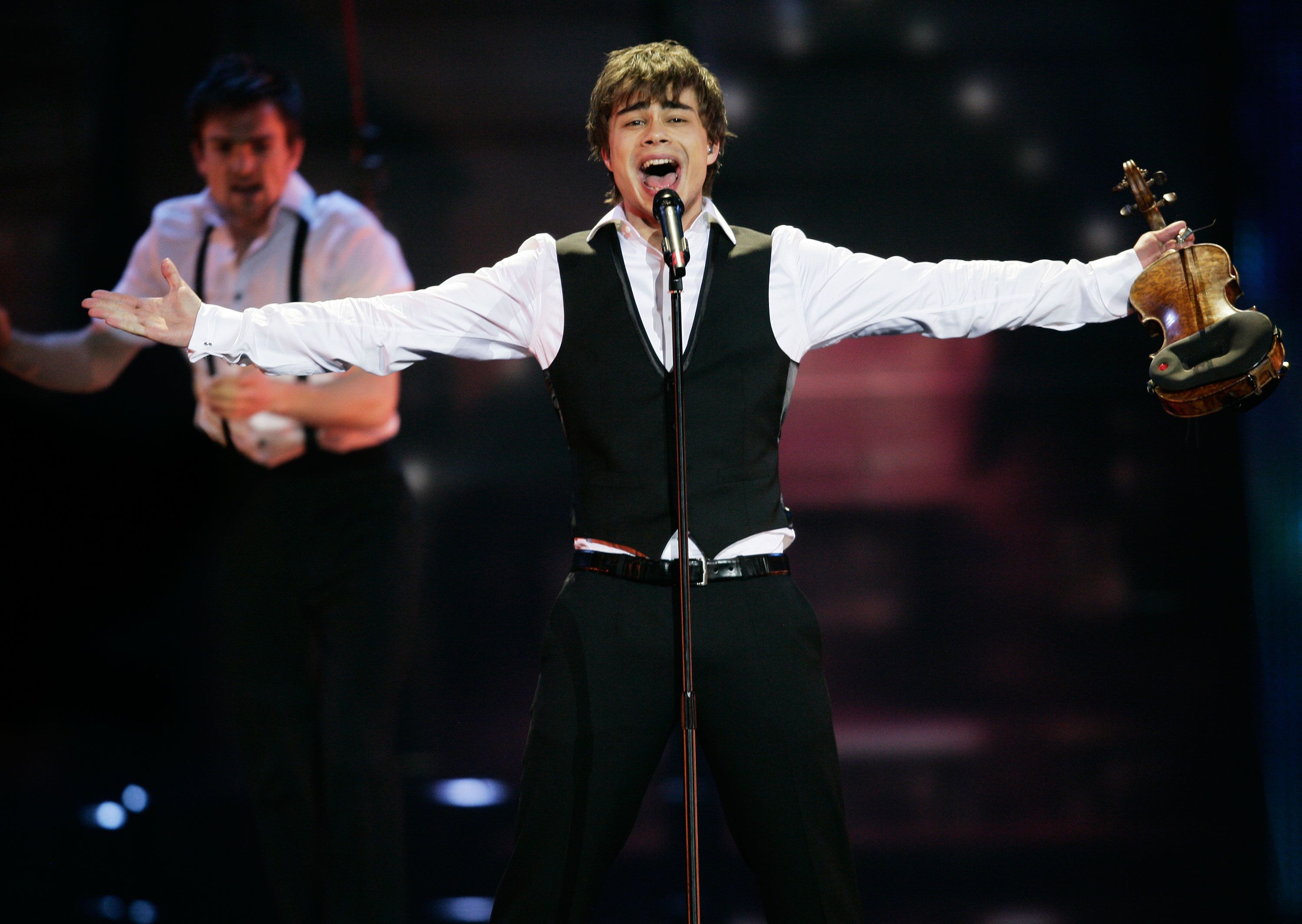
Alexander Rybak won the Eurovision Song Contest in 2009. Before that, he appeared on two Norwegian talent shows, including Norway’s Got Talent, in 2005 and 2006. In 2008, he entered Eurovision with his self-written song ‘Fairytale,’ and it became a huge success.
The artist had the honor of performing for Norway at the Olimpiyskiy Arena in Moscow, Russia. On May 16, 2009, his performance featuring the violin and folk dancers received 387 points, securing him the victory. This win was historic, breaking the previous Eurovision record of 292 points set by Finland’s Lordi, who we’ll be discussing later.
Rybak’s song ‘Fairytale’ quickly became a hit, reaching number 10 on the European iTunes chart just a week after his Eurovision win. It also became the title track for his album, Fairytales. Following his victory, Rybak’s career continued to flourish. He wrote songs for the Maltese and Belarusian entries in the 2014 Eurovision contest and expanded into voice acting, providing the Norwegian voice for Hiccup in How to Train Your Dragon and its sequel.
In a 2014 interview with Eurovision’s YouTube channel, Rybak explained that even if he hadn’t won the contest, he would still be proud of having the courage to compete and would consider the experience a personal success.
What to Read Next
Verka Serduchka

Verka Serduchka’s song ‘Dancing Lasha Tumbai’ is instantly recognizable as a Eurovision classic, often bringing to mind its memorable silver costumes and dance routine. The performer, Andriy Mykhailovych Danylko, competed as his drag character, Verka Serduchka, in the 2007 contest after winning Ukraine’s national selection from a group of seven hopefuls.
Although Serduchka gave a memorable performance, Marija Šerifović of Serbia won with her song ‘Molitva’, leaving Serduchka in second place. Despite not winning, Serduchka became a Eurovision favorite and has performed at the contest four times since then.
Serduchka represented Ukraine during the voting process at Eurovision in 2016 and performed on stage in both 2019 and 2023. He also made a brief appearance in the 2015 film Spy, featured during a concert scene where Melissa McCarthy’s character is involved in a fight.
Erika Vikman

Erika Vikman is a rising star in the world of Eurovision, having competed last year. While she first tried out for the competition in 2020 and placed third in Finland’s national selection, her song ‘Cicciolina’ quickly became popular in her home country.
In 2025, Vikman debuted her song ‘ICH KOMME’, telling The Independent it’s a song about celebrating female pleasure, strength, and freedom. She explained that the song felt deeply personal and that she knew it was the perfect time to perform at Eurovision, a competition she loves and feels a strong connection to. She described the Eurovision community as ‘my people’ and said she feels ‘at home’ there.
Finland performed strongly in the voting, receiving 392 points, but Austria’s JJ ultimately won. After the competition, Kaari Vikman described the experience as both “the best time of her life” and “the hardest.”
Participating in Eurovision was more impactful for my growth as an artist and as a person than anything else I’ve experienced in the last decade. But the best part of it all has been connecting with all of you, my incredible fans – I’m so thankful for each and every one of you.
I’m so grateful you approached my work with curiosity and kindness. Your support, encouragement, and inspiration mean the world to me – you’re the most valuable part of my experience with ESC.
Lordi

Most people still recall the unforgettable performance of Lordi’s ‘Hard Rock Hallelujah’ at the 2006 Eurovision Song Contest. They were known for their striking horror-movie costumes, including masks, wings, and impressive pyrotechnics – much like how everyone remembers Verka Serduchka.
Finland hadn’t fared well in the Eurovision Song Contest for a long time and was desperate to win. In fact, consistently receiving zero points had become a source of national disappointment, according to Kimmo Valtanen, the head of Sony BMG Music Finland – the record label that represented Lordi at the time (as reported by The Guardian).
Sending a metal band to the competition wasn’t a widely supported decision. The publication reported that some religious groups protested, claiming the band Lordi was “evil and satanic.” However, the band’s frontman, Mr. Lordi (Tomi Putaansuu), strongly refuted these accusations, stating, “We have absolutely nothing to do with devil worship.”
He exclaimed, “Hard Rock Hallelujah!” and questioned, “Would a truly satanic band name a song that? I don’t think so.” He explained that their second single was titled “The Devil Is a Loser,” but clarified they weren’t a gospel band either.
Lordi didn’t just win – they dominated the competition with 292 points, receiving the maximum 12 points from eight different countries, including the UK. To celebrate their victory, Finland issued a commemorative postage stamp, created a special drink in their honor, and even named a square after the band in Mr. Lordi’s hometown (according to the BBC).
By 2025, Lordi had released nineteen studio albums, embarked on many tours, and performed at the Eurovision Song Contest twice: representing Finland as voters in 2012 and as performers in 2021.
Mirana Conte

Mirana Conte, similar to Erika Vikman, competed in the Eurovision Song Contest, representing Malta. She first appeared in 2022 with the song ‘Look What You’ve Done Now,’ finishing in sixth place. She then returned in 2025, performing ‘Serving’ at the contest in Switzerland. Interestingly, the song wasn’t always titled ‘Serving’.
The song ‘Serving’ was initially named ‘Kant,’ a Maltese word for singing. The phrase ‘serving kant’ in the chorus was a nod to a well-known LGBTQ+ expression meaning to be bold and confident. However, according to Radio Times, one of the participating broadcasters lodged a formal complaint with the European Broadcasting Union (EBU), which led to a decision to censor the song in March 2025.
In a Facebook post, Conte expressed shock and disappointment, but assured fans that the show would continue, declaring, “Diva NOT down.”
The word was eventually taken out of the song, and the chorus now simply says, “Serving (ah)”. In a TikTok interview, she explained that she worried removing it would hurt the song, but her dedicated fans still seem to remember the original lyrics, even with the updated version.
Conte finished 17th at the Grand Final, earning a total of 91 points. Since her last performance, she’s released her debut studio album, Overstimulated, which came out in January.
Ruslana

Ruslana won the 2004 Eurovision Song Contest with her song ‘Wild Dances,’ giving Ukraine its first victory after competing for the first time the previous year. She recently told Euronews that she didn’t hesitate to accept the invitation to participate.
I told my mother I was going to the Eurovision Song Contest, and she confidently replied, ‘Ruslana, you will win!’ I funded the entire trip myself.
Taking the chance proved worthwhile, as Ruslana and her husband, Oleksandr Ksenofontov, co-wrote ‘Wild Dances’ which earned her 280 points and the top scores (12 points) from eight different countries. After winning Eurovision, she continued to perform and even spent some time in politics.
In 2014, Ruslana received the International Women of Courage Award from Michelle Obama, then the First Lady, for her performances supporting pro-European protestors in Kyiv, according to BBC News.
Kristian Kostov

Kristian Kostov first gained recognition in 2016 with his single ‘Ne Si Za Men’. Before representing Bulgaria at Eurovision in 2017 with his song ‘Beautiful Mess’, the then-17-year-old had already competed on talent shows – X Factor Bulgaria and The Voice in Russia.
Although Kostov didn’t win, finishing second to Portugal’s Salvador Sobral and his song ‘Amar Pelos Dois’, he achieved a strong result with 615 points. He also ranked second in both the jury and public votes.
In 2019, he competed on the seventh season of the Chinese singing show, Singer, but was eliminated by the voters.
Max Mutzke

Max Mutzke represented Germany at the 2004 Eurovision Song Contest, finishing in eighth place while Ruslana won for Ukraine. He performed his debut single, ‘Can’t Wait Until Tonight,’ at the contest in Istanbul, and the song later became a number one hit in Germany.
Although Mutzke didn’t win in 2004, he returned to compete in the German national final in 2024 with his song ‘Forever Strong,’ placing second. He hoped to represent Germany again, marking the 20th anniversary of his initial Eurovision appearance.
Being a guest on the ARD Countdown Show at last year’s Eurovision in Liverpool was amazing,” he shared with Eurovision’s official website. “I was really struck by the incredible energy and how passionate people are about the contest.
Considering where the competition stands now and how much I’ve grown as a player, it feels great to be back. I’m excited to build on this positive energy, especially after being away for 20 years.
As a huge movie and TV fan, I’m so excited they have a Streaming Guide! It’s awesome because I can quickly find out exactly where to watch all my favorite shows and movies – no more endless searching!
The latest issue of Living Legends, a special collector’s edition about the royal family, is now available! You can purchase The Royals at newsstands or online.
2026-05-16 22:22