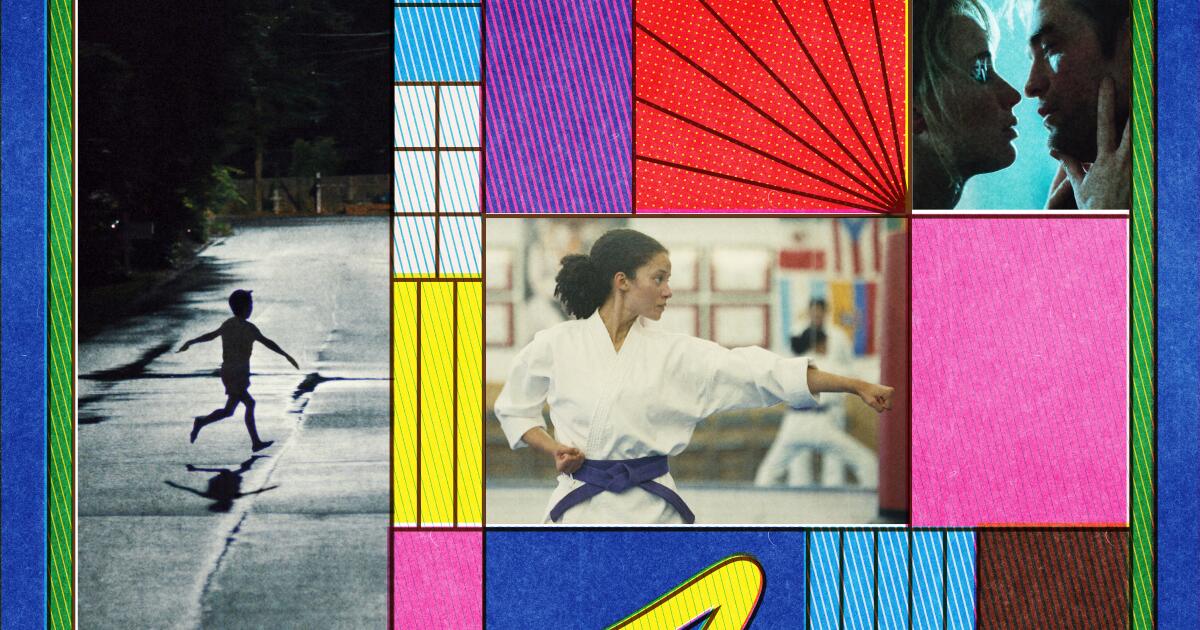
Carefully selected music can transform ordinary movie scenes into something truly exciting. In the film industry, these musical moments are known as ‘needle drops‘ – and surprisingly, some filmmakers are actually using vinyl records and turntables to create them!
As a total movie buff, I’ve always wondered what makes a song really work in a film. Sometimes it’s about a funny contrast – using a song in a way that’s totally unexpected and ironic. But other times, it’s about capturing a truly heartfelt moment and forever linking it to a song. After that, you can never hear that song again without remembering that scene – it’s magical!
We’ve picked out twelve of our favorite things from the past year, and you’ll find them listed below. You can arrange them in any order you like to create your own custom collection!
The Spice Girls, ‘2 Become 1,’ as heard in ‘Together’

Dave Franco and Alison Brie, who are married in real life, star as a couple, Tim and Millie, in the unsettling romance “Together.” Despite being engaged, Tim and Millie seem better off apart. He’s a struggling musician, and she’s a teacher with a fondness for the Spice Girls. Their clashing tastes are just one symptom of a deeply unhealthy relationship. Desperate to save things, they move to the countryside, but their problems only worsen. They discover an eerie cave that begins to physically merge Tim and Millie, forcing them into an inescapable connection. The film builds to a climax during a slow dance set to a 1996 pop song, making the already strange situation even more intense. — Amy Nicholson
Jack O’Connell, Lola Kirke and Peter Dreimanis, ‘Pick Poor Robin Clean,’ as heard in ‘Sinners’

Ryan Coogler’s film is filled with blues music, both original compositions and carefully chosen period songs, which cleverly play with the classic tale of making a deal with the devil at a crossroads. But one particular song stands out. When a trio of white musicians play a cheerful, polished version of this traditional tune at a juke joint, it foreshadows the future of cultural appropriation. The music feels threatening, suggesting something valuable is being taken. It almost acts as a curse, and the fact that the club owner rejects them highlights Coogler’s skill as a filmmaker. It’s a brilliant example of music criticism seamlessly integrated into a popular movie. — Joshua Rothkopf
Steely Dan, ‘Dirty Work,’ as heard in ‘One Battle After Another’

Paul Thomas Anderson has a knack for using music effectively, a skill he’s demonstrated since films like “Boogie Nights” and “Magnolia.” Even after directing ten movies, his musical taste is still excellent. In his new darkly comedic action-thriller, “One Battle After Another,” Leonardo DiCaprio plays Bob Ferguson, a former revolutionary living in hiding with his teenage daughter, trying to escape his past. The film starts with a fast pace, but it settles into a more relaxed rhythm when Steely Dan’s song “Dirty Work” begins. We see Bob waiting outside his daughter’s school, smoking before a parent-teacher conference and trying to avoid the gaze of other parents. When the lyrics “I’m a fool to do your dirty work” play, it feels like a realization of Bob’s self-awareness – he knows he’s being taken advantage of. It’s something we can all relate to; the song simply puts it into words. — Josh Rottenberg
George Harrison, ‘Beware of Darkness,’ as heard in ‘Weapons’

Zach Cregger’s horror film builds slowly to a wildly funny and intense climax – you might find yourself laughing so hard you get scared. It begins with a deeply moving scene: a group of pajama-clad third-graders running through dark, rainy streets, leaving you wondering what’s happening and why. The scene is set to George Harrison’s haunting song “Beware of Darkness,” which warns against succumbing to despair. In the film, the song’s unsettling melody hints at a coming loss of innocence. — Mikael Wood
Led Zeppelin, ‘Whole Lotta Love,’ as heard in ‘F1’

Okay, yeah, it’s a little obvious what’s happening, but that’s honestly part of why I love these movies. Joseph Kosinski has really nailed a specific vibe – what I’m calling ‘Dad Cinema.’ It’s all about experienced guys who are clearly the best at what they do, like we saw with “Top Gun: Maverick” and now with his new racing film. And the music? Forget anything modern, it has to be classic rock. And you can’t get much more classic than Led Zeppelin, who for years wouldn’t let anyone use their songs. But something’s changed! The moment Brad Pitt’s character, Sonny, arrives at Daytona and Robert Plant’s voice kicks in with “Whole Lotta Love”…it’s perfect. Seriously, as soon as that guitar riff hits, you feel Sonny taking the lead. It’s cheesy, but in the best way. Let the good times roll!

Movies
Even thirty-five years after making ‘Days of Thunder,’ producer Jerry Bruckheimer continues to create fast-paced, large-scale films. He discusses his passion for racing movies, creating blockbuster spectacles, and the current state of the Hollywood film industry.
John Prine and Iris DeMent, ‘In Spite of Ourselves,’ as heard in ‘Die My Love’
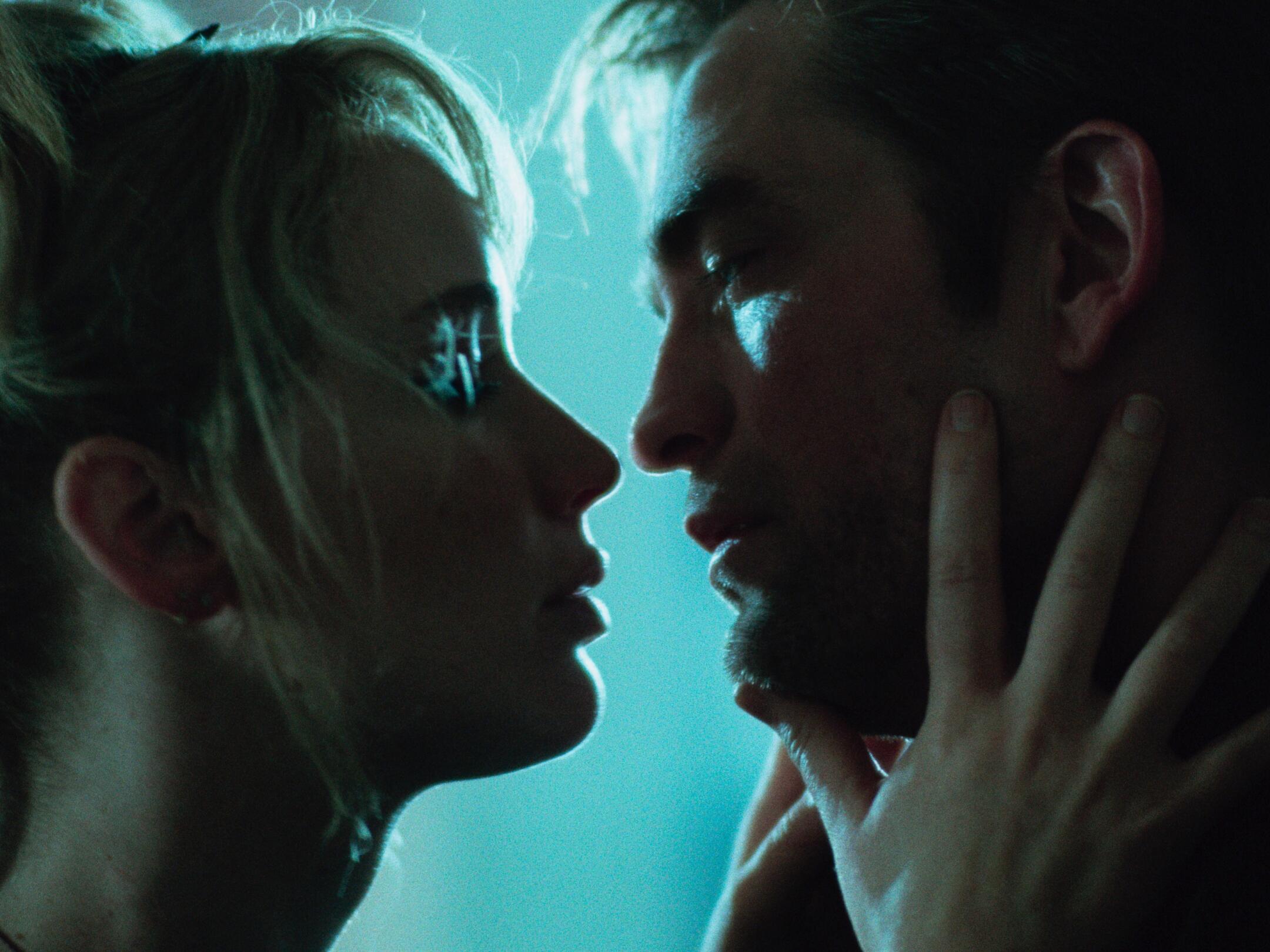
Lynne Ramsay’s film offers a haunting and intensely personal look at the disorienting experience of postpartum life. Jennifer Lawrence and Robert Pattinson brilliantly portray the subtle breakdown of a new couple adjusting to parenthood in a remote setting, with Lawrence especially conveying a growing sense of disconnection from her husband and herself. Despite the overall sense of unease, the film is punctuated by moments of humor and genuine affection, hinting at the enduring bond between them. A standout scene features the couple singing along to John Prine and DeMent’s “In Spite of Ourselves,” a song that perfectly captures the bittersweet dynamic of a relationship with its playful banter and heartfelt devotion. Though also featured in another film, “Materialists,” the song feels central to the emotional core of this one. — August Brown
Gil Scott-Heron, ‘The Revolution Will Not Be Televised,’ as heard in ‘Dead Man’s Wire,’ ‘One Battle After Another’ and ‘The Running Man’

It’s interesting how a song can become instantly popular simply through its use in multiple films. Gil Scott-Heron’s 1971 track, “The Revolution Will Not Be Televised,” perfectly captured a feeling of frustration and absurdity, offering a sharp look at the world. Recently, three films—Edgar Wright’s “The Running Man,” Gus Van Sant’s “Dead Man’s Wire,” and Paul Thomas Anderson’s “One Battle After Another”—have all used the song in their closing credits, each in a unique way. “The Running Man” used its energetic beat to heighten the tension, while “Dead Man’s Wire” employed it to emphasize the film’s theme of self-reliance. Most surprisingly, “One Battle After Another” reveals the song’s lyrics are actually woven into the script as a secret code among revolutionary characters. The convergence of these films using the same song is exciting, reflecting the widespread confusion and dissatisfaction many people are feeling. It’s rare to see filmmaking so connected to the current moment, and the synergy between these three films is truly remarkable.
Peter Gabriel, ‘I Have the Touch,’ as heard in ‘Marty Supreme’
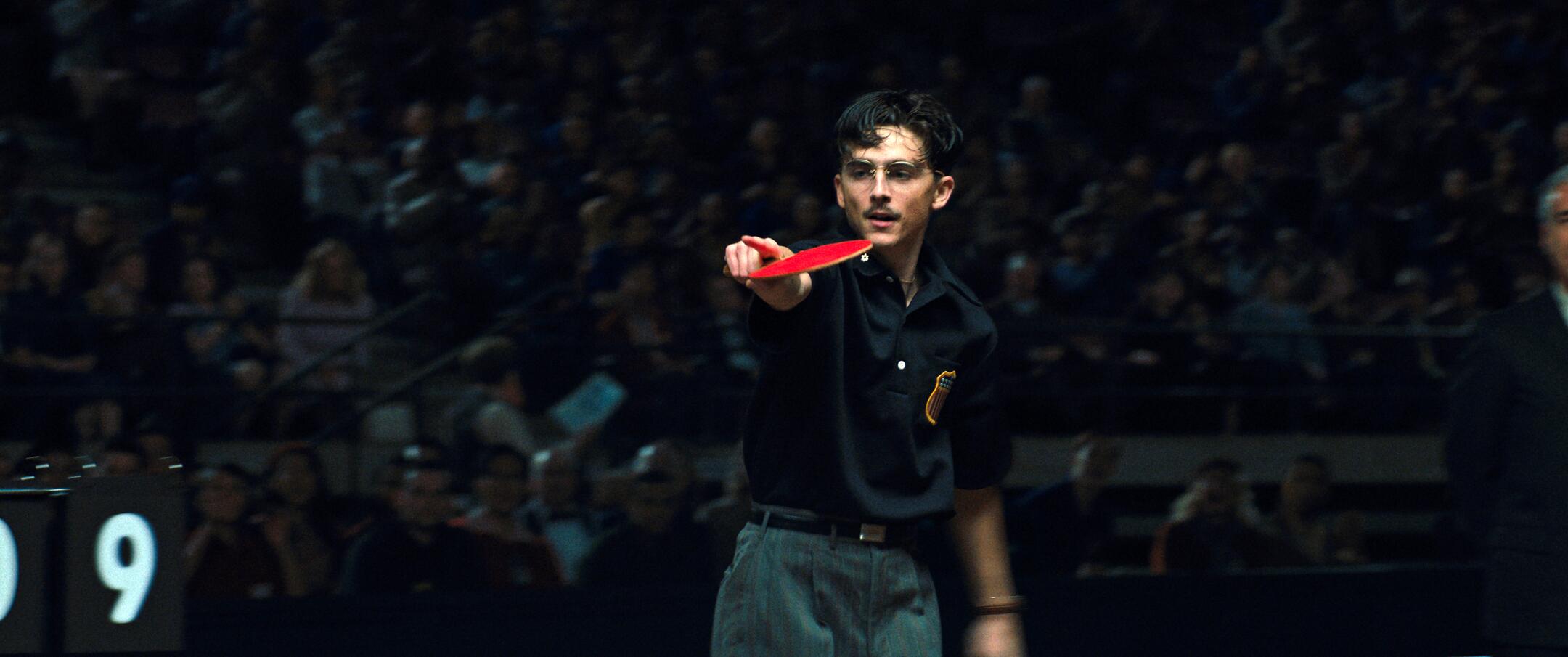
Peter Gabriel is known for his atmospheric songs in films, like “In Your Eyes” and “Solsbury Hill,” but it’s time to appreciate his more energetic side. Director Josh Safdie brilliantly uses a track from Gabriel’s 1982 album “Security” in his new film, “Marty Supreme” (released December 25th). The song perfectly matches the intensity of Timothée Chalamet’s character, Marty, who is exceptionally skilled at table tennis. The song’s driving 80s drums and electric guitars create a competitive atmosphere. Even as his opponents improve, Marty’s victory feels inevitable. Gabriel sings, “I have the touch,” embodying a confident competitor. Originally written about asserting oneself when meeting new people, Safdie reimagines the lyrics as a referee’s call to action: “Shake hands!”—a moment highlighted in the film with a stark, isolated repetition of the phrase.
Donna Summer, ‘Love to Love You Baby,’ as heard in ‘The Secret Agent’

2025 saw a striking similarity in two films, “Sirāt” and “The Secret Agent”: both featured tense nighttime drives on dangerous country roads. In “The Secret Agent,” a cold-blooded stepfather and son duo drive through São Paulo at night, navigating near the Sérgio Motta Dam with limited visibility. Their mission? To secretly dispose of a body in the dam. Set in 1977, the scene is accompanied by Donna Summer’s lengthy disco hit, featuring a notable 23 audible moans (according to the BBC). This hypnotic music creates a uniquely unsettling and memorable sequence, solidifying it as one of cinema’s best scenes of its kind.
Katy Perry, ‘Firework,’ as heard in ‘Eddington’

Katy Perry’s upbeat song “Firework” is all about staying positive, even when you don’t feel like it. In Ari Aster’s film “Eddington,” the song plays a key role during a tense standoff between the sheriff (Joaquin Phoenix) and the mayor (Pedro Pascal). The scene unfolds at a backyard fundraiser during the pandemic, where a disagreement over the music escalates. The sheriff tries to lower the volume, but the mayor keeps turning it up. After a series of increases and decreases, the mayor ultimately slaps the sheriff, turning what began as a playful dispute into a sad and pointless confrontation, all set to Perry’s cheerful song. Aster has used pop music in surprising ways before, famously pairing Mariah Carey’s “Always Be My Baby” with a disturbing scene in his film “Beau Is Afraid.” For Aster, adding a popular song isn’t just about providing a soundtrack—it’s about creating a jarring and impactful moment. — J. Rottenberg
The Veronicas, ‘Untouched,’ as heard in ‘Bring Her Back’

Most films would use The Veronicas’ upbeat song “Untouched” to cheerfully introduce a typical Australian suburban setting. But in this disturbing horror film about a foster care cult, the song plays during one of the most shocking and gruesome scenes, creating a darkly comedic effect. You end up laughing nervously as the violence is juxtaposed with the catchy tune. The song isn’t used for irony, but to emphasize the surprisingly normal world created by the filmmakers, highlighting the desperation of Sally Hawkins’ character. It’s a brilliantly unsettling and funny use of music that The Veronicas likely appreciated. — A.B.
Metallica, ‘For Whom the Bell Tolls,’ as heard in ‘Freaky Tales’

“Freaky Tales,” directed by Anna Boden and Ryan Fleck (known for films like “Half Nelson” and “Captain Marvel”), is a fun and quirky tribute to Oakland in the 1980s. The movie features a great soundtrack from local artists, including Too Short, who narrates the story and appears as a younger version of himself in a rap battle against two talented teenage girls – a scene that stands out as a highlight. However, the film’s most memorable sequence involves Golden State Warriors player Sleepy Floyd (played by Jay Ellis) seeking revenge on a Nazi gang who harmed his girlfriend during a basketball playoff game. (It’s important to note that “Freaky Tales” is a work of fiction.) As Metallica’s iconic song starts, Floyd arms himself and takes on numerous opponents, leading the film to play another Bay Area hit, E-40’s “Choices (Yup).”
Read More
- Clash Royale Best Boss Bandit Champion decks
- Vampire’s Fall 2 redeem codes and how to use them (June 2025)
- Mobile Legends January 2026 Leaks: Upcoming new skins, heroes, events and more
- World Eternal Online promo codes and how to use them (September 2025)
- Clash Royale Season 79 “Fire and Ice” January 2026 Update and Balance Changes
- Best Arena 9 Decks in Clast Royale
- Clash Royale Furnace Evolution best decks guide
- Best Hero Card Decks in Clash Royale
- FC Mobile 26: EA opens voting for its official Team of the Year (TOTY)
- Clash Royale Witch Evolution best decks guide
2025-12-18 14:04