 1
1
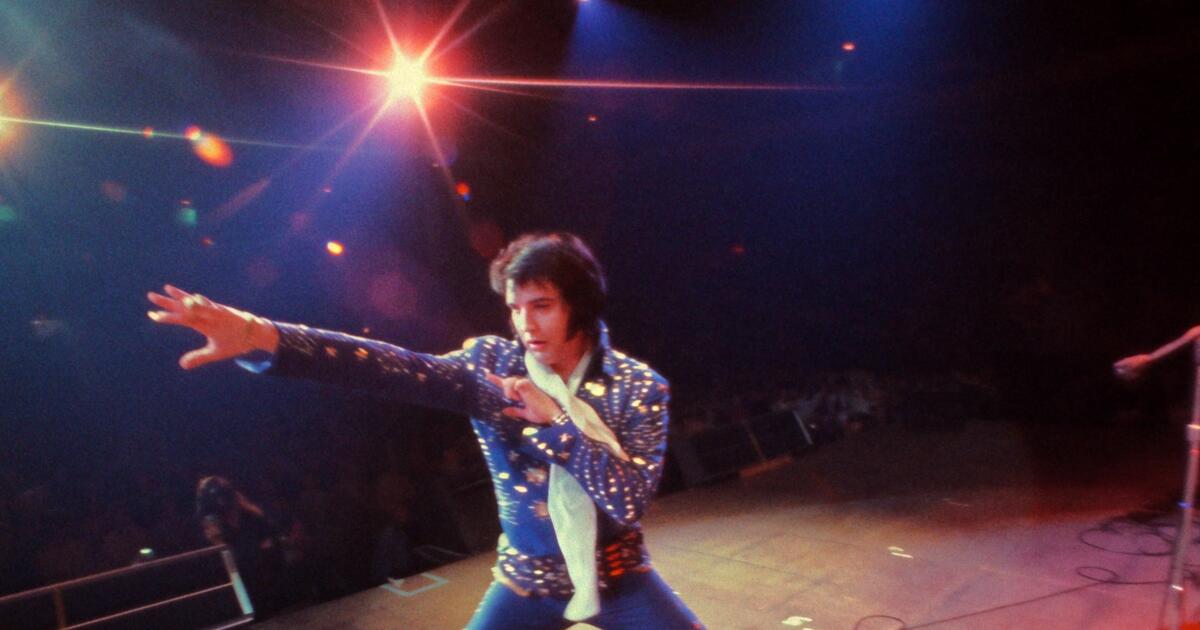
Within the first hour of “EPiC: Elvis Presley in Concert,” you’ll be convinced Elvis was the most incredible performer of all time. By the end, he feels like a legend. Director Baz Luhrmann says he created this IMAX documentary for those who never saw Elvis live, hoping they could experience his power. But it seems Luhrmann also hopes future civilizations, maybe even aliens, will discover this footage and be so captivated by Elvis’ performance that they build a religion around it.
If this vision of the future becomes reality, Baz Luhrmann will likely be seen as a major interpreter of Elvis’s legacy. His dedication to the singer is clear, as this new project follows his 2022 film “Elvis,” which featured a strong performance by Austin Butler, though many felt no one could truly capture the King’s essence. The earlier film followed a typical rise-and-fall story, but faced criticism because Elvis’s life touched on so many complex issues—race, social class, and difficult relationships—making it impossible to create a universally satisfying portrayal or for any actor to fully embody him.
As a huge Elvis fan, I really appreciated that this film, “EPiC,” leaned heavily on actual concert footage. We get to see the King perform over two dozen songs – classics like “That’s All Right,” “Burning Love,” and “In the Ghetto” – with even more tunes playing in the background. I’m not usually one for his gospel stuff, but it actually works well within the film’s overall vibe. It feels like a massive, extended concert – bigger than anything fans could have experienced live. The movie mainly pulls footage from his 1970 and 1972 Las Vegas shows, and you can even tell the years apart by how over-the-top his rhinestone-covered jumpsuits get – they just kept adding more and more!
By 1969, it had been nine years since Elvis last performed live, and his popularity had waned. The massive popularity of The Beatles had significantly hurt his image, leading one editor to compare their rise to destructive events like car crashes and missile strikes. At his comeback concert, reporters noticed that most of his fans were over 30, with only one 25-year-old admitting he was there for a nostalgic experience.

At Toronto, Oscar hopefuls enter the octagon, but bigger swings are found elsewhere
The Toronto International Film Festival often showcases films expected to contend for awards, and it was great to see such a diverse range of movies this year – everything from big-budget blockbusters starring Dwayne ‘The Rock’ Johnson to a Thai horror film about a possessed vacuum cleaner.
The film quickly establishes the basic story, then jumps ahead a year after Elvis’s career was revitalized. Now free from the controversies of his early fame, his time in the army, and the pressures of Hollywood, we see Elvis at what many consider the peak of his career – a period just before his 1973 divorce, after which his personal life and health began to decline.
This portrayal of Elvis is charmingly confident, relaxed, and humorous. He’s shown making light of the challenges of performing in his iconic jumpsuit – he apparently wore it to avoid tearing his pants! There’s also a funny moment where he playfully changes the lyrics to “Are You Lonesome Tonight?” to ask, “Do you look at your forehead and wish you had hair?”
The camera frequently focuses tightly on Elvis, capturing the way sweat glistens on his face under the bright Vegas lights. His connection with the audience is both deeply personal and incredibly energetic. You can really see his charisma when he playfully focuses on someone unexpected, like a backup singer during “Suspicious Minds.” He slowly walks toward her, captivating her attention with the same skill as a hypnotist, then playfully moves toward her, causing her to jump and laugh.
The movie introduces us to Elvis’s band, but surprisingly never tells us their names – not even in the closing credits. They deserve recognition, but the film focuses on the experience of the concert, not how it was created. Once you move past the initial visual impact of Elvis’s bright pink shirt during rehearsals, it’s wonderful to see he puts the same energy into a small performance as he does in a huge stadium. He truly gets lost in the music, moving with such intensity that his hip movements look like a rapid-fire machine gun.

Movies
The 27 best movie theaters in Los Angeles
We’ve created a guide to 27 fantastic movie theaters in Los Angeles, including iconic spots like the TCL Chinese Theatre and the New Beverly, as well as popular chains like Alamo Drafthouse and the best AMC location in Burbank.
As you’d expect, the movie shows a fantastic montage of the women in the audience absolutely losing it – there’s this little girl crying and clinging to Elvis, and this glamorous woman practically diving under the stage curtain. They’re pulling at his scarves, throwing bras – he even puts one on his head! What’s a bit surprising looking back now is that Elvis actually kissed a lot of his fans back, even when he jumped into the crowd and came out with pieces of his jumpsuit ripped off. Honestly, if you see your mom or grandma in those shots, that’s pretty cool!
As a film buff, I found Luhrmann’s approach really interesting. Instead of dwelling on the darker sides of Elvis’ life, he uses these quick cuts to personal photos – sometimes a little unexpected – to really punch up the emotional impact of the songs. Like, when Elvis sings about missing someone, we suddenly see a picture of his mother, Gladys, and it just hits you. Then, with “Always on My Mind,” he beautifully acknowledges Priscilla and Lisa Marie. It feels like Luhrmann intentionally chose to focus on the joy and excitement of Elvis’ life, giving us the highs without the lows – pure ecstasy, if you will.
This portrayal of Elvis avoids any negativity or bad moods. While the movie shows him dealing with intrusive questions from reporters, his only moment of playful attitude comes during a performance of “Little Sister.” He speeds up the song, unexpectedly launches into a bit of The Beatles’ “Get Back,” and then seamlessly returns to his own tune – a clear message that he doesn’t think the British bands deserve all the credit for changing rock music.
Baz Luhrmann seems to feel Elvis Presley never reached his full potential. The film portrays Colonel Parker, Elvis’s manager, as holding him back, starting with minor film roles and later limiting him to casino performances. While Elvis was a huge star in America, he never performed internationally, and the film wonders what he might have achieved if he’d had the chance to explore different cultures and musical styles around the world, like learning to play the sitar in India.
Although the film’s focus on Parker and Tom Hanks’ exaggerated portrayal of him overshadowed it, this celebratory film emphasizes the importance of recognizing the Colonel’s significant influence. Baz Luhrmann even uses the song “The Devil in Disguise” while showing footage of Parker, suggesting that every powerful figure has a darker side.
Read More
- ‘Project Hail Mary’s Unexpected Post-Credits Scene Is Worth Sticking Around
- Beyond Accuracy: Gauging Trust in Human-AI Teams
- How Martin Clunes has been supported by TV power player wife Philippa Braithwaite and their anti-nepo baby daughter after escaping a ‘rotten marriage’
- Clash Royale Balance Changes March 2026 — All Buffs, Nerfs & Reworks
- Gold Rate Forecast
- CookieRun: OvenSmash coupon codes and how to use them (March 2026)
- eFootball 2026 is bringing the v5.3.1 update: What to expect and what’s coming
- The most surprising Hannah Montana cameos: From John Cena to Dwayne Johnson and even a Coronation Street soap star as show celebrates its 20th anniversary
- Genshin Impact Version 6.5 Leaks: List of Upcoming banners, Maps, Endgame updates and more
- Total Football free codes and how to redeem them (March 2026)
2026-02-20 01:31