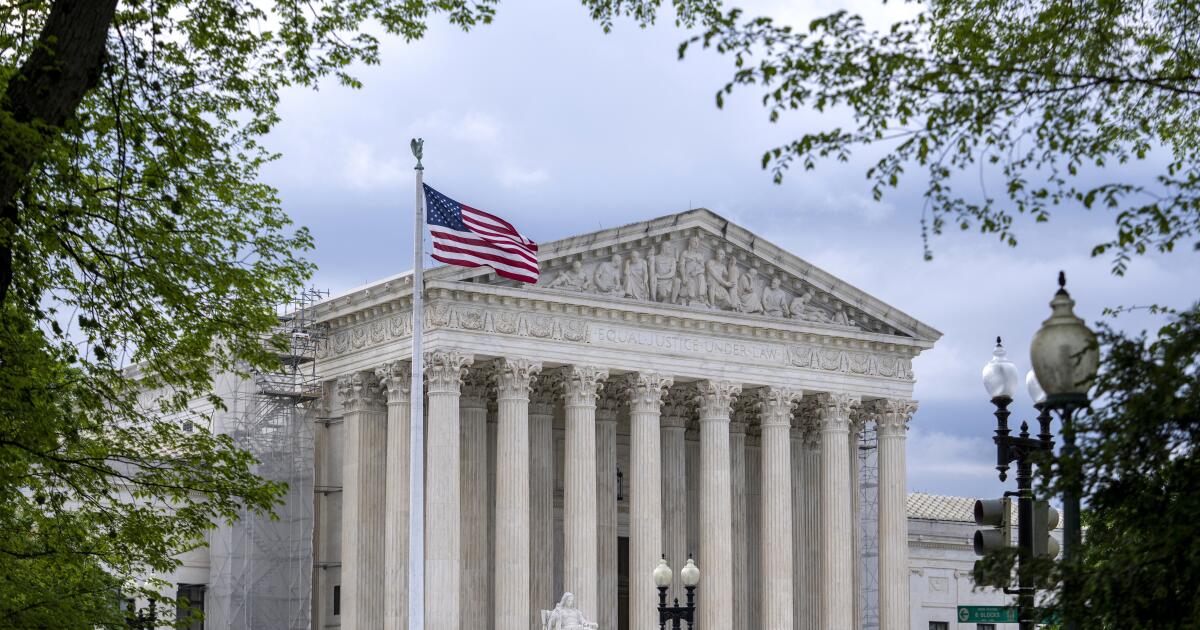
The Supreme Court ruled on Wednesday that companies providing internet access generally aren’t responsible for copyright violations committed by their customers, even if those customers are illegally downloading music or movies. This makes it more difficult for artists and filmmakers to sue over online piracy.
The Supreme Court unanimously ruled against Sony and overturned a $1 billion copyright infringement verdict against Cox Cable.
As a music fan, I was really glad to see the courts backed up the jury’s decision about Cox internet. It seemed pretty clear they weren’t doing enough to prevent their customers from illegally downloading music, and they finally had to take responsibility for it.
Sony’s legal team highlighted that a vast number of Cox customers were sharing copyrighted material. They argued that Cox was informed about this, but failed to take significant action to prevent it.
But the high court said that is not enough to establish liability for copyright infringement.
Entertainment & Arts
High court sides with the entertainment industry in the fight against illegal file sharing.
According to previous court decisions, a company isn’t held responsible for copyright infringement simply because it offers a service to the public, even if some users misuse it to violate copyrights,” Justice Clarence Thomas explained in the court’s opinion.
Twenty years ago, the court ruled against file-sharing services like Grokster and Napster, agreeing with music and movie companies that their software was designed to illegally distribute copyrighted content.
On Wednesday, the court ruled that internet service providers aren’t liable for copyright infringement simply because some of their users have engaged in it. The court clarified that ‘contributory’ infringement doesn’t apply to ISPs in these cases.
According to Thomas, Cox offered internet service to its customers but didn’t want that service used for illegal copyright activity. Cox didn’t encourage users to infringe on copyrights, nor did it design its service to facilitate such activity.
Cox maintained that internet providers could face financial ruin from large copyright infringement lawsuits, even though they claim they weren’t responsible for the violations and couldn’t have stopped them.
Read More
- Invincible Season 4 Episode 4 Release Date, Time, Where to Watch
- Physics Proved by AI: A New Era for Automated Reasoning
- Gold Rate Forecast
- American Idol vet Caleb Flynn in solitary confinement after being charged for allegedly murdering wife
- Magicmon: World redeem codes and how to use them (March 2026)
- “Wild, brilliant, emotional”: 10 best dynasty drama series to watch on BBC, ITV, Netflix and more
- Olivia Colman’s highest-rated drama hailed as “exceptional” is a must-see on TV tonight
- Total Football free codes and how to redeem them (March 2026)
- Seeing in the Dark: Event Cameras Guide Robots Through Low-Light Spaces
- DC Retcons Controversial Superman Storyline Thanks to Powerful New Villain
2026-03-25 20:01