As a total movie and TV buff, I was completely hooked by Netflix’s latest series! It really delved deep into what makes truly awful criminals tick – like, a seriously unsettling look inside their heads. The show follows the beginnings of the FBI’s Behavioral Science Unit, and even though I watch tons of crime dramas, this one genuinely disturbed me with how calmly it presented these real-life monsters. Joe Penhall did an amazing job creating something both gripping and deeply unnerving.
Even horror master Stephen King was impressed with the show, noting its ability to create fear without relying on excessive gore. This praise is particularly striking coming from an author known for his graphic and realistic writing, highlighting how Mindhunter builds suspense through nuance. The two-season series uses fictional interviews to delve into the minds of criminals, offering a chilling and psychological experience that relies on suggestion rather than explicit violence.
Stephen King Had Surprising Praise for Netflix’s Mindhunter
I stumbled across Stephen King talking about Mindhunter on social media a while back, and it really stuck with me. He said it was ‘strongly recommended,’ which is high praise coming from him! He also mentioned it wasn’t overly graphic – just one really shocking moment in the first episode, but overall, it’s more about the psychological side of things. As a fan of crime dramas and King’s work, that definitely piqued my interest.
It’s surprising to hear the author say Mindhunter doesn’t have enough gore, given how vividly he portrays violence in his own writing. He’s well-known for graphic descriptions – phrases like ‘He heard the blade squeal against bone’ – that create a powerfully disturbing and unsettling picture of pain and bloodshed, leaving very little to the reader’s imagination.
Considering Stephen King is known for vividly depicting intense and disturbing scenes in his stories, it’s surprising he found a crime series focusing on real American cases so unsettling. He’s often explored graphic violence and its aftermath in his own work without hesitation.
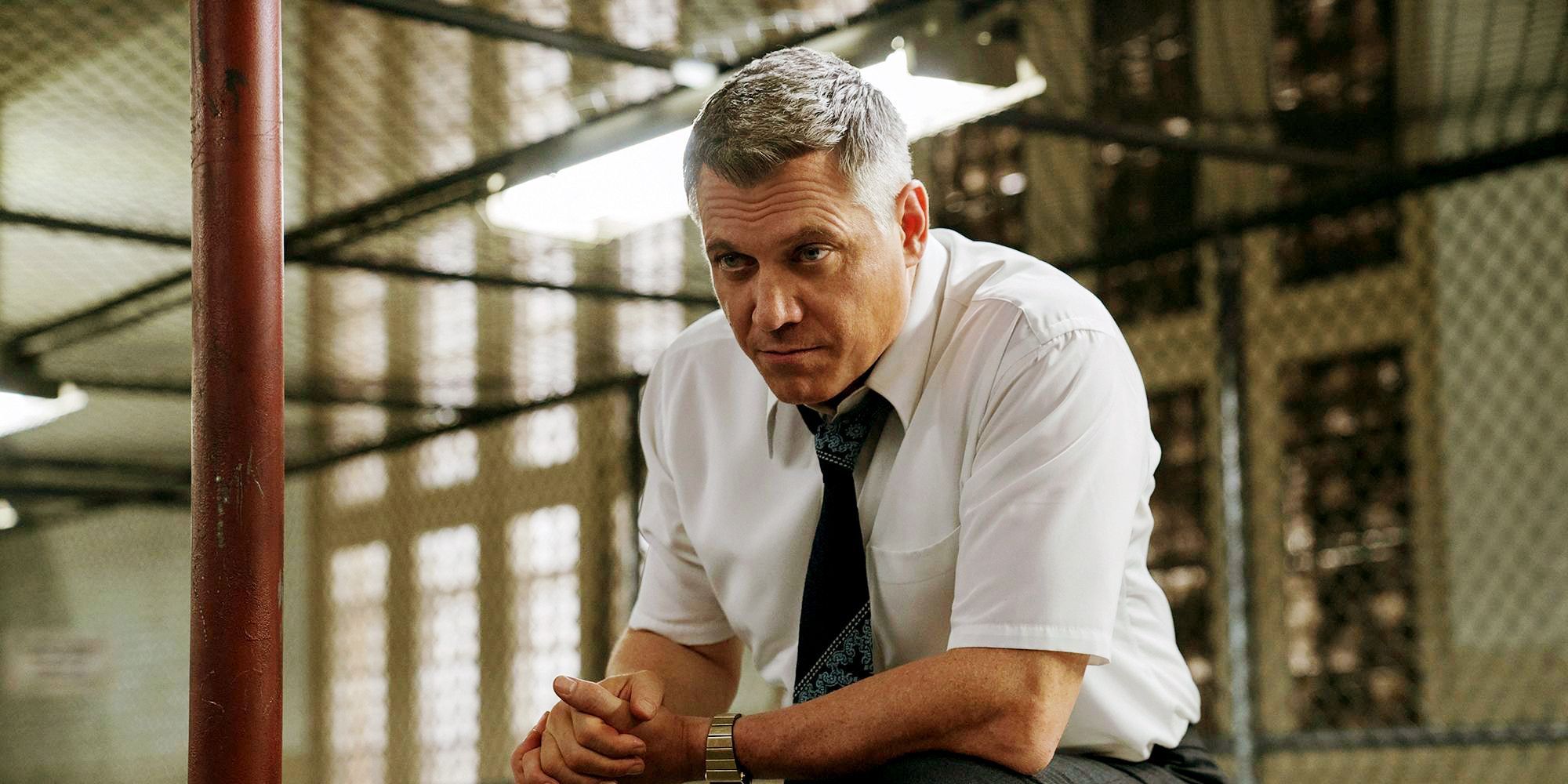
The show’s strength lies in its realistic approach. Inspired by John Douglas’ groundbreaking work in criminal profiling, the series centers on FBI agents Holden Ford (Jonathan Groff) and Bill Tench (Holt McCallany). They investigate serial killers by talking to convicted murderers, hoping to gain insight into their motives and methods.
As critic King observed, Mindhunter doesn’t rely on graphic violence to create suspense. Instead of showing disturbing scenes or delving into the details of the crimes, the Netflix series lets the killers themselves explain their actions and motivations. Through conversations with figures like Ed Kemper and Richard Speck, the show draws viewers into the minds of these real-life criminals, allowing their own imaginations to create the horror.
Penhall cleverly draws the audience directly into the scene by placing the camera as if we were another person present. When the characters calmly discuss their motivations while looking straight at us, it makes us actively think about what’s happening and form our own opinions. This technique is similar to being a hidden observer – like a ‘Peeping Tom’ – but instead of shocking visuals, Penhall uses calm conversation to create feelings of unease, shared responsibility, and intense interest.
The series Mindhunter excels by recognizing that true horror comes from what viewers imagine themselves. Instead of relying on typical jump scares, it presents the disturbing reality of human evil and allows the audience to draw their own conclusions, making it a uniquely unsettling crime thriller.
Netflix’s Mindhunter Changed the Crime TV Formula
When Mindhunter debuted on Netflix in 2017, it aimed for something different than typical crime shows. David Fincher, essentially the show’s creator, explained in a 2024 interview that he envisioned it as a procedural focused on behavioral science—not like The X-Files, CSI, or Criminal Minds. He described it instead as a story about someone being introduced to the disturbing world of people with extreme sexual compulsions.
At first glance, Mindhunter seems like a typical crime show. It features a driven young FBI agent partnered with a seasoned, more traditional profiler as they travel the country giving seminars on understanding criminal behavior. Though very different – Ford is eager to analyze how crime evolves, while Tench is just waiting to retire – the pair initially fit the mold of many similar crime dramas.
The series truly begins in the second episode when Ford visits Ed Kemper. This meeting, intended to gain insight into the minds of serial killers, sets the stage for the show’s gradually chilling and disturbing progression. Ultimately, Ford and his partner shift their focus from standard police work to the emerging field of behavioral profiling, driven by a desire to stop future crimes. They transform from traditional detectives into pioneers in understanding criminal behavior.
Fincher truly shines in Mindhunter by delving into the personal lives of FBI agents Ford and Tench—and the toll their work takes on them. The series explores the psychological damage they suffer, including emotional breakdowns, strained relationships, and a blurring of professional boundaries.
Let me tell you, Ford’s journey is a really compelling, but disturbing, one. He starts out as this hopeful, eager guy, genuinely wanting to understand the minds of the criminals he’s interviewing. But the more he tries to get their perspectives, the more he seems to lose himself. It’s a slow burn, watching him become increasingly detached, arrogant, and frankly, a bit scary. By the end of the first season, something definitely snaps – that hug with Kemper is devastating – and it all comes crashing down, landing him in the hospital at the start of season two. It’s a powerful, if unsettling, arc.
What really sets Mindhunter apart, for me, isn’t just how it handles cases, but its villains. Unlike a lot of crime shows where you get these over-the-top, cartoonish bad guys, the people Ford and Tench interview feel…real. And honestly, it’s a little unsettling. The show doesn’t shy away from showing you these killers as complex people, and it actually makes you feel a strange kind of empathy, which I’ve never really experienced with other shows in this genre.
Just to clarify, Mindhunter wasn’t trying to make these criminals sympathetic, and neither does the book it’s based on. However, the show still reveals the events leading up to their crimes – particularly with Kemper, whose story is powerfully portrayed by Britton.
Kemper is disarming and surprisingly intelligent, making it easy to forget how truly monstrous he is. He’s shown being remarkably normal – offering food, listening to others, and even giving advice – all while casually discussing the terrible things he’s done. This is what makes him so frightening; Mindhunter illustrates that evil doesn’t always look how we expect it to, and can often hide in plain sight.
This approach sets the show apart from typical entries in its genre and reinforces the idea that it doesn’t need excessive violence. Hearing the criminals describe what they did, seeing the investigators struggle with the cases, and recognizing a bit of ourselves even in these monsters is far more unsettling – enough to make viewers squirm.
This true crime series redefines the genre with compelling characters and a director who brings realism to every scene. It’s a disturbing look inside the minds of both killers and those trying to understand them, offering a raw portrayal of the beginnings of criminal profiling and forcing viewers to consider what drives someone to become a serial killer.
2026-07-28 14:37