
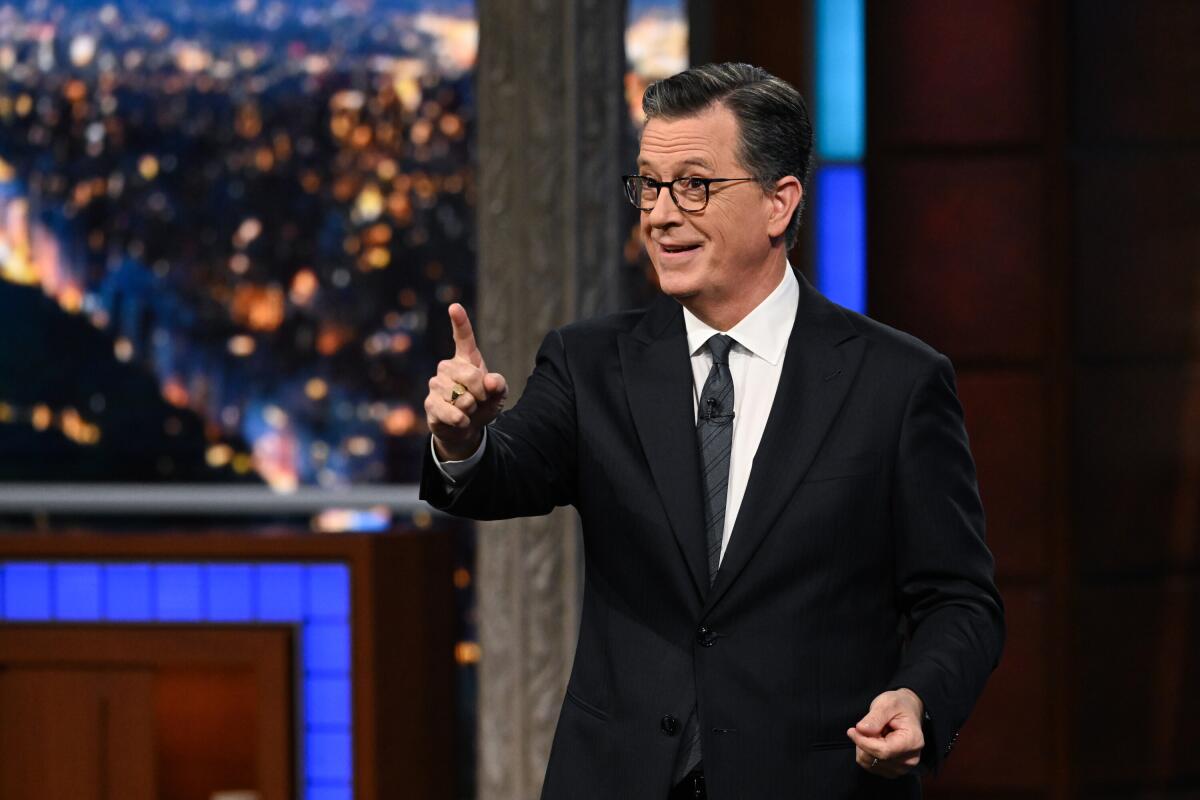
In a surprising move, Stephen Colbert, host of CBS’s late-night show, publicly criticized his own network on Tuesday for how they dealt with his interview with James Talarico, a Democratic candidate running for Senate in Texas.
Stephen Colbert claimed his network, CBS, blocked him from broadcasting an interview, possibly to avoid upsetting the Trump administration. CBS has refuted this claim. Instead, Colbert released the interview with the Texas state legislator on YouTube, a platform not subject to the same regulations as traditional television.

Hollywood Inc.
A little-used FCC rule could make a comeback if commission Chair Brendan Carr has his way.
As a huge fan of late-night comedy, the whole situation with CBS and the host really showed how much tension was building up behind the scenes. But it was more than just an internal issue; it felt like another battle in the ongoing war between the Trump administration and a lot of prominent figures in media and entertainment – folks like Seth Meyers and Jimmy Kimmel, who haven’t been shy about criticizing the president’s policies. It was just the latest example of that conflict playing out publicly.
Federal Communications Commission (FCC) Chairman Brendan Carr is pushing to enforce an old rule – the ‘equal time’ rule – which requires TV stations to give equal airtime to opposing political candidates. The goal, according to former President Trump, is to pressure traditional media companies he feels are biased against him.
Carr argues this action is a necessary fix to address what he and former President Trump see as a left-leaning slant in news reporting on major TV networks. He’s even suggested that stations could lose their licenses if they don’t comply.
Last autumn, he cautioned ABC that they risked losing their broadcasting licenses because Jimmy Kimmel made comments on his show about the death of conservative activist Charlie Kirk, which angered many on the right. As a result, two large television station groups stopped airing the show, and the network temporarily suspended Kimmel’s program for one week.
However, legal experts warn that these actions, including the recent arrest of former CNN journalist Don Lemon on civil rights charges, could infringe on the right to free speech as protected by the Constitution and are likely to be contested in court.
Media consultant Michael Harrison recently told The Times they’re concerned about the government deciding what qualifies as political speech or what’s considered fair, leaving those definitions open to government control.
However, some experts doubt that the FCC chair will actually follow through with stricter enforcement of the equal time rule.
Communications lawyer Andrew Jay Schwartzman argues that FCC Commissioner Nathan Carr is using his position to pressure broadcasters who seem afraid to stand up to him.
According to Schwartzman, the current concerns are mostly just talk. Broadcasters really want quick, easy changes to regulations from the FCC, and Paramount, specifically, is focused on getting the green light for a potential deal with Warner Bros. Discovery.
CBS canceled Stephen Colbert’s show in May, citing financial reasons. This decision came just two months before its parent company, Paramount Global, finalized its merger with Skydance Media – a deal that needed approval from the Trump administration. At the same time, Paramount has also been trying to acquire Warner Bros. Discovery, despite resistance.
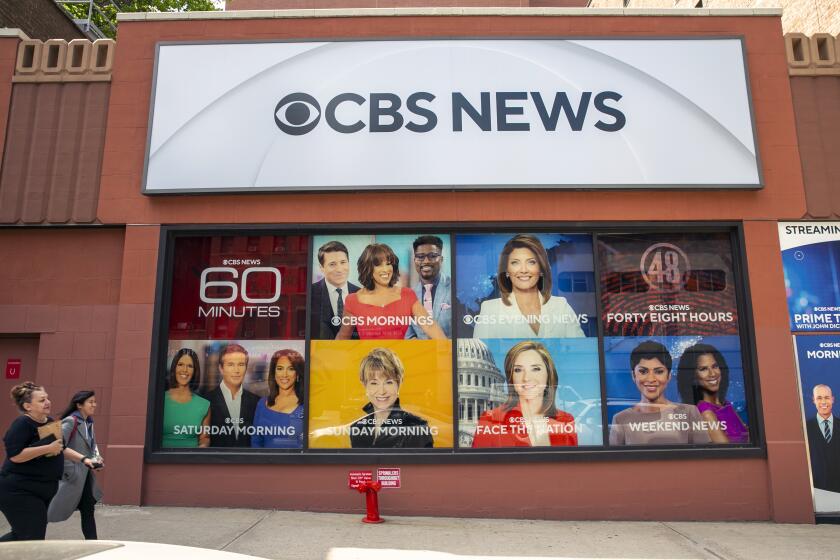
Paramount faced criticism for agreeing to pay $16 million to resolve a legal dispute brought by Donald Trump against “60 Minutes.” The case stemmed from how an interview with Kamala Harris, then Vice President and his 2024 opponent, was edited. Legal experts generally considered the lawsuit to be without merit.
Hollywood Inc.
Many at CBS News were upset about a $16 million settlement, feeling it gave in to demands from Donald Trump. However, they also recognized the situation could have ended with an even less favorable result.
Jeffrey McCall, who teaches communications at DePauw University, explained that he can see why CBS wanted to avoid attention from the Federal Communications Commission.
According to McCall, CBS might have other issues pending with the FCC, so it’s understandable why they would ask Stephen Colbert to tone down his commentary.

California
Lemon was arrested in Los Angeles on Friday morning while reporting on the Grammy Awards. The arrest stems from a protest against ICE that he participated in last week in Minnesota.
However, McCall believes the FCC shouldn’t change the current rule that allows daytime and late-night talk shows to avoid having to give equal airtime to political candidates.
“They have a lot to do otherwise and I’m just not sure this is worth their trouble,” he said.
The rules requiring equal airtime for political candidates were created when people had few choices about where to get their news. Today, with the rise of streaming, broadcast TV isn’t as powerful. For example, an interview with Talarico gained 8 million views on YouTube – more than three times the usual audience for Colbert’s “Late Show.”
Schwartzman pointed out that disputes about equal time for candidates are usually settled fast, because the rule only applies while a campaign is happening.
I understand that if Mr. Talarico’s interview was shown on TV, his rivals would have had the right to respond before the Texas primary on March 3rd. It’s interesting to note, though, that CBS wouldn’t have been obligated to give airtime to the Republican candidates.
Hollywood Inc.
A little-used FCC rule could make a comeback if commission Chair Brendan Carr has his way.
CBS could have easily met the request by offering airtime on its local stations in Texas. The other candidates weren’t required to be on Stephen Colbert’s program.
“The remedy is you have to give them airtime,” Schwartzman said. “That’s all.”
CBS advised Stephen Colbert to avoid mentioning Robert F. Kennedy Jr.’s running mate, Nicole Shanahan, because the Federal Communications Commission (FCC) is already looking into ABC regarding Shanahan’s appearance on “The View.” The FCC started an investigation after her February 2nd interview on the talk show.
Representatives from CBS and ABC declined comment.
During an appearance on Fox News’s “The Ingraham Angle” on Wednesday, Attorney General Chris Carr dismissed claims from Democrats that he was attempting to suppress their candidates with the new rule.
“What we’re doing now is simply applying the law on the books,” Carr said.
When Laura Ingraham pointed out that broadcasting the Talarico interview would have given free publicity to Representative Jasmine Crockett – a prominent Trump critic and Talarico’s opponent – Carr agreed, saying, “That’s true, actually.”
Schwartzman pointed out that if the FCC were to fine a network for breaking the rule, it would probably be taken to court, leading to a lengthy legal battle. Furthermore, simply violating the policy wouldn’t be grounds for revoking a station’s license.
According to Schwartzman, one or two instances of breaking FCC rules aren’t significant. You need to show a repeated pattern of violations for it to matter.
Okay, so as a big fan of having lots of choices when it comes to local news, I’ve been following this media merger stuff pretty closely. Apparently, Gordon Carr has come out in favor of Nexstar buying Tegna – it’s a huge deal worth over six billion dollars! The tricky part is, current rules limit how much of the country any one company can cover with its TV stations – right now, it’s capped at 39%. This merger would need the government to raise that cap, which is a big ask, and honestly, a little worrying if it means fewer voices in local broadcasting.
It’s no surprise that Donald Trump supports the merger, as he’s friendly with Nexstar executive Sean Compton, who manages their NewsNation cable channel.
On February 7th, Trump posted on Truth Social that he wants more competition for what he calls the “Fake News National TV Networks.” He believes that deals like the one between Nexstar and Tegna would help achieve this by increasing competition and raising the quality of news coverage.
It’s unclear how Nexstar plans to compete with the major broadcast networks. The company currently relies heavily on its partnerships with ABC, CBS, NBC, and Fox, especially because their NFL contracts deliver the most popular shows. These network agreements also give Nexstar a strong position when negotiating with cable and satellite companies to ensure its stations are included in their channel lineups.
Read More
- ‘Project Hail Mary’s Unexpected Post-Credits Scene Is Worth Sticking Around
- Beyond Accuracy: Gauging Trust in Human-AI Teams
- Gold Rate Forecast
- Clash Royale Balance Changes March 2026 — All Buffs, Nerfs & Reworks
- The most surprising Hannah Montana cameos: From John Cena to Dwayne Johnson and even a Coronation Street soap star as show celebrates its 20th anniversary
- Genshin Impact Version 6.5 Leaks: List of Upcoming banners, Maps, Endgame updates and more
- eFootball 2026 is bringing the v5.3.1 update: What to expect and what’s coming
- Total Football free codes and how to redeem them (March 2026)
- Brawl Stars Brawl Cup Pro Pass arrives with the Dragon Crow skin and Chroma, unique cosmetics, and more rewards
- We talked to ‘Bachelorette’ Taylor Frankie Paul. Then reality hit pause on her TV career
2026-02-20 21:02