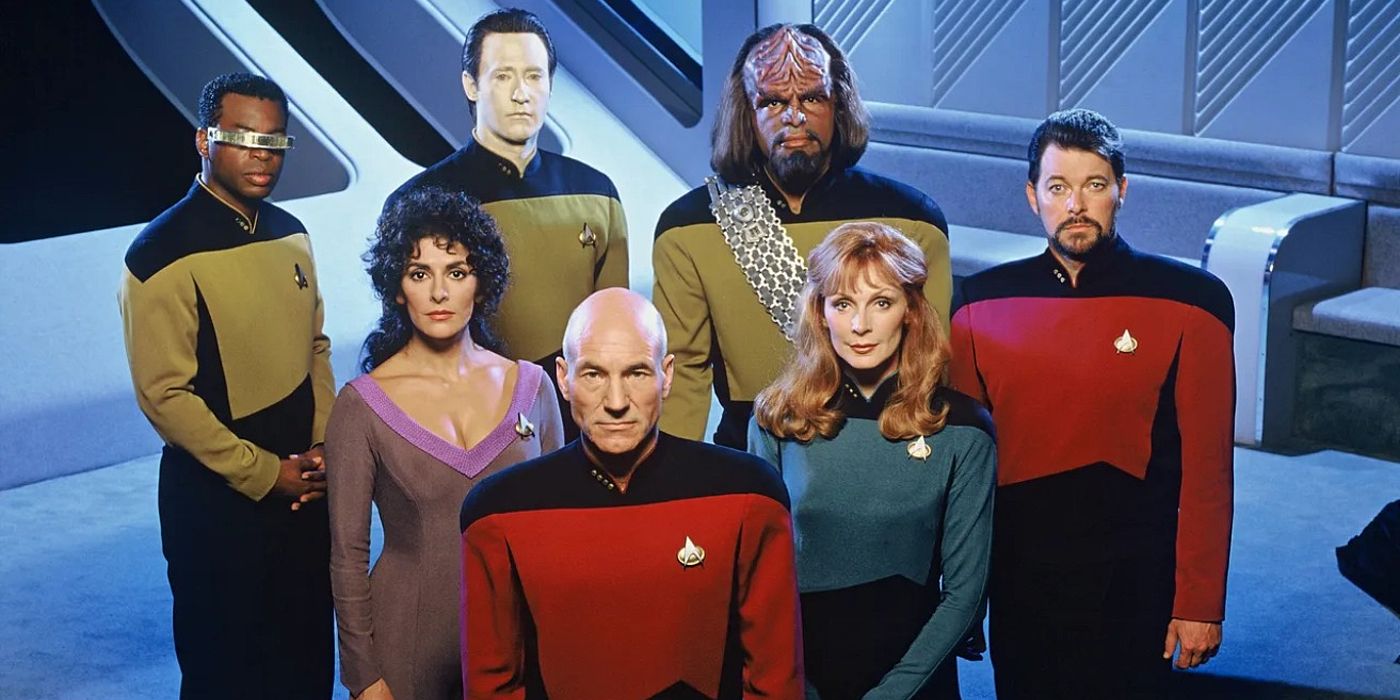
The fifth season episode “Disaster,” which first aired in 1991, is a key moment in Deanna Troi‘s story arc. Before this episode, Troi hadn’t been given much to do, but “Disaster” puts her in charge during a ship-wide crisis. Looking back at the series, it’s clear this episode was a turning point for her character.
When problems arise on the ship, Troi unexpectedly steps up to take charge. While she’s always been a key character, she usually offered advice or support from the sidelines. But in the episode “Disaster,” Troi proves she’s a capable leader, using skills she’s developed throughout the series. This episode shows a new side of her, moving beyond her typical role as a counselor.
Star Trek: TNG Mastered the Character Spotlight Episodes in Later Seasons
By season 5, the show’s producers realized the supporting characters needed more development to avoid becoming stale. They intentionally moved away from stories focused on single, new alien threats each week and started creating episodes that explored the characters’ inner lives. This allowed often-underappreciated cast members to shine and become more fully realized.
Ronald D. Moore became the head writer for Star Trek: The Next Generation, and his arrival marked a major improvement in the show’s writing quality. Before Moore, the writing team was known for being unstable and having frequent turnover. He brought consistency and shifted the focus to developing each character’s individual journey. By the time the episode “Disaster” aired, this new approach had been successfully implemented for several seasons.
Pillar’s approach quickly had an impact. Even before the episode “Disaster” highlighted his techniques, his influence was visible throughout seasons 3 to 5. For example, “The Bonding,” early in season 3, deeply explored grief and loss as he helped a boy cope with his mother’s death. This episode offered a unique look into how Klingons understand death and mourning.
Fans were captivated by “The Offspring” episode that same season. It featured Data creating a daughter, which prompted viewers to consider his motivations as an android. The episode moved the story away from Data’s skills and towards his longing to be more like a human. This built upon the themes introduced in the previous episode, “The Measure of a Man,” which confirmed that Data deserved to be recognized as an individual with rights.
Before the episode “Disaster,” many of Troi’s featured storylines revolved around romance or her empathic abilities. In Season 4’s “The Loss,” she primarily used her skills as a trained psychologist, even temporarily losing her psychic abilities and questioning who she was without them. However, “Disaster” was different – it completely removed her usual role and abilities from the situation.
Even though Commander Riker was a key figure in The Next Generation, his character began to feel predictable. He needed a refresh, and that came in the season 3 finale when a new character, Commander Shelby, forced him to confront his own strengths and weaknesses. The episode essentially showed Riker proving he was capable of commanding the Enterprise, even without Captain Picard.
What really made Star Trek: The Next Generation so successful, and kept viewers engaged until the very end, was its focus on characters. Putting characters we know and care about in challenging situations is a great way to create emotional impact. This approach makes the stories more interesting and encourages viewers to think about the characters – and themselves – in new ways.
As a viewer, “Disaster” really stood out to me as a turning point for Deanna Troi. It proved how brilliant Ronald D. Moore’s approach could be when focused on a character who deserved a spotlight. Honestly, this episode fundamentally changed Troi’s arc for the rest of Star Trek: The Next Generation. For the first time, she was given a chance to truly shine, and she absolutely seized it – not just because it was offered, but because the situation demanded it. She stepped up, and it was fantastic to watch.
Dianna Troi Steps Up to the Plate in “Disaster”
Okay, so in this “Star Trek: The Next Generation” episode called “Disaster,” things go seriously wrong when the Enterprise hits this weird quantum thingy. It basically knocks out all communication and power, and the worst part is, it separates all the senior officers. Suddenly, Deanna Troi is left in charge on the bridge! It’s a really intense episode because it puts her to the test – can she handle leading the ship when everything’s falling apart and she’s the only one who can make the big decisions? It’s a total pressure cooker situation!
When faced with critical decisions impacting the entire Enterprise crew, Counselor Troi readily acknowledges her limitations. She turns to Chief O’Brien and Ensign Ro for expertise on the technical details, admitting she doesn’t understand what a warp core breach is. Surprisingly, this honesty doesn’t diminish her position of authority; instead, it strengthens it.
Deanna Troi is comfortable admitting when she doesn’t know something. During the crisis, she focuses on gathering information and listening to the advice of experts. While she’s in charge due to her position, it’s not because she understands the technical details of the Enterprise. Initially, Lieutenant Monroe was the highest-ranking officer on the damaged ship, but unfortunately, she didn’t survive the impact.
After the collision, the bridge was completely sealed off from the rest of the ship – communications were cut, and physical barriers were put in place. To fix the damage, we need to get crucial information to the Engineering bay, but standard communication methods aren’t working.
Throughout the episode, Ro becomes increasingly forceful with her suggestions to Troi. The main problem is a failing warp core that threatens to destroy the ship. Ro argues that separating the ship’s saucer section is the only solution, but this would leave everyone on board that section to certain death. Troi ultimately disagrees and doesn’t take Ro’s advice.
With most of the power out, there’s no way to know if anyone survived in that part of the ship. Ro believes Troi is putting everyone else at risk by hesitating, prioritizing a small group over the many. Despite Ro’s warning that everyone could die if they don’t act, Troi decides to follow her gut feeling and overrules Ro’s plan.
This development diminishes Troi’s ability to sense others’ emotions. Despite lacking proof that anyone is still alive, she believes restoring power to engineering might allow someone to detect the hull breach. Earlier in the episode, her empathic skills confirmed survivors were present, but she currently has no way of locating them on the ship.
Death was a recurring theme on Star Trek: The Next Generation, so it’s not surprising that those in engineering may not have survived. The episode immediately highlights the danger with the death of Lt. Monroe. Ultimately, Troi’s choice to keep the ship together proves correct, allowing Riker and Data to get the information they need to fix the issue.
The “Disaster” Episode of Star Trek: TNG is one of the Best Character-Centric Stories
As a huge Star Trek fan, I’ve always found the episode “Disaster” to be incredibly important for Deanna Troi’s character arc. It really stuck with me how much that experience shaped her! Later on, she actually talks about what happened in “Disaster” as the reason she decided to take the Bridge Officer exam. She basically admitted she felt out of her depth during the crisis, realizing she needed a stronger grasp of the ship’s technical side to be truly effective, and that pushed her to aim for a higher rank.
Deanna Troi’s experiences in the episode “Disaster” ultimately prepared her to command the Enterprise-D in the film Star Trek Generations. Both viewers and critics now recognize this season 5 episode as a turning point for her character, significantly shaping her development and changing how she was perceived by the rest of the crew.
Though often remembered for Troi’s central storyline, the episode “Disaster” really puts the entire crew through intense challenges, forcing each of them to confront their biggest flaws. Picard, Riker, Geordi, Crusher, and Worf all manage to overcome significant personal weaknesses, making “Disaster” a perfect illustration of Michael Piller’s emphasis on character development.
Read More
- Clash Royale Best Boss Bandit Champion decks
- Vampire’s Fall 2 redeem codes and how to use them (June 2025)
- Mobile Legends January 2026 Leaks: Upcoming new skins, heroes, events and more
- World Eternal Online promo codes and how to use them (September 2025)
- Clash Royale Season 79 “Fire and Ice” January 2026 Update and Balance Changes
- Best Arena 9 Decks in Clast Royale
- Best Hero Card Decks in Clash Royale
- Clash Royale Furnace Evolution best decks guide
- FC Mobile 26: EA opens voting for its official Team of the Year (TOTY)
- Clash Royale Witch Evolution best decks guide
2025-12-21 04:38