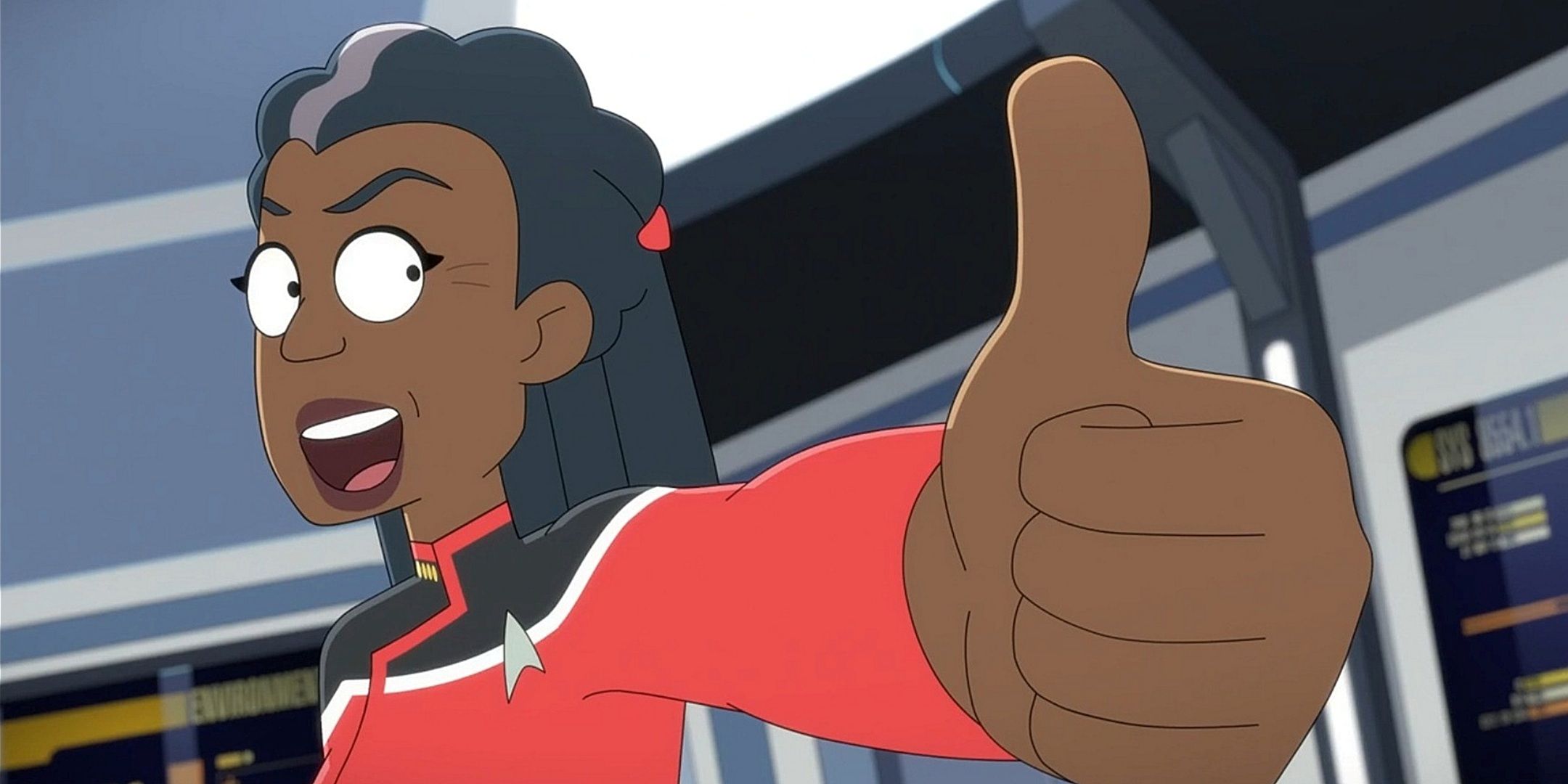
From the very first episode, Lower Decks took Star Trek in a completely new direction. While the franchise had sometimes poked fun at itself, building an entire series around comedy was a big risk, especially by using animation. The show didn’t just get off to a good start; it quickly became much more than just a parody.
Lower Decks was a standout addition to the Star Trek franchise, successfully combining humor, genuine danger, and compelling character growth. Though it ran for five seasons, many fans feel the show ended too soon. The fifth season was particularly strong, delivering some of the funniest and most creative episodes, and its cliffhanger ending left viewers wanting more. Ultimately, Lower Decks brought a fresh and innovative perspective to the world of Star Trek.
Star Trek Always Approached Humor Carefully
Gene Roddenberry aimed to change what science fiction could be with his show. Before Star Trek: The Original Series, space adventures were generally seen as entertainment for children, filled with basic storylines and unrealistic special effects. Roddenberry believed sci-fi could be much more thoughtful, and he took inspiration from classic films like Forbidden Planet and The Time Machine.
The first series intentionally copied its winning formula of blending deep concepts with exciting adventures. Although it wasn’t always perfect, it was successful enough to create the basis for a hugely popular franchise.
As a critic, I’ve always felt Star Trek: The Original Series walked a tightrope. The creators clearly understood that treating the show as a complete joke would’ve lost the audience. While there was definitely humor woven throughout, it never felt like a silly farce. Even episodes designed to be funny, like “The Trouble with Tribbles,” were more playful than outright parodies. Honestly, when the show did stumble into unintentional comedy, it usually wasn’t a good thing. They aimed for a certain dignity, and thankfully, mostly achieved it.
As a lifelong Star Trek fan, there are episodes that are just… memorable, and Season 3’s opener, “Spock’s Brain,” is definitely one of them. I mean, the image of Spock talking McCoy through putting his own brain back in? It’s so ridiculous, but you also kind of have to respect the show for even trying something that outlandish. We all secretly loved it, even if we pretended to be horrified!
Fans also found humor in some of the show’s less impressive elements, like the special effects or William Shatner’s tendency to dramatically overact when the writing wasn’t great. Back then, Star Trek had to persevere, mostly relying on Captain Kirk’s playful personality and a few witty lines to keep things light.
Star Trek IV – The Voyage Home Embraced the Laughs
The Star Trek series truly leaned into humor for the first time with Star Trek IV: The Voyage Home, and it was a bold move at the time. While Star Trek II: The Wrath of Khan and Star Trek III: The Search for Spock were successful, they were both quite serious and dealt with heavy topics like death and grief.
As a huge fan, I was genuinely shocked when they killed off Spock in the third movie, along with Kirk’s son, David, at the hands of the Klingons. It was a bold move! Then, to completely switch gears and try a comedy felt like a massive risk – I wasn’t sure if the series could even do that, honestly. It was a big gamble whether it would work.
Looking back, it was a really smart decision. After the intense and sad events of The Wrath of Khan and The Search for Spock, The Voyage Home felt like a breath of fresh air. With Spock brought back to life, the crew returned to Earth to deal with the consequences of stealing the Enterprise. However, they quickly found themselves traveling back in time on a mission to find humpback whales. While trying to accomplish this, they awkwardly navigate 1980s San Francisco, and don’t quite manage to fit in.
Despite facing challenges, the movie was a huge success, and it powerfully concluded the recent three-film arc of Star Trek movies. The actors, familiar with their characters, brought a lively and humorous energy to their performances.
The film occasionally leaned into over-the-top comedy, including a frantic chase through a hospital reminiscent of classic silent film stars like Charlie Chaplin. However, it never lost its core Star Trek identity. Now considered a standout in the franchise, it demonstrates that Star Trek doesn’t always need to be so serious. The animated series Lower Decks subtly pays tribute to it with the characters of Matt and Kimolu, two beluga whale officers on the U.S.S. Cerritos.
Later Star Trek series sometimes included humor, but not consistently. Star Trek: The Next Generation was particularly good at comedy, with episodes like Season 6’s “A Fistful of Datas” showcasing the actors’ comedic talents. Star Trek: Deep Space Nine balanced its intense storylines by using characters like Quark for comic relief, and didn’t shy away from making Captain Kirk the target of jokes alongside his heroic deeds.
Even so, the series skillfully avoided becoming a simple parody. It stayed true to its main goals and made sure the comedy didn’t undermine the serious, dramatic moments.
Lower Decks Showed That Comedy Could Work in Star Trek
When Lower Decks debuted, the Star Trek universe looked quite different. Star Trek: Discovery had already proven successful in 2017 as the franchise moved to streaming, and its captain had become a popular figure by 2020. Because Star Trek was already established as a more dramatic series, Lower Decks had the freedom to take risks and be truly unique.
Honestly, a show like this had to be different to stand out, and I think they nailed it with the creative team. Mike McMahan was a brilliant pick as showrunner – his work on Rick and Morty proved he knows how to tell a great story, and it’s clear he’s a genuine Star Trek fan, which really shows!
Inspired by the animated series of the same name, Lower Decks centers on the support crew of a Starfleet ship – the people who handle the essential but often overlooked jobs that keep the Federation functioning. The show hit its stride immediately, beginning with a scene where Ensign Beckett Mariner accidentally slices off a piece of Brad Boimler’s leg with a Klingon weapon. From that moment on, no topic was off-limits, and Lower Decks fearlessly satirized elements that the franchise had previously treated with caution.
lower decks
What set McMahon apart was his approach: he imagined the show through the eyes of a fan, not someone involved in making it. The characters acted like real ‘Trekkies’ suddenly living in the future, and the show didn’t shy away from the franchise’s sillier or more embarrassing moments – instead, it highlighted them.
The original animated series was a unique part of the Star Trek universe. Interestingly, Gene Roddenberry himself had delayed its release for years, feeling it didn’t quite fit the franchise’s tone. Lower Decks embraced this history, intentionally revisiting and playfully showcasing many of the sillier ideas from that earlier show.
Lower Decks Became Much More Than a Comedy
Despite its humor, Lower Decks remained true to the established Star Trek universe. Even in silly situations, the characters and dangers felt authentic. The show excelled at this, developing surprisingly complex and well-rounded characters that were just as compelling as those in more dramatic series.
The characters’ emotional journeys felt genuine and their development over the course of the show was remarkable. Plus, Lower Decks skillfully incorporated established details from the Star Trek universe, honoring its history.
Races like the Orions and Ferengi were suddenly given a lot of background information, often within a single episode, which helped build out the larger Star Trek universe. Lower Decks openly embraced its connection to established Star Trek stories, and was further enhanced by the return of original actors to voice their characters.
The ultimate confirmation came when Paul F. Tompkins and Lauren Lapkus appeared on Star Trek: Strange New Worlds, playing live-action versions of their characters and even acting alongside Spock and Uhura. By that point, the show had become a fully established part of the Star Trek universe, despite initially being known for playfully poking fun at it.
The season ends with a hopeful outlook and plenty of stories left to tell. Carol Freeman is now in charge at Starbase 80, near a gateway to other dimensions, while Ransom steps into the captain’s chair on the Cerritos. It’s a smooth and genuine transition, and Ransom has consistently been the perfect voice of reason throughout the series.
The show still has plenty of story left, likely enough for at least one or two more seasons, and continues to strike the same successful balance it’s known for. Whether it continues or not, it’s set up the Star Trek universe for future success.
2026-05-17 06:39