Summary
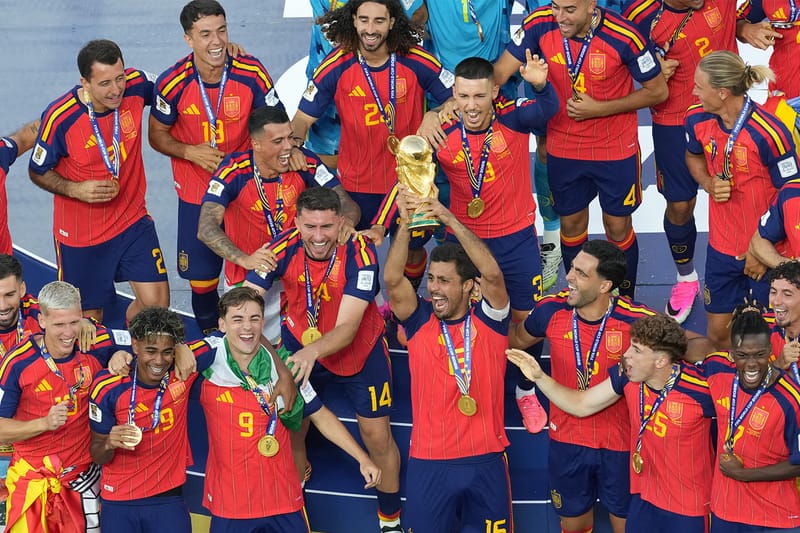
Spain dominated possession and controlled much of the field throughout their 120-minute match against Argentina in the 2026 World Cup final at MetLife Stadium, limiting Argentina to only two shots. Ferran Torres scored the winning goal early in extra time, finishing a play started by Pedro Porro’s cross and Nico Williams’ header. Late in the game, Enzo Fernández received his second yellow card and was sent off for a foul on Pau Cubarsí, forcing Argentina to finish extra time with only ten players.
Spain defeated Argentina 1-0 in extra time to win the 2026 FIFA World Cup at MetLife Stadium on Sunday. While the score was close, the game itself wasn’t – Spain completely dominated. They controlled the play for the entire 120 minutes, and Argentina didn’t even manage a shot until the 115th minute – a new record for the World Cup.
From the start, it was clear how Spain intended to play. They controlled the pace and space by passing the ball around patiently and moving it wide, forcing Argentina to defend deeply. Argentina couldn’t find a way to break through this and were stuck playing defensively, just as many expected. Spain kept possession and looked for openings, while Argentina waited for chances to get the ball to Lionel Messi. This tactic had worked for Argentina throughout the tournament, with Messi scoring late goals to win against Egypt and England. However, against Spain, they couldn’t create those opportunities.
The difference wasn’t just about which team had the ball; it was about how quickly possession turned into scoring opportunities. Argentina’s goalkeeper, Emiliano Martínez, made save after save to keep the score tied throughout the game. He even made a fantastic stop early in extra time from Nico Williams. Spain continued to create chances with quick passing and clever play through the middle, but Argentina’s attack stalled completely. Remarkably, the defending champions didn’t manage a single shot on goal for the first 115 minutes – an incredibly rare occurrence at this level of competition.
Beyond Spain’s clever tactics, the game was just really physical. It was a tough battle all over the pitch, and honestly, the referee seemed pretty lenient with the cards, letting a lot slide. Argentina definitely tried to disrupt Spain’s flow by being very physical and committing fouls – a lot of little things to break up their play. But Enzo Fernández went too far right at the end of regular time, fouling Pau Cubarsí and getting his second yellow. That meant he was sent off, and we had to play the entire 30 minutes of extra time with only ten men. It was a tough blow!
Spain, having more players on the field, continued to push forward aggressively. The winning play came early in the second half of extra time when Pedro Porro crossed the ball from the right. Nico Williams headed it towards the goal, and Ferran Torres, who had come on as a substitute earlier, was able to score from just a few yards out. It was Torres’ first goal of the tournament, and it came as a result of Spain’s consistent attacking play rather than a single outstanding effort – a testament to the team’s strategy working effectively.
The final World Cup match marked a quiet end to what Lionel Messi declared would be his last tournament. While he scored eight goals and provided four assists throughout the competition, the final itself didn’t allow for any standout plays – Spain’s defense was simply too strong. This was Argentina’s third time reaching the final in the past four World Cups; they previously lost to Germany in 2014 but won against France in 2022. However, this year they faced a Spanish team that played with more energy and skill than any other opponent they’d encountered, and couldn’t pull off a comeback.
Spain won the tournament after allowing only one goal in eight games – a quarterfinal goal by Belgium. Coach Luis de la Fuente made some unexpected choices in the lineup, like keeping Pedri on the bench for the final, but those decisions proved to be correct based on the team’s success. Having already won the European Championship, Spain’s World Cup victory completes a remarkable double, solidifying this team’s place as one of the best tournament teams in football history.
2026-07-20 09:26