
Before Stuart Scott popularized it, “Boo-yah” was simply a way to show excitement. He turned it into a signature phrase on ESPN, and it quickly became a common expression in the world of sports.
In his ESPN 30 for 30 documentary, “Boo-Yah: A Portrait of Stuart Scott,” premiering Wednesday, director Andre Gaines examines how Scott changed the world of sports media.
He’s often simplified to just a few things – like his famous sayings or his on-air personality. But that really diminishes what he accomplished. Broadcasting was fundamentally changed by Stuart; it truly looked different before and after he came along.
The Times interviewed Gaines about the challenges and rewards of creating the film and how he portrayed Scott’s dedication and toughness as a journalist. This interview has been shortened and clarified for readability.
Obituaries
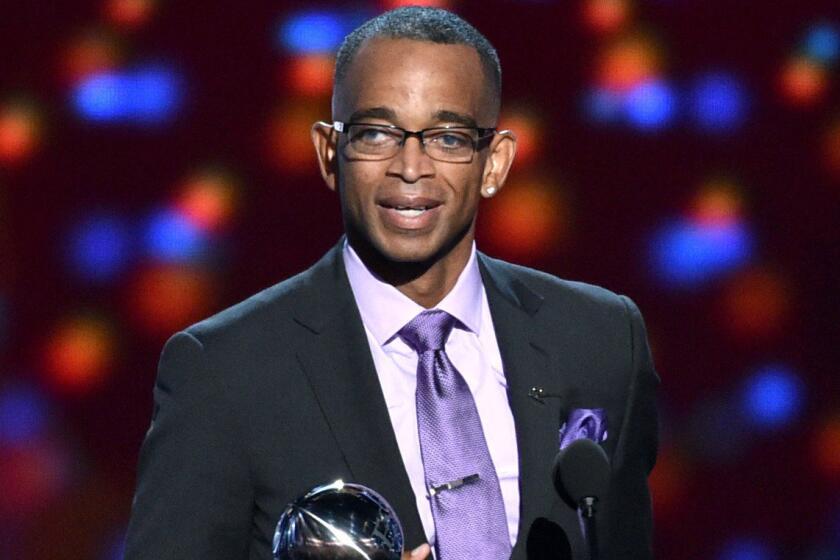
Stuart Scott, the popular ESPN sportscaster, was often imitated, playfully mocked, and sometimes criticized. But he’ll always be remembered for his energetic and famous catchphrase, “Boo-yah!”
How did you decide to open the film with a Stuart Scott quote about his dreams?
The film centers around the idea that Stuart Smalley genuinely believed people create their own fate. This belief drove him both when he first tried out for the Jets and throughout his life as a public figure. We discovered strong evidence of this through the personal video diaries he kept, which are a key part of the film. I decided to begin the movie with a quote from him that perfectly captured this core idea.
Why did you decide to use Scott’s voice throughout the documentary?
I always aim to tell stories through the eyes of the person it’s about. I don’t want anyone else controlling the narrative or speaking for them. I want the main character to share their own experiences and guide us through their life. With Stuart, that was tricky because he spent so much time as the interviewer, not the interviewee. Especially early in his life, there wasn’t much material available where he talked about himself. But through a lot of research, we found little pieces – footage he’d shot, interviews he’d done, or interviews where he was the one being interviewed. This allowed us to tell his story in his own voice. I really wanted him to be the one leading us through the film, acting as a guide on his journey and taking ownership of his story.
A recent report from The Institute for Diversity and Ethics in Sports shows that Black sports reporters represent less than 34% of the field. What impact do you hope this film will have on creating more diversity in sports journalism?
Stuart played a huge role in shaping the current landscape, and he was always aware of those who came before him. He understood what made him unique and embraced that authenticity, even though it meant taking on a lot of responsibility within a somewhat artificial environment. I’m optimistic that progress will continue, and that striving for true equality is the best way to honor his memory. While it’s wonderful to celebrate his life and learn about his beginnings, we need to remember there’s still much work ahead.
It’s common for athletes to try their hand at rapping, and for rappers to dream of athletic careers. Scott uniquely blended these two worlds by using the language and style of both in his reporting. How has Scott’s approach changed the way these groups collaborate?
Stuart was the key to bridging two different worlds at ESPN. He was hired because of his unique ability to connect with people, but that same quality later led to attempts to stifle him and even discrimination. He acted as a guiding force, bringing together diverse perspectives in a way that created a cohesive and harmonious on-screen presence. Many of today’s popular television personalities owe their success to him. While he’s celebrated for his charisma and for injecting personality into a traditionally formal media landscape, he doesn’t receive enough recognition for being a truly excellent journalist.
You collected some great stories from the athletes and people he worked with. Is there one story that, while it didn’t make it into the final piece, you still feel deserves to be shared?
There were some amazing stories about Stuart Scott’s competitive spirit that didn’t quite make the final cut. One involved a fiercely competitive pickup basketball game with Dan Patrick. Another was about an ESPN flag football league where Stuart showed up in full football gear – pads, goggles, the works – treating it like a real game. These moments really highlighted his relentless drive and what it meant to fight cancer. He battled the disease physically, focusing on diet, exercise, and a tough workout routine. While we didn’t have time to include all the details, the core of those stories did make it into the film.
You really captured his essence in the film. What does he mean to you as a Black filmmaker?
Stuart was a role model for me from the start. I studied journalism at Northwestern, and he was my fraternity brother in Alpha Phi Alpha, so I already felt a connection to him. When ESPN asked me to work on this project, I immediately said yes. I never had the chance to meet him personally, but I always admired him. It was a real honor to create a lasting tribute to such a beloved figure – something people can watch and enjoy for years to come, learn about his life, and understand that he was a real person with struggles and successes, just like everyone else. He just lived his life in the public eye.
There is an original song by Common in the end-credits. How did that song come about?
Common and I have been friends and collaborators for years. We first worked together on a TV show, and he’s a genuinely kind person and a remarkably talented artist who’s impacted a lot of people. I asked him to be part of the film because I knew he had a connection to Stuart. He immediately agreed to contribute a song, which was exactly what we needed for the film’s ending. It’s a beautiful piece that’s both moving and hopeful – a unique quality he brings to his music, setting him apart from many other artists.
Sports
What do you hope people take away after watching this documentary?
I truly hope the film inspires people. I didn’t want it to focus solely on Stuart’s final battle with cancer, but rather on his lifelong determination. Before his illness, he faced and overcame many obstacles. So, when cancer arrived, neither he nor his family doubted he would fight through it, just as he always had. He showed us all the true meaning of courage and perseverance.
What will be Scott’s legacy in sports journalism?
Gaines had a significant impact on media and broadcasting, and we should remember him for that. Today, it’s common to see news personalities express themselves on screen, but he was a pioneer who brought that style to the field. Before Gaines, news broadcasts were much more formal and lacked that personal touch.
Read More
- Clash Royale Best Boss Bandit Champion decks
- Mobile Legends January 2026 Leaks: Upcoming new skins, heroes, events and more
- Clash Royale Furnace Evolution best decks guide
- Vampire’s Fall 2 redeem codes and how to use them (June 2025)
- Best Hero Card Decks in Clash Royale
- Best Arena 9 Decks in Clast Royale
- M7 Pass Event Guide: All you need to know
- Brawl Stars Steampunk Brawl Pass brings Steampunk Stu and Steampunk Gale skins, along with chromas
- Clash of Clans January 2026: List of Weekly Events, Challenges, and Rewards
- Brawl Stars December 2025 Brawl Talk: Two New Brawlers, Buffie, Vault, New Skins, Game Modes, and more
2025-12-10 19:02