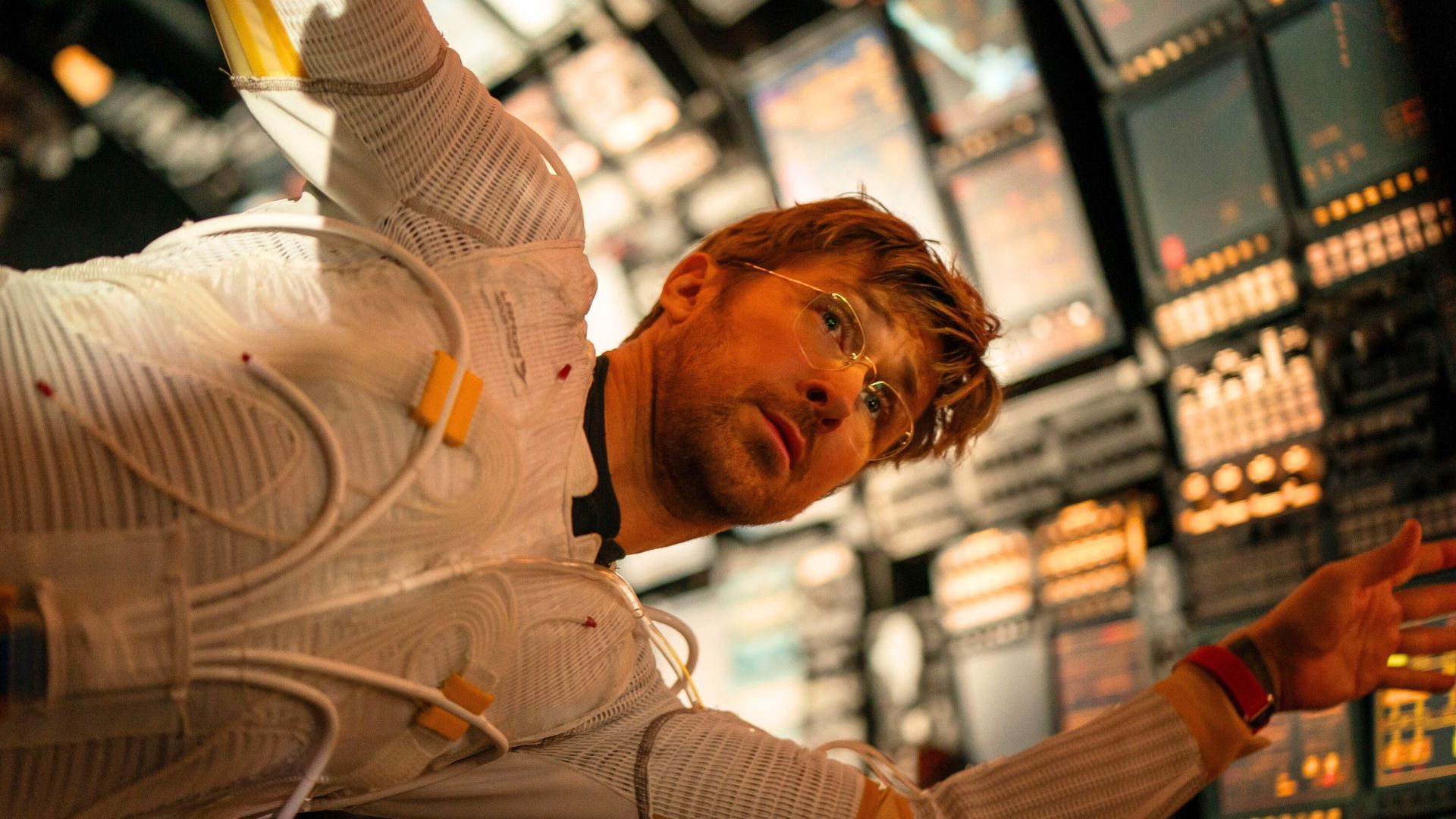
The new sci-fi movie features Ryan Gosling as a scientist sent into space to save Earth, where he encounters a quirky alien. It’s based on the novel Project Hail Mary by Andy Weir, the author of The Martian. Recently, some fans have been puzzled by reports that the film was shot without using green or blue screens.
The story of Project Hail Mary begins with Ryland Grace waking up on a spaceship with no memory of who he is or how he got there. He soon learns that the Sun is fading, and he’s on a desperate, one-way mission to save Earth. The movie takes an unexpected turn when he meets an alien, making it reminiscent of E.T. – it’s as much a heartwarming story about the friendship between Ryland and the alien, named Rocky, as it is a thrilling space adventure. Interestingly, claims that the film was shot without using green or blue screens sparked debate among fans familiar with visual effects.
Did Chris Miller Claim Project Hail Mary Used ‘No Green Screen’ in the Movie?
The movie Project Hail Mary, directed by Phil Lord and Chris Miller, has sparked some questions about its production. Chris Miller clarified that the film was shot without using any green or blue screens – a surprising fact, as these are typically used in filmmaking to add digital effects and backgrounds to live-action footage.
The spaceship was constructed entirely as an interior set, and a large exterior section was also built. Director Rocky was consistently present during the process, which added to the overall complexity. The directors also explained they carefully crafted the film’s visual style, using different types of film for Earth scenes versus those in space to create a noticeable difference. However, fans remained puzzled by Miller’s comments, especially given the trailer’s depiction of spacewalks and other fantastical elements.
Many viewers thought the co-director said the film had no digital effects or CGI. When people picture movies with visual effects, they often think of films like Avatar or The Lord of the Rings, especially fantastical creatures that couldn’t be created in real life. However, digital effects aren’t always used to add things; they can also enhance realism or remove unwanted elements. In the case of Project Hail Mary, even the character Rocky is relatively realistic – considering he’s made of rocks!
The Truth About Project Hail Mary and Its Use of Practical Effects and Digital VFX
A key part of promoting the film is highlighting its incredible visual effects, as the directors want audiences to understand just how grand in scale it is. That’s why they decided to feature Rocky prominently in the trailer, rather than keeping him a secret. As they explained, the movie centers on a relationship, and Rocky is essentially a main character – hiding him would be like making E.T. without showing E.T.! However, their openness about showcasing these impressive visuals in the trailers is what led to criticism when one of the directors jokingly mentioned the extensive use of green screen technology.
One of the film’s directors used Twitter to explain their approach to visual effects. He explained that green screen technology is sometimes used as a shortcut when filmmakers don’t have time to build full sets or plan locations and lighting carefully, and this can look artificial if not handled well. They specifically wanted to avoid that on this film, so they built the entire interior of the spaceship. However, even with a physical set, some scenes still required digital removal of wires, puppetry, and ceiling adjustments. He acknowledged the recent discussion wasn’t unexpected. Importantly, he clarified that using green or blue screen doesn’t automatically mean practical effects and real environments weren’t also used.
While digital effects are common in filmmaking, their use in Project Hail Mary stands out. Many films, like those featuring Ewan McGregor and Hayden Christensen, use green screens, but still film some footage on physical sets, even if miniature. Project Hail Mary, however, relies on thousands of digital effects shots not to create environments, but to subtly enhance them – things like hiding cables, lighting equipment, or adding ceiling details. It’s a different approach to visual effects.
Framestore’s animators also played a key role in creating Rocky, stepping in when traditional puppetry wasn’t enough. They built the expansive outdoor scenes and all the spaceship shots entirely using digital effects. When filming Ryan Gosling, he performed in front of a black backdrop or one with changing colors, allowing for more realistic lighting on his body, as explained by director Gareth Edwards in a social media post.
Why Are Modern Audiences and Filmmakers Seemingly So Down on Digital VFX?
Many people have forgotten the 1980s film Young Sherlock Holmes, but it holds an important place in movie history. It featured the very first character created entirely with computer graphics – a stained-glass knight that threatened a priest. Since then, digital visual effects have improved incredibly quickly. Now, filmmakers can create almost anything they imagine on screen, from the stunning world of James Cameron’s Avatar to the more recent, though less popular, Quantum Realm in Ant-Man and the Wasp: Quantumania.
Some movies clearly fall short when it comes to visual effects, often due to limited resources or tight deadlines. These films can unfortunately lower expectations for movies relying heavily on VFX. Furthermore, younger audiences, accustomed to high-quality digital imagery, are quick to criticize anything that doesn’t look completely realistic, even if the effects are technically sound. They might simply label it as “bad CGI” if it doesn’t feel physically believable.
Miller was proud that his film didn’t rely heavily on digital backgrounds. He explained online that if visual effects aren’t seamless, viewers can easily become distracted and lose their sense of being in the scene. That’s why recent films, including Star Wars: The Force Awakens, have emphasized the use of real sets and effects to create a more believable experience.
The film strives for a level of realism that many viewers don’t associate with digital special effects. Even scenes filmed with physical sets and props often rely on digital editing to remove visible supports and blend everything together seamlessly. This is because practical effects are still limited by real-world constraints – things like gravity and the need for actors to play alien characters. While Project Hail Mary uses a lot of physical sets and tangible elements, no modern science fiction film could be made today without the incredible capabilities of digital VFX artists.
Project Hail Mary will debut in theaters on March 20, 2026
Found an error? Send it so it can be corrected.
Read More
- Invincible Season 4 Episode 4 Release Date, Time, Where to Watch
- Physics Proved by AI: A New Era for Automated Reasoning
- How Martin Clunes has been supported by TV power player wife Philippa Braithwaite and their anti-nepo baby daughter after escaping a ‘rotten marriage’
- CookieRun: OvenSmash coupon codes and how to use them (March 2026)
- Total Football free codes and how to redeem them (March 2026)
- American Idol vet Caleb Flynn in solitary confinement after being charged for allegedly murdering wife
- Gold Rate Forecast
- Goddess of Victory: NIKKE 2×2 LOVE Mini Game: How to Play, Rewards, and other details
- Only One Straw Hat Hasn’t Been Introduced In Netflix’s Live-Action One Piece
- Olivia Colman’s highest-rated drama hailed as “exceptional” is a must-see on TV tonight
2026-03-06 08:09