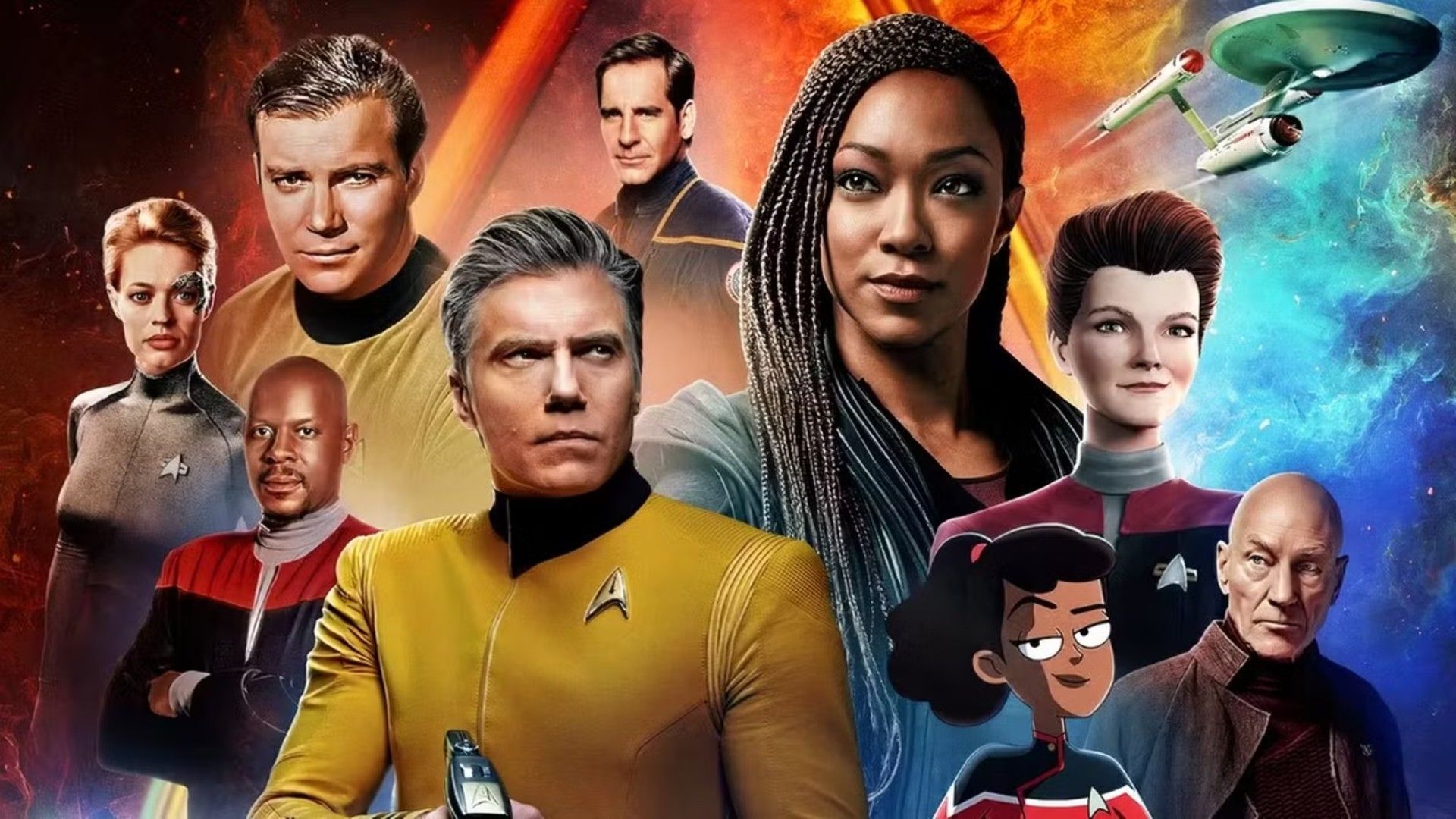
For sixty years, Star Trek has captivated audiences with its adventures in space. As one of the most enduring and celebrated science fiction franchises – spanning twelve TV series and fourteen films – it continues to thrive. While the original show and Star Trek: The Next Generation are often considered the best, Deep Space Nine has recently gained significant popularity and recognition.
Many fans consider Deep Space Nine to be the best Star Trek series because it broke from the mold of previous shows. Unlike The Original Series and The Next Generation, which featured adventures aboard starships, DS9 took place on a space station and explored complex, ongoing political and religious struggles. It aired from 1993 to 1999 and was ahead of its time in using a serialized storytelling format – a style of TV that’s now very common.
Deep Space Nine gained popularity on streaming platforms because of its complex characters and continuing storylines – finally earning the praise many fans always believed it deserved. However, unlike The Original Series and The Next Generation, which were upgraded to HD, Paramount hasn’t remastered DS9, which limits its potential to attract even more viewers.
Paramount Remastered TOS And TNG, But The Budget Wasn’t There For DS9

As a film buff, it really bothers me when older shows are only available in standard definition – that 480p just doesn’t hold up on today’s TVs. It’s not just that they look bad next to all the HD and 4K content, but they’re being stretched to sizes they were never meant to be, and honestly, the whole pixelated format feels really outdated now. It’s like watching something through a really old lens – it just wasn’t designed for how we view things today.
As a critic, revisiting Next Generation and Deep Space Nine is a bit painful, honestly. They originally shot on 35mm film, which sounds great, but then transferred it to standard definition for editing. Back when these shows first aired, most people had smaller TVs – maybe 20 to 30 inches. That meant any imperfections were pretty easily hidden. Now, with TVs averaging 55 to 65 inches, everything is crystal clear, and those older standard definition transfers really show their age. What looked perfectly acceptable then now looks… well, noticeably pixelated. It’s a stark reminder of how much display technology has changed.
Paramount quickly updated both Star Trek: The Original Series and Next Generation for high-definition releases on Blu-ray and DVD. While updating The Original Series was fairly straightforward, Next Generation required a much bigger and more expensive overhaul. The entire series—all 176 episodes—had to be essentially recreated using the original film negatives. This involved re-editing each episode to match the original broadcast and completely redoing the special effects. They also had to update the audio to meet today’s standards, expanding it from the original 2-channel stereo to 7.1 DTS.
While producing the show was expensive, the studio was confident that sales of DVDs and Blu-rays would recoup the costs. However, with Deep Space Nine—which didn’t achieve the same level of popularity as The Next Generation—they weren’t certain this would be the case. The growing popularity of streaming services like Hulu and Netflix also presented a problem, as people began purchasing fewer physical copies of shows. Because of these factors, Paramount decided the investment of time and money needed to upgrade Deep Space Nine was too risky.
One reason DS9 was more expensive to produce than TNG was the way visual effects were created. TNG relied on traditional model photography shot on 35mm film, which looks good even today. DS9, however, used computer-generated imagery (CGI) rendered at a lower resolution. This means the effects can’t be easily updated for high definition and would need to be completely redone.
The Cost Of Remastering Deep Space Nine Is Worth It Now

Paramount’s decision to delay releasing Deep Space Nine on Blu-Ray made sense back in 2014, when Next Generation was first released on the format. However, it doesn’t make as much sense now. Streaming has significantly expanded Deep Space Nine’s fanbase over the past decade, even though many viewers have been watching in lower quality standard definition.
Now that Paramount+ exists, it’s disappointing they haven’t remastered Deep Space Nine and Voyager. These shows currently look inferior to other Star Trek series, which might give new viewers the wrong impression about their quality. If they were considered top-tier, the studio would likely prioritize presenting them with the best possible visuals.
While acquiring Warner Bros. would be expensive, Paramount might be better off investing in its most valuable asset: the Deep Space Nine franchise. Often overshadowed by other Star Trek series, Deep Space Nine was actually a groundbreaking show that pioneered a more dramatic and complex style of storytelling. It’s a significant piece of both Star Trek history and television as a whole, and Paramount should recognize its importance.
Read More
- Invincible Season 4 Episode 4 Release Date, Time, Where to Watch
- Physics Proved by AI: A New Era for Automated Reasoning
- How Martin Clunes has been supported by TV power player wife Philippa Braithwaite and their anti-nepo baby daughter after escaping a ‘rotten marriage’
- Gold Rate Forecast
- American Idol vet Caleb Flynn in solitary confinement after being charged for allegedly murdering wife
- Total Football free codes and how to redeem them (March 2026)
- CookieRun: OvenSmash coupon codes and how to use them (March 2026)
- Only One Straw Hat Hasn’t Been Introduced In Netflix’s Live-Action One Piece
- Olivia Colman’s highest-rated drama hailed as “exceptional” is a must-see on TV tonight
- Nicole Kidman and Jamie Lee Curtis elevate new crime drama Scarpetta, which is streaming now
2026-01-23 18:11