Many people have played trading card games at some point in their lives. Those who grew up in the late 90s and early 2000s likely remember popular games like Pokémon and Yu-Gi-Oh!. A newer, increasingly popular option is a trading card game centered around Disney characters, places, and memorable objects.
Released in August 2023 by Ravensburger, Disney Lorcana has quickly become a popular trading card game. Players take on the role of “Illumineers,” using magical ink to summon Disney characters. The first player to reach 20 lore points wins. Remarkably, in its first three years, only two cards have been officially banned for competitive play, which is a low number compared to many other TCGs.
Disney Lorcana Has Only Banned Two Cards from Competitive Play
So, Disney Lorcana is still a pretty new game – it’s almost turning three in August! That’s young for a trading card game, especially when you look at how long some others have been around. But honestly, it’s already blown up! As a Disney fan myself, I totally get why people are lining up for every new release – the hype is real!
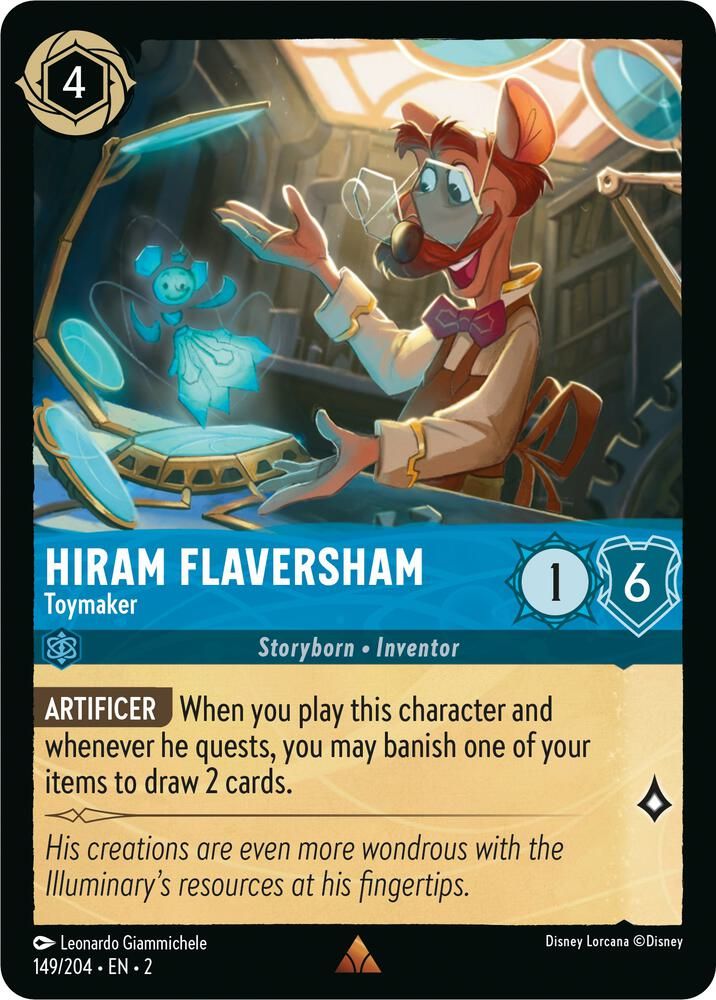
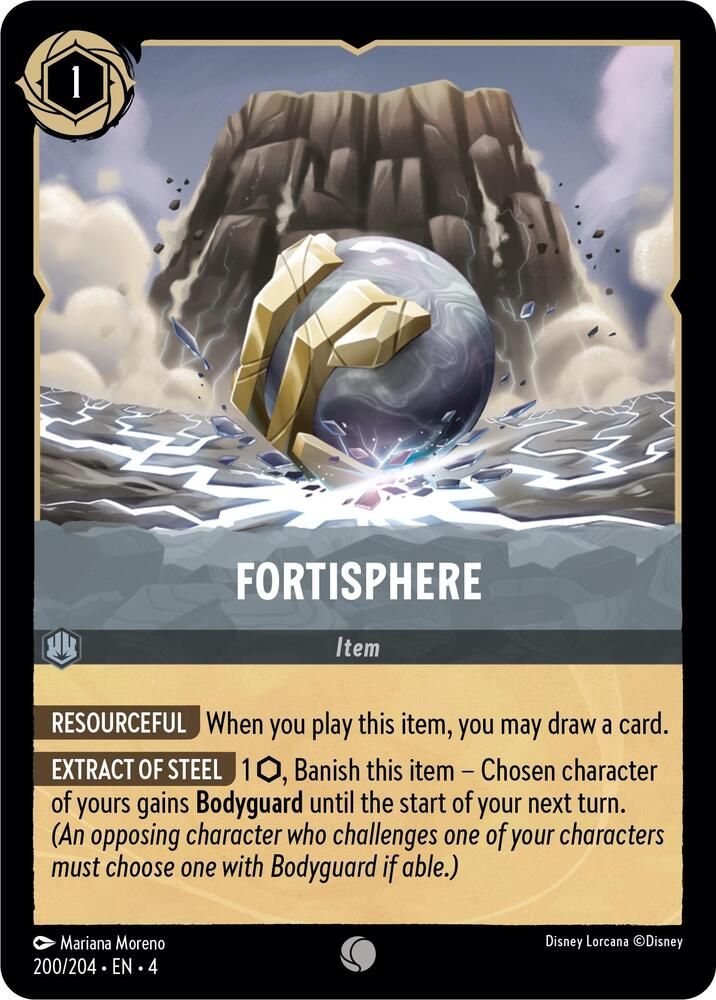
Most collectible card games have a list of cards that aren’t allowed in official tournaments. These cards usually aren’t strong on their own, but can become incredibly powerful when used with other cards. Instead of reprinting or changing the cards, game creators simply ban them from competitive play. This is a common issue in nearly every trading card game, and in the case of Disney Lorcana, only two cards have been restricted: Hiram Flaversham and Fortisphere.
Hiram Flaversham (card number 149/204) is a character card from the November 2023 expansion of Disney Lorcana, called Rise of the Floodborn. This Rare Storyborn Inventor has a special ability: when you play him, or when he goes on a quest, you can remove one of your item cards from the game to draw two new cards.
Hiram Flaversham was removed from competitive play because it created an unfair advantage. The card let players repeatedly cycle through their decks by quickly getting rid of and drawing new cards, giving them a significant edge over opponents. It was easy to use, so it became the dominant strategy, making other deck types ineffective. Players stopped trying different approaches because Hiram Flaversham’s ability to draw cards consistently proved to be the most reliable path to victory.
Fortisphere (cards 200 and 204) is a Common Item card released in May 2024 as part of Ursula’s Return. It’s notable for being the second card Ravensburger has ever banned. Fortisphere has two special abilities: ‘Resourceful,’ which lets you draw an extra card when you play it, and ‘Extract of Steel.’ Using Extract of Steel costs one Ink to remove Fortisphere from the game and give Bodyguard to any card you choose. When a card has Bodyguard, opponents must attack that card instead of others.
Fortisphere was banned for the same reason as Hiram Flaversham: it led to a dominant strategy focused on drawing lots of cards. This pushed decks built around Sapphire items to the top, and Fortisphere worked so well with those decks that it created a repetitive and predictable game environment. Before the ban, over half of competitive players were using Sapphire item decks, which made it difficult for other strategies to succeed.
The Real Reason TCGs Ban Cards from Competitive Play
Currently, only two Disney Lorcana cards – Hiram Flaversham and Fortisphere – have been banned from competitive play, and they perfectly illustrate why bans are sometimes necessary. At first glance, neither card seems particularly strong. In fact, both actually encourage a common and generally useful strategy in trading card games: drawing extra cards. Having more cards simply gives players more options and potential moves.
Many trading card games let players draw extra cards during their turn, so Hiram Flaversham and Fortisphere aren’t unique in that way. While these cards seem straightforward on their own, they become problematic when played with other cards. They aren’t overpowered individually, but combined with strong, popular decks like Sapphire-Steel, they can create an unfair advantage.
Trading card game players are skilled at finding the strongest strategies to win. In Disney Lorcana, Sapphire item decks quickly became dominant. Cards are typically banned in these games when they create unfair combinations that disrupt balanced competition. While Hiram Flaversham and Fortisphere weren’t completely overpowered, they did limit strategic variety by pushing everyone towards a single, specific way to play.
Trading card games often ban cards for various reasons. Sometimes, a card is simply considered unenjoyable to play against. For instance, if a card completely prevents an opponent from taking their turn, it might be banned because it ruins the fun of the game. A player’s enjoyment is just as important as strategic gameplay, and if players aren’t having fun, the game isn’t very good.
Often, the difference comes down to older trading cards not having the same rules as newer ones. This is particularly true for long-running games like the Pokémon TCG. Many older cards lack limits found on newer cards, such as being usable only once per turn. Because of this, older cards can sometimes be overpowered in competitive play, as newer cards are designed with more restrictions.
Generally, when a trading card is removed from competitive play, it’s usually for a significant reason. Creators might ban cards due to issues ranging from unfair advantages and frustrating gameplay to problematic images. Hiram Flaversham and Fortisphere are prime examples of why this happens: when only a few cards dominate the entire game and dictate how everyone plays, it creates an unhealthy environment.
2026-07-26 01:38