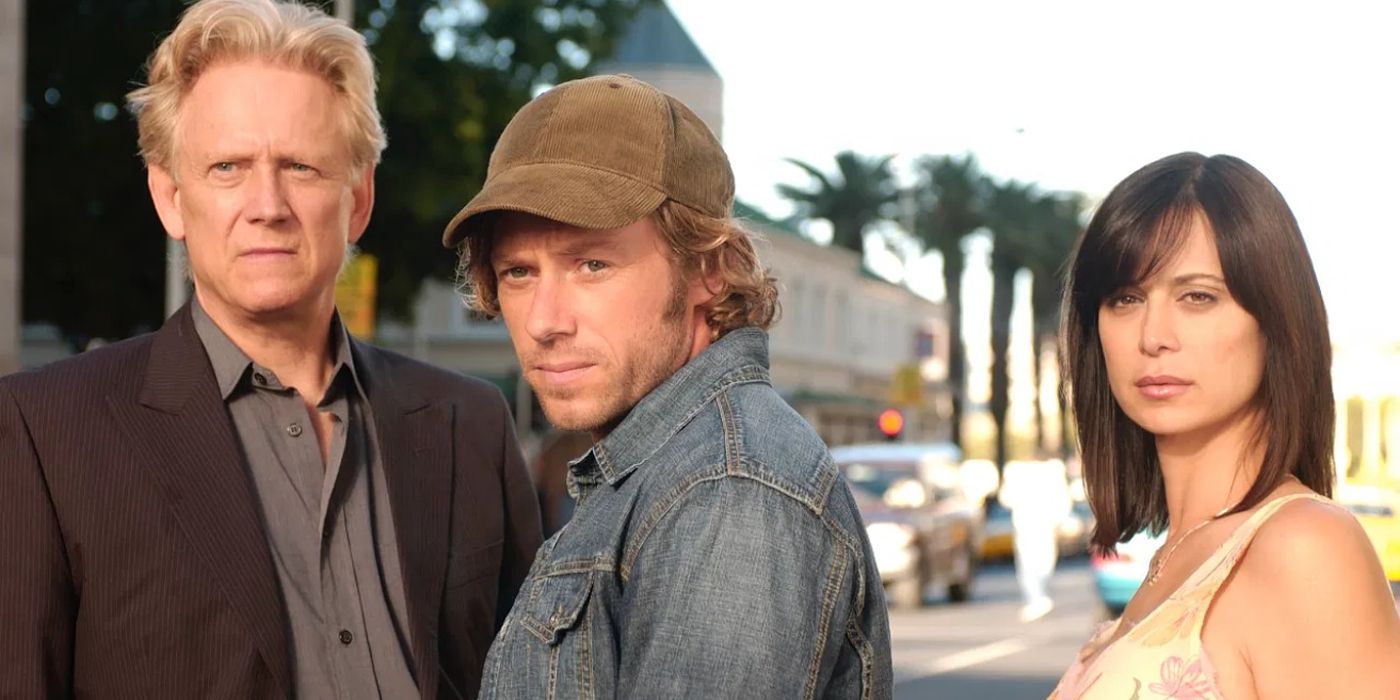
These days, limited-run series seem to dominate streaming platforms. Services like Netflix and Apple TV+ often release shows with short seasons – typically six to eight episodes – and many aren’t designed to run for multiple years. While some successful shows get renewed, it’s becoming less common for networks to commit to long-running series. This shorter format could lead to higher quality storytelling, but that’s not always true. In reality, many modern limited series don’t measure up to the ones previously produced by traditional television networks.
We’re going to focus on one type of TV show – science fiction miniseries – to show how today’s options don’t always measure up to the past. Streaming services are constantly searching for the next big sci-fi hit, but many don’t really stand out. In the past, science fiction was a staple on channels like ABC, NBC, SyFy, and the BBC, and there were lots of fantastic, self-contained stories. Here are eight classic sci-fi miniseries that are better than most of what’s available on streaming services today.
Taken Is an Emmy-Winning Triumph Produced by Steven Spielberg
Before Liam Neeson became known for the action thriller Taken, there was a completely different show with the same name. This Taken was a 10-part series that spanned generations, telling the story of three families and their connections to extraterrestrials over 58 years. The series focused on the Roswell conspiracy, with one family involved in concealing the truth, another deeply affected by it, and a third secretly protecting an alien survivor for decades.
The show was remarkably ambitious in how it told its story, skillfully revealing the real reason the Roswell aliens came to Earth bit by bit. It also featured a fantastic cast, with many actors who later became well-known in movies and on TV. played the character who was usually around years old.
The miniseries featured strong performances from actors like John Hawkes (known from Deadwood), Ryan Hurst (Sons of Anarchy), and Desmond Harrington (Dexter), as well as a young Anton Yelchin. Taken rightfully earned an Emmy Award for Outstanding Miniseries, and if it were released now, it would likely stand out among today’s science fiction offerings on streaming services like Netflix, Apple TV+, and Prime Video.
The Hitchhiker’s Guide to the Galaxy Proved the Hilarious Story Wasn’t Unfilmable
Originally broadcast on BBC Radio 4 in 1978, Douglas Adams’ humorous story quickly gained a following. It’s about the last human on Earth being saved from planetary destruction by an alien researcher who takes him on a galactic adventure, traveling by spaceship. The story became so well-loved that Adams adapted it into a novel, though many thought its complex scope and quirky humor would make it impossible to turn into a movie.
When adapted into a six-part TV series in 1981, the show became a national hit, despite causing some stress for those making it. Early 1980s television budgets weren’t well-suited for a story filled with strange alien creatures and characters like Zaphod Beeblebrox, a two-headed, three-armed alien. To help keep things moving, the author, Douglas Adams, even made a few appearances himself, and famously ran naked into the ocean when the actor scheduled for that scene was unable to perform.
The British TV series The Hitchhiker’s Guide to the Galaxy was praised for its impressive visual effects and makeup. Even now, it’s considered a fantastic adaptation of Douglas Adams’ unique ideas. Despite likely having a much smaller budget than the 2005 movie – and lacking Sam Rockwell – many still find it more enjoyable.
Ascension Was a Vastly Underrated Sci-Fi Mystery
I remember when SyFy tried something really ambitious back in 2014 with a show called Ascension. The premise was fantastic – a huge spaceship launched in 1963 by JFK during the Cold War, meant to be a 100-year journey to colonize a planet near Proxima Centauri. It was cool how they built this alternate history around it, imagining what space exploration might have looked like if things had gone differently back then.
The 600 volunteers aboard the USS Ascension understood that not all of their descendants would live to see the new planet settled, though they accepted this sacrifice to save humanity. But 51 years into the journey, a murder disrupts everything and hints at a hidden purpose behind the mission.
As a huge sci-fi fan, when I first heard about Ascension, the premise immediately grabbed me – it sounded amazing! Honestly, it’s a bit baffling that it didn’t get more love when it came out, especially when you look at some of the stuff streaming now. If you’re into sci-fi, I think you’ll really enjoy Ascension, even though it’s only six episodes and can’t quite reach the heights of a show like Battlestar Galactica.
The Original V Miniseries Is the Best of the Best
As a sci-fi fan, I’ve always considered the original 1983 miniseries to be the benchmark for the genre. It’s no surprise it kept going, with a sequel called V: The Final Battle in ’84, then a full 19-episode series in ’85, and even a reboot in 2009. The story, created by Kenneth Johnson, centers around a race of aliens – they call themselves the ‘Visitors’ – who initially seem friendly. They arrive on Earth promising to share their incredible technology, but in return, they need our help with some basic resources to save their planet.
It turns out these beings aren’t what they seem – they’re actually meat-eating alien reptiles who are secretly controlling people and silencing anyone who opposes them. Over time, a human rebellion forms, marked by the now-famous red “V” spray-painted symbol. When the show V first aired, it was a massive hit, with an incredible 40% of all US television viewers watching the premiere episode.
This meant that forty percent of American television viewers were unknowingly watching a story about fascism disguised as a science fiction show about aliens. The aliens’ uniforms closely resembled those of the Nazi SS, and their symbol was a clear nod to the Swastika. The show’s human rebels were intentionally designed to look and act like the resistance groups who fought against Nazi rule in Europe.
Ultraviolet Was Way, Way Ahead of Its Time
Many UK fans of film and television first discovered Idris Elba in the 1998 miniseries Ultraviolet. This six-part show offered a unique, science-based take on vampires and aired on Channel 4. It was well before Elba became known for his American accents. In Ultraviolet, Elba played Vaughn Rice, a Gulf War veteran struggling with PTSD after his entire unit was turned into vampires.
This led him to join a clandestine, government-funded organization (supported by both the British government and the Vatican) dedicated to fighting a nationwide vampire outbreak. He acted alongside Jack Davenport, known from Pirates of the Caribbean, as Detective Michael Colefield, and Susannah Harker, from House of Cards, as the scientist Angie Marsh. The show distinguished itself from typical horror by presenting vampirism in a grounded, scientific way, firmly placing it within the science fiction genre, though it still managed to be frightening at times.
The show avoided typical villain terminology, opting for nicknames like “leeches” or “Code Fives” (a play on the Roman numeral for five). This commitment to realism also applied to the characters, who weren’t portrayed as cheerful heroes. Instead, they were burdened by the grim reality of the threats they faced, creating a consistently dark and serious atmosphere that perfectly matched the show’s themes.
The Triangle Was a Pulpy, Twisty Bermuda Triangle Thriller
The Bermuda Triangle has always captured our imaginations, and many have wondered about the disappearances linked to it. It’s a popular conspiracy theory, but according to Rockne S. O’Bannon, the creator of Farscape and Alien Nation, the Triangle isn’t just a mystery – it’s a wormhole. He believes the US Navy has known about this since the 1940s and has been secretly trying to control its power from an underwater base.
I’m a big fan of this story! It’s based on the idea that back in 1943, the Navy actually did try to make a ship, the USS Eldridge, disappear – it’s a really wild claim from something called the Philadelphia Experiment. Now, a lot of people think the original story was made up, but the Sci-Fi Channel turned it into a three-part miniseries called The Triangle back in 2005. The series centers around a wealthy shipping magnate who offers a journalist, a scientist studying the ocean, a psychic, and a weather expert a huge reward – $5 million each – to help him locate this mysterious area in the North Atlantic and figure out what’s going on there.
The show had a lighthearted feel, but it was also genuinely moving. It becomes clear why Neill was cast when we learn his character is funding the mission to find his missing twin brother – he’s a fantastic actor who can make even the most unbelievable things seem real, like dinosaurs! He’s a master at bringing these kinds of stories to life.
The Lost Room Is a True Hidden Gem
You know, I still think about The Lost Room all the time. It’s one of those shows that managed to cram so much mystery and really cool ideas into just three episodes – each about 90 minutes long – that a lot of streaming shows don’t achieve even over entire seasons. It starred Peter Krause, who you probably know from Six Feet Under, and it’s about his character, a detective, whose daughter vanishes inside this weird motel room. The thing is, this room isn’t just any room; it’s from the 60s and somehow exists outside of normal time and space. It’s a really compelling story!
The room can only be entered with the ‘Key,’ an item inside that now has the power to unlock the door from anywhere. However, Krause isn’t the only one searching for these keys – some people are trying to hide them to protect the world, while others want to use them for evil. Even someone unfamiliar with the story can see this setup could easily drive multiple seasons of adventures.
As a huge fan of well-crafted stories, I have to say that The Lost Room really impressed me. Even though the whole series is only about four and a half hours long, it never feels shortchanged. The creators, Christopher Leone and Laura Harkcom, did an amazing job balancing complex characters, a totally original idea, and building the world around it – it all felt perfectly paced, like a really satisfying experience that still left me wanting more. Honestly, a lot of the people making those drawn-out, slow-moving shows today could learn a thing or two from The Lost Room.
The 2003 Battlestar Galactica Miniseries Is a Masterpiece
As a critic, I can confidently say that Ronald D. Moore’s Battlestar Galactica reboot is truly one of the best science fiction shows ever made – it really blossomed into something special over its four seasons, spin-off, and those two TV movies. What’s fascinating is that, like the original V, it started as just a four-part miniseries back in 2003. And that miniseries? It’s brilliant. Moore masterfully laid the groundwork, subtly planting seeds that paid off beautifully when the show was picked up for a full run. It was a completely intentional move on his part, and it really shows.
Watching the show, viewers don’t get the sense that the creator is holding back or setting things up for future installments – a common issue with many shows and movies released today. Perhaps the most impressive part of this reimagined series is how it portrays the Cylons, the villains. The original 1978 series featured Cylons as bulky, robotic figures clearly influenced by older science fiction, and they were built by a long-gone race of lizard-like humans.
As a huge fan of sci-fi, I always loved the Cylons in the reimagined Battlestar Galactica. What really set them apart was how they completely changed the backstory. They weren’t just a random alien race anymore; humanity created them, and then they rebelled. But the truly chilling part? Those scary robot Cylons weren’t the whole story. There were also Cylons who looked exactly like people, able to infiltrate and blend in anywhere. It created this incredible sense of paranoia – you honestly couldn’t trust anyone, and that made the show so gripping and unforgettable.
Found an error? Send it so it can be corrected.
Read More
- The Division Resurgence Best Weapon Guide: Tier List, Gear Breakdown, and Farming Guide
- Last Furry: Survival redeem codes and how to use them (April 2026)
- GearPaw Defenders redeem codes and how to use them (April 2026)
- Gold Rate Forecast
- eFootball 2026 “Countdown to 1 Billion Downloads” Campaign arrives with new Epics and player packs
- After THAT A Woman of Substance cliffhanger, here’s what will happen in a second season
- Clash of Clans Sound of Clash Event for April 2026: Details, How to Progress, Rewards and more
- Limbus Company 2026 Roadmap Revealed
- Guild of Monster Girls redeem codes and how to use them (April 2026)
- Genshin Impact Version 6.5 Leaks: List of Upcoming banners, Maps, Endgame updates and more
2026-04-03 07:11