Barcelona isn’t illuminated by the sun in this scene, but by flames. A prominent building designed by Antoni Gaudí is ablaze, with a body suspended from it, a grim warning against the Catalan sky. This shocking image immediately establishes the dark and unsettling tone of the story, City of Shadows (Ciudad de Sombras).
This carefully crafted mystery explores the lasting impact of violence on cities, how corruption slowly destroys organizations, and the enduring power of memory. The six-part series, universally acclaimed with a 100% rating on Rotten Tomatoes, follows a detective who is brought back from disgrace to investigate a case that ultimately reveals not only a killer, but also the hidden secrets and wrongdoings of the entire city. Fans of True Detective will find this series essential viewing.
The Netflix Series Features a City That Remembers Everything
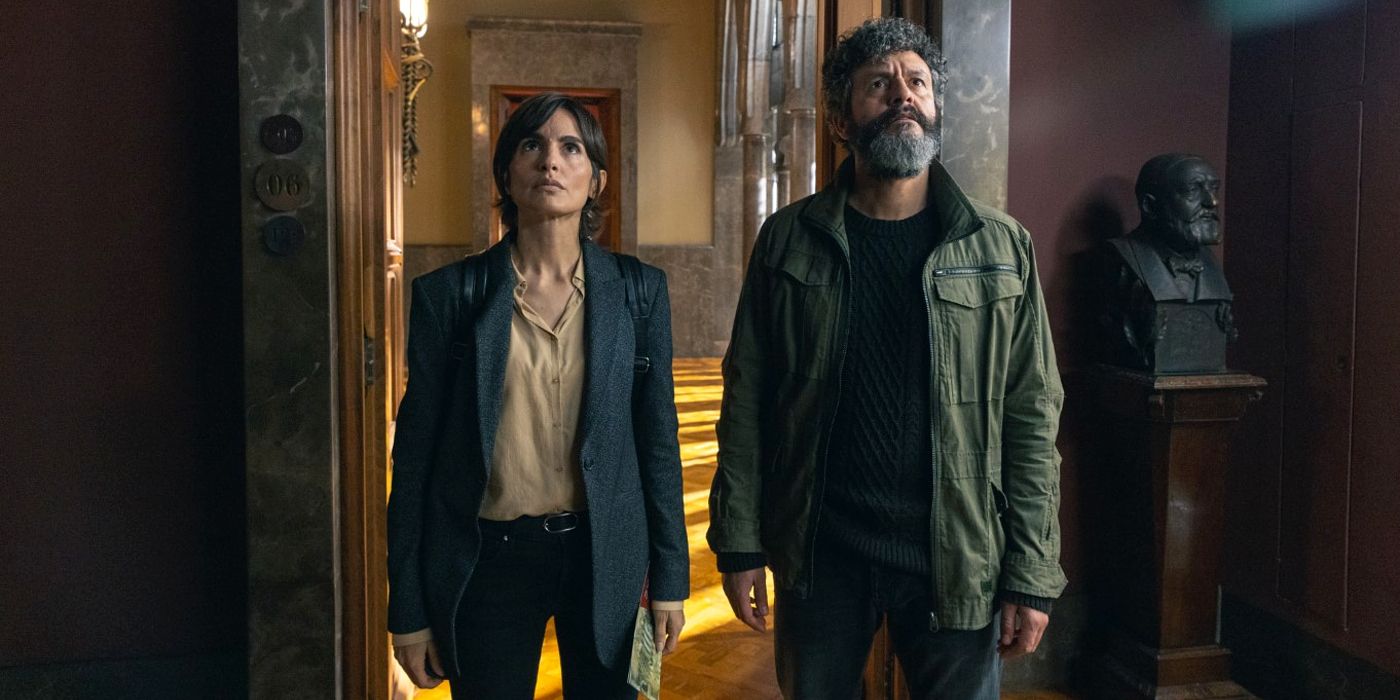
The Barcelona depicted in City of Shadows isn’t the typical picturesque tourist destination. It’s a city deeply marked by its history, and its appeal is intertwined with its painful past. From the very beginning, the series portrays buildings as silent observers. Gaudí’s iconic architecture isn’t presented as simply beautiful, but as if it’s witnessed the city’s eras of change, upheaval, and deception.
The sight of a body—hanging or burning—feels like a physical manifestation of the city’s own uprising. The series powerfully portrays location not as mere scenery, but as a vital character in itself. Barcelona’s cramped alleyways absorb sound, while its plazas are filled with a heavy silence. The older parts of the city feel almost otherworldly, weighed down by the palpable weight of history.
The camera takes its time, focusing on the city’s aged details – weathered stones, rusty balconies, and shadowy rooms. This Barcelona remembers its past, including the era of Franco, the struggles against it, and both what was lost and what endured.
The show consistently explores how crime is linked to specific locations. The killer’s methods are dramatic yet precise, using well-known landmarks to make a statement. These crimes aren’t random acts of chaos; they’re deliberate attempts to force the city and its officials to confront uncomfortable truths. Fire appears repeatedly, not as something that destroys, but as a way to expose what’s already broken and hidden beneath the surface.
The way this story uses setting would immediately resonate with viewers. Just as the Louisiana swamp reflects a stagnant moral decline, the beautiful city of Barcelona hides a deep hypocrisy. The film City of Shadows powerfully suggests that guilt isn’t just about individual actions, but a shared responsibility of all people.
True Detective Fans Will Appreciate This Disgraced Detective
I’m really drawn to Milo Malart, the detective in this series. He’s a bit of a mess, pulled back into the job after a fall from grace, but he’s not the type to give long, dramatic explanations about life. Instead, you feel his past mistakes – they seem to weigh him down physically. What’s clever is the story doesn’t just tell you he’s disgraced; it shows you. It’s in the way people treat him – the cool distance from his colleagues, the polite but reserved interactions. It’s subtle, but it really builds a picture of a man carrying a lot of baggage.
Similar to Rust Cohle, this character feels disconnected from the present. He views the city as a reflection of his past self – familiar with its bars and aware of its old cases, and possessing a comprehensive knowledge of everything within it. The beginning of the series doesn’t portray his return as a journey toward forgiveness, but as something destined to happen. The initial crime closely mirrors an old, unresolved case that was deliberately hidden.
One of the strengths of City of Shadows is that it avoids the typical trope of the detective haunted by a troubled past. Instead, the show portrays a man consumed by his work, to the point where he sacrifices his relationships, rest, and self-respect. While the authorities don’t necessarily like him, they tolerate him, viewing him as a disposable asset. The series understands that organizations often take advantage of people willing to confront the darkest aspects of a case, and then discard them when they’re no longer useful.
Throughout the series, the detective’s investigation doesn’t lead to catching the criminal, but to understanding why he failed in the first place. The story uses very few flashbacks, and those it does use are brief and potentially misleading. We experience the detective’s feelings of shame directly, as if we were him.
This character feels familiar to fans of True Detective because he carries the same sense of heavy responsibility and hopelessness. He realizes he can’t truly fix the problems he encounters, and even if justice is achieved, it will be incomplete. Despite this, he continues his work, not because he believes it will make a difference, but because he feels compelled to. The story doesn’t portray this as heroism, but as an unstoppable drive—some people simply can’t stop pursuing the truth, even when everything is collapsing around them.
The show’s strength lies in its willingness to let the detective be flawed. He misreads people, makes poor choices, and often questions himself. These imperfections make him relatable—more human than a perfect, all-knowing detective could ever be. The core emotional impact of the show comes from watching him struggle against a world that seems determined to enforce its own version of the truth.
A Killer with Purpose Stalks City of Shadows
As a film buff, I’m really fascinated by this series. It quickly becomes clear this isn’t just about random killings; every murder feels deliberate, almost like a statement. What’s especially interesting is the killer isn’t seeking fame – they want to draw attention to forgotten events from the city’s past, letting the crimes themselves be remembered, not them.
Instead of relying on unexpected plot twists, City of Shadows builds suspense from the feeling that the ending is already set in stone. The story creates tension by making the audience feel like the killer is always one step ahead, not because of superior vision, but because he deeply understands the flaws within the system pursuing him. He anticipates that bureaucracy, political maneuvering, and public attention will hinder the investigation. It’s not force, but rather his knowledge of how things truly work, that gives him the upper hand.
As the detectives gathered more clues, they began to suspect the victims were connected to a long-forgotten case hidden within the complex layers of bureaucracy. These weren’t typical crime victims; they were people who enabled wrongdoing – by signing documents, misdirecting funds, and ignoring suspicious activity, they allowed it to continue.
The series takes a bold approach by showing that innocence isn’t always straightforward. Characters often believed their actions were justified, leading the show to ask a challenging question: when does following orders become complicity?
The core ethical question in City of Shadows is particularly strong here. The film doesn’t portray the killer as a hero, but it does help us understand his motivations. We see the reasons behind his rage, rather than simply being told he’s evil. Flashbacks reveal a history of trauma – institutional abuse, family tragedies, lost records, and suppressed voices – that shaped his life. His violent actions are presented as a last resort, born from the failure of more reasonable options.
The show also wisely avoids revealing its secrets too soon. The murderer’s identity remains a mystery for most of the season, allowing the audience to concentrate on the larger problems with the system itself, rather than getting caught up in ‘whodunnit.’ When the killer is finally revealed, it feels less like a shocking twist and more like a confirmation of what viewers suspected all along – that this person was a product of the flawed system.
City of Shadows Features Six Hours of Precision Storytelling
One of the key reasons City of Shadows is so effective is its tight focus. The six-episode series, with each episode nearly an hour long, gets straight to the point and doesn’t feel drawn out. It avoids unnecessary storylines, artificial suspense, or shifts in mood.
Every scene in the show builds upon the characters, explores the central themes, or establishes the setting. This careful construction makes it incredibly easy to watch all at once without losing its emotional impact. While some shows overstay their welcome and lose their power, City of Shadows understands when to end, making it a strong and focused piece of work.
Each episode builds a sense of unease, not shock, stemming from hidden truths, choices that hurt others, or unresolved situations. The show unfolds like a detective story—slowly revealing details, leading to moments of clarity, and ultimately leaving you with lingering questions. This realistic approach extends to the visuals, with most scenes filmed using natural light and relying on shadows to create atmosphere.
This approach also brings the scenes to life and makes them feel more authentic. The indoor settings emphasize the characters’ feelings of being trapped, portraying offices as towering structures buried under mountains of paperwork. Conversely, the outdoor scenes emphasize the disconnect between the characters and their surroundings, showing them as insignificant figures dwarfed by the vast buildings and streets around them.
Often, it’s the quiet moments that truly resonate. When music is used, it’s sparingly and evokes a sense of sadness, offering comfort for the loss instead of building suspense. The acting throughout the series is consistently excellent, with the performers delivering nuanced and understated performances. The characters feel incredibly real and lived-in, as if their lives continue even off-screen.
Unlike the lengthy, philosophical speeches in True Detective, City of Shadows relies on more subtle and impactful dialogue. The show trusts that the most unsettling ideas don’t need to be explained – they’re more powerful when left unsaid, allowing the audience to fill in the blanks.
City of Shadows (Ciudad de Sombras) isn’t trying to be like True Detective. Instead, it understands what makes that show so compelling: it’s not just about the mystery itself, but about delving into the characters’ morals. By showcasing the city’s buildings and history, the series becomes a powerful look at how people are connected and how easily things can be forgotten.
This show is a standout example of how to perfectly blend mood, compelling characters, and a gripping plot, all within its six episodes. Its perfect score on Rotten Tomatoes isn’t hyperbole – critics overwhelmingly agree this is a top-tier mystery that stays true to the genre’s core. The show tackles challenging themes, resists easy solutions, and understands the power of quiet moments just as much as dialogue.
Read More
- Clash Royale Best Boss Bandit Champion decks
- Vampire’s Fall 2 redeem codes and how to use them (June 2025)
- Mobile Legends January 2026 Leaks: Upcoming new skins, heroes, events and more
- World Eternal Online promo codes and how to use them (September 2025)
- Clash Royale Season 79 “Fire and Ice” January 2026 Update and Balance Changes
- Best Arena 9 Decks in Clast Royale
- Best Hero Card Decks in Clash Royale
- Clash Royale Furnace Evolution best decks guide
- FC Mobile 26: EA opens voting for its official Team of the Year (TOTY)
- Clash Royale Witch Evolution best decks guide
2025-12-20 21:16