
The media frequently describes Mon Laferte as a “femme fatale” – a captivating woman who often causes heartbreak to those she becomes involved with.
After almost twenty years as a singer, Chilean artist Mon Laferte confidently steps into the classic role of a captivating and experienced woman on her ninth studio album, “Femme Fatale,” released last October.
In a recent video call, singer Mon Laferte explained that she believes people see her as a very free-spirited woman, and she thinks that can be unsettling to some. She said her confidence sometimes makes others insecure. Laferte was speaking shortly after attending the 2025 Fashion Awards in London with designer Willy Chavarria. She also mentioned finding inspiration from the late Amy Winehouse, and even took a photo by Winehouse’s statue in Camden.
As a huge fan, I’ve been captivated by Mon Laferte’s new album, ‘Femme Fatale.’ It feels like she’s really exploring and owning her power as a woman through these incredibly jazzy, almost old-Hollywood-style ballads. It’s that signature vocal style – the big, dramatic sound she’s known for in songs like ‘Tu Falta de Querer’ and ‘Mi Buen Amor’ – but taken to a whole new level. What really struck me is that she was starring as Sally Bowles in ‘Cabaret’ in Mexico City right before the album came out. You can hear that theatrical influence – it’s like the stage experience unlocked something, and this album feels like her most honest and compelling work yet.
The songs on “Femme Fatale” evoke the atmosphere of a hidden, vintage bar. They explore past relationships, which sometimes bring up painful memories for the singer, Norma Monserrat Bustamante Laferte, a 42-year-old native of Viña del Mar, Chile.
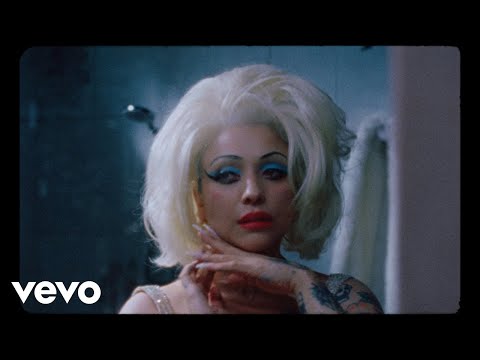 ×
× The album includes songs like “Otra Noche de Llorar,” a heartfelt ballad about unreturned love, and “El Gran Señor,” a defiant condemnation of domestic abuse. It builds to a powerful conclusion with “1:30,” an energetic and spontaneous track where Laferte weaves together personal experiences of trauma and empowerment with broader historical events, including the Industrial Revolution and the atrocities committed during Pinochet’s 1973 Caravan of Death.
Laferte described her song as deeply personal and politically charged, admitting it’s even difficult for her to hear. She explained that the section about a past relationship is particularly painful, to the point where she avoids listening to it. Talking about such a vulnerable experience, she said, feels incredibly raw and uncomfortable.
“Femme Fatale” is a very personal album where Mon Laferte confronts and comes to terms with her past. The album ends with the upbeat song “Vida Normal,” where she reflects on realizing she’s becoming more like her mother, a feeling that intensified after becoming a mother herself in 2022 to her first child with her husband, Joel Orta – the guitarist for the band Celofán.
The award-winning artist explained, ‘Ultimately, after all this, I just want to live a normal life.’
I’m so excited for Mon Laferte! Even though she’s finally looking forward to a normal life, she’s hitting the road first with the 2026 Femme Fatale tour. It’s starting in Latin America and then coming to the US. She’s kicking things off in her hometown of Viña del Mar at the International Song Festival, and she said it feels like coming home – it’s amazing!
This interview has been edited and condensed for clarity.

You recently attended the Fashion Awards in London with Willy Chavarria, who was up for Designer of the Year. What was that like? I was there as Willy’s guest. It was great seeing so many stylish people, including a lot of artists with amazing looks. I’ve always been interested in fashion – even as a child, alongside singing, dancing, and playing guitar, I loved drawing women and their clothes, dresses, and outfits… maybe that’s where my interest in design started. My last album, “Autopoiética,” had a very baroque aesthetic – I felt a bit like Marie Antoinette, wearing big dresses during my performances. This time, with “Femme Fatale,” the style is more bohemian, featuring sequins and a slightly undone makeup look.
The album is called “Femme Fatale,” which is a very strong and sensual title. What made you choose that phrase? Well, “femme fatale” often has negative connotations – it brings to mind a woman who’s vengeful and causes trouble. It’s actually a name the media gave me – they call me La Femme Fatale Chilena.
I enjoyed choosing this title because I’m drawn to the idea of a strong, independent woman. I prefer music that’s dramatic and atmospheric, and this title captures that feeling. While I haven’t always felt completely secure and free, I appreciate being perceived that way by others.
I aimed for a jazz-influenced sound on this album, wanting it to feel like a late-night, somewhat sad experience. I’ve been really into jazz lately, and I thought it would be great to create something I personally enjoy listening to. Growing up, my mom played jazz around the house, but I didn’t appreciate it then – I actually found it quite dull. As a teenager, I even considered it background music.
I used to have a certain idea about jazz, but as I’ve really listened and grown, I’ve let go of that. When I stopped judging it and just listened, I discovered so much beauty and even a kind of wildness within it. I think it’s the improvisation that gets me – it takes real courage to just go for it and create something in the moment, because it’s all happening live, with no safety net. It’s something I’m truly passionate about; it feels both crazy and incredibly beautiful all at once.
You recently starred as Sally Bowles in a production of “Cabaret” in Mexico City. How did that experience influence your album, “Femme Fatale”? It definitely felt like those two projects went hand-in-hand. Playing Sally Bowles really fueled the creative world of “Femme Fatale.” In fact, there’s a song on the album, called “Vida Normal,” that I specifically wrote with the idea that it could be part of a musical. Overall, the whole theatrical process was amazing – I had a lot of fun and learned so much.
 ×
× I was curious about your song, “Vida Normal.” It seems like you suggest wanting a simpler, more conventional life, which is a contrast to the powerful, dangerous image in “Femme Fatale.” Was that deliberate? Absolutely. “Femme Fatale” really captures who I was – someone who caused trouble, hurt the people I cared about, and always managed to ruin things for myself. But I’ve been working on changing those patterns, and thankfully, I’m making progress. The songs on the album are about confronting my past and letting go of that old self.
My song, ‘Vida Normal,’ is very personal and reflects where I am now. I’ve changed a lot, especially after becoming a mother, and sometimes I don’t even recognize myself when I look in the mirror. I’m starting to see my mother’s face in my own, and it’s a reminder that I’m getting older. I’m at that strange age where I don’t feel particularly young or old, somewhere in my 40s. Ending the album with that song felt right because, ultimately, all I want is a normal life.
I was really struck by your song “1:30.” It feels like you explore women’s fantasies in a way that’s rarely discussed. Can you tell me about the inspiration behind it?
That song was definitely the most challenging I’ve ever written. I cover a lot of personal and sensitive ground – everything from self-pleasure and pretending to reach orgasm, to experiences with abuse and even the atrocities committed during Pinochet’s dictatorship in Chile. It’s all very personal and politically charged. The final section is particularly difficult for me; it details a painful experience, and I often find it hard to even listen to that part of the song. It’s incredibly vulnerable to talk about something so honestly and openly.
I discussed my vision with the band – I wanted the song to feel really fast-paced and urgent, almost like we were running away from something. I envisioned the bass guitar taking the lead. We rehearsed it about eight times, and I was happy with how one particular take sounded.
 ×
× The album includes a collaboration with Natalia Lafourcade and Silvana Estrada on the song “My One and Only Love.” It was interesting working with them, considering they’re often compared to each other. While we were all singing together, I realized how truly unique each of our voices are—we each have our own distinct style. I think the comparison comes from the fact that we’re all female singer-songwriters, and people often group similar artists together, regardless of gender—you could say the same about many male-led bands.
We’re all close friends. I’ve known Natalia for a long time, and we have a strong bond – they’re all incredibly talented women. Our voices blend beautifully when we sing, and I especially love creating harmonies. It was a special experience to sing together on what I consider the most beautiful song on the album. It’s a really sweet and genuine song about the challenges couples face, and it actually reflects my own relationship with my husband. Ultimately, we love each other and are committed to staying together.
Read More
- Clash Royale Best Boss Bandit Champion decks
- Vampire’s Fall 2 redeem codes and how to use them (June 2025)
- Clash Royale Furnace Evolution best decks guide
- Best Hero Card Decks in Clash Royale
- Mobile Legends January 2026 Leaks: Upcoming new skins, heroes, events and more
- Mobile Legends: Bang Bang (MLBB) Sora Guide: Best Build, Emblem and Gameplay Tips
- Best Arena 9 Decks in Clast Royale
- Dawn Watch: Survival gift codes and how to use them (October 2025)
- Clash Royale Witch Evolution best decks guide
- Brawl Stars December 2025 Brawl Talk: Two New Brawlers, Buffie, Vault, New Skins, Game Modes, and more
2025-12-10 22:32