Author: Denis Avetisyan
A new framework integrates computational experiments and causal reasoning to unpack the complexities of modern systems, offering insights into phenomena like rider behavior on food delivery platforms.
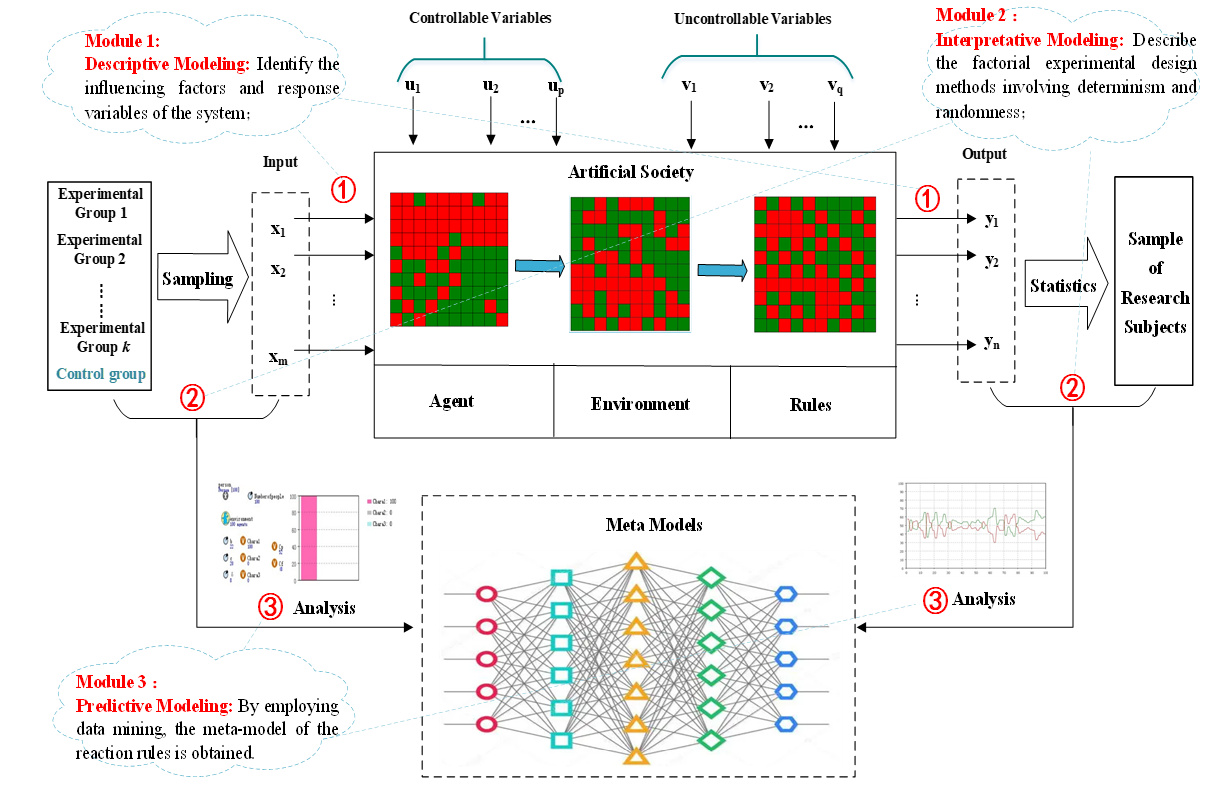
This review proposes a multi-layer approach combining agent-based modeling with causal inference to analyze emergent phenomena and system complexity.
While agent-based modeling excels at simulating complex systems, it often prioritizes observation over rigorous causal inference. This paper, ‘From Agent Simulation to Social Simulator: A Comprehensive Review (Part 2)’, proposes a framework integrating computational experiments – systematically varying inputs to observe outputs – with causal reasoning to move beyond mere simulation. By establishing a multi-layer approach, the authors demonstrate how to identify underlying operational principles, exemplified through an analysis of rider behavior on online-to-offline (O2O) platforms. Can this method unlock a deeper understanding of emergent phenomena across a broader range of complex social and technological systems?
The Illusion of Efficiency: Unmasking Rider Involution
Despite the convenience promised by online-to-offline (O2O) platforms, a peculiar phenomenon known as ‘Rider Involution’ frequently undermines their potential efficiency. This describes a situation where an overabundance of delivery riders, incentivized by platform algorithms, compete intensely for a limited number of orders. The resulting hyper-competition doesn’t translate to faster service or increased earnings; instead, it leads to riders spending significant time and resources – fuel, time, and effort – simply to secure enough orders to maintain a minimal income. This creates a systemic inefficiency where the aggregate effort expended far exceeds what would be necessary in a rationally optimized system, demonstrating that individual incentives can inadvertently generate collective drawbacks within these digital marketplaces.
Conventional analytical methods often fall short when attempting to decipher the peculiar dynamics of online-to-offline (O2O) platforms. These approaches typically dissect individual components – supply, demand, or rider behavior – in isolation, neglecting the crucial feedback loops and emergent properties arising from their interconnectedness. The resulting models struggle to account for phenomena like ‘Rider Involution,’ where increased competition paradoxically diminishes overall efficiency. This failure stems from an inability to adequately capture how the actions of numerous agents – riders, merchants, and consumers – collectively shape systemic pressures, creating unintended consequences that defy prediction based on isolated variables. A holistic perspective, acknowledging the platform as a complex adaptive system, is therefore essential to unraveling these counterintuitive behaviors and designing more effective interventions.
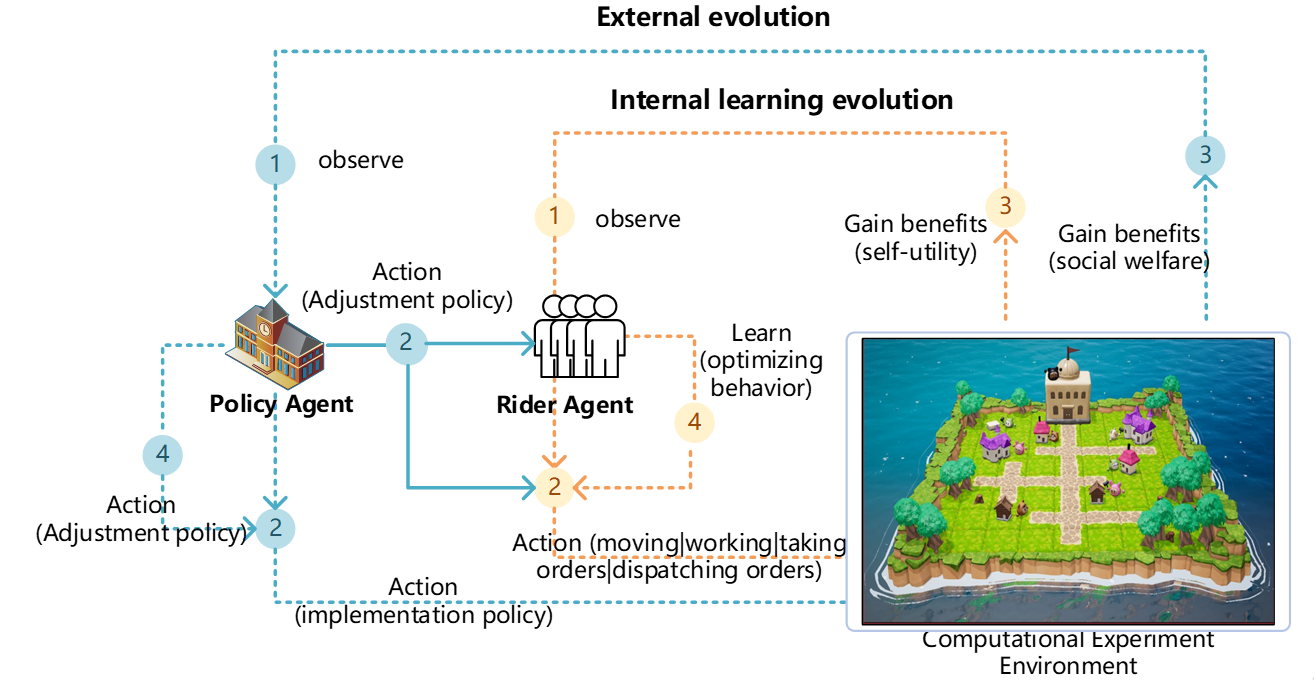
A Framework for Understanding Systemic Behavior
The computational framework utilizes a method combining Agent-Based Modeling (ABM) with established experimental techniques to facilitate the simulation and analysis of Online-to-Offline (O2O) systems. ABM allows for the creation of autonomous agents representing entities within the O2O ecosystem, and their interactions are modeled to replicate system dynamics. Rigorous experimental techniques, including controlled interventions and statistical analysis of simulation results, are then applied to these models. This approach enables researchers to systematically investigate complex relationships and emergent behaviors within O2O systems that would be difficult or impossible to study through traditional empirical methods alone.
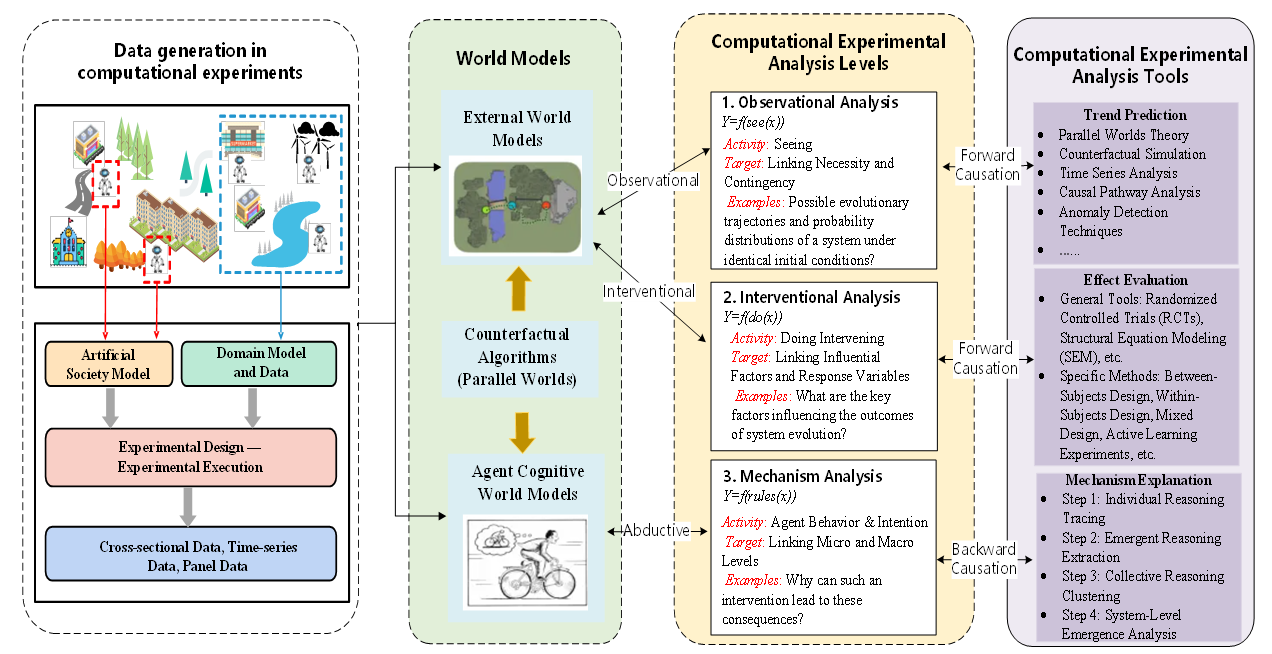
The computational framework facilitates two distinct analytical modes within the simulated Online-to-Offline (O2O) system. Observational analysis leverages the simulated environment to identify statistical correlations between various system parameters and agent behaviors, mirroring traditional empirical studies. Crucially, the framework also enables intervention analysis, allowing researchers to manipulate specific variables – such as pricing, marketing spend, or agent characteristics – and directly observe the resulting changes in system outcomes. This controlled experimentation establishes causal relationships that would be difficult or impossible to determine through observational data alone, providing a means to test hypotheses and evaluate the impact of different interventions on the O2O system’s performance.
The computational framework utilizes a World Model to simulate agent behavior, leveraging Large Language Models (LLM) for representation of agent intelligence and decision-making processes. Validation of this model against real-world data demonstrates a high degree of accuracy in predicting working hours; specifically, the model achieves an R-squared value of 0.98, indicating that 98% of the variance in real-world working hours is explained by the simulation. Further, the Mean Absolute Error (MAE) is reported as 0.05 hours, representing the average absolute difference between predicted and actual working hours and confirming the model’s precision.
Dissecting the Roots of Inefficient Competition
Structural Equation Modeling (SEM) was employed to analyze the mechanisms driving ‘Rider Involution’, demonstrating it is not solely attributable to platform algorithmic design. The analysis indicates that rider behavior is a product of interactions between individual agents, rather than a direct response to the platform. Specifically, the model assesses how choices made at the rider level collectively contribute to the observed phenomenon, identifying it as an emergent property of the system. This approach moves beyond a simple algorithm-centric explanation, and instead focuses on the reciprocal influences between riders and the platform environment, establishing a more nuanced understanding of the observed involutionary trends.
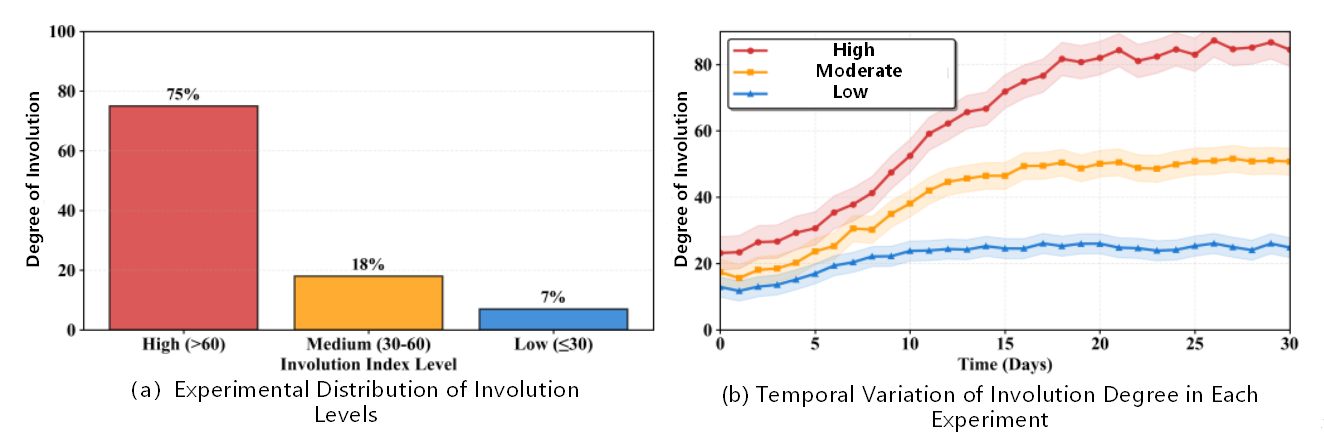
Simulations indicate that rider behavior contributing to ‘Involution’ is significantly influenced by both risk avoidance and the diffusion of anxiety among riders. This results in competitive behavior even when it demonstrably decreases overall platform efficiency. Analysis of the Involution Index shows a substantial reduction correlated with increased order volume; specifically, the index decreased from 70.42 to 24.76 with a corresponding increase in available orders. These findings suggest that riders, anticipating potential losses from inaction, compete for orders, creating a systemic inefficiency that is partially mitigated by higher order density.
The observed phenomenon of Rider Involution is not solely driven by individual rider choices, but is significantly impacted by systemic factors creating a feedback loop, or reverse causation. Statistical analysis, utilizing Standardized Path Coefficients, demonstrates a strong correlation between external pressures and rider behavior; specifically, order volume exhibits a coefficient of 0.50, indicating a substantial influence on the Involution Index, while the interaction mode between riders and the platform yields a coefficient of 0.45. These values suggest that increases in order volume and specific interaction designs can directly mitigate involutionary tendencies, highlighting the need to consider both agent-level motivations and broader systemic influences when analyzing and addressing this behavior.
Toward Sustainable O2O Ecosystems: Reframing Governance
Simulations reveal that strategically implemented governance mechanisms can substantially lessen the detrimental effects of ‘Rider Involution’ within online-to-offline (O2O) platforms and simultaneously enhance overall system efficacy. These interventions, encompassing techniques like dynamic pricing – adjusting fees based on demand and availability – and incentivized cooperation – rewarding riders for efficient route choices or peak-hour service – directly address the competitive pressures driving excessive effort for diminishing returns. The modeling demonstrates that these targeted strategies don’t simply mask the symptoms of rider oversupply; they actively reshape the incentive structure, encouraging more sustainable and productive behavior. Consequently, platforms adopting such governance approaches experience improvements not only in rider well-being – reducing burnout and increasing earning stability – but also in key performance indicators like order fulfillment rates and delivery times, fostering a more robust and balanced O2O ecosystem.
A crucial element in designing effective governance for online-to-offline (O2O) platforms lies in employing forward causation – a methodology that moves beyond merely reacting to observed issues and instead proactively tests the impact of potential interventions. This approach prioritizes understanding why inefficiencies arise, rather than simply treating their manifestations. Through rigorous simulation and experimentation, researchers can isolate the root causes of problems like ‘rider involution’ and assess whether specific policies – such as adjusted pricing or cooperative incentives – genuinely address these underlying drivers. By focusing on causal relationships, platform designers can move beyond superficial fixes and implement strategies that foster long-term sustainability and systemic improvement, ultimately creating more equitable and efficient O2O ecosystems.
The long-term viability of online-to-offline (O2O) platforms hinges on a nuanced comprehension of how individual agents – riders, vendors, and the platform itself – interact and respond to incentives. Current platform design often overlooks the complex behavioral dynamics that can lead to unintended consequences, such as ‘rider involution’ where increased effort yields diminishing returns. A deeper investigation into these behaviors reveals that sustainable and equitable O2O ecosystems aren’t simply built on technological infrastructure, but on governance strategies that proactively address the underlying motivations and constraints of each agent. Consequently, regulation and platform policies should move beyond reactive measures, focusing instead on fostering cooperation, incentivizing efficiency, and ensuring fair distribution of value to cultivate a thriving, long-term O2O environment.
The study dissects system complexity, revealing how seemingly rational individual actions within O2O platforms can generate counterintuitive emergent phenomena – rider involution, specifically. This echoes Marvin Minsky’s assertion: “The more of a method that you put into a program, the less it knows.” The framework proposed doesn’t aim to solve the problem of platform manipulation, but rather to illuminate the causal structures at play. Abstractions age, principles don’t. The multi-layer approach, integrating computational experiments and causal inference, seeks fundamental understanding – a principle more valuable than any quick fix. Every complexity needs an alibi, and this work begins to construct one.
What’s Next?
The pursuit of systemic understanding, even through computational proxy, invariably reveals the limits of current technique. This work identifies a framework-integrating simulation with causal reasoning-but does not transcend the fundamental challenge: model validation. Establishing ground truth in complex, evolving systems remains a persistent difficulty. The presented approach mitigates, but does not eliminate, the risk of inferring causality from observed correlation-a risk inherent in all such endeavors.
Future work must address the question of scale. The demonstrated application, while illustrative, operates within a constrained parameter space. Extension to genuinely open systems-those subject to unpredictable external influence-demands novel methods for managing computational burden and mitigating error propagation. The current emphasis on ‘world models’ requires careful consideration; simplicity, not verisimilitude, is often the more valuable quality.
Ultimately, the true metric of progress lies not in the complexity of models, but in their utility. Clarity is the minimum viable kindness. The field should prioritize the development of tools that facilitate focused inquiry, rather than attempting to capture the totality of experience. To strive for perfect replication is a vanity; to seek meaningful approximation, a necessity.
Original article: https://arxiv.org/pdf/2601.14296.pdf
Contact the author: https://www.linkedin.com/in/avetisyan/
See also:
- Invincible Season 4 Episode 4 Release Date, Time, Where to Watch
- Physics Proved by AI: A New Era for Automated Reasoning
- Gold Rate Forecast
- American Idol vet Caleb Flynn in solitary confinement after being charged for allegedly murdering wife
- Magicmon: World redeem codes and how to use them (March 2026)
- “Wild, brilliant, emotional”: 10 best dynasty drama series to watch on BBC, ITV, Netflix and more
- Total Football free codes and how to redeem them (March 2026)
- Goddess of Victory: NIKKE 2×2 LOVE Mini Game: How to Play, Rewards, and other details
- Invincible Creator on Why More Spin-offs Haven’t Happened Yet
- Simulating Humans to Build Better Robots
2026-01-22 13:18