
Michael J. Fox reached out after watching “Shrinking,” a comedy on Apple TV created by Bill Lawrence, who used to be his boss on “Spin City.” The show stars Harrison Ford as a therapist dealing with Parkinson’s disease. Fox, who was diagnosed with Parkinson’s at 29, was deeply touched by the show’s realistic and thoughtful portrayal of the condition, both in the writing and acting.
He remembers immediately connecting with the show’s relatable and down-to-earth quality. He thought, ‘I understand this.’ About a year ago, after finishing all the episodes, he contacted Lawrence to share his thoughts. But true to his style – and his reputation for perfect comedic timing – he delivered the compliment with a touch of playful irony, as only he could.
“Bill, why the f— am I not on the show?”
Immediately launching into laughter, Lawrence pipes in: “It’s true.”
Fox and Lawrence were remembering a recent video call—Fox joined from his New York home, and Lawrence from his office at Warner Bros. in Burbank—where they discussed Fox’s upcoming guest appearance on a show, an idea that came up during that very call.
The third season of the show begins this Wednesday with two new episodes. In these episodes, Paul, played by Michael J. Fox, schedules a doctor’s appointment because his Parkinson’s symptoms are getting worse. While waiting, he meets Gerry, another patient with Parkinson’s who still has a great sense of humor – much like Fox himself. (The show has already been renewed for a fourth season!) This marks a reunion for Fox and Zach Braff, who previously worked together on “Spin City” for four seasons before Fox stepped away to focus on his health. They last appeared together in 2004 when Fox made a guest appearance on Braff’s show, “Scrubs.” What follows are highlights from their conversation.
 ×
× So, Michael’s call is what kicked things off. But Bill, were you already thinking about having Michael appear on the show ‘Shrinking’ at some point?
I’m a bit naive – I always believe Mike when he says he’s retiring from acting. [laughs] It might sound a little sentimental, but I kept mentioning Mike because, as a fan, you always hope your heroes live up to your expectations. I was lucky enough to meet him early in his career, and he turned out to be exactly the person I’d hoped he’d be. And like anyone my age who enjoys reminiscing, I’ll always cherish the chance to talk about good times and people I admire.
Building on what Bill mentioned, Michael, you shared in your 2020 book, “No Time Like the Future,” that health issues were making it hard to act – specifically, being on set and remembering lines. Can you talk about what led you to the difficult decision to retire?
I wasn’t really feeling it, it was just okay. I was working on ‘The Good Fight’ and kept getting it mixed up with Kiefer Sutherland’s show, ‘Designated Survivor,’ because they both involved a lot of complicated legal stuff that I had trouble understanding. I was struggling to memorize the lines. It reminded me of a scene in ‘Once Upon a Time in Hollywood’ where Leonardo DiCaprio berates himself in the mirror, getting upset about his inability to remember his lines. I found myself doing the same thing, looking in the mirror and just thinking, ‘Ugh, this is not good!’
[A collective laugh erupts]
I was feeling overwhelmed and ready to stop working. I decided to finish the project as best I could and move on with my life, and that’s what I did. It reminded me of when I was retired after leaving “Spin City” and you asked me to be on “Scrubs.” I hadn’t really wanted to act anymore, but I ended up loving it and getting a lot of interesting offers. I realized I enjoyed playing characters with flaws, and I was able to use my own experiences with Parkinson’s disease to portray characters with similar or different conditions on shows like “Boston Legal” and “The Good Wife.” When I saw Billy’s show, I was really impressed by its depth, the relationships between the characters, and the writing. I just wanted to be a part of something so well-made, not to jump back into acting with any particular goal. It seemed like it would be fun, and the fact that Harrison Ford was involved was amazing.
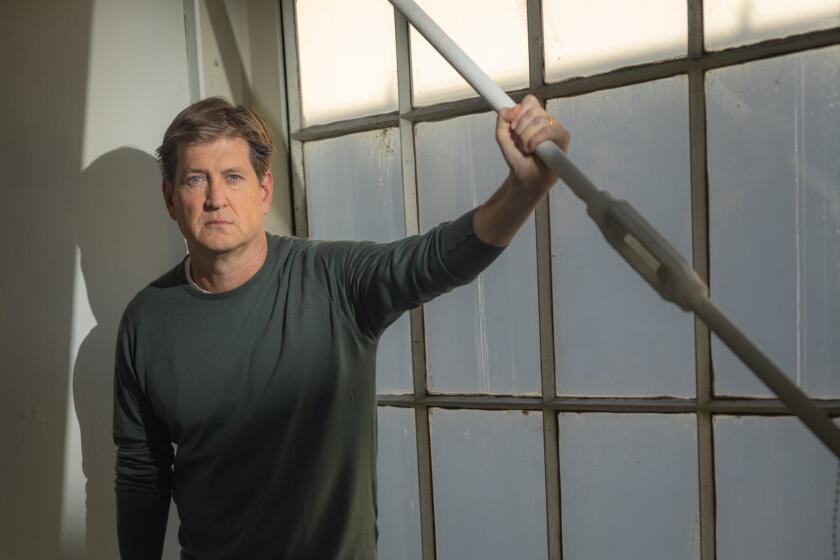
Television
At 55, Bill Lawrence reflects on the conclusion of ‘Shrinking,’ discusses the future of ‘Ted Lasso,’ and shares his thoughts on how to address the challenges facing television’s biggest stars.
Could you talk about how you developed the character of Gerry, and how you used him to show how Paul’s condition changed over time?
Lawrence explained that the show’s structure allowed for Mike to make a cameo appearance, perhaps playing a doctor based in Los Angeles, as a nod to his persona, Mike Fox. However, Mike specifically requested to play a fully developed character, which the writers appreciated much more because it offered more creative potential.
Brett Goldstein, my co-creator, has a father with Parkinson’s, and my own grandfather also had the disease. My dad is dealing with Lewy bodies, which are related to Parkinson’s. Mike, a hugely important person in my life, has been a constant source of inspiration. Throughout the show, we always focused on two things: being true to life and maintaining a hopeful tone – we didn’t want it to feel overly sentimental or depressing. Nobody in my family, including Mike, has ever let Parkinson’s define them or forced them to hide away. We never imagined the show would become as impactful as it has, but featuring Mike brought a whole new level of honesty and authenticity to it.
1

2

1. A glimpse behind the scenes during the making of the first episode of Season 3 of “Shrinking.” 2. A photo shows co-creator Bill Lawrence, Harrison Ford, Michael J. Fox, and director Randall Winston taking a break while filming “Shrinking.” (Photo by Robert Voets/Apple)
So, Michael, what was it like working on set? You shared a lot of scenes with Harrison, so tell us a memorable story about him.
Harrison Ford was just a genuinely kind person. I wasn’t sure what meeting him would be like, as we have many friends and colleagues in common, like Bob Zemeckis and Steven Spielberg. I wasn’t worried, but I expected him to be nice. I just didn’t realize how incredibly kind and sweet he would be to me. You noticed it too, Bill – he was really thoughtful and gentle.
Lawrence: He was moved by the whole thing, man.
Then we began filming. He really connected with something in his character and in mine, and he just dove right in. It was clear why he’s such a huge star.
When Paul met Gerry, they came up with the phrase “F— Parkinson’s,” which became their motto for the year. Michael, did you find a similar powerful phrase to motivate you through your own experience?
I’ve lived a full life, and sometimes I overwhelm my kids with the lessons I’ve learned. My philosophy is to focus on the present moment, acknowledging the past and future possibilities. Living with Parkinson’s is challenging – it affects your memory, which can be a strange blessing in disguise. Ultimately, it’s about finding positivity and moving forward. Surprisingly, I’m more concerned about global issues like the situations in Canada and Greenland than about my own health. Being part of a supportive community gives me confidence and a renewed sense of purpose.
Honestly, some people think a certain event really set my career back, and maybe it did in one way. But it also opened up so many other doors and possibilities, which has been amazing. At the end of the day, I’m just an actor, and nothing makes me happier than being on set, especially alongside someone like Harrison Ford, and making people smile.
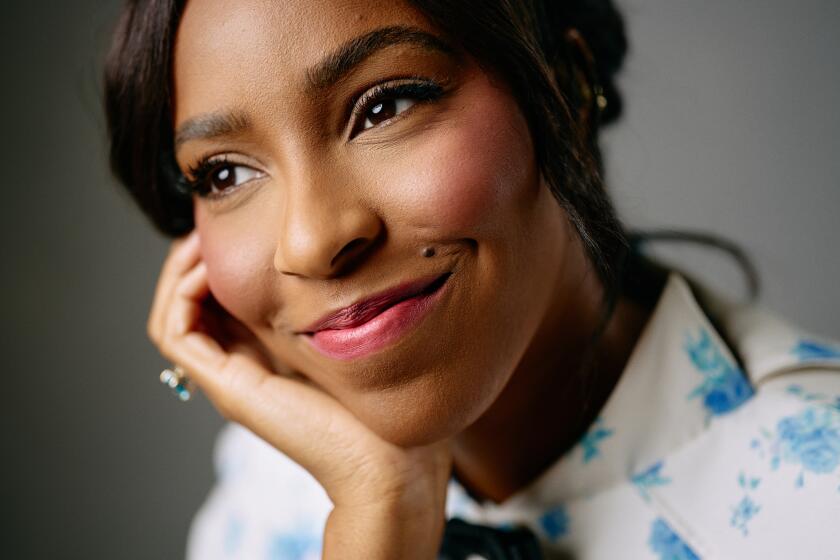
Television
While stuck in L.A. traffic, the actor is thinking about life in the city, her passion for pottery, and her work on the second season of the Apple TV+ show, “Shrinking.”
Looking back on your decision to leave “Spin City,” how did you feel about your future and your own mortality at the time? And how does that compare to how you feel now? It seems Paul chose to fully embrace life and enjoy what time he had left, rather than dwell on negativity.
You know, I’ve been doing a lot of thinking lately. My kids are all grown up – my youngest is 24, I have twins in their 30s, and another who’s 37 – so they’re independent now, which is great. When I retired, all I wanted was to spend quality time with them, and I really did, watching them grow up over the years. Now I’m 64, and the house feels a little empty with everyone out on their own. So, I’m happy to start taking on new projects, but this isn’t about making a big comeback or anything – just enjoying what I do.
I’ve seen it happen firsthand, and I’m always surprised when someone retires. You’d think they’d just disappear, but Mike was actually busier right away than he ever was before!
I was focused on getting the foundation up and running. It was a lot of work, and if I hadn’t been, things would have been much harder. [I started the Michael J. Fox Foundation for Parkinson’s Research in 2000 to help find better treatments and a cure for the disease.]
I hadn’t attended a foundation event in a while, but when I did, I was struck by how positive and hopeful everyone was. Being around people who are directly involved in this work – some of whom are personally affected by it – was incredibly inspiring. It reinforced my belief that we’re making progress and sharing these stories is important.

Later in the season, Michael returns and shares his experiences with Paul, strengthening their connection. We wanted to show this interaction because it highlights the importance of community and shared experiences.
Lawrence explained that while it’s important to understand and portray a condition like Parkinson’s with empathy, truly understanding it requires lived experience. He emphasized that the only way to fully grasp what it’s like is to speak with someone else who shares that experience. Having a community within the show, where characters could relate to each other’s specific struggles, was incredibly helpful for the writers. They even used humor to highlight this, referencing a scene where a character with prostate cancer felt out of place compared to those with Parkinson’s. Lawrence felt strongly that pairing Harrison’s character with another actor pretending to have the condition wouldn’t have been believable. Authenticity was crucial, especially considering Harrison was already apprehensive about taking on the role.
Fox: He’s so exquisite. The way he plays it is so beautiful. It’s so subtle.
Ford is incredibly dedicated to getting the medical details right. He asks our advisors to send him videos so he can study them, and he even reviews footage of himself to make sure his movements look accurate. He’s a natural when it comes to portraying medical procedures.
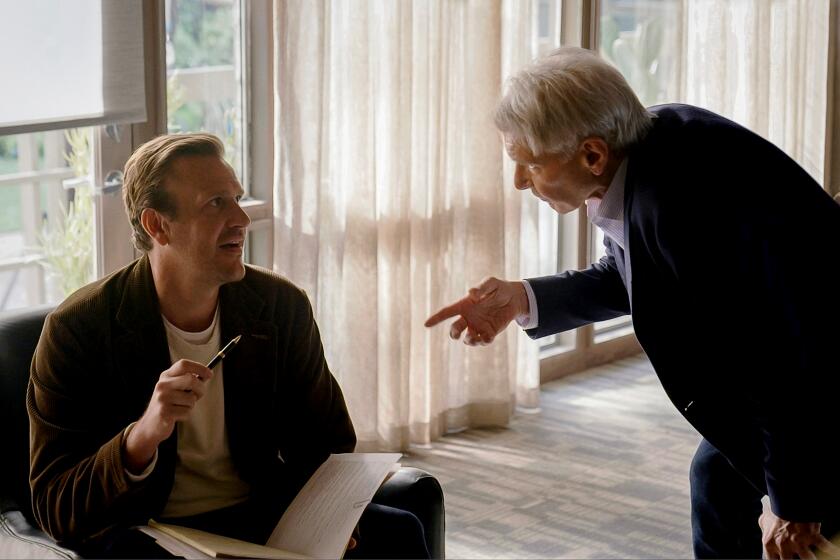
Television
I recently spoke with one of the masterminds behind the Apple TV+ show, and we dove deep into that season one finale – what a ride! But honestly, one of the biggest surprises was hearing about Harrison Ford. Not only is he a phenomenal actor, but apparently, he’s hilarious, with impeccable comedic timing. And get this – the man loves Fun Dip! It’s not every day you learn such delightful details about a Hollywood legend.
Paul’s character is struggling with who he is when he’s not doing what he’s passionate about. As an actor, how do you maintain your sense of self and find meaning in your work? And beyond acting, who are you as a person?
I sometimes encounter unexpected sides of myself, things I never anticipated. When that happens, I try to confront them directly. I’m not a complicated person, and I’ve learned a lot from difficult experiences. I used to struggle with setbacks frequently, but I’ve gotten better at handling them. Occasionally, I still have moments where I feel completely overwhelmed and unable to get up, and it reminds me of that old commercial – it really happens! I’ll just wait for someone to help me. It can be a vulnerable feeling, but I accept it. I believe I can offer Bill insights that others might miss, helping him move the story forward and potentially offer some understanding to the audience.
This season explores Paul’s concerns about his impact on the world and who will continue his work. Michael, do you often think about that as well?
I don’t worry about what happens after I’m gone. My father-in-law actually wrote a book about living life to the fullest – the idea was to spend everything you have, not just money, on the people you love and enjoy it now. I’m not focused on building a legacy. Of course, I’d like the foundation to keep going and our work to continue, and ideally, I’d like to see that happen while I’m still alive, but I don’t know if that will be possible. We’re making progress, though. What people think of me after I’m gone isn’t my concern. I just want to live a full life, do great work, take advantage of opportunities – like collaborating with Billy and Harrison – and keep writing my own story for as long as I can.
Read More
- ‘Project Hail Mary’s Unexpected Post-Credits Scene Is Worth Sticking Around
- Beyond Accuracy: Gauging Trust in Human-AI Teams
- Gold Rate Forecast
- Clash Royale Balance Changes March 2026 — All Buffs, Nerfs & Reworks
- The most surprising Hannah Montana cameos: From John Cena to Dwayne Johnson and even a Coronation Street soap star as show celebrates its 20th anniversary
- Genshin Impact Version 6.5 Leaks: List of Upcoming banners, Maps, Endgame updates and more
- eFootball 2026 is bringing the v5.3.1 update: What to expect and what’s coming
- Total Football free codes and how to redeem them (March 2026)
- Brawl Stars Brawl Cup Pro Pass arrives with the Dragon Crow skin and Chroma, unique cosmetics, and more rewards
- We talked to ‘Bachelorette’ Taylor Frankie Paul. Then reality hit pause on her TV career
2026-01-28 14:32