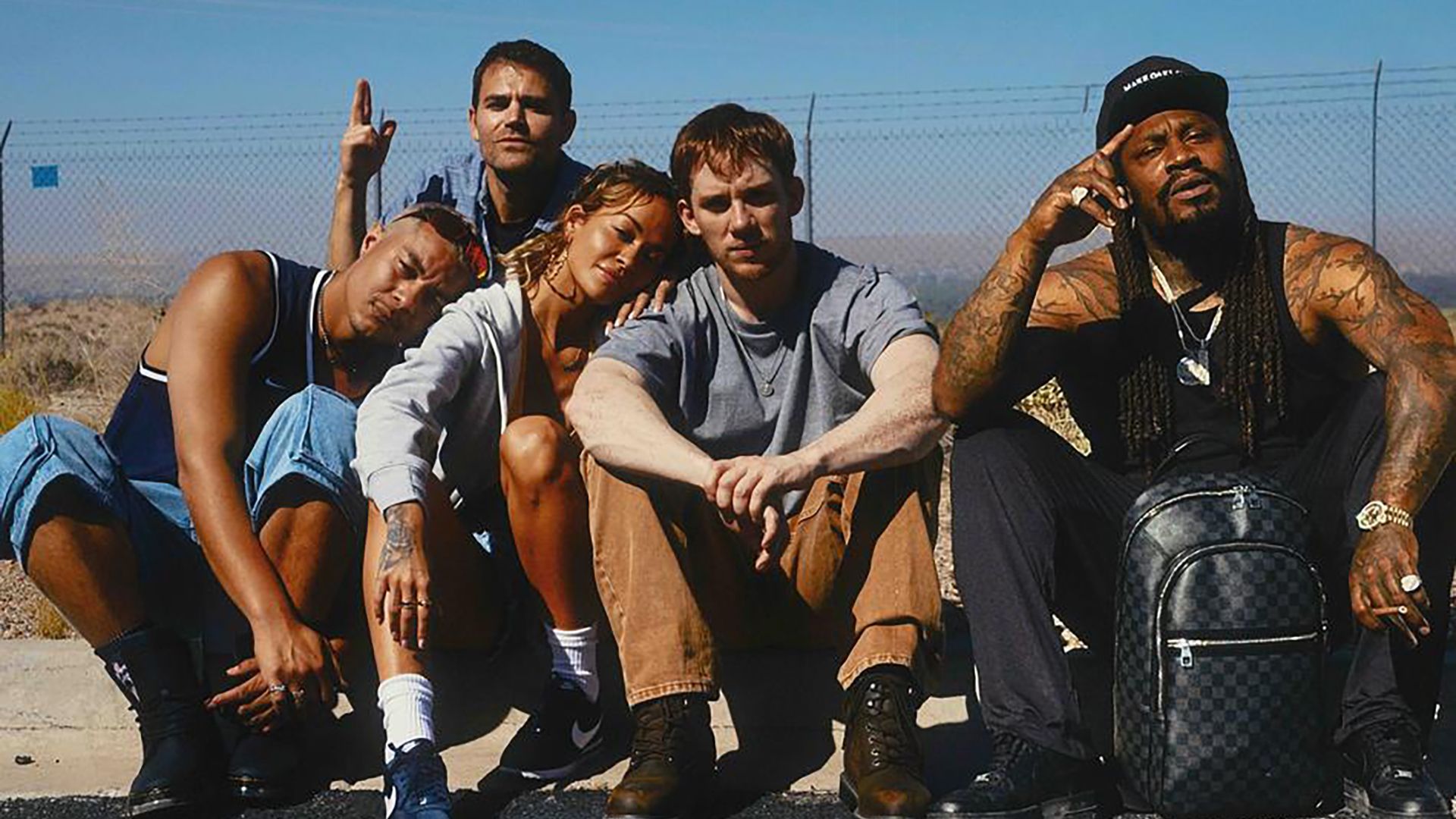
Josh Holloway is back in movies after more than ten years with the film He Bled Neon, and he’s taking on a role unlike anything he’s done before.
Josh Holloway is an actor most recognized for his roles as Sawyer on the TV show Lost and Will in Colony. He was last in a major movie in 2014, appearing alongside Arnold Schwarzenegger in the thriller Sabotage, where he played DEA Agent Eddie Jordan. Since then, he’s primarily focused on television, with appearances in shows like Yellowstone as a villain, and the HBO Max comedy Duster.
Drew Kirsch’s first feature film, He Bled Neon, follows Ethan, a young man struggling with the loss of his brother, who begins to suspect his death wasn’t accidental. Ethan, who escaped a troubled past in Las Vegas, must return and put his life in Los Angeles on hold to investigate, facing his old demons and uncovering the dark side of the city.
Joe Cole, known for his role in Gangs of London, stars in He Bled Neon as Ethan. The cast also features Holloway, singer Rita Ora, NFL player Marshawn Lynch (now an actor), Ismael Cruz Cordova from The Lord of the Rings: The Rings of Power, and Paul Wesley of The Vampire Diaries. The film, written by Tim Cairo and Jake Gibson, and based on a story by producer Nate Bolotin, premiered at SXSW on March 16, 2026, as part of the Narrative Spotlight section.
At the SXSW festival, ScreenRant’s Ash Crossan spoke with the cast and crew of He Bled Neon, including Josh Holloway, ZHU, Joe Trapanese, Ismael Cruz Cordova, Nate Bolotin, and Drew Kirsch. During the interview, they discussed their roles in the film, and the conversation focused on Josh Holloway’s character, which marks a departure for the actor, who is known for playing heroes throughout his long career.
Holloway playfully claimed he’s “the star until things go horribly wrong,” and explained that the villain’s motivations, as described by Cordova, are surprisingly relatable. Cordova pointed out that the character, like many people, is driven by family and acts based on understandable, if perhaps misguided, reasons.
I approached the character by focusing on his motivations and finding a sense of empathy for him. For me, it wasn’t about playing just a typical villain. This character’s actions stemmed from a deep sense of loss – his family was killed, and that included a brother, even though that brother wasn’t a good person. They had all worked towards a specific goal since childhood, and in their minds, achieving it was their version of success. It was about survival, and they justified their actions as necessary. I needed to understand why he did what he did, and even find a way to see how he might have enjoyed it, to make the character feel real and complex.
The actor, known for his role on Lost, explained that his character from He Bled Neon has deeply influenced his perspective: he feels that if someone harms his family, he would relish getting revenge. He also admitted he rarely gets to play a truly villainous role – perhaps never – and therefore had to carefully balance making his character relatable while still portraying him as genuinely evil.
It’s all about how you look at things. I don’t matter from what angle you view the character. Working on this was really interesting and enjoyable, but also challenging. When I first got the script, I had to figure out how the character arrived at his key moments. I started reading, and around pages 60 or 61, I was wondering where my part fit in. Then suddenly, there it was – a four-page monologue! That’s when I understood him. The character made a strong impression when he was introduced. Working with Joe was fantastic, and we filmed fight scenes all night. It was definitely a challenge to play opposite someone so much younger – he was 28 and I’m 50! Overall, it was an amazing experience, and I’m excited to finally see how it all turned out.
Nate Bolotin & His He Bled Neon Team Wanted To Show The Grimy Side Of Vegas
ScreenRant: Just tell me where the origin of the idea came from, and how we got here.
Growing up in Las Vegas, I’ve always been fascinated by the city’s unique atmosphere, and I wanted to capture that authentically in a project. The idea for this movie really started about 20 years ago when my stepbrother and best friend tragically died from a drug overdose. I received a text message similar to one in the film, and had to return home to deal with the loss and reconnect with people from my past. Years later, I began thinking about a classic noir revenge story – a ‘what if’ scenario about someone returning to their hometown and discovering things aren’t as they remember. That sparked the initial idea for the movie. Then I started thinking about who could direct it. Drew had been doing amazing work with music videos, and he happened to be close with my brother – they grew up together. I felt a connection through that Nevada upbringing and believed his style would be perfect for this project. We reached out to Drew, and from there, the movie began to take shape. Of course, there were many steps along the way, but that’s how it all started.
ScreenRant asked if filming with all the bright lights and the Vegas setting presented any unexpected or easily missed challenges.
As a fan, I always loved how the visuals in this film really popped. From the start, the filmmakers intentionally avoided the main Las Vegas Strip. They wanted to show a different side of the city – a grittier, more textured version of the neon lights you’d find just off the main drag. It felt like a perfect fit because the director’s style is already so vibrant and colorful, and it created an amazing backdrop for the story. The title itself just seemed to tie everything together beautifully!
ScreenRant asked me to introduce the characters and explain who I play and how my character fits into the story.
Ismael Cruz Cordova describes his character as complex and secretive, someone who reveals new layers with each viewing and performance. He intentionally portrayed the character as harboring secrets beyond what’s explicitly shown in the film, building a sense of internal depth. At his core, the character is driven by a strong personal code and a unique understanding of family – one forged through hardship and shared experience, rather than traditional ideals. This ‘found family’ is his guiding principle. Cordova found the role exciting, and he was pleased with how the editing process further enhanced the character’s nuances, allowing him to experience the film as a viewer himself.
ScreenRant asked the actor how much they enjoyed creating a sense of mystery in the movie, where almost every character seems potentially untrustworthy. They highlighted the line, “We don’t know who to trust,” and wondered how satisfying it was to present that ambiguity to the audience.
I really connected with the show’s flawed characters. I’m drawn to complex, even unlikeable people – those who are broken, struggling, or morally ambiguous. I don’t believe most people are inherently ‘good,’ and these characters feel more realistic because we all have those fleeting, darker thoughts and impulses. Exploring those shades of gray, even through fictional characters, can actually help us understand ourselves better.
Working with Drew Kirsch was fascinating. He played a really layered character, and we spent a lot of time on set discussing the best way to approach it – bouncing ideas around and even debating some of the trickier choices. Honestly, editing his scenes was tough! When I first put everything together, I really had to focus on maintaining the mystery of his character and avoid revealing too much too soon. It felt like a really demanding role, but he absolutely nailed it.
ScreenRant asked the actors what they were hoping to find in a new role, considering they’re both known for specific characters. They wanted to know what career goals led them to take on this particular project.
I didn’t seek out the role; it came to me. As an actor, being offered a part is always flattering – it means people are noticing your work and that something you’ve done has connected with them. This role, though, was particularly interesting because the character is deeply flawed and even awful. I loved that complexity; it was a brokenness I enjoyed exploring. We see a lot of stories designed to lift us up, but those stories are popular because life isn’t always happy. I’m drawn to portraying the darker, more difficult sides of life, and this character carries a lot of pain. He’s searching for answers I can’t provide, and that journey was incredibly rewarding, even though it was challenging to play. I had to hold back so much, not hinting at anything that would reveal what happens later in the story. It was a constant effort to restrain my performance. If I’d read the character breakdown for auditions, I would have been eager to try out for the part. So, I was thrilled to be offered the role and committed to giving my best possible performance.
ScreenRant and I recently spoke about my work on The Bluff and Lord of the Rings, and they shared their enthusiastic support, saying I’m doing a fantastic job.
I was offered those roles around the same time and had to pick one, but it ended up working out well. One was a charming, free-spirited sailor who played the violin, and the other was a really rough, untrustworthy character. But what I realized is that, at their heart, they’re both just people. As an actor, you focus on finding that human core, that small piece of truth within the role and the world it exists in, and you can’t get caught up in the genre. Ultimately, they’re driven by the same basic things: a need for family and a desire to defend their beliefs, and that’s all that really matters.
Absolutely. Let’s talk about the music. Given your background in music, what discussions took place to determine the film’s overall sound, and how did you decide on the composers?
I envisioned an electronic sound for the project, inspired by the feeling of a city. I’ve always liked ZHU’s music, and as I read the script repeatedly, I kept listening to his work at a low volume. Talking with Nate, we thought collaborating with him would be a great fit. Nate then introduced me to Joe Trapanese, whose work is incredible. When we met at his studio, we discussed bringing in another artist, something Joe had done before. It seemed like the perfect combination, so we decided to bring both of them on board, and that’s how it all came together.
ScreenRant asked about the parts of the film that inspired the sound design, and what the team was aiming for with the audio.
When we started working with ZHU, I anticipated our initial discussions would focus on electronic music elements like synthesizers and drum machines. However, we quickly dove into the script itself, concentrating on how to create a believable and immersive world through natural, organic sounds. We all agreed the score needed a driving energy and rhythm, but we spent a lot of time exploring the use of guitars, acoustic drums, and even unique, world-influenced percussion. The goal was to make the music feel grounded and textured, reflecting the gritty, realistic setting of the film, rather than sounding overly polished or purely electronic. We wanted it to have a genuine sense of depth.
ScreenRant: And ZHU, what was your process for the music in the film?
I’m passionate about creating music that evokes strong emotions, and I wanted this project to feel incredibly raw and real, reflecting the experience of loss and the will to survive. Having personally lost a friend, I know what it’s like to be in survival mode, making difficult choices. I wanted the music to capture that intensity, to be powerful and unfiltered. Combining cinematic scope with underground energy allowed me to convey a feeling that words alone couldn’t express – a sense of immersion. I wanted listeners, especially in a large crowd, to truly feel that energy, to understand the story of survival at its core. That’s what I aimed for with this film’s music – a primal, powerful experience.
ScreenRant: Is there a companion album that we can buy, pick up?
Nate Bolotin confirmed a movie soundtrack is planned, though they haven’t set a release date for either the soundtrack or the film itself. They’re currently looking for distribution partners and exploring options for both the movie and the music, aiming to maximize the project’s potential. Drew and he always envisioned the music as a standalone piece – something memorable that people would continue to enjoy and discuss. They felt the music was essential to the film and were very pleased with the final result.
It was a real privilege to be involved with the project from the beginning. We started working on the music even before filming began, reading the script and getting familiar with the story, and we even got to visit the set. It’s clear how much effort everyone put into making the music a key part of the film’s narrative.
As an actor, the emotional core of the character was always present. From my first meeting with Drew, we focused on the character’s soul. He immersed us in the world by sharing playlists before scenes, letting us experience the sounds and atmosphere. It was a wonderful process where the character felt fully realized. We weren’t just acting out lines or a genre; we were embodying the entire experience, and the music played a huge role in grounding us and making a real impact.
I think it stems from my background in music videos. When you’re making a video, you get the song and listen to it repeatedly while developing the visuals. It’s reassuring for me to be familiar with the music beforehand and to share that with the whole team before we start filming.
Be sure to dive into some of ScreenRant‘s other SXSW coverage with:
- The Sun Never Sets Review
- The Fox Review
- I Love Boosters Review
- Dead Eyes Review
- One Another Review
- Kill Me Review
- Ready or Not 2: Here I Come Review
- The Saviors Review
- Family Movie Review
- Seekers of Infinite Love Review
- Mike & Nick & Nick & Alice Review
- Over Your Dead Body Review
- Sender Review
- Normal Review
- Brian Review
- Phoenix Jones: The Rise and Fall of a Real Life Superhero Review
- Dakota Fanning reacting to All Her Fault‘s record-breaking success
- Sydney Chandler sharing her ideal Alien: Earth season 2 story for Wendy and the Lost Boys as production ramps up
- Robin Tunney weighing in on a Mentalist revival after its Netflix resurgence
- Yul Vazquez explaining why he has yet to return to Severance
- Jake Johnson on the chances of Peter B. Parker getting a Spider-Verse live-action spinoff
- Elijah Wood teasing that his mysterious Ready or Not 2: Here I Come character may be immortal
- Wood on reuniting with his Faculty co-star Shawn Hatosy in the Ready or Not sequel
- The Ready or Not 2: Here I Come director and cast on the sequel’s new cabal of wealthy Satanists
- Jessica Rothe on the ongoing wait for Happy Death Day 3 to close out the Blumhouse franchise
- BenDavid Grabinski on how Mike & Nick & Nick & Alice breaks a classic sci-fi time-travel trope
- Grabinski and Vince Vaughn on the accidental Dodgeball reunion in Mike & Nick & Nick & Alice
- John Goodman responding to Monsters Inc. 3 reports
- Kevin Hamedani sharing how the Adam Scott and Danielle Deadwyler-led The Saviors was inspired by both The Twilight Zone and The X-Files
- Emily Browning on how Hulu’s Prison Break reboot will be different from the original series
- Raviv Ullman on the chances of a Phil of the Future revival
- Jamie Lee Curtis sharing why she ultimately didn’t play One Piece season 2’s Dr. Kureha after fan campaigning
- Barbara Crampton on her goal to become “the Betty White” of the horror genre
- Jorma Taccone and Brian McElhaney on how the Timothy Olyphant-starring Over Your Dead Body remake is gorier than the original
- Taccone confirming his, Akiva Schaffer and Andy Samberg’s Popstar: Never Stop Never Stopping won’t get a sequel
- Leighton Meester reacting to the new Blair Waldorf-focused Gossip Girl book
- Riz Ahmed explaining why Andor didn’t bring back his Star Wars character, Bodhi
- Adam Scott teasing the “terrific” scripts for Severance season 3 as he confirms filming begins soon
- Kelly Marie Tran reflecting on how Star Wars: The Last Jedi opened the door for her to make everything from The Wedding Banquet remake to Rock Springs
- Derek Kolstad on how Bob Odenkirk’s Normal differs from their Nobody movies
- Kolstad offering a disappointing update on his Streets of Rage movie adaptation
- Bob Odenkirk on how his remake of The Room connects to Tommy Wiseau’s cult classic, and reflecting on its lack of a release
- Graham Parkes on how Lewis Pullman and Maya Hawke’s Wishful Thinking puts a dark twist on a 20-year-old book
- Aimee Garcia on Lucifer‘s ongoing global impact five years after fans fought for Netflix to renew it beyond season 6
- Cassidy Freeman on Smallville‘s global Netflix resurgence as the sequel show awaits a greenlight
- Chandler, Takehiro Hira, Maximilian Lee Piazza and Brian Tetsuro Ivie talk Anima‘s experimental filming
- The cast and producer of I Love Boosters hype Boots Riley & Keke Palmer’s “unapologetic” new crime movie
- David E. Kelley, Elle Fanning and the Margo’s Got Money Troubles cast on their Apple TV comedy and why Michelle Pfeiffer was the only choice to help lead it
- The AI Doc: Or How I Became An Apocaloptimist team breaking down just how extensive their research was
- Dakota Fanning, Joe Swanberg, Jake Johnson and Cory Michael Smith on the bizarre experience filming The Sun Never Sets
- Brea Grant and her Grind team on how they turned a short film into a DIY horror hit
- Uma Thurman and the Pretty Lethal team on mixing R-rated ballet-fu action with a touching central message
- Kathryn Newton on still not being used to watching people blow up after reuniting with Radio Silence on Ready or Not 2
- Adam Scott and Damian McCarthy on how Hokum gives the star a return to a rare villain-like role
- BenDavid Grabinski and the Mike & Nick & Nick & Alice cast on how the sci-fi action comedy is like two movies in one
- Kevin Hamedani on how Adam Scott and Danielle Deadwyler’s Saviors casting specifically is meant to go against audience expectations
- Lucy DeVito, Danny DeVito, Lizzy Caplan and the rest of the Drag team sharing how their thriller offers a new twist on Home Alone
- Jessica Rothe, Caleb Phillips and Yul Vazquez recalling the house they filmed Imposters in was “150% haunted”
- Luchina Fisher on how her award-winning short The Dads became a Dwayne Johnson-produced feature
- Bob Odenkirk, Derek Kolstad, Ben Wheatley and Marc Provissiero on how Normal almost cut one of its funniest jokes from a brutal fight scene
- Rachel Mason on how My Brother’s Killer solved a brutal murder 30 years later
- The Bacon family talking how Family Movie proved to be a dream scenario to shoot
- Lewis Pullman and his Wishful Thinking team recalling how Kerri Kenney-Silver was hospitalized on the first day of shooting
- Finn Wolfhard and the Crash Land team on Jackass influences and how it’s a big pivot from Stranger Things
- Ben Wang and the Brian cast and director talking the coming-of-age movie and how it’s a perfect follow-up to Easy A for one key reason
- Barbie Ferreira and the Mile End Kicks team on how the film chronicles being “completely imperfect” in one’s 20s
- Ryan Simpkins and the Ugly Cry team on their timely body horror movie and how it was the culmination of their 10-year friendship with writer/director/producer/star Emily Robinson
- Rob Riggle and the Pirate King team on the dramedy and how it hit him harder emotionally than many of his projects
- David Dastmalchian and the Sender team on the psychological thriller and how it gave the DC Universe vet a career-first
- Jorma Taccone and the Over Your Dead Body team on adapting the acclaimed comedy and watching Jason Segel “get beat to s–t”
- Olivia Colman and The Fox team on the unique origin story behind the fantasy comedy
- The Edie Arnold is a Loser team on how a Chris Evans box office flop inspired their film
- The Dark Wizard team on how their four-part HBO Max series tells the deeper story of its infamous climber subject
- Riz Ahmed on Bait and how his Prime Video comedy was able to pull off its James Bond connection
- Kelly Marie Tran and Vera Miao on Rock Springs and the horror film’s multiple-timeline structure
- The Forbidden Fruits team on their new cult horror movie and its sheer range of genre influences
- Leighton Meester and the Basic team explaining why the social media-driven comedy leaves out one specific element
- John Carney on Power Ballad and how the Paul Rudd and Nick Jonas-led comedy continues a 19-year tradition for him
- John Goodman and the Chili Finger team on their wild new comedy and how filming it proved surprisingly relaxing
- Joe Bird and Adrian Chiarella on how their acclaimed new film Leviticus is more than just a horror movie
Read More
- Invincible Season 4 Episode 4 Release Date, Time, Where to Watch
- Physics Proved by AI: A New Era for Automated Reasoning
- How Martin Clunes has been supported by TV power player wife Philippa Braithwaite and their anti-nepo baby daughter after escaping a ‘rotten marriage’
- CookieRun: OvenSmash coupon codes and how to use them (March 2026)
- Goddess of Victory: NIKKE 2×2 LOVE Mini Game: How to Play, Rewards, and other details
- Invincible Creator on Why More Spin-offs Haven’t Happened Yet
- Total Football free codes and how to redeem them (March 2026)
- eFootball 2026 is bringing the v5.3.1 update: What to expect and what’s coming
- Roco Kingdom: World China beta turns chaotic for unexpected semi-nudity as players run around undressed
- American Idol vet Caleb Flynn in solitary confinement after being charged for allegedly murdering wife
2026-03-26 00:32