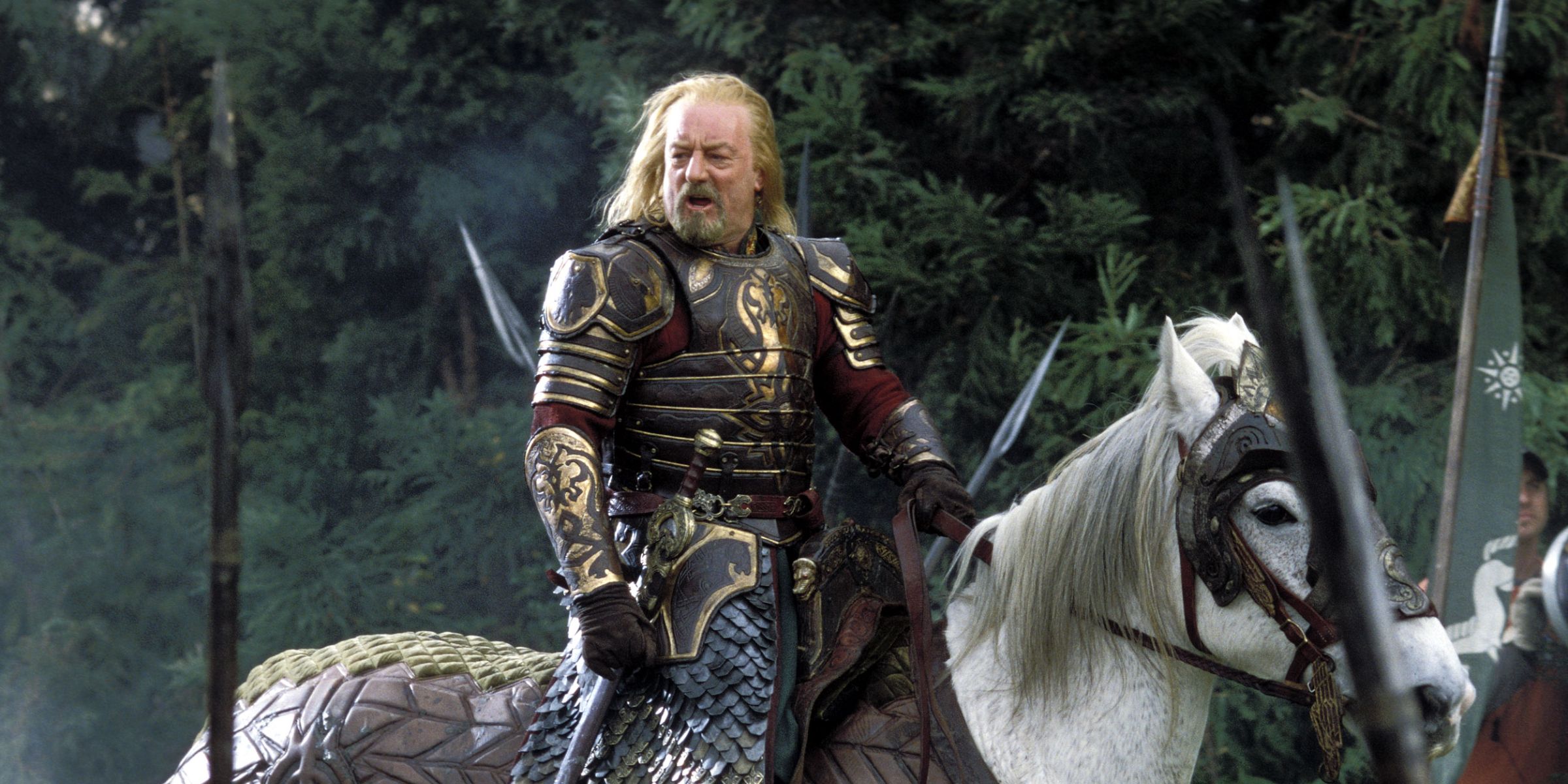
The movie achieved a record number of Academy Awards, and one reason it captivated viewers was its impressive depiction of large-scale battles, such as the Sieges of Gondor and the Battle of the Pelennor Fields. A historian specializing in ancient warfare recently reviewed these scenes and praised their historical accuracy.
The Battle of Pelennor Fields happens right after the Siege of Gondor. It truly begins when King Théoden leads the Rohirrim in a powerful charge, a moment historian Roel Konijnendijk uses as the starting point for his analysis.
Konijnendijk points out that the scene of someone hitting spears with a sword isn’t accurate to history. He explains it was a creative decision made by someone on the film crew for that particular moment, and it ended up staying in the final cut of The Lord of the Rings. He clearly knows both ancient warfare and the making of the movie.
Konijnendijk acknowledges the portrayal is remarkably effective, to the point where viewers often wonder if it’s historically accurate. People frequently ask if commanders in ancient or medieval times actually used this tactic. However, it’s purely a cinematic creation, a brilliant performance by Bernard Hill designed to look like something from premodern warfare, but it exists only within the context of the movie.
Konijnendijk dives into the details of the battle, starting with the Rohirrim’s cavalry charge against Mordor’s forces. He explains that real cavalry charges weren’t as consistently fast-paced as depicted in films. Movies often show extended gallops for dramatic effect and to emphasize speed with the sound of hooves. However, in reality, cavalry would approach slowly, perhaps transitioning to a trot, then a canter as they neared the enemy. A full gallop would likely only be used for the final few meters to ensure the horses maintained formation and didn’t tire too quickly, as horses have different speeds.
The Lord of the Rings: The Return of the King’s Iconic Battle Touches on Real Historical Debate
As a total movie buff, I recently learned something fascinating about the Rohirrim’s epic charge in The Lord of the Rings. Apparently, it sparks a real debate among historians about how effective cavalry actually was in ancient battles! According to one expert, Konijnendijk, some argue a charge wasn’t about crashing into enemy lines, but more about exploiting a rout. Basically, they wouldn’t slam into a prepared defense, but ride through and finish off an army that was already falling apart – kind of like giving a final, symbolic push to troops already on the run.
However, there’s another idea about how cavalry charges worked. Konijnendijk explains that some believe horses could be trained to deliberately run into solid formations. He points to a description from Winston Churchill, likely from the Battle of Omdurman, which details horses actually running over infantry soldiers – suggesting that’s what would happen when a cavalry charge hit a line of troops.
Perhaps the most memorable war creatures in The Return of the King are the oliphaunts. According to Konijnendijk, they’re essentially fantastical versions of the war elephants used in ancient times. When first seen on the battlefield, these massive animals were incredibly frightening and effective. Typically, soldiers facing elephants would simply create gaps in their lines to let them pass, as the elephants preferred to run free rather than engage in a fight. This tactic was famously used by the Romans against Carthaginian elephants, for example.
Regarding The Lord of the Rings, he believes the opposing forces are positioned too closely, making it hard to create openings. Alternatively, they could try to defeat them with a large number of projectiles. He suggests using fast-moving troops like archers and light infantry to create a defensive line against elephants, which is often a successful tactic.
Konijnendijk acknowledges that judging a fantasy film’s historical accuracy is difficult, but he gives The Return of the King significant praise. He states, “This is the best scene in terms of filmmaking and emotional impact. It’s the best possible depiction of ancient warfare you could ask for.” He concludes that Return of the King will always be a perfect 10.
He added that if he had to give it a rating, even though it’s a fictional story, he’d likely say an eight out of ten.
This month, fans can finally see the epic Battle of the Pelennor Fields in cinemas.
Read More
- Clash Royale Best Boss Bandit Champion decks
- Mobile Legends January 2026 Leaks: Upcoming new skins, heroes, events and more
- Vampire’s Fall 2 redeem codes and how to use them (June 2025)
- Clash Royale Furnace Evolution best decks guide
- Best Hero Card Decks in Clash Royale
- Mobile Legends: Bang Bang (MLBB) Sora Guide: Best Build, Emblem and Gameplay Tips
- Best Arena 9 Decks in Clast Royale
- Clash Royale Witch Evolution best decks guide
- Dawn Watch: Survival gift codes and how to use them (October 2025)
- Brawl Stars December 2025 Brawl Talk: Two New Brawlers, Buffie, Vault, New Skins, Game Modes, and more
2026-01-01 20:38