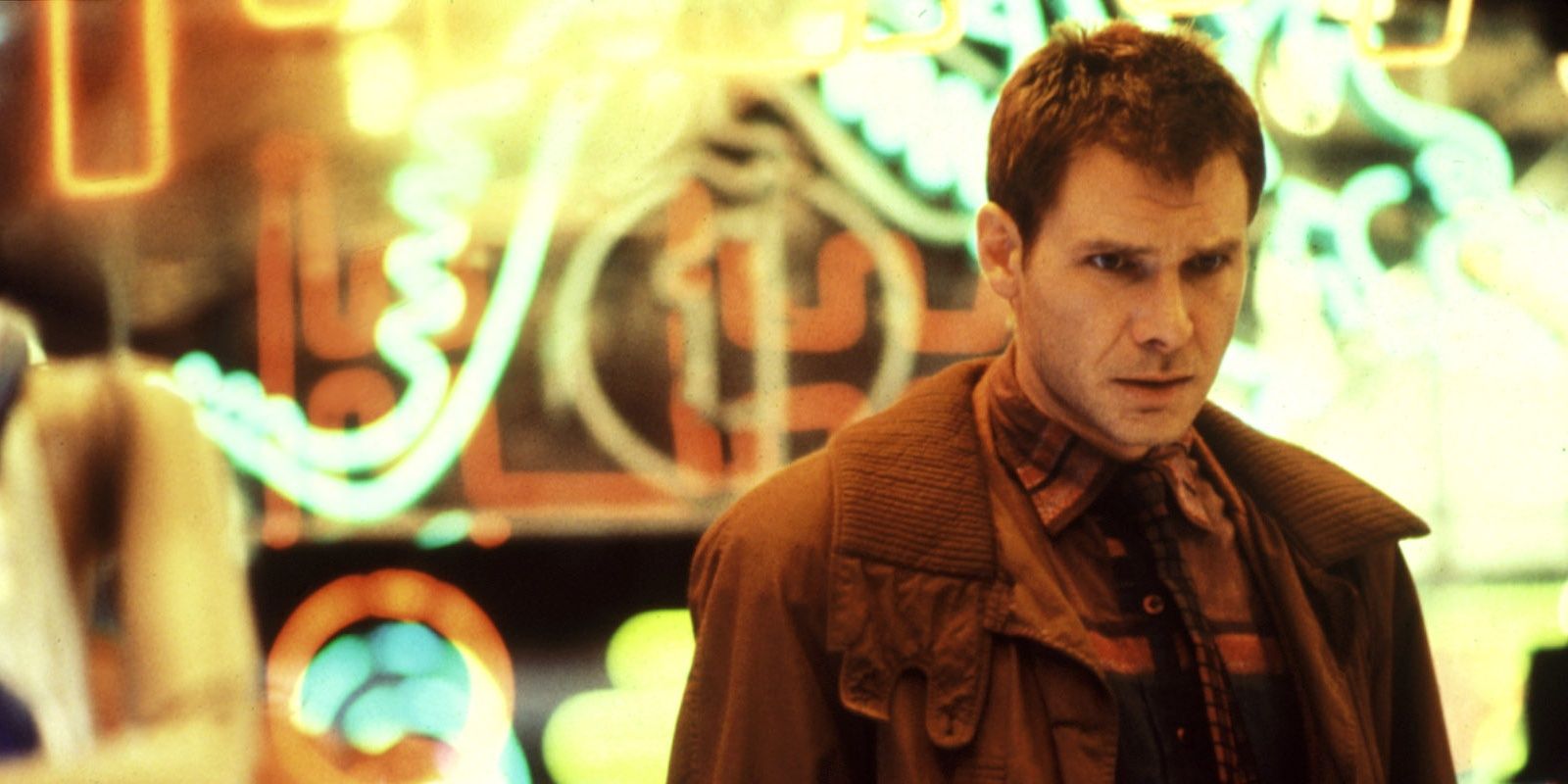
I first saw Ridley Scott’s film over 40 years ago, and it completely blew me away. It’s a huge, sweeping science fiction story starring Harrison Ford, Rutger Hauer, and Sean Young, and people still talk about it as one of the best futuristic, noir films ever made. The world it creates is so gritty and full of neon lights, and it really makes you think about what happens when humans and technology completely blend together, especially with these artificial beings called Replicants who do a lot of the work.
The film profoundly examines what it means to be human. Over its 119-minute runtime (in the theatrical version), Scott reveals the core of the human experience, ultimately delivering what’s become the central idea of Blade Runner – a single line of dialogue considered by many to be the most impactful in all of science fiction.
Roy Batty’s Monologue Puts Blade Runner’s Universe Into Perspective
Roy Batty was one of six escaped Replicants and proved to be the most difficult to find. He led the group until Rick Deckard cornered him in an old apartment building. What followed was a fast-paced chase in the pouring rain. Beyond the exciting action, the scene revealed a deeper connection: both Rick and Roy were deeply troubled individuals grappling with similar life challenges and suffering greatly.
Despite being a manufactured human with implanted memories and a short lifespan, Roy Batty’s final speech revealed a surprising connection with Deckard. As he was dying, while saving Deckard from falling off a building, Roy reflected on the experiences he’d had, demonstrating that their lives weren’t so different despite their origins.
As Roy faced death, he remembered a life filled with incredible experiences – battling ships near the Orion constellation and witnessing the shimmering light of distant worlds. He realized all those memories would be lost forever, like tears vanishing into the rain, and with a sigh, accepted his fate, uttering the now-famous words, “All those moments will be lost in time, like tears in rain. Time to die.”
Roy’s final words resonated deeply and are now considered iconic. In his last moments, he showed more genuine humanity than Deckard did during their fight, simply by choosing compassion and understanding. Roy experienced the full range of human emotions – happiness, awe, and sorrow – just like anyone else, but because he was a Replicant, he was deemed less worthy and given a tragically short life.
Deckard began to doubt the clear line between Replicants and humans when he fell in love with Rachael. This growing uncertainty became clear when Roy, facing death, expressed his fear that his memories and life would simply vanish, like tears in the rain. It was a deeply emotional scene, and Roy’s words unexpectedly shifted the perspective, making Deckard appear cruel as a Replicant grappled with the reality of his own death.
Blade Runner’s Biggest Moment Was All Thanks to Rutger Hauser
Though writer David Peoples is often credited with the memorable death speech, the powerful final version was largely thanks to actor Rutger Hauer. Peoples’ original monologue was quite different from what Hauer actually said on screen. The original read: “I’ve seen things… seen things you little people wouldn’t believe. Attack ships on fire off the shoulder of Orion bright as magnesium… I rode on the back decks of a blinker and watched C-beams glitter in the dark near the Tannhäuser Gate. All those moments… they’ll be gone.”
The film’s most famous line – about lost moments disappearing like tears in the rain – wasn’t actually in the original script. As revealed in the Channel 4 documentary, On the Edge of Blade Runner, actor Rutger Hauer felt the script sounded overly dramatic and didn’t fit the movie’s tone. He subtly changed the line the night before filming, and his delivery reportedly moved the cast and crew to tears, enhancing the scene’s emotional impact.
This speech perfectly captured the central, tragic message of Blade Runner: the Tyrell Corporation built Replicants who were almost indistinguishable from humans, led them to believe they were human, and then treated them as disposable objects to be eliminated. This cycle of creation, destruction, and prejudice was deeply flawed, and ironically, the Replicants often demonstrated more compassion and humanity than the people living on Earth.
Read More
- The Division Resurgence Best Weapon Guide: Tier List, Gear Breakdown, and Farming Guide
- Kagurabachi Chapter 118 Release Date, Time & Where to Read Manga
- Last Furry: Survival redeem codes and how to use them (April 2026)
- Clash of Clans Sound of Clash Event for April 2026: Details, How to Progress, Rewards and more
- Gold Rate Forecast
- Guild of Monster Girls redeem codes and how to use them (April 2026)
- ‘Project Hail Mary’s Soundtrack: Every Song & When It Plays
- All Mobile Games (Android and iOS) releasing in April 2026
- Wuthering Waves Hiyuki Build Guide: Why should you pull, pre-farm, best build, and more
- Top 5 Best New Mobile Games to play in April 2026
2026-03-22 04:39