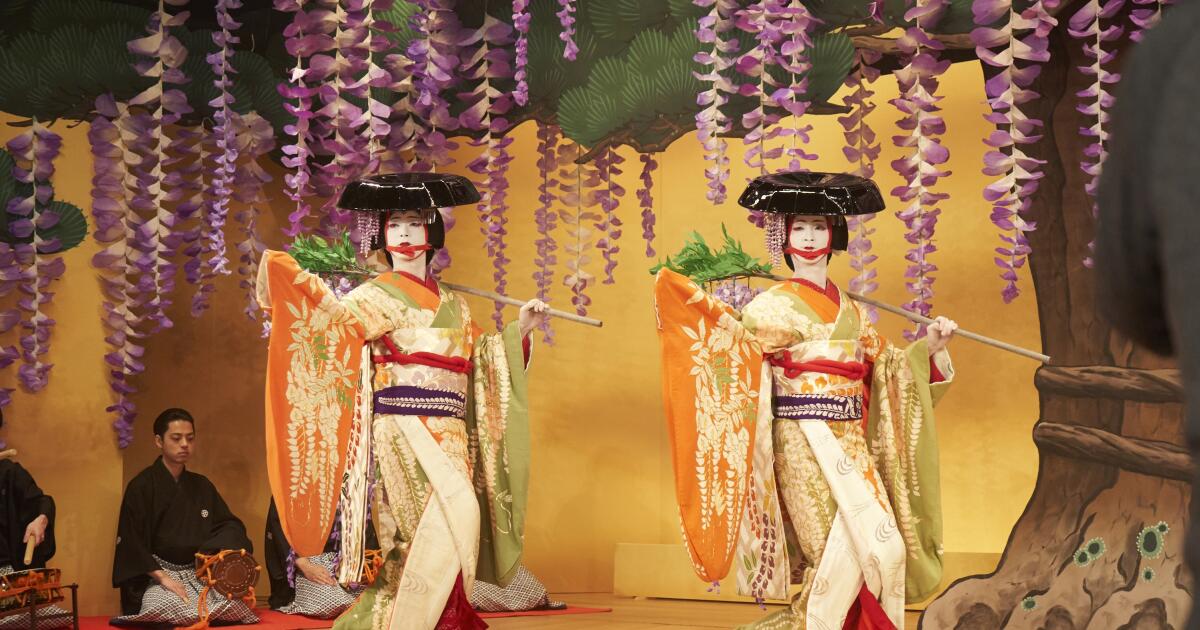
Director Sang-il Lee’s film, “Kokuho,” is a sweeping epic set within the colorful world of kabuki theater. What truly sets it apart is its complex portrayal of two characters and their 50-year journey to achieve greatness. The film, which has become Japan’s most successful live-action movie, shows kabuki as a beautiful and skillful art form, but ultimately suggests it can’t fully heal the rift between the two main characters, who were once close friends but were driven apart by their ambitions.
In 1964 Nagasaki, young Kikuo, a 14-year-old performer, catches the eye of Hanjiro, a famous kabuki actor, during a New Year’s celebration. When Kikuo’s father, a yakuza boss, is killed, Hanjiro takes him in and begins to train him – along with his own son, Shunsuke – in the art of kabuki. They learn to become “onnagata,” male actors who specialize in playing female roles. As they train in Osaka, enduring Hanjiro’s strict methods, the shy and gentle Kikuo and Shunsuke form a close bond and strive to become graceful, skilled performers.
The story jumps ahead to the early 1970s, introducing Kikuo (Ryo Yoshizawa) and Shunsuke (Ryusei Yokohama) as young adults. They’ve become a popular kabuki pair, almost like brothers, but their personalities are growing apart. Kikuo remains quiet and reserved, while Shunsuke is outgoing and loves to be the center of attention, often taking over interviews. Their mentor, Hanjiro, still believes in both of them, but each faces unique challenges. Kikuo is naturally more talented, but in the traditional world of kabuki, family background is essential – something he lacks as the son of a yakuza member. Shunsuke, on the other hand, doesn’t have Kikuo’s skill, but his future is secure as Hanjiro’s son. Though they work well together on stage, a sudden and unexpected event will tear them apart.

Awards
The 98th Academy Award nominations are out! ‘Sinners’ received the most nominations with a total of 16. You can find the complete list of nominees for 2026 here.
Lee’s film, based on a novel by Shuichi Yoshida, follows the story of a friendship and offers a detailed look at the world of kabuki theater, both the performances and what happens behind the scenes. The film’s stunning makeup—recognized with an Oscar nomination—highlights the iconic white face paint and red lipstick used by kabuki actors to transform into their characters. Like ballet, kabuki relies on precise, choreographed movements, and the film showcases several kabuki pieces with titles and brief summaries. While these performances don’t always directly relate to the characters’ personal struggles, they enrich the viewing experience, complemented by beautiful costumes and impressive sets that bring the mythical stories to life.
Throughout their careers, Kikuo and Shunsuke experience both success and hardship – even facing setbacks when they’re already struggling. Director Lee avoids painting either performer as simply good or bad, and our feelings towards them shift as we see their flaws and strengths. “Kokuho” is a dramatic and engaging story filled with everything from scandals and betrayals to unexpected comebacks and health problems. Despite its over-the-top plot twists, the film doesn’t glorify stardom; instead, it realistically portrays its dangers. What’s truly refreshing is that “Kokuho” doesn’t automatically equate talent with success. While Kikuo and Shunsuke both reach great heights and suffer significant lows, the film ultimately suggests that their determination is more important than labels like “genius” or “brilliance.”
The film’s title, meaning “national treasure,” is a label often used to describe exceptional artists. The story centers on characters who aspire to that title, but discover how inaccurate and limiting it can be, especially when applied to the legendary kabuki actors they admire. Actors Yoshizawa and Yokohama beautifully portray a tender friendship, avoiding simple characterizations. Yoshizawa subtly reveals hidden complexities beneath Kikuo’s seemingly innocent exterior, showcasing the performer’s talent and inner struggles. Meanwhile, Yokohama convincingly plays a young man grappling with the privileges and burdens of his fortunate upbringing.
Their paths cross and separate, but they keep finding their way back to each other. This mirroring of connection and disconnection is much like a kabuki performance, which beautifully blends sadness and joy, pain and release.
Read More
- ‘Project Hail Mary’s Unexpected Post-Credits Scene Is Worth Sticking Around
- Beyond Accuracy: Gauging Trust in Human-AI Teams
- Gold Rate Forecast
- Clash Royale Balance Changes March 2026 — All Buffs, Nerfs & Reworks
- The most surprising Hannah Montana cameos: From John Cena to Dwayne Johnson and even a Coronation Street soap star as show celebrates its 20th anniversary
- Genshin Impact Version 6.5 Leaks: List of Upcoming banners, Maps, Endgame updates and more
- eFootball 2026 is bringing the v5.3.1 update: What to expect and what’s coming
- Total Football free codes and how to redeem them (March 2026)
- Brawl Stars Brawl Cup Pro Pass arrives with the Dragon Crow skin and Chroma, unique cosmetics, and more rewards
- We talked to ‘Bachelorette’ Taylor Frankie Paul. Then reality hit pause on her TV career
2026-02-20 22:31