
Ugh, we’ve all been there, right? You’re crushing it in a match, playing your best, and then BAM – your opponent throws down a super-leveled card that just completely steamrolls your defenses. Suddenly, their Hog Rider gets that one extra hit on your tower and you lose. It makes you wonder, did they actually outplay me, or did they just… spend more money? That’s what gets everyone talking about ‘pay-to-win’. Does all my strategy and skill in Clash Royale even matter when someone can just buy their way to victory? Before I rage-quit and delete the game, I want to understand why these moments happen and what’s going on under the hood.
Key Takeaways
- Clash Royale’s model is built on paying to skip the grind: The core debate boils down to this: spending money doesn’t unlock secret weapons, but it lets you bypass months of progression, giving you a significant advantage with higher-level cards.
- Master one deck to compete without spending: Free-to-play success is possible, but it requires focus. Concentrate all your resources on leveling up a single, versatile deck to close the power gap against paying players through sheer skill and expertise.
- Card levels can ultimately trump skill: While strategy is crucial, the game is designed so that you’ll eventually hit a wall where an opponent’s over-leveled cards create a statistical advantage that’s nearly impossible to outplay.
Is Clash Royale Pay-to-Win?
Let’s address a long-standing question about Clash Royale that sparks a lot of debate: Is it a ‘pay-to-win’ game? There’s no easy answer. It depends on what you mean by that term and what you’re hoping to achieve in the game. To really understand why this question keeps coming up, we need to define ‘pay-to-win’ and explore why it’s been such a persistent issue for Clash Royale.
What “pay-to-win” actually means
Okay, so “pay-to-win” games – or P2W as we call them – are the ones where spending real money basically lets you get way ahead of everyone else. It’s not usually about buying a win instantly, but more about buying power. Think powerful items or leveling up your character way faster than if you were just grinding it out. I’ve seen a lot of debate around games like Clash Royale. Some people don’t think it’s totally P2W, but more like “pay-to-progress-faster.” Basically, you’re not getting stuff nobody else can get, you’re just skipping a ton of the grind and maxing out your stuff quicker. That difference – whether it’s exclusive stuff or just faster progress – is what everyone’s arguing about.
Why this debate has raged since 2016
The debate about “pay-to-win” elements in Clash Royale isn’t new – it’s been happening since the game launched. From the beginning, people have argued that players who spend a lot of money can end up facing much weaker opponents, which feels unfair. Many veteran players believe this problem has gotten worse over time. Originally, spending money just let you progress faster, but now it feels almost required to be competitive at higher levels. This frustration highlights a broader discussion about how mobile games make money.
Breaking Down Clash Royale’s Economy
Clash Royale is fundamentally a game where you collect and improve cards to create a powerful deck of eight. You earn these cards by winning battles and opening chests. While the basic idea is straightforward, the game’s system for earning and upgrading cards can be complex, leading to discussions about whether spending money gives players an unfair advantage. The game revolves around a continuous cycle: battling to earn chests, waiting for those chests to unlock (or paying to open them immediately), collecting cards and gold, upgrading your cards, and then battling again.
This game is built to unfold gradually. Progress is deliberately slowed down by waiting times and random card draws. While you can play for free, you have the option to spend money to speed things up. You can purchase Gems – the game’s special currency – to bypass these delays. Whether you enjoy a challenge without spending money or prefer to invest in the game, understanding how the in-game economy works is crucial to see if skillful play can overcome spending power. Let’s take a closer look at the key elements driving this system.
The grind: Card levels and upgrades
In Clash Royale, how strong your cards are is the most important part of winning. To make cards stronger, you need copies of them and Gold. Getting both of these can take a long time, especially if you don’t spend money on the game. Players who don’t pay to win will spend a lot of time opening chests and saving Gold, and it takes even longer to upgrade cards as you progress to higher levels.
This system is causing a lot of frustration for players. Previously, spending money just meant progressing faster, but now it feels like you need to spend money to win. The issue is compounded by the matchmaking system, which often puts players with stronger, upgraded cards against those who are still developing. This means skill isn’t always enough to win, as a player can be easily defeated by someone who has simply spent more money. It’s a discouraging experience that makes playing the game feel pointless at times.
Buying time with gems
In Clash Royale, Gems are a way to speed things up. You can use them to instantly open chests, buy Gold, or get cards right away. Basically, they let you avoid the waiting times that other players have to deal with. For example, if you don’t want to wait for a chest to unlock, you can use Gems to open it immediately. This system of paying to advance more quickly is a key part of how the game makes money.
As a long-time player, it’s pretty clear to me that Supercell sometimes seems to want you to get frustrated so you’ll spend money. I remember when everyone was begging for a way to turn off emotes, and they intentionally didn’t add it because they said they wanted strong emotional reactions. It’s annoying when someone beats you and then spams a laughing emote – honestly, it makes you want to spend a little to get revenge! You can’t deny that spending money gives you a real advantage, and that seems to be built right into the game’s design.
The real cost of climbing the ladder
Most players aim to rise through the ranks and unlock new arenas. However, as you progress, the competition gets tougher, and having powerful, upgraded cards becomes crucial. You’ll eventually find it hard to win just based on skill, as opponents will have fully upgraded decks. At that point, you can either spend a lot of time collecting more cards and upgrading them, or you can choose to spend money to speed up the process.
The idea that this game favors players who spend money is particularly strong here. Many veteran players think the game has become repetitive, and a recent survey showed they’re frustrated by unfair cards and a shortage of fresh content. When it feels like the best strategies are already figured out and progress depends on owning powerful cards, it’s hard to deny that spending money gives players an advantage. Ultimately, many feel the biggest cost of trying to improve isn’t just time or money, but the enjoyment they get from playing.
The Case for “Pay-to-Win”
Let’s address the main issue: many players believe Clash Royale favors those who spend money, and it’s not just about being upset after a loss. The game’s design – how players advance and how matches are made – actually seems to give an advantage to players who spend a lot of money. It’s hard to ignore the feeling that how much you spend is more important than how well you play, and this frustration is consistently voiced by players online and in surveys.
Look, it’s not just people being upset they’re losing. There are real reasons to believe this game leans towards ‘pay-to-win.’ It’s not about skill sometimes, but about what you’ve bought. Things like upgrading your cards drastically change how battles play out, and honestly, the matchmaking can feel really unfair. I’ve been seeing a lot of discussion in the community, and it seems like a lot of us feel like players who spend money have a significant advantage right from the start. Let’s dive into exactly why people are feeling this way and look at the evidence.
How higher card levels create an unfair advantage
Clash Royale is fundamentally a game where stats matter most. A card’s level directly affects its strength and health, and even a small difference can completely change a battle. When players spend money to fully upgrade their cards, they gain a big advantage in these stats. This means a well-timed attack might not be enough to defeat an enemy’s stronger cards, or their upgraded units could deliver a crucial final blow. This is where it becomes difficult to distinguish between simply speeding up progress and actually buying a win. The benefit isn’t just about saving time; it’s about creating situations where a less-upgraded player can’t win, no matter how skilled they are.
What Supercell admits about spending
Supercell is known for choosing its words carefully, but some previous statements have actually made the situation worse. For example, the company once explained its decision not to let players turn off emotes by saying they wanted the game to create strong feelings. While they didn’t directly say the game favored paying players, this shows they knew the game’s design – especially features you can buy – was meant to have a powerful psychological effect. This suggests that spending money isn’t just about how things look; it’s designed to deeply change and amplify how players feel while playing, which many believe gives those who spend money an unfair advantage.
Why the community is so frustrated
As a long-time player, I think a huge part of the problem is how frustrated everyone is. The surveys are always saying the same thing: people really dislike feeling like you have to pay to win, and it’s right up there with issues like card balance and a lack of new stuff to do. What really gets to me, and a lot of others, is when you see players who clearly spend a lot of money getting matched against newer players in the lower arenas. It’s just a really unfair fight! New players, or those of us who don’t spend money, are facing off against maxed-out cards we can’t possibly beat. It just feels bad, and honestly, it’s driving a lot of people away from the game. It creates this awful cycle where you feel like you have to spend money to even compete.
Debunking Pay-to-Win Myths
People often call games “pay-to-win,” especially if they have in-app purchases. But when you look at Clash Royale, many complaints about this aren’t entirely accurate. It’s not as simple as players who spend money always winning. The game’s financial system is complex, and a lot of the frustration comes from misunderstandings. Let’s address these misconceptions and see how the game actually works. Knowing the details will help you understand if you can be competitive without spending any money.
Myth: Paying guarantees a win
The claim that spending money guarantees wins in Clash Royale is easily proven false. While buying upgrades can give you an edge, it doesn’t automatically lead to victory. You can purchase a powerful deck, but that doesn’t mean you’ll know how to use it well. A player with top-level cards can still lose to a more skilled opponent with weaker cards if their timing and resource management are poor. Ultimately, the game rewards spending with faster advancement, but winning still comes down to strategy and skill.
Myth: Spenders get exclusive content
A frequent misunderstanding is that players who spend money gain access to cards unavailable to free players. This isn’t the case – all cards are obtainable by everyone. Paying players simply acquire and improve their cards at a quicker rate. Essentially, you’re paying to avoid a lengthy grind, not to get exclusive items. This leads many to believe the game is more about paying for faster progress than outright winning through purchases. A committed free player can ultimately build an equally powerful deck, but it will take considerably longer.
Myth: All mobile games are the same
Okay, so a lot of mobile games feel the same with all the in-app purchases, but Clash Royale actually does a few things differently. Their trophy system tries to match you up with people who are about as good as you are. You will occasionally face someone who’s clearly spent a ton of money upgrading everything, but the system isn’t totally unfair. Even if someone spends a lot, they can still drop down in rank if they’re not actually skilled enough. This is cool because it means even if you’re just starting out, you can still have some really competitive matches. It just proves not all mobile games are designed to squeeze money out of you the same way.
The Argument Against the “Pay-to-Win” Label
It’s tempting to call Clash Royale “pay-to-win,” but that’s not the whole story. While spending money can definitely help, it’s not the only key to success. Skill, smart planning, and understanding the game are just as important, if not more so. For serious players, Clash Royale is really a battle of strategy, where being good at the game can often overcome a financial advantage.
Ultimately, the core of this argument is that spending money can help you progress quickly, but it won’t make you a good player. A player with a powerful, fully upgraded deck but no skill is an easy target for someone who truly understands the game and how cards work together. Those who oppose paying to win emphasize that certain things can’t be bought with in-game currency – things like precise timing, smart resource management, and the ability to anticipate what your opponent will do next.
Why skill and strategy still matter
Clash Royale is fundamentally a game of strategy, like a supercharged version of rock-paper-scissors. Success comes from learning how to effectively respond to opponents – for example, using a quick swarm of skeletons to stop a powerful charge, or timing your attacks perfectly. As one player noted, spending money mainly speeds up progress; it doesn’t unlock unbeatable cards. All players have access to the same cards, meaning skill is more important than spending. A player who understands how to manage resources and build a strong deck will consistently beat someone who simply relies on powerful cards.
How free-to-play players can succeed
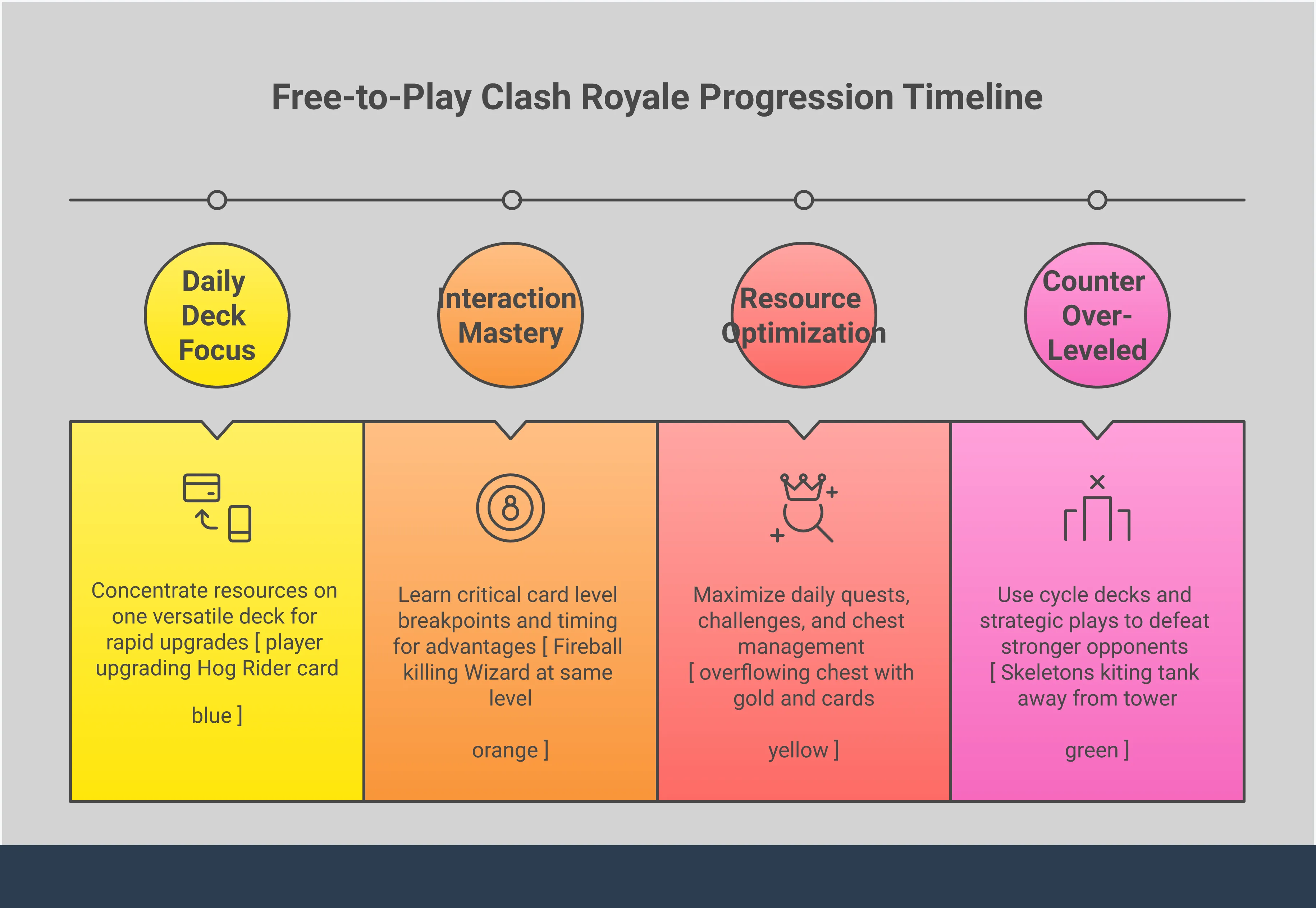
Becoming successful in a free-to-play game takes time and dedication. It’s not about quick wins, but about being patient and managing your resources carefully. Don’t try to upgrade every card you get – instead, pick one or two strong decks and focus on improving those. This lets you save your gold and ask for specific cards you know will help. Joining an active clan is also crucial, as the cards you receive from other players will significantly speed up your progress. If you play strategically, complete challenges, and gradually build your collection, you can compete at a high level without spending any money.
Is it pay-to-win or pay-to-progress-faster?
The main point of contention is whether Clash Royale is “pay-to-win.” Many believe it’s more accurately described as “pay-to-progress-faster.” Players who spend money don’t gain access to things free-to-play players can’t eventually earn; they just speed up the process of unlocking chests and collecting cards. A truly pay-to-win game typically restricts its strongest items to paying players, creating an unbeatable advantage. However, in Clash Royale, a committed free player could theoretically reach the same top level as someone who spends a lot of money – it would simply take much longer. This difference is why many players don’t see the game as purely focused on extracting money.
What Does the Clash Royale Community Really Think?
The discussion about whether spending money gives players an unfair advantage in Clash Royale is ongoing and very active within the game’s community. Players freely share a wide range of opinions – from online forums like Reddit and Discord, to official game surveys – about what they enjoy, dislike, and want to see improved. Understanding the players’ collective feedback is crucial to understanding the game’s current state and how its in-game economy is perceived.
What player surveys reveal
The data clearly shows players are unhappy with several aspects of Clash Royale. Recent surveys reveal concerns about the game’s social features and a feeling that it’s becoming too reliant on spending money to win. Players are also asking for more new content – like new cards, events, and game modes – to keep the game exciting. Finally, many are frustrated with ongoing issues regarding card balance and the game’s difficulty. Overall, the community wants a fairer and more enjoyable experience.
Casual vs. competitive player views
Whether a game is “pay-to-win” is often a matter of opinion. How players experience Clash Royale’s progression system varies greatly – a casual player will have a different view than a competitive one. Many players agree that spending money can help you advance faster, but it doesn’t guarantee wins. They believe that skill, smart strategy, and understanding how to build a good deck are still the most crucial elements for success. This means that while paying money might get you powerful cards more quickly, it doesn’t replace the need for good gameplay, which is why the discussion about whether it’s truly “pay-to-win” continues.
How feedback shapes the game’s reputation
As a player, I can tell you everything Supercell does gets picked apart by the community, and a lot of the talk ends up being about how much you can get ahead by spending money. One of the biggest gripes is matchmaking – it’s super frustrating to be a free player and get matched against people with fully upgraded cards, even when I’m still pretty low level. It just feels unfair, like skill doesn’t matter as much as how much money someone’s spent. Honestly, all this feedback from players really impacts how the game is seen, and it pushes Supercell to think about how they make money in future updates. We, the players, really have a say in how the game changes and evolves.
Can You Compete Without Spending Money?
The big question for Clash Royale players is: can you succeed without spending any money? The answer is definitely yes, but it takes effort. Instead of relying on purchases, you need to focus on strategy, patience, and really learning how the game works. Buying cards with money might get you ahead faster, but it won’t make you a better player. Plenty of players have shown that you can achieve high rankings and compete successfully without spending any money, proving that skill and smart play are more important than financial investment.
As a big fan of this game, I’ve learned that going free-to-play isn’t about spending money, it’s about playing smart! It’s a slower burn, for sure – you’ll need to be patient as you build up your card collection and sometimes face opponents who seem stronger on paper. But honestly, that’s where the fun really starts. It’s all about figuring out how to make the most of what you have, being strategic with your resources, and outplaying your opponents with smart tactics. Instead of just relying on having the best cards, you learn to win through skill and clever counter-plays. Let’s dive into how you can actually compete – and even win – without spending a dime!
Strategies for free-to-play success
If you’re playing for free, the key to winning is to focus on just one deck instead of trying to improve everything. Choose eight cards that work well together and dedicate all your resources – gold, wild cards, and trade tokens – to leveling them up. It takes commitment, but you’ll get a competitive deck much faster. Really learn how your chosen cards interact and how to play against every other deck. This expertise will help you compete with players who have more cards overall, but haven’t mastered any one deck as thoroughly.
Is it about time or skill?
The central question in the Clash Royale community is whether success depends more on spending money or on skillful gameplay. While it’s often said the game isn’t purely ‘pay-to-win,’ many believe it’s more accurate to say money simply speeds up progress. Players who spend money don’t gain access to uniquely powerful cards, they just bypass the time and effort needed to level up. Ultimately, skill remains the most important factor. Even a fully upgraded attack strategy can be defeated if your opponent understands how to counter it effectively. Good timing, smart card placement, and efficient elixir use will always be more valuable than simply spending money in a close match.
Playing smart within the system’s limits
To succeed as a free-to-play player, you need to understand how the game works. A unique aspect of Clash Royale is that simply spending money doesn’t ensure high rankings. As Game Informer pointed out, even players who spend a lot can fall to lower levels if they lack skill. This opens the door for smart free players. You might encounter an opponent with powerful, fully upgraded cards who still makes simple errors, giving you an easy win. Ultimately, it’s about identifying what your opponent is doing and taking advantage of their weaknesses – their card levels don’t matter as much as your strategy. Your ability to think critically is your greatest strength.
How Spending Changes Your Experience
No matter if you’re new to Clash Royale or have been playing for years, spending money definitely impacts your gameplay. It’s more than just collecting powerful cards – it affects how quickly you progress and how competitive you are. Players who don’t spend money have a very different experience than those who do. For many, the real issue isn’t whether it’s possible to win without paying, but how enjoyable the game is when you choose not to. Let’s explore what it’s like to play as different types of players.
The free-to-play grind
Playing without spending money will be tough and take a long time. Many players find that the game increasingly favors those who pay to win as you progress. It used to be that spending money just gave you a slight edge, but now it feels like you have to pay to be competitive. It’s especially frustrating when high-spending players are matched against those with lower levels, creating unfair fights where skill isn’t enough to win because the opponent has simply bought stronger cards.
From light spender to “whale”
Whether Clash Royale is “pay-to-win” is complicated. It’s often more accurate to say it lets players “pay to progress faster.” Spending money doesn’t unlock cards you can’t earn otherwise, but it does save you time. You can skip waiting for chests to open, instantly buy cards, and quickly upgrade your units. This is a significant benefit, as it avoids the long, slow process that free players face. While it doesn’t guarantee a win, having stronger cards than your opponent creates an uneven playing field and gives you a considerable advantage.
How far can you really get without paying?
For players who don’t spend money, there’s a surprisingly high skill ceiling, but it’s a really difficult path. Many players are frustrated by how hard it is to make progress without paying. While skillful play, smart strategy, and lots of patience can get you far – even to high competitive levels – you’ll eventually find your progress limited by the strength of your cards. At that point, you’ll either have to accept a very slow pace or compete against players who’ve paid to get ahead.
How Clash Royale Stacks Up
Okay, so everyone’s always arguing about whether Clash Royale is “pay-to-win,” right? I think to really figure it out, we need to step back and look at mobile games in general. That “pay-to-win” thing means different things in different games – some are super obvious about wanting your money, while others are more subtle. If we compare Clash Royale to other mobile games, we can get a much better sense of just how much spending actually impacts your ability to win.
It’s not simply about being able to afford things; it’s about how spending affects the game for all players. Does it offer a minor advantage, or does it create a huge gap between those who spend money and those who don’t? Let’s examine how different ways of earning money work in games and see where Supercell’s method fits in.
Monetization in other mobile games
In mobile gaming, “pay-to-win” (P2W) is a controversial topic. Essentially, it means players can spend money to gain an edge over those who don’t. This could involve buying better items, speeding up progress, or unlocking content more quickly. However, it’s not always a straightforward advantage. Some games are designed to balance things out – for instance, high-spending players might be reset to lower levels, giving free players a fair chance and preventing them from being constantly overwhelmed. This makes the game more competitive, where skill can be just as important as spending money.
Where Clash Royale falls on the P2W scale
Where does Clash Royale stand when it comes to spending money? Opinions differ. A lot of players believe it’s not strictly “pay-to-win,” but more “pay-to-progress-faster.” They say that paying money doesn’t give you cards that are unbeatable, it just lets you upgrade your cards quicker. The idea is that skill and smart gameplay are still the most important things when players are at a similar level.
Many players are upset, feeling the game has gone too far with its spending requirements. While it initially just let people pay to speed things up, updates have made it very hard for free players to compete. They believe spending money now gives such a large advantage that Clash Royale has become a ‘pay-to-win’ game, where how much money you spend is more important than your skill or the cards you use, which is very frustrating.
What This Means for the Future of Mobile Gaming
The ongoing discussion about Clash Royale isn’t just about the game itself—it highlights a bigger issue with mobile gaming. Developers constantly struggle to balance making money with keeping the game fun and fair for everyone. Clash Royale’s approach, where spending money can significantly speed up progress, has become a common model, but it also serves as a warning. It demonstrates how quickly players can become unhappy if they feel like winning depends more on how much money you spend than on your skill. As new mobile games are released, they’ll need to find a balance between profit and fairness. The lessons learned from games like Clash Royale—both its successes and failures—will influence these decisions, and ultimately make us consider what we truly want from our games and what we’re willing to tolerate from the companies that create them.
The impact on player satisfaction
Introducing features that give paying players a clear advantage can really hurt how players feel about a game. It creates an uneven playing field where spending money feels more important than skill, which is disappointing for those who enjoy fair competition. While getting players to spend money can boost revenue, it risks turning away those who don’t pay, and these players are vital to a healthy community. Without a strong base of free players, it becomes harder to find matches, the community gets smaller, and the game feels lifeless. In the long run, a game that leaves many players feeling frustrated isn’t likely to succeed.
The future of competitive mobile games
Clash Royale offers a look at how competitive mobile games might evolve. Although spending money definitely helps players improve, the game includes features like trophy resets to prevent experienced players from always dominating beginners. This hints at a future where game developers could design more intricate systems that balance spending with skill-based gameplay. What players consider “pay-to-win” also shifts over time—something initially seen as giving an edge can become essential for staying competitive. Ultimately, players need to understand how spending impacts their favorite games and adjust their approach, regardless of whether they choose to spend money or not.
Frequently Asked Questions
Okay, so is Clash Royale really pay-to-win? It’s a tricky question! If you think ‘pay-to-win’ means getting stuff nobody else can, then it’s not quite that. But if it means spending money to get a big edge and win more easily? Yeah, I think it definitely leans that way. Honestly, I’d say it’s more ‘pay-to-progress-faster.’ But getting ahead quickly creates a real imbalance when you’re trying to climb the ladder, and that feels unfair sometimes.
It’s definitely possible to compete without spending any money, but it takes patience and smart planning. Instead of trying to upgrade every card, focus on becoming really good with one strong deck. You might progress slower than players who spend money, but understanding the game well and having good skills can often beat opponents who rely on powerful cards without knowing how to use them properly.
The biggest benefit of spending money in Clash Royale is saving time. Players who spend can bypass waiting for chests and instantly get the gold and cards they need to improve their units. This lets them quickly boost their units’ health and damage, giving them an edge over players who don’t spend. While free players can eventually become just as powerful, paying players reach that level much faster.
Why is the difference in card levels such a big issue in this discussion? Card levels significantly impact how the game plays. Even a small difference – just one level – can completely change an attack, like making a Fireball spell ineffective or allowing an enemy unit to deal critical damage. When a player’s skill and strategy can be overshadowed by a simple level advantage, it can feel unfair and frustrating.
Whether or not the Pass Royale is worth the money depends on how often you play and what you’re hoping to get out of the game. If you play regularly and want to speed up your progress without spending a lot, the Pass Royale is a good deal because it gives you extra rewards. It won’t make you the very best player, but it can make playing each day more enjoyable and less tedious.
Read More
- Clash Royale Best Boss Bandit Champion decks
- Vampire’s Fall 2 redeem codes and how to use them (June 2025)
- Mobile Legends January 2026 Leaks: Upcoming new skins, heroes, events and more
- World Eternal Online promo codes and how to use them (September 2025)
- How to find the Roaming Oak Tree in Heartopia
- Best Arena 9 Decks in Clast Royale
- Clash Royale Furnace Evolution best decks guide
- Clash Royale Season 79 “Fire and Ice” January 2026 Update and Balance Changes
- Clash Royale Witch Evolution best decks guide
- Best Hero Card Decks in Clash Royale
2025-12-03 16:06