Most stories about the end of the world follow a similar pattern: a disease or an outside force devastates the planet, almost wiping out humanity and leaving those who survive to struggle in a world where society has collapsed. Often, these stories feature monsters as the cause of the disaster or as a major obstacle to rebuilding.
Shows like The Walking Dead, Fallout, The Last of Us, and The 100 have always captivated viewers with the idea of living through a complete societal breakdown. However, some series offer a more realistic take on the end of the world. This show depicts a rapid collapse as a deadly virus wipes out most of the population. Stripping away the typical monsters or nuclear disasters, it presents a truly chilling vision of what human extinction might actually look like.
Station Eleven’s Apocalypse Mirrors the Real World Too Well
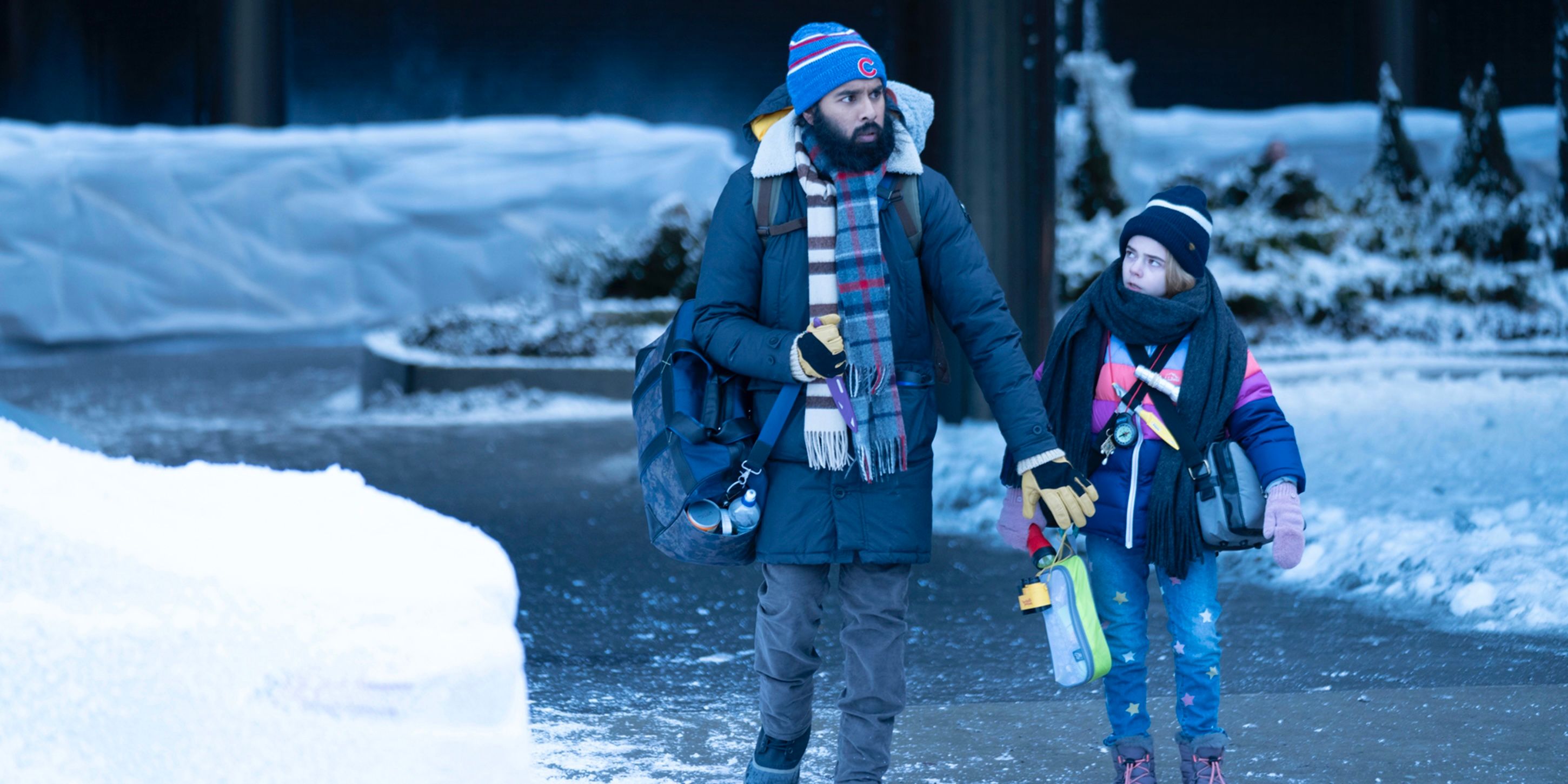
The series primarily follows the stories of two people who survive a devastating pandemic: Kirsten Raymonde and Jeevan Chaudhary. Though captivating, it came out at a difficult moment, premiering in December 2021 and concluding in mid-January 2022—just two years after the start of the COVID-19 pandemic. While inspired by the 2015 novel of the same name and not based on real events, Station Eleven depicts an outbreak caused by a lethal virus originating in Asia.
The first episode features scenes of hospitals struggling with a new virus, mirroring the challenges faced by healthcare workers during the initial COVID-19 outbreak. Widespread panic arises from the virus’s rapid spread and the lack of clear solutions. Like many people did in 2020, Jeevan and Kirsten stock up on groceries and retreat to an apartment, hoping the situation will quickly improve.
Meanwhile, across the globe, a group of people find refuge in an airport and attempt to create a new community. This situation reveals a darker, more flawed side of human nature when faced with danger. Unlike Jeevan and Kirsten, who found connection with strangers, the airport survivors react with fear and isolate others by forcing them onto a quarantined plane, driven by paranoia about the spreading infection.
While their actions might seem harsh, it’s understandable why the airport survivors are so afraid. More importantly, this situation highlights how prejudice and keeping people apart are ultimately more destructive to us all than any disease. Unfortunately, this isn’t a new problem for our society.
Survivors of Station Eleven Cope Exactly as Expected
What sets Station Eleven apart is its shifting timeline. The story jumps between the beginning of the outbreak, focusing on a young Kirsten, and twenty years later, when she’s grown up. This allows us to see a detailed picture of how society has changed. Interestingly, the virus isn’t as prevalent in the future, suggesting life is starting to return to normal.
That assessment is completely wrong. People have divided into different groups, with varying levels of cooperation. A dangerous cult, led by someone calling themselves a “Prophet” who kidnaps children, has also emerged, highlighting how religious extremism can flourish when society breaks down.
However, the novel also shows how people can find healthy ways to cope with difficult times. For example, Kirsten travels with a group of actors called the Traveling Symphony, bringing entertainment to different communities. Station Eleven effectively contrasts these different coping methods, and surprisingly, they all stem from the same underlying grief.
Even the smaller details in Station Eleven demonstrate the writers’ thoughtful consideration of real-life disasters and how people might respond. For instance, the connection between Jeevan and Kirsten is explored much more deeply in the television series than in the original book.
After the outbreak begins, Jeevan and Kirsten form a strong bond, despite previously being strangers. However, the weight of their new reality affects them both. Kirsten, still grieving the loss of her parents and the sudden upheaval of her life, finds comfort in a graphic novel, which becomes a source of emotional reliance. This reliance ultimately creates distance between her and Jeevan and hints at future problems.
Jeevan and Kirsten are separated, and sadly, they never find their way back to each other over the next two decades. This feels realistic, given a world where it’s hard to communicate or travel. Unlike in The Last of Us, where characters often reunite despite the odds, Station Eleven doesn’t shy away from loss. It acknowledges the sadness of an apocalyptic world, but also shows how even in darkness, hope and kindness can still exist.
Read More
- Clash Royale Best Boss Bandit Champion decks
- Vampire’s Fall 2 redeem codes and how to use them (June 2025)
- Mobile Legends January 2026 Leaks: Upcoming new skins, heroes, events and more
- World Eternal Online promo codes and how to use them (September 2025)
- Clash Royale Season 79 “Fire and Ice” January 2026 Update and Balance Changes
- Best Arena 9 Decks in Clast Royale
- M7 Pass Event Guide: All you need to know
- Clash Royale Furnace Evolution best decks guide
- Best Hero Card Decks in Clash Royale
- Clash Royale Witch Evolution best decks guide
2025-12-14 21:07