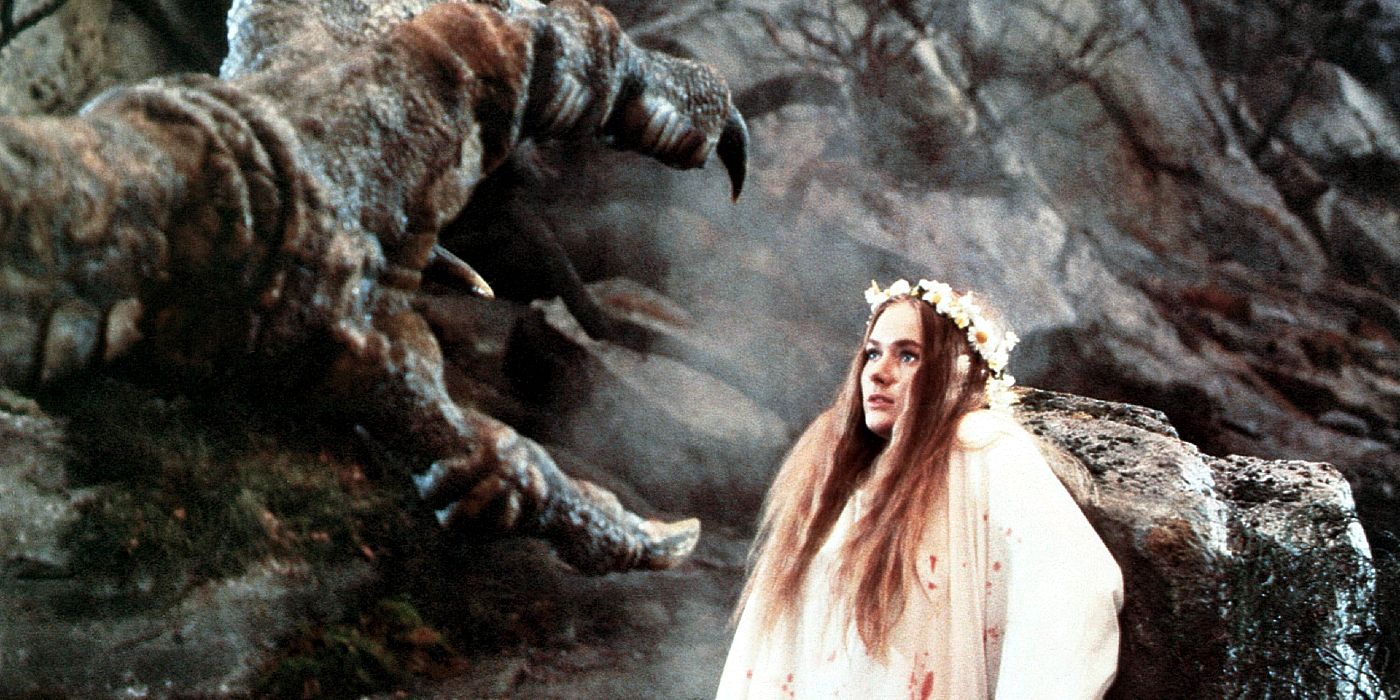
George R.R. Martin is famous for his gritty fantasy worlds – and deservedly so. As the creator of the universe behind House of the Dragon and several planned spin-offs, he’s a hugely influential figure who helped shape modern fantasy. But even great creators are inspired by others, and surprisingly, one of Martin’s all-time favorite movies is the dark Disney classic, Dragonslayer.
As a huge fan of fantasy films, I always come back to this 1981 movie – it’s seriously one of the best dragon films ever made. The dragon itself is iconic, but what really blew me away even then was how they created it. It was a real leap forward in visual effects for its time! It’s funny, though, because despite all that effort, it wasn’t a hit when it first came out – a collaboration between Disney and Paramount that just didn’t quite connect with audiences 44 years ago. Interestingly, the famous fantasy author who inspired a lot of these films had some pretty strong opinions about how the dragon was portrayed.
George R.R. Martin Called Vermithrax Pejorative the Best Dragon Ever Put on Film
Dragonslayer blended powerful magic with fantastical creatures in a tale of the Kingdom of Urland, which was under attack by a terrifying dragon named Vermithrax Pejorative. This 400-year-old dragon—even more frightening than others—had a name that meant ‘The Wyrm of Thrace that makes things Worse’ in Latin. Dragons this old were usually in intense pain, but Vermithrax remained fearsome and even had three offspring to continue its bloodline.
George R.R. Martin ranked Dragonslayer as his number 5 favorite film, praising it as the best live-action Disney movie of the 1980s and an often-overlooked gem. He specifically highlighted Vermithrax Perjorative as the greatest dragon ever filmed, though he also gave high marks to the dragons in Reign of Fire, and considered its name the coolest of any dragon in cinema.
George R.R. Martin’s work clearly shows the impact of the novel Dragonslayer. He reused names and words from it – for example, ‘Tyrian’ and ‘Valerian’ became ‘Tyrion’ and ‘Valyrian’ in A Song of Ice and Fire. Similarly, the dragon Vermithor in Fire & Blood appears to be named after the dragon Vermithrax Pejorative from Dragonslayer.
For years, King Casiodorus of Urland appeased the dragon Vermithrax with a terrible price: young women offered as sacrifices. While horrifying, this practice established Vermithrax’s reputation as an incredibly dangerous dragon. The dragon was demanding, but seemed to believe it was justified – it had three mouths to feed, after all.
Young Valerian sought out the last sorcerer, Ulrich, hoping he could defeat the dragon. When Ulrich couldn’t pass the Royal Guard’s test, his apprentice, Galen, bravely stepped up to fight. But Galen quickly discovered the dragon – a massive beast, 40 feet long with a 90-foot wingspan – was a far more dangerous opponent than he expected. After a failed attack, the dragon, Vermithrax, unleashed even greater fury upon the kingdom.
Vermithrax Pejorative’s Design and Animation Were Astounding
I was fascinated learning how Vermithrax was created! It’s amazing that such a fantastical creature was based on real animals. The artist, David Bunnet, specifically wanted to avoid making Vermithrax look silly, so he used a rattlesnake’s jaw and even chicken feet to give him a sleek, aerodynamic shape. But it wasn’t just about looks – Bunnet really focused on giving Vermithrax a personality. He added a bony ridge above the eyes that created a permanent frown, which I think really makes the dragon feel more… well, him.
Bunnett carefully designed the dragon to appear realistic in flight, concentrating its weight in the neck, shoulders, and head and giving it a sleek body. Phil Tippett from Industrial Light & Magic perfected the design and brought it to life, subtly altering the wings to resemble those of a bat. He constructed a physical model and used a groundbreaking animation technique called Go Motion, which involved moving the dragon during each camera exposure instead of between them. This resulted in smoother, more natural movement compared to traditional stop motion.
Vermithrax was constructed piece by piece, featuring a 16-foot head and neck, a 20-foot tail, legs, claws, and 30-foot wings. It was physically operated on set during filming to make its expressions look genuine. The final result was outstanding; Vermithrax wasn’t just a visually impressive creation, but a fully realized character—much more than a simple fire-breathing beast.
As a huge fantasy fan, I was really struck by how much more grown-up this movie felt compared to most Disney stuff. It wasn’t simple good versus evil, and that’s what I loved. George R.R. Martin actually put it perfectly when he said the villains weren’t just bad guys, but complex characters with their own motivations – it reminded me so much of the worlds he builds in his own books!
Though Vermithrax Pejorative was the antagonist in the film, she was also portrayed with a surprising amount of sympathy, alongside her frightening presence. This complexity is what made her such a memorable movie dragon. Even decades after her debut in Dragonslayer, she continues to inspire artists and storytellers.
Read More
- Clash Royale Best Boss Bandit Champion decks
- Vampire’s Fall 2 redeem codes and how to use them (June 2025)
- Mobile Legends January 2026 Leaks: Upcoming new skins, heroes, events and more
- World Eternal Online promo codes and how to use them (September 2025)
- Clash Royale Season 79 “Fire and Ice” January 2026 Update and Balance Changes
- Best Arena 9 Decks in Clast Royale
- M7 Pass Event Guide: All you need to know
- Clash Royale Furnace Evolution best decks guide
- Best Hero Card Decks in Clash Royale
- Clash of Clans January 2026: List of Weekly Events, Challenges, and Rewards
2025-12-21 02:10