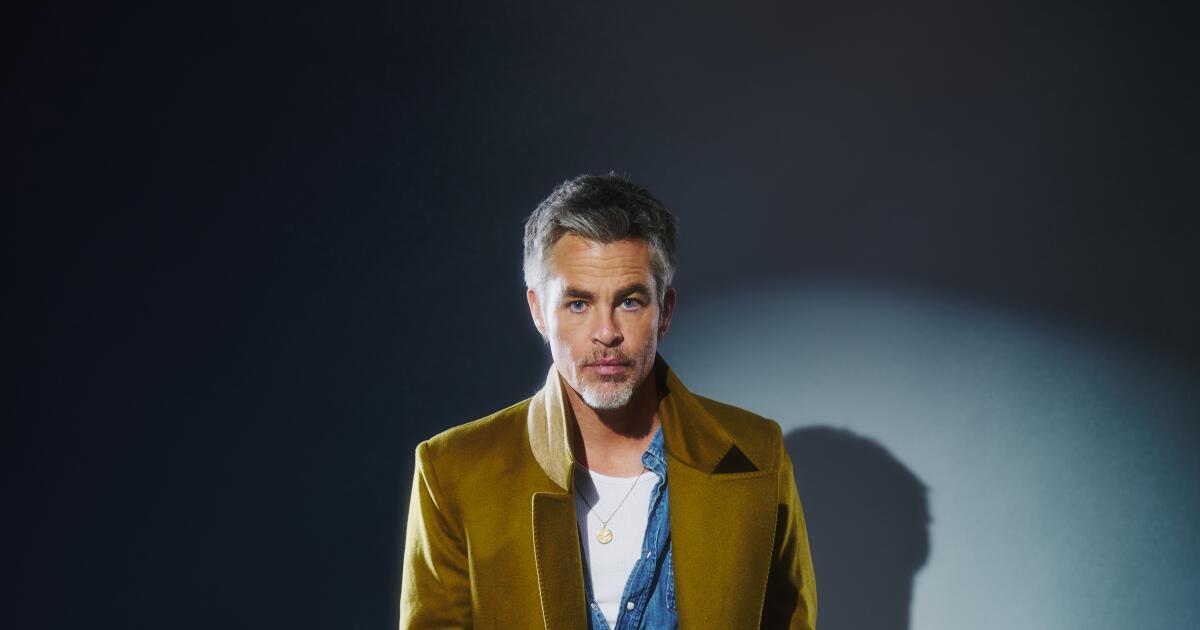
When Chris Pine was thirteen, his family experienced financial hardship and lost their home.
After reading Matthew Desmond’s Pulitzer Prize-winning book, “Evicted: Poverty and Profit in the American City” – which follows eight families struggling to maintain their homes in Milwaukee – the “Star Trek” actor felt compelled to turn it into a film.
Filmmaker Justin Pine recently explained at the Sundance Film Festival that the true strength of film lies in its ability to show us we all share similar experiences and aren’t isolated. He described the story he was presenting as being one of those powerful, relatable narratives.
Pine is creating a documentary inspired by a book, and it’s one of several projects funded by Harbor Fund. Harbor Fund is a new nonprofit in Utah that uses donations from wealthy individuals and investors to support films and documentaries with positive themes.
Lindsay Hadley, co-founder and CEO of Harbor Fund, explained that compelling stories have the ability to shift people’s emotions. She believes film and entertainment, in general, can be a powerful force for building a more compassionate society.

Hollywood Inc.
So far at Sundance, four films have already sold out, and the arrival of new distributors is encouraging for independent filmmakers.
Launched about a year and a half ago, the fund has successfully raised $15 million from 82 donors, averaging $250,000 per contribution. So far, $10 million of that has been used to support 22 projects, including one called “Evicted.”
Pine explained that while the issue stems from housing policies and financial factors, it ultimately affects individuals. He noted that stories like these are often difficult to support in an industry focused on avoiding risk.
Harbor Fund quickly recognized the important message of the film and the need to tell it truthfully. They don’t just fund projects; they’re invested in the impact of those films, working to bring them to communities, spark important discussions, and ensure those conversations continue long after the film ends.
It’s often hard to agree on what truly benefits society, and that’s especially true now, given how divided and tense politics have become.
Hadley explained that she receives a lot of guidance on potential projects from the fund’s advisory board, which features filmmakers such as Patty Jenkins, David Oyelowo, Amy Redford, and Mark Burnett. She added that they focus on projects that reflect common values and steer clear of content that portrays people negatively.
Harbor Fund aims to reach $100 million in funding over the next two years. Hadley, formerly the chief development officer for Global Citizen – where she also produced their annual Central Park festival benefiting social causes – will be leading the effort.
Making movies with a social message isn’t a recent idea. Participant, a production company based in Culver City, became well-known for films that tackled important issues, like the 2006 environmental documentary “An Inconvenient Truth,” and award-winning features such as “Spotlight” (2015) and “Green Book” (2018). However, the company shut down in 2024 due to major shifts in the independent film industry.
The old way of making and releasing independent films isn’t working anymore. Since the pandemic, fewer people are going to the movies, and there are fewer companies to buy and distribute these films. Combine that with the financial risks of filmmaking, and it’s understandable why investors are hesitant to put money into indie projects.
As a long-time fan of indie films, it’s really disheartening to hear how much things have changed. David Offenberg, who knows a lot about the financial side of things – he even wrote a book called “Independent Film Finance” – explained that independent films used to rely on getting shown in theaters. Now, that whole system is pretty much disappearing, and it’s a big blow to the films I love.
The way Harbor Fund finances projects is unusual, but it appeals to a key interest for many investors: making a positive social impact through the films and TV shows they support.
Many investors are funding films because they’re driven by a desire to create positive change and believe movies can be a powerful tool for achieving it, according to Offenberg.
Harbor Fund is designed to be financially stable by operating like a nonprofit venture capital firm, avoiding expensive in-house production, and investing in a variety of projects, explained Hadley. It also hosts exclusive events, like last year’s forum in Montana with Kevin Costner, where investors get to hear directly from the people behind potential projects – sometimes even well-known celebrities.
Donors contribute to the fund without expecting any financial return. They select the projects they’d like to help, Harbor Fund takes a share of the project’s ownership, and all profits are reinvested to support future films and television shows.
“If it’s successful, it’s a gift that keeps giving,” Hadley said.
Shauna Ockey, an investor from West Point, Utah, decided to fund the documentary “Orphan Myth” because she believes it will create positive social change, not just financial profit. The film focuses on the challenges faced by children who are separated from their families due to poverty.
Ockey and her husband strongly believe in keeping children with their families instead of in institutions, and have donated $350,000 to Harbor Fund to support this goal. She explained that while she hopes any film she supports philanthropically does well, even impacting just a few lives is a worthwhile result.
The fund supports diverse projects, including the upcoming film “Hershey,” which tells the story of Milton and Catherine Hershey’s charitable work, and “Flash Before the Bang,” a movie following a track team of deaf athletes.
These investments help cover the costs of making these films, based on the idea that popular actors will draw bigger crowds and ultimately lead to greater impact, Hadley explained.
After watching the 2006 film “The Pursuit of Happyness,” starring Will Smith, Calgary investor Lloyd Roberts began to see how a person’s outlook can greatly impact their sense of happiness. The movie, which tells the story of a father and son facing homelessness, shifted his perspective on what truly leads to fulfillment.
Roberts explained that while you can hear about inspiring ideas, seeing them played out in a movie like ‘The Pursuit of Happyness’ makes their impact much more personal and shows how they can actually work. Having invested over $1 million in the fund, Roberts is confident audiences will benefit from this approach.
You know, as a movie lover, I think the most powerful way to get an idea across isn’t always through documentaries. Sometimes, it’s a beautifully made film – a movie that really gets to your emotions and leaves a lasting impact. Those are the ones that truly stick with you and make you think.
Read More
- Invincible Season 4 Episode 4 Release Date, Time, Where to Watch
- How Martin Clunes has been supported by TV power player wife Philippa Braithwaite and their anti-nepo baby daughter after escaping a ‘rotten marriage’
- Beyond Accuracy: Gauging Trust in Human-AI Teams
- Gold Rate Forecast
- Clash Royale Balance Changes March 2026 — All Buffs, Nerfs & Reworks
- ‘Project Hail Mary’s Unexpected Post-Credits Scene Is Worth Sticking Around
- CookieRun: OvenSmash coupon codes and how to use them (March 2026)
- eFootball 2026 is bringing the v5.3.1 update: What to expect and what’s coming
- We talked to ‘Bachelorette’ Taylor Frankie Paul. Then reality hit pause on her TV career
- Only One Straw Hat Hasn’t Been Introduced In Netflix’s Live-Action One Piece
2026-02-17 14:31