
As the Super Bowl LXI halftime show approached, Bad Bunny’s fans were buzzing and making predictions about which Puerto Rican artists might join him on stage. Many wondered if reggaeton icons like Daddy Yankee, Don Omar, or Tego Calderón would make an appearance.
But as the halftime show went underway, Ricky Martin appeared.
About nine minutes into the performance, José Eduardo Santana really captivated the audience with his playing of the cuatro – it’s this amazing 10-string instrument, basically the national instrument of the island. The director then focused on Martin, who was sitting on a simple white plastic chair. It instantly reminded me of the album cover for “Debí Tirar Más Fotos,” and I know a lot of people in the Latino community felt that same wave of nostalgia when it came out last year – it’s a really powerful visual reference.
The pop singer powerfully sang “Lo Que Le Pasó a Hawaii,” a song that urges people in Puerto Rico to avoid making the same choices Hawaii did in 1959 when it became a U.S. state. Similar to Puerto Rico, Hawaii was taken over by the U.S. in 1898, and both islands have faced challenges with rising costs of living and the loss of local communities as wealthier people move in.
Though brief, lasting around 30 seconds, Martin’s action was an unusual protest for the singer and highlighted how much Latin music has grown in popularity and influence within the United States.
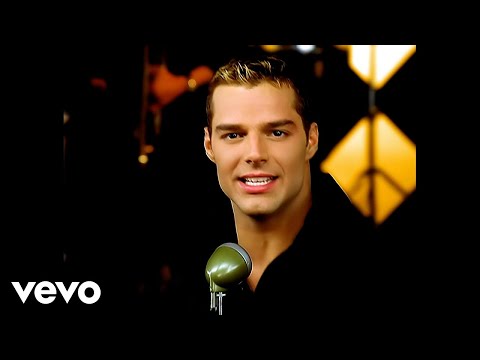
Ricky Martin began his career with the boy band Menudo before captivating the world with his 1998 FIFA World Cup song, “La Copa de Vida” (known in English as “The Cup of Life”). His performance of the song at the 1999 Grammy Awards was a hit, and he followed it up with the popular surf-pop song “Livin’ la Vida Loca.” The song quickly became a radio sensation, reaching number one on the Billboard Hot 100 chart and, more significantly, helping launch a wave of Latin pop artists – like Jennifer Lopez, Marc Anthony, and Shakira – into mainstream English-language music markets. This period became known as the “Latin boom.”
 ×
× Many artists labeled as ‘crossover’ stars were already successful before gaining recognition in the United States. For example, Jennifer Lopez and Marc Anthony, both born in New York, were initially treated as foreign performers. Lopez had a thriving film career throughout the 1990s before releasing her debut album, and Anthony had already won a Billboard Award and performed as an opening act for Tito Puente at Madison Square Garden. Similarly, Shakira had achieved significant success in Latin America and Spain with her earlier albums before releasing her first English album in 2001. Ricky Martin had already sold millions of albums in Spanish before the hit song “Livin’ la Vida Loca” introduced him to a wider audience.
Even after Martin’s 1999 album, simply titled “Ricky Martin,” reached the top of the Billboard 200 chart, talk show host Rosie O’Donnell playfully pointed out that she hadn’t been familiar with him before his earlier English-language song became a hit that year.
Rosie O’Donnell remembers asking, ‘Who is Ricky Martin?’ She explained she hadn’t heard of him at the time. Tommy Mottola, who was the head of Sony Music, had told her Martin would become a huge star, and that’s when she first learned his name.
I remember when Ricky Martin was everywhere! His songs were constantly at the top of the charts, and his music video was all over MTV. But it wasn’t just about the music, you know? The media really focused on everything about him, and honestly, a lot of the conversation fell into really old, tired stereotypes about Latin men being overly passionate or something. It was frustrating to see him reduced to that.
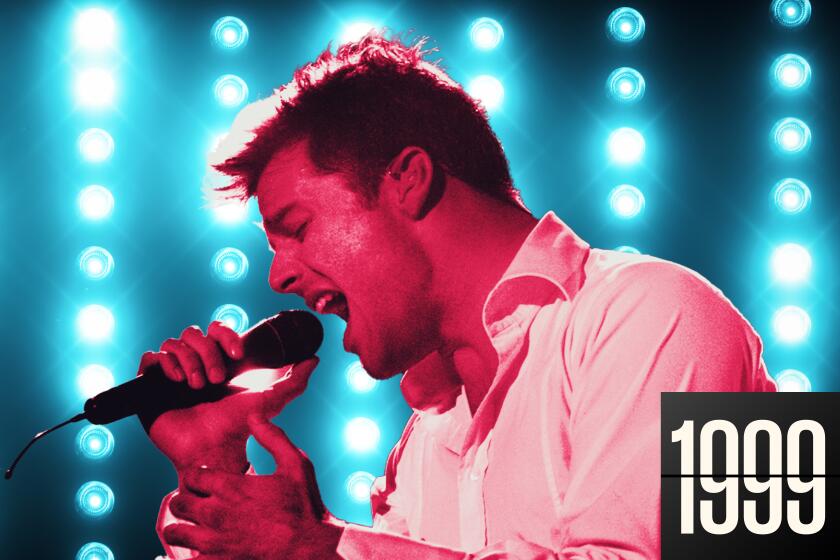
In the summer of 1999, Ricky Martin’s hit song ‘Livin’ La Vida Loca’ became incredibly popular, sparking a surge of Latin music into mainstream pop.
I remember reading Alisa Valdes-Rodriguez’s piece from 1999, and she really hit the nail on the head. She pointed out how everyone kept using the same tired words to talk about this artist, and it was frustrating. What bothered me most was how much attention was given to his background, even though he was singing in English! It felt like the coverage sometimes veered into really strange and almost dehumanizing territory.
In 1999, writer Valdes-Rodriguez pointed out an odd detail in Billboard magazine’s coverage of Ricky Martin. The magazine repeatedly called him a ‘hot tamale,’ which Valdes-Rodriguez found amusingly inaccurate, as Martin is Puerto Rican and neither chili peppers nor tamales are traditional Puerto Rican food – they originate in Mexico.
As a music critic, I remember a time when breaking into the English-language mainstream felt like a point of no return for many artists. As Agustin Gurza pointed out back then, it was often a one-way street – you’d achieve success, but at the cost of your original identity or audience.
According to Gurza, mainstream American pop music struggles to appreciate cultures as they are. Artists from other cultures often have to change their sound to fit American preferences or risk being ignored. The music industry tends to simplify and remove unique cultural elements to appeal to a wider audience.
The singer frequently faced questions about his personal life, particularly his sexuality. He later revealed that an interview with Barbara Walters was deeply upsetting for him.
In a 2021 interview with People, Martin explained that he felt upset when asked about his personal life because he wasn’t prepared to publicly share he was gay. He had officially come out as gay in 2010.
Despite continued success with his 2000 album, “Sound Loaded,” which included popular songs like “She Bangs” and a collaboration with Christina Aguilera on “Nobody Wants to Be Lonely,” the initial excitement surrounding the Latin music boom didn’t last. In 2003, Ricky Martin refocused on his core Spanish-speaking audience with the album “Almas del Silencio.”
Back in 2003, Martin told the New York Times he was concerned that the way the media talked about him and other Latino artists was based on racist ideas.
Martin pointed out in a 2003 interview that Latin music has always been present, stating, ‘You just have to be willing to notice it.’
His record label, Columbia Records, wasn’t happy when he decided to focus again on making music in Spanish, as they were handling the release of his English songs. Despite this, he later released his third and last English album, “Life,” in 2005.
In a 2003 interview with the New York Times, Martin explained that his record label had reacted extremely strongly to something, and he felt he needed to return to his roots. He said, ‘I needed to go back to Puerto Rico.’
Both Ricky Martin and Bad Bunny experienced a career resurgence after returning to their Puerto Rican roots following intense attention from U.S. media. However, their paths also highlight how Latin music is evolving. Unlike in the past, Latin artists can now achieve major success in the U.S. without needing to appeal primarily to English-speaking audiences.
Throughout his decade-long career, Bad Bunny has consistently released music in Spanish, never recording a full album in English. He’s remained true to his Caribbean Spanish dialect, even though it’s sometimes faced criticism within Latin America and Spain. His rise to fame has been powered by reggaeton, a genre that hasn’t always received recognition from institutions like the Latin Recording Academy until recently.

Following Bad Bunny’s Grammy win for Album of the Year, Ricky Martin shared a post celebrating the landmark achievement.
Bad Bunny’s achievements clearly resonated with writer Martin, who published an open letter in El Nuevo Día praising the singer after his Grammy win for “Debí Tirar Más Fotos.” Martin expressed his pride in Bad Bunny’s 31-year-old career.
Martin praised the winner for achieving success while remaining genuinely themselves. He highlighted that they didn’t need to alter who they were or disconnect from their Puerto Rican heritage – their language, culture, and personal story were enough to triumph.
Martin’s performance on Sunday felt genuinely powerful, and it was especially meaningful because for years, the way people spoke Spanish in media wasn’t always accurate. His music connected with Puerto Ricans, and he seemed to be telling young Latino artists a vital message: learn from the past and don’t let those mistakes happen again.
Read More
- The Division Resurgence Best Weapon Guide: Tier List, Gear Breakdown, and Farming Guide
- Kagurabachi Chapter 118 Release Date, Time & Where to Read Manga
- Last Furry: Survival redeem codes and how to use them (April 2026)
- Clash of Clans Sound of Clash Event for April 2026: Details, How to Progress, Rewards and more
- Annulus redeem codes and how to use them (April 2026)
- Gold Rate Forecast
- Silver Rate Forecast
- Gear Defenders redeem codes and how to use them (April 2026)
- All Mobile Games (Android and iOS) releasing in April 2026
- Top 5 Best New Mobile Games to play in April 2026
2026-02-10 23:02