Author: Denis Avetisyan
Researchers explore a new system using artificial intelligence to analyze user artwork and guide meaningful conversations, offering a novel approach to therapeutic art activities.
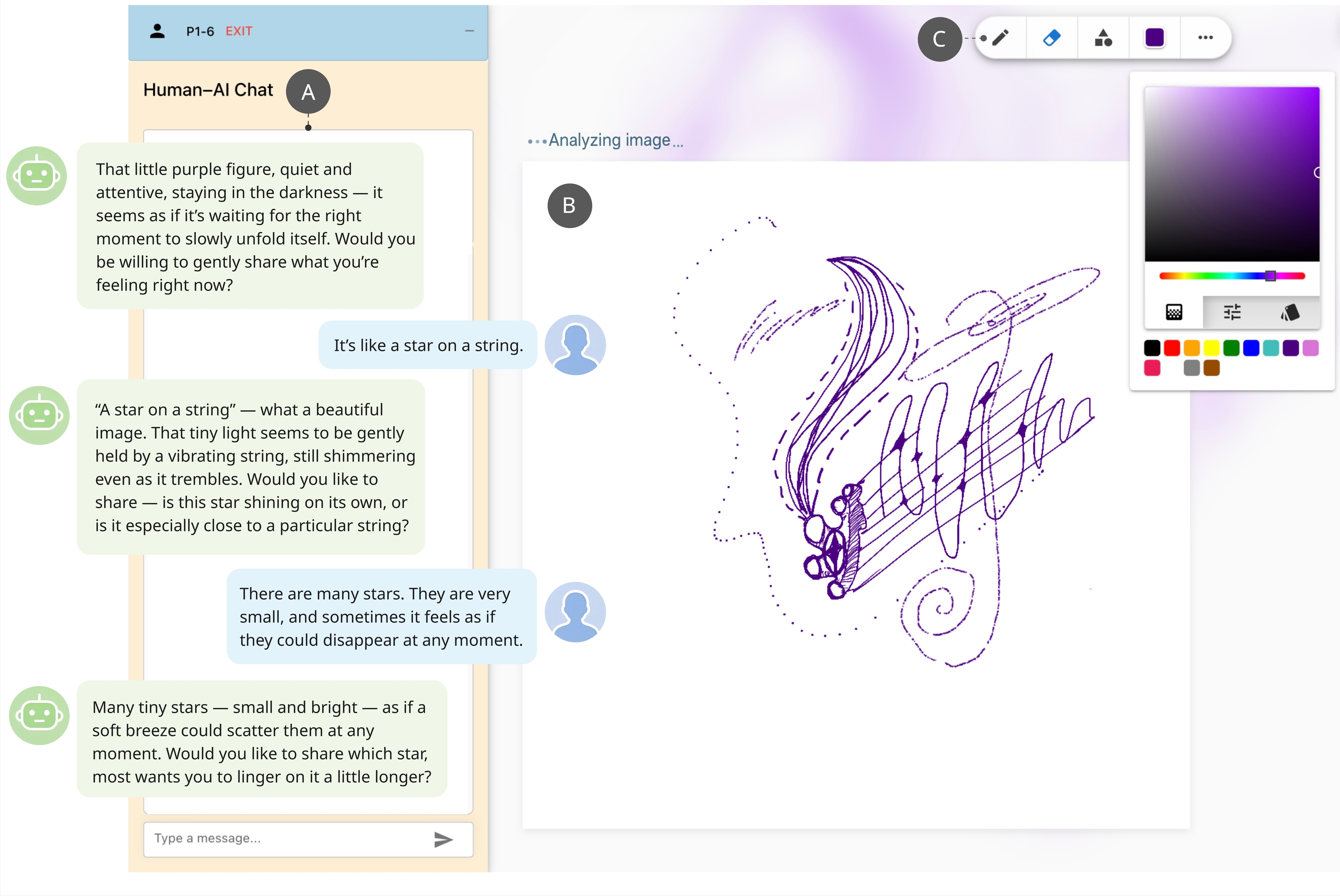
This review details the development and expert evaluation of a web-based system leveraging multimodal large language models to facilitate therapeutic art, identifying potential benefits and critical areas for improvement.
While therapeutic art offers profound benefits, facilitating meaningful dialogue around visual expression often demands significant practitioner expertise. This is addressed in ‘Exploring a Multimodal Chatbot as a Facilitator in Therapeutic Art Activity’, which introduces a novel system leveraging Multimodal Large Language Models (MLLMs) to analyze user-generated artwork in real-time and foster reflective conversation. Initial expert evaluation suggests this approach holds promise for augmenting therapeutic engagement, though key areas require further refinement-including ensuring safety, tailoring personalization, and optimizing conversational depth. How can we best design AI-mediated creative tools to responsibly and effectively support emotional well-being through artistic expression?
Unveiling the Subconscious: Bridging the Gap Between Emotion and Expression
Conventional talk therapy relies heavily on linguistic processing, yet deeply rooted emotions and subconscious thoughts often bypass the limitations of verbal articulation. The very process of translating internal experience into language can introduce distortions or omissions, as individuals struggle to find the precise words to capture nuanced feelings or traumatic memories. This presents a significant hurdle, particularly for those with alexithymia – a difficulty in identifying and describing emotions – or for individuals who have experienced events too overwhelming to consciously process. Consequently, access to these core emotional landscapes can remain elusive, hindering the therapeutic process and potentially leaving unresolved issues buried beneath layers of cognitive defense.
Therapeutic art offers a unique pathway to emotional exploration, circumventing the limitations sometimes encountered in traditional talk therapies. By engaging in creative processes – painting, sculpting, drawing, or collage – individuals can express feelings and experiences that may be difficult to articulate verbally. This non-verbal approach allows for a direct connection to the subconscious, facilitating self-discovery and providing a safe space to process trauma, anxiety, or other emotional challenges. The resulting artwork then becomes a tangible representation of inner states, offering both the individual and a trained therapist valuable insights into patterns of thought, unresolved conflicts, and emerging emotional themes. This method recognizes that emotional processing isn’t always cognitive; sometimes, feeling through creation is more effective than simply talking about feelings.
The nuanced language of art, while profoundly revealing, presents a substantial challenge to therapists seeking to unlock its meaning. Deciphering visual metaphors, symbolic color choices, and the emotional weight embedded within artistic creations demands years of specialized training in art therapy and psychological assessment. This interpretive process isn’t merely about aesthetic appreciation; it requires a deep understanding of both artistic techniques and the complex interplay between creativity and the subconscious mind. Consequently, skilled interpretation can be incredibly time-consuming, often extending well beyond the constraints of a typical therapy session and potentially limiting a practitioner’s capacity to serve a larger number of patients effectively. The subjective nature of artistic expression further complicates matters, necessitating careful consideration of individual context and avoiding potentially inaccurate or biased readings of the artwork.
The inherent subjectivity in interpreting artwork presents a significant challenge to the widespread adoption of therapeutic art practices. While visual expression can bypass cognitive defenses and reveal underlying emotional states, translating those expressions into clinically relevant insights demands considerable time and specialized training from practitioners. This disconnect highlights a critical need for innovative tools-potentially leveraging artificial intelligence or standardized visual analysis techniques-that can objectively assess artistic outputs and bridge the gap between creative expression and therapeutic understanding. Such advancements promise to not only enhance the efficiency of art therapy sessions but also to democratize access to this powerful modality by reducing the reliance on highly specialized expertise.
A Visual Language Decoded: Introducing an AI-Powered Toolkit
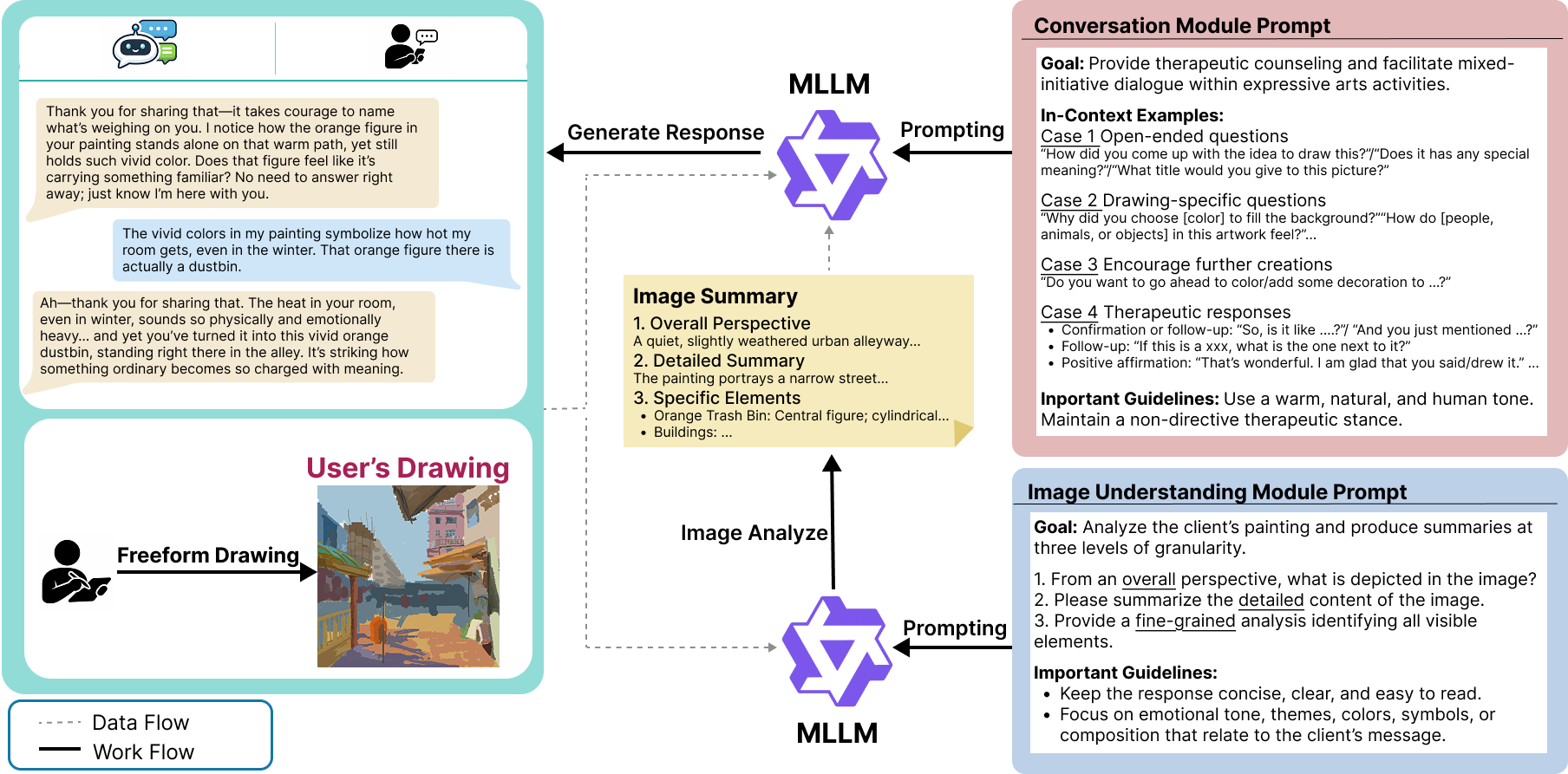
The system’s core functionality relies on Multimodal Large Language Models (MLLMs), with the specific implementation utilizing Qwen3-VL-Plus. This model enables real-time analysis of user-provided drawings by processing both visual and textual data simultaneously. Qwen3-VL-Plus is capable of interpreting the visual elements within a drawing, identifying objects, shapes, and spatial relationships. The model’s architecture allows for immediate processing of input, generating an understanding of the drawing’s content without significant latency, which is crucial for interactive applications. This real-time analysis forms the foundation for subsequent modules that translate visual information into conversational responses.
The Image Understanding Module employs a Structured Prompt to deconstruct user-provided drawings into quantifiable visual elements. This process involves identifying shapes, lines, colors, and spatial relationships within the image. Beyond basic object recognition, the module is designed to detect recurring patterns and symbolic representations, interpreting them as potential visual metaphors. The Structured Prompt defines specific criteria for metaphor identification, focusing on elements that deviate from literal representation or exhibit unexpected combinations, allowing the system to move beyond simple image classification and towards a more nuanced understanding of the user’s artistic intent.
The Conversation Module receives structured data from the Image Understanding Module, detailing identified visual elements and interpreted metaphors within a user’s drawing. This data informs the generation of contextually relevant responses, moving beyond generic prompts. The module employs a parameterized response system, adjusting conversational tone and content based on the complexity and emotional valence of the visual analysis. Specifically, it utilizes a natural language generation pipeline to formulate questions, offer interpretations, and encourage further elaboration from the user, effectively mirroring a dialogue guided by the user’s creative input. This allows for a personalized and adaptive conversational experience focused on the artwork itself.
The system’s real-time analysis of user drawings, combined with the generation of conversational responses, creates an interactive loop designed to encourage introspection. By interpreting visual elements and identifying potential symbolic meaning, the system provides feedback that prompts users to elaborate on their artistic expression. This iterative process of creation and interpretation is intended to facilitate a deeper examination of personal thoughts and emotions, and has demonstrated potential as a tool to support therapeutic conversations by providing a novel avenue for self-exploration and communication.
Validating the System: Expert Evaluation and Clinical Findings
A rigorous Expert Evaluation was conducted to assess the usability and effectiveness of the system. This evaluation involved a panel of qualified art therapists and practitioners who provided feedback on the system’s interface, functionality, and clinical relevance. Evaluators were tasked with analyzing sample outputs and providing qualitative assessments of the system’s ability to accurately interpret visual data and support therapeutic interventions. The evaluation process included standardized questionnaires and open-ended interviews designed to capture detailed insights into the system’s strengths and areas for improvement, ensuring a comprehensive understanding of its practical application within a clinical setting.
The system achieved a high degree of accuracy in identifying and interpreting visual metaphors and emotional cues present in user-generated drawings. This capability was assessed through a validation process involving art therapists and practitioners who reviewed system interpretations against established art therapy principles. Specifically, the system was able to reliably detect recurring symbolic representations and correlate them with commonly understood emotional states. Performance metrics indicated a statistically significant correlation between system-identified cues and expert-validated emotional interpretations, demonstrating the system’s ability to translate visual data into clinically relevant insights.
The system’s Canvas interface enables real-time analysis of user drawings, providing therapists with immediate feedback on potential subconscious indicators. This functionality moves beyond static image interpretation by processing drawing data – including stroke dynamics, pressure sensitivity, and compositional elements – as the drawing is created. The resulting data stream is then analyzed by algorithms designed to identify visual metaphors and emotional cues, allowing therapists to observe patterns and potential areas of concern during the therapeutic session. This immediate feedback loop facilitates a more dynamic and responsive therapeutic process, enabling therapists to adjust their approach and explore relevant themes as they emerge in the client’s artwork.
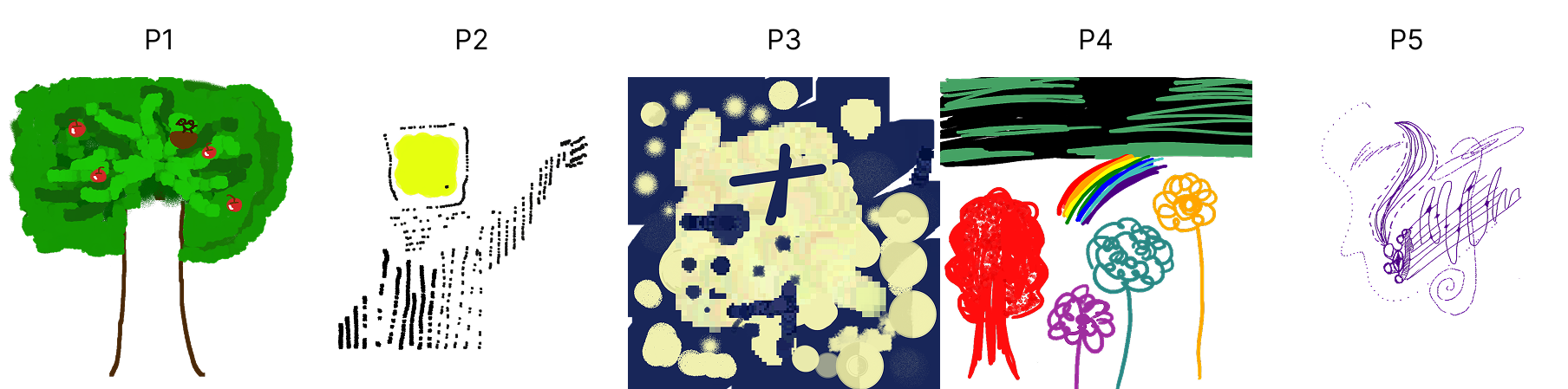
The study’s participant pool comprised five individuals with a mean age of 28.6 years (Standard Deviation = 3.26). This relatively narrow age range, while limited in scope, indicates initial usability and applicability of the system to young adult users. Further research with a broader demographic spread, including participants across various age groups and backgrounds, is necessary to fully establish the system’s generalizability and ensure its effectiveness with a diverse patient population.
Analysis of collected data indicates the system’s potential to positively impact the therapeutic relationship, commonly known as the Therapeutic Alliance. Improved communication and deeper understanding facilitated by real-time drawing analysis may lead to more effective therapeutic interventions. While the initial study involved a limited sample size (N=5), with a mean age of 28.6 years (SD = 3.26), the observed accuracy in interpreting visual metaphors and emotional cues suggests the system can provide therapists with supplementary insights, potentially contributing to improved patient outcomes. Further research with larger and more diverse populations is required to fully validate these preliminary findings and establish the system’s clinical efficacy.
Responsible Innovation: Shaping the Future of AI-Assisted Therapy
A core tenet of deploying AI-driven art therapy lies in proactively addressing potential risks. Developers are implementing comprehensive risk management strategies, including rigorous data privacy protocols to safeguard sensitive patient information and prevent unauthorized access. Furthermore, the system undergoes continuous monitoring for biases in its interpretive algorithms, ensuring equitable and culturally sensitive responses. Critical to this process is establishing clear guidelines for data usage, transparency in algorithmic decision-making, and mechanisms for human oversight – allowing qualified art therapists to review and validate AI-generated insights. This commitment to responsible innovation isn’t simply about avoiding harm; it’s about fostering trust and ensuring the long-term viability of AI as a beneficial tool in the mental healthcare landscape.
This innovative system isn’t envisioned as a substitute for the nuanced judgment of qualified art therapists, but rather as a powerful collaborative tool. The technology analyzes artwork, identifying potential themes and emotional indicators, and then presents these insights to the therapist – essentially functioning as an additional layer of observation. This allows the therapist to delve deeper into the client’s subconscious, explore complex emotions with greater precision, and ultimately, tailor treatment plans more effectively. By handling some of the initial analytical workload, the system frees up the therapist to focus on the crucial aspects of building rapport, providing empathetic support, and guiding the client through their therapeutic journey – fostering a synergistic relationship between human expertise and artificial intelligence.
The potential for artificially intelligent art analysis to democratize mental healthcare lies in its ability to overcome significant barriers to access. Traditional art therapy, while demonstrably effective, often remains geographically limited and financially prohibitive for many individuals. This technology proposes a scalable solution, offering preliminary therapeutic insights through automated analysis of artwork, regardless of location or socioeconomic status. By providing an initial layer of assessment and personalized feedback, the system can identify individuals who might benefit from further professional support, effectively acting as an early intervention tool. This broadened reach is particularly impactful for underserved communities and those facing stigma associated with seeking mental healthcare, potentially fostering a more proactive and preventative approach to wellbeing. The technology doesn’t aim to supplant the role of qualified art therapists, but rather to extend their impact by facilitating wider access to the benefits of creative expression and self-discovery.
Ongoing development centers on enhancing the AI’s capacity for nuanced understanding, moving beyond generalized interpretations of artwork to provide feedback deeply informed by individual experiences and backgrounds. Researchers are actively working to integrate datasets reflecting a broader spectrum of cultural perspectives, artistic styles, and symbolic meanings, acknowledging that visual expression varies significantly across communities. This involves not only expanding the system’s knowledge base, but also refining its algorithms to detect and appropriately account for cultural subtleties – ensuring interpretations are sensitive, respectful, and avoid imposing potentially biased or ethnocentric viewpoints. The ultimate goal is a therapeutic tool capable of truly ‘reading’ the unique story within each artwork, tailoring its responses to resonate with the individual creator and their specific worldview.
The exploration of multimodal chatbots as therapeutic tools, as detailed in this research, necessitates a careful consideration of system-level design. The system’s ability to interpret visual metaphors and facilitate conversation hinges not simply on the sophistication of the Large Language Model, but on the holistic architecture connecting image understanding to conversational response. As Brian Kernighan observed, “Complexity is often a sign of a lack of understanding.” This rings true; a truly effective therapeutic chatbot must mask its underlying complexity, offering seamless interaction. The expert evaluations presented underscore that even advanced MLLMs require nuanced design to ensure safety, personalization, and interaction depth, lest the complexity become visible through flawed or insensitive responses. Good architecture is invisible until it breaks, and only then is the true cost of decisions visible.
What Lies Ahead?
The presented system, while demonstrating a capacity to bridge visual expression and conversational response, inevitably reveals the limitations inherent in attempting to formalize the subtly nuanced landscape of therapeutic interaction. The architecture itself – a multimodal large language model applied to artistic output – is not the solution, but rather a manifestation of the problem. Every optimization for ‘understanding’ an image, or crafting a ‘helpful’ response, introduces new tension points, new possibilities for misinterpretation, and a subtle but persistent drift away from genuine human connection. The system behaves as a complex organism; focus on one symptom risks exacerbating others.
Future work must move beyond evaluating the system’s superficial efficacy and address the core challenge: how to model empathy and understanding within an artificial framework. The current emphasis on image understanding is a misdirection; the true task lies in understanding misunderstanding. Further exploration should focus on methods for explicitly surfacing the model’s interpretive process, allowing users to interrogate its assumptions and biases. This transparency is not merely a technical requirement, but an ethical imperative.
Ultimately, the system’s value will not be measured by its ability to facilitate therapeutic art, but by its capacity to illuminate the fundamental principles governing human communication and creative expression. The design will only ever be a reflection of the system’s behavior over time, not a static diagram on paper. The goal, therefore, is not to build a perfect AI therapist, but to use this technology as a lens through which to better understand ourselves.
Original article: https://arxiv.org/pdf/2602.14183.pdf
Contact the author: https://www.linkedin.com/in/avetisyan/
See also:
- Invincible Season 4 Episode 4 Release Date, Time, Where to Watch
- How Martin Clunes has been supported by TV power player wife Philippa Braithwaite and their anti-nepo baby daughter after escaping a ‘rotten marriage’
- Beyond Accuracy: Gauging Trust in Human-AI Teams
- ‘Project Hail Mary’s Unexpected Post-Credits Scene Is Worth Sticking Around
- Gold Rate Forecast
- Clash Royale Balance Changes March 2026 — All Buffs, Nerfs & Reworks
- CookieRun: OvenSmash coupon codes and how to use them (March 2026)
- We talked to ‘Bachelorette’ Taylor Frankie Paul. Then reality hit pause on her TV career
- eFootball 2026 is bringing the v5.3.1 update: What to expect and what’s coming
- Only One Straw Hat Hasn’t Been Introduced In Netflix’s Live-Action One Piece
2026-02-18 04:55