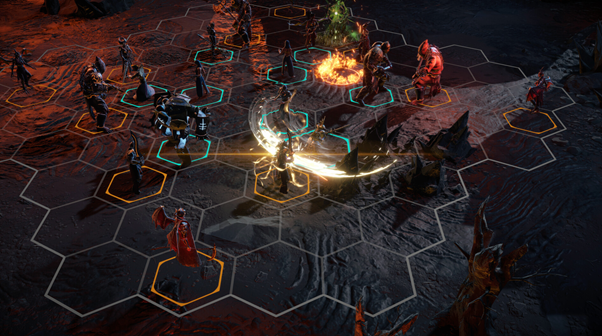
The developers listened. It shows.
Few people anticipated the release of Disciples: Liberation in 2021. Bringing back the classic strategy series seemed like a long shot, and unfortunately, the game proved to be slow-paced and uninspiring for both critics and players, validating those doubts. So, the announcement of a direct sequel was met with understandable skepticism. It seemed risky to continue with a spin-off that hadn’t been well-received.
The reason Disciples: Domination is a success is simple: the developers at Artefacts Studio truly took player feedback to heart. Hired by Kalypso Media, they actively worked to fix the issues people had with the previous game, Liberation, and largely succeeded – it’s impressive to see. While not flawless, it’s a significant improvement, and that’s what counts.
What Kind of Game Is Disciples: Domination?
Just to clarify before we begin: Liberation and Domination aren’t direct continuations of Disciples II. They’re separate games that explore the same world and ideas, but tell their own stories. In fact, they play more like King’s Bounty than traditional Disciples games – focusing more on role-playing elements and a strong story, and less on complex strategy. Think of the story as the main event, rather than just a backdrop.
Okay, so if you’re a Disciples II veteran hoping for that same super dark and brooding strategy experience, you’ll need to adjust your expectations a bit. This isn’t quite that. Domination throws in a lot more RPG stuff – like making moral choices, building relationships with companions, and getting involved in faction politics – all wrapped up in a story-driven campaign. Honestly, it feels more like a modern fantasy RPG that looks like a Disciples game. Once you realize that, it’s actually a lot more fun to play.
The Story: Dark Fantasy With a Lighter Touch
Fifteen years after the events of Liberation, a new power struggle begins. Queen Avianna, who sacrificed much to unite the kingdom of Nevenaar, has been living in seclusion, battling her own demons. Now, she’s prepared to reclaim her throne, but she returns to a kingdom on the brink of collapse. Gnomes are being mistreated and forced into hiding, elves and imperials are locked in conflict, dangerous cults are gaining influence, and a dark evil is spreading throughout the land.
This game is noticeably darker and more violent than previous installments, and it delivers on that promise consistently. The side quests are surprisingly impactful – one particular scene with elves and a monster presents a difficult choice that feels more significant than many games’ central plots. Your moral choices actually matter, affecting how different groups see you and even influencing your performance in battles.
The story is generally enjoyable and fairly conventional. Avianna goes between different groups, gains their trust by helping them with their issues, and deals with their conflicting goals—a setup common in many recent role-playing games. The plot follows a familiar pattern: she arrives in a new place, proves her worth, and then moves on. While it’s not a groundbreaking story, the characters and details are well-developed enough to keep you engaged.
The game’s biggest weakness is its inconsistent tone. It sometimes tries to be funny – with playful interactions with enemies or self-aware nods to typical game tropes – but these attempts feel out of place given the game’s overall dark and serious story. These lighter moments feel jarring and like they belong in a different game, though they aren’t game-breaking flaws. They simply weaken the strong atmosphere the writing otherwise creates.
Domination’s campaign involves careful planning and resource control, similar to the strategic thinking found in card games and online games. If you enjoy that type of gameplay, you might like Staycasino – and it’s worth checking out their new player offer before you join to get the best possible deal.
Companions, Factions, and the Throne Room
I’m really loving the companion system in Domination! Each character you team up with, like Avianna, isn’t just a follower – they have their own story, and they bring something totally new to how you explore the world. One might let you teleport, another can talk to spirits, and yet another can even hack magical barriers! It’s cool because as you unlock new companions, you’ll want to go back to places you’ve already been. Their abilities open up secret paths and areas you couldn’t reach before, which feels a lot like those Metroidvania games where you’re constantly finding new ways to get around. It adds a lot of depth to the whole adventure.
Domination now features a throne room where Avianna regularly meets with representatives from different factions who bring her problems to solve. These could range from an elven sickness to a trade offer from gnomes, or even demons trying to influence the kingdom. Each issue presents several ways to respond, and most choices will require you to spend resources and impact your relationships with various groups. While straightforward, this system adds a tangible element to the game’s political storyline.
Your reputation with different factions directly impacts battles – better relationships mean stronger units and cheaper hiring fees. This ties your story choices into the gameplay in a way that previous games didn’t, and it makes important moral decisions feel truly meaningful because they have a clear effect on your strategy.
Combat: Still Long, No Longer Boring
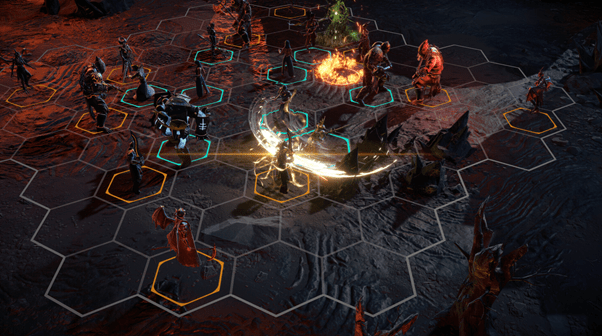
Honestly, the biggest issue with the last game, Liberation, was how boring the battles were. They just went on and on, weren’t really challenging, and it felt like you could just wait it out instead of actually thinking strategically. This new game, Domination, seems to use pretty much the same system: turn-based fights on a separate map, units that can take a lot of damage, and not a ton of damage being dealt. Plus, there’s a system where units get better just by hanging around in the back. So, looking at it, it sounds like we’re going to run into the same old problems again.
Okay, so I’ve been playing, and things have really changed for the better. The developers have clearly spent a lot of time tweaking the balance and making the different unit types work together in cool ways, and you can totally feel it. The beginning is still pretty easy, maybe too easy, but don’t get comfortable! The game starts throwing some serious challenges at you that actually make you think. Like, you’ll face necromancers constantly bringing enemies back to life, or battles where someone calls in reinforcements, turning it into a frantic rush to finish them off. And the battlefields themselves aren’t static – they’ll freeze over, drop rocks, or give you buffs and debuffs. These aren’t just little details, they genuinely change how you have to play each fight.
The game’s boss battles are especially tough, featuring enemies that take up a large portion of the screen. These fights really test your strategic skills and require careful planning. You’ll need to think ahead about which units to use, how they work together, and how to manage your resources. Don’t spend all your gold early on trying things out – you’ll need it later to be successful!
The game’s character system has been improved. You can choose from four classes, and each one has a detailed skill tree that does more than just boost numbers – you can learn abilities like summoning healing or having your character automatically attack weaker enemies at the end of each turn. Magic spells are also available, and while they aren’t essential at first, they become really helpful as the game gets harder. Changing classes is possible, costing 2,000 gold, which is a fair price but won’t set you back too much.
What Still Needs Work
Combat often takes too long, even when set to faster speeds. The process of chipping away at enemy health can feel repetitive, and the game could let you automate battles sooner. Some of the rules around resources seem unnecessary – you can’t sell old gear or trade for gold – which sometimes leads to frustrating shortages that likely aren’t meant to be there. The game also has occasional bugs and freezes, and while the voice acting is okay, not everyone will like it.
The game’s strategic elements are fairly basic. You won’t find cities to build up or enemy heroes actively challenging you on the map. You’ll spend your time with Avianna exploring, gathering resources, taking control of mines, and battling enemies. Your castle acts as a central base for recruiting and improving your forces, and you can instantly travel to and from it. Players hoping for a deep strategy game might be let down, but those familiar with the King’s Bounty series will likely find it enjoyable.
Final Verdict: A Spin-Off That Earns Its Place
Disciples: Domination isn’t the sequel fans expected from Disciples II, and that’s okay. It wasn’t meant to be, so it’s unfair to compare it that way. If you look at it as its own game—a role-playing game focused on story, with tactical battles, political intrigue, and a grim fantasy world—it’s actually a significant improvement over the original, and a solid game in a crowded genre.
While the game is still a bit lengthy and the economic system isn’t perfect, it’s showing real improvement. The shifts in tone between serious and lighthearted aren’t always smooth, but the difficult choices you make feel important, and building relationships with your companions is truly enjoyable. Most importantly, the battles evolve from simple grinding into strategic challenges, and that’s thanks to the developers listening to player feedback and making positive changes.
If you didn’t enjoy the previous game, Liberation, Domination might change your mind. It’s also a great place to start if you’re new to this unique blend of RPG and strategy. Overall, it’s a worthwhile experience, though some improvements to battle times and the in-game economy would make it even better.
Quick Breakdown
What Works
- Meaningful moral choices with real faction and combat consequences
- Companion system with distinct personalities, storylines, and exploration abilities
- Combat balance significantly improved over Liberation
- Battlefield conditions add genuine tactical depth to later encounters
- Multi-stage boss fights are challenging and rewarding
- Throne room faction mechanic connects story decisions to gameplay
- Stronger role-playing system with four flexible class options
- Visually and aurally solid throughout
What Doesn’t Work
- Not a Disciples II sequel — spin-off format will disappoint series purists
- Strategy layer is minimal; no city building or rival heroes on the map
- Battles are still longer than they need to be
- Economy restrictions feel arbitrary and occasionally frustrating
- Bugs and freezes appear with enough regularity to notice
- Tone shifts between dark and comedic in ways that undercut the atmosphere
- Voice acting is competent but divisive
- Auto-battle unlocks later than it should
Read More
- Invincible Season 4 Episode 4 Release Date, Time, Where to Watch
- Physics Proved by AI: A New Era for Automated Reasoning
- Gold Rate Forecast
- American Idol vet Caleb Flynn in solitary confinement after being charged for allegedly murdering wife
- Total Football free codes and how to redeem them (March 2026)
- Olivia Colman’s highest-rated drama hailed as “exceptional” is a must-see on TV tonight
- Goddess of Victory: NIKKE 2×2 LOVE Mini Game: How to Play, Rewards, and other details
- Nicole Kidman and Jamie Lee Curtis elevate new crime drama Scarpetta, which is streaming now
- “Wild, brilliant, emotional”: 10 best dynasty drama series to watch on BBC, ITV, Netflix and more
- Country star Maren Morris blasts Trump supporters for backing ‘cornball’ president in fiery rant
2026-03-04 18:07