
The new movie, Dead Man’s Wire, is based on a real event from February 8, 1977. It tells the story of Tony Kiritsis, who took Richard ‘Dick’ Hall, an executive at Meridian Mortgage Company, hostage because he felt deeply mistreated. Tony rigged a dangerous device – a shortened shotgun connected to Richard with a wire – so that if anything happened to him, the shotgun would fire and kill his hostage.
The story’s unbelievable details likely appealed to acclaimed director Gus Van Sant. The film features a talented cast including Bill Skarsgård, Dacre Montgomery, Colman Domingo, and Cary Elwes, who recently discussed his return to the Saw series.
TopMob spoke with Colman Domingo and Dacre Montgomery about how they made the movie.
Domingo, who dreams of playing a major villain in the Marvel Cinematic Universe, takes on a very different role in Dead Man’s Wire. He plays Fred Temple, a beloved radio host who Tony Kiritsis (played by Bill Skarsgård) looks up to. Fred becomes one of the few people Tony will talk to and ultimately helps to resolve the central conflict.
Interestingly, while filming their phone conversations, Domingo shared that he and Bill Skarsgård never actually performed those scenes together on set. Luckily, they’d worked together before, so Domingo was familiar with Skarsgård’s way of speaking. Because of their previous collaboration, Domingo felt he genuinely knew how Skarsgård would deliver those lines to him.
Dacre Montgomery plays Richard ‘Dick’ Hall, the character Tony holds hostage. While it might seem like Montgomery wasn’t actually with Bill Skarsgård during filming due to the nature of movie production, that wasn’t the case – they really were together on set.
The actor said they felt a strong connection throughout the entire experience, describing it as very intense. He also mentioned the setup was difficult to take apart, which meant he had to stay in it for extended periods.
Montgomery described the experience as intensely exhausting and disorienting, which he believes infused the film with a strange, darkly humorous energy.
You can read and watch the full interview with Colman Domingo and Dacre Montgomery here. Their new film, Dead Man’s Wire, will be released in select theaters on January 9, 2026, and will be available nationwide starting January 16th.
Colman Domingo on Being the Perfect Radio Host In Fred Temple
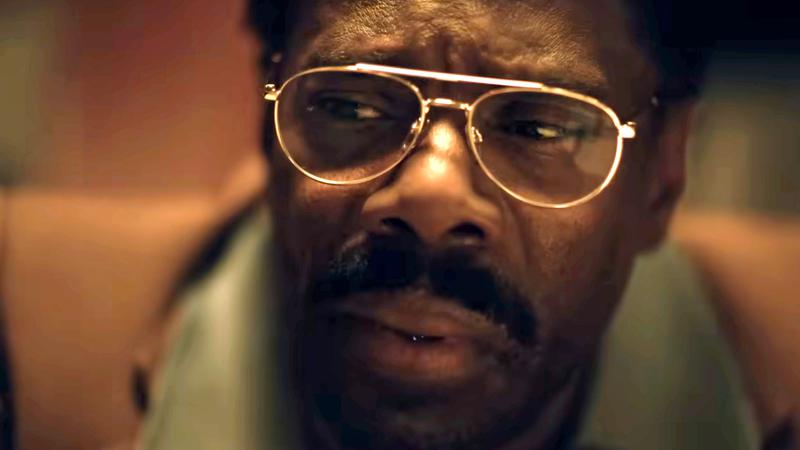
“He’s the Voice of the People…”
- TopMob: “Your character [Fred Temple] is at least partially based on the real-life journalist Fred Heckman… In terms of Fred Temple himself, how much of that character did you pull from the real-life figure, and then how much did you inject from yourself and what the movie needed?”
When I first started learning about Fred Heckman, my immediate question was how I, as a Black actor, could portray him. He was a white man, and it didn’t seem possible at first. I wondered how we would make it work, especially when the director mentioned exploring different approaches to the role.
He really connects with his listeners. I realized that was key to understanding the character – finding that voice within myself and figuring out how to portray it. He’s not your typical radio DJ. It struck me that he’d been listening to me, really hearing my delivery, every day. So I started looking for examples of people who felt a real connection with him, who thought, ‘This guy gets me.’ He plays the music I like, shares poetry I appreciate, and even gets a reaction out of me with his finger snaps. He wanted to feel like he’d found someone genuine, and I wanted to be that person.
Growing up, a couple of DJs really stood out to me. I remember William Rousted, and Gus Van Sant was fascinated by him when he was young. Also, Georgie Woods from WDA SFM in Philadelphia – I listened to him a lot as a kid, and he always brought back good memories. He was just a really cool guy, well-loved and known by everyone. I think my parents even used to go to a club where he DJed, but he was someone you could always count on and admire.
When Tony Karitsis needed help, he was the only one who would listen to me. He’s like my son, a radio DJ I really care about, and that’s how I got involved. I can use my communication skills to help resolve the situation because I have a connection with this person – right now, I’m the only one he trusts. I didn’t necessarily want to get involved, but I knew I had to.
- TopMob: “You are so incredible in this movie, and it made me think, are you sure that you weren’t meant to be a radio host in an alternate timeline?”
People often comment on my voice, asking if I’ve always sounded this way. I actually don’t think I have. It seems like as I got to know myself better and really embraced my natural way of speaking, my voice started to become richer and more confident, especially after I turned forty. I honestly don’t think I had this same voice in my thirties. It feels like a more mature, grounded voice – one that comes from being comfortable with what I have to say. It’s like I finally found my own personal radio DJ – the voice I live with now.
- TopMob: “You and Bill Skarsgård don’t really share the screen together much at all in the film, but you guys talk on the phone. Did you ever have Bill actually reading that part, or was it always someone else and you just had to play off of something else entirely?”
I always thought I knew how Bill would deliver those lines, but I should clarify. I actually worked with him on ‘Assassination Nation’ with Sam Levinson, so I’m familiar with his rhythm and how he speaks. Because of that, I felt like I really understood how he’d approach the lines, and how we’d work through them together.
I was really lucky because my first day on set was filming the press conference scene – the one with the gun. We shot that first, which was great for me. It gave me a chance to really observe how the director worked, his style, and how he communicated with everyone.
I downloaded that audio and kept it with me. That way, when I was acting the scene where I was only communicating by radio, I could draw on his speech patterns and make my performance more realistic.
The entire video interview with Colman Domingo and TopMob can be seen below:
Dacre Montgomery Talks About Being Hooked Up to The Dead Man’s Wire
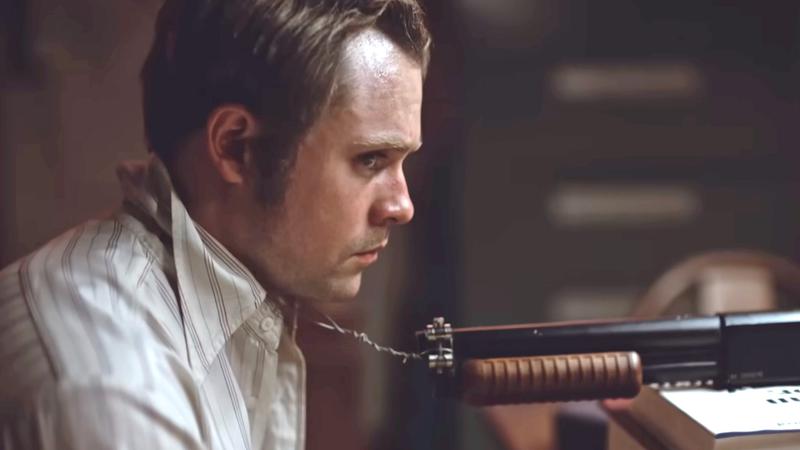
“We Were Really Connected the Whole Time…”
- TopMob: “Did you spend any time with people who actually knew the real Dick Hall?”
I didn’t find any information about his wider family. He’s no longer with us, and the same goes for Tony Kritsis’ character, Bill [Skarsgård’s], but I wasn’t able to track down anything about their relatives either.
Only Cary Elwes, who played Mike Grable, managed to locate his character’s family. He successfully found them, and they even visited the filming set, traveling from Indianapolis to Louisville, Kentucky.
It was a really tough experience. I believe his family doesn’t want to be associated with this story. My character was deeply affected by the hostage situation, and it cast a long shadow over his life – he discusses it extensively in the book he wrote afterward.
- TopMob: “Bill Skarsgård is fantastic as well, and the two of you together, it’s such an intriguing dynamic. Can you talk about developing that dynamic between you two, and what you guys might have done to kind of establish how you guys play opposite each other?”
Dacre Montgomery believes the most helpful thing, besides having a great co-star, was being physically connected to them with wires and a gun throughout the entire shoot. This unusual closeness created a unique physical and emotional connection. He admits it left him exhausted and disoriented, which surprisingly led to a lot of darkly comedic moments between the characters—a dynamic that’s reflected in the film. He thinks the movie will be funnier than people anticipate, especially considering the serious subject matter.
- TopMob: “That dynamic between you and Bill’s character develops greatly throughout the film, and it really changes. Can you talk about how it develops and where it ends up towards the end of the movie?
Dacre Montgomery explains that the film begins with two characters who are very different – they come from different backgrounds and are facing different struggles. But as the movie progresses, they develop an unexpected connection. He believes audiences will easily identify with both characters, recognizing aspects of themselves in each of them.
You know, by the time the credits roll, I genuinely felt like these two characters had grown. What really struck me was that Dick, the guy I play, actually starts to understand Tony, and vice versa. It’s a small thing, but it’s powerful. I see so many films that paint things in black and white, good versus evil, but this one isn’t like that. I much prefer a movie that explores the messy middle ground, the areas where things aren’t so clear-cut. It feels more real, and ultimately, more satisfying.
- TopMob: “I did want to talk about that, the actual Dead Man’s [Wire] trigger contraption. What was that like on set? Was it exactly what we saw? Could you separate, or were you really connected the whole time?”
Dacre Montgomery described feeling a strong connection with the scene throughout filming. He mentioned the prop gun was securely fastened, making it difficult to remove. He was particularly excited to be working with the props master, who had previously worked on Edgar Wright films like ‘Hot Fuzz’ and ‘Shaun of the Dead,’ and was a very kind person.
The wire around my neck was genuine, and the experience was incredibly intense. The gun felt heavy and was physically connected to the wire. It took some effort to untangle the wire from the device, but the entire setup was clearly designed to mimic a real mechanism – they really made it as realistic as they could.
So, I’m a bit of a movie memorabilia collector – I like to grab one prop from each film I work on and have it framed. I was really fortunate on this one because I actually got to keep the ‘dead man’s wire,’ which, of course, is what the whole movie is named after! It’s a pretty cool piece to have.
- TopMob: “Tony Kirtsis obviously believes Richard to be this terrible person, kind of just like his father… How much do you feel Dick is like this father?”
Dacre Montgomery believes his character wasn’t a willing participant in the situation. He explained that, according to the source material, the character’s father pressured all his children to work at his company, each managing a different area, creating a difficult family dynamic.
There are some similarities to the show ‘Succession,’ and I definitely kept that in mind while working on it. Think of Brian Cox’s character as being similar to mine, and my siblings as all competing for control. However, the family dynamics are more complex – my character isn’t necessarily trying to take over in the same way. It’s a fascinating look at family, power, and what those surface-level interactions really mean.
I believe the film challenges the expectation that this character would be just like his father or other wealthy people. That’s what’s so insightful about it – it shows us he’s actually different. It’s really compelling to see that side of him, and it surprisingly makes the villain, or who we think is the villain, feel more human.
The entire video interview with TopMob’s Russ Milheim and Dacre Montgomery can be seen below:
Read More
- Clash Royale Best Boss Bandit Champion decks
- Vampire’s Fall 2 redeem codes and how to use them (June 2025)
- Mobile Legends January 2026 Leaks: Upcoming new skins, heroes, events and more
- M7 Pass Event Guide: All you need to know
- Clash Royale Furnace Evolution best decks guide
- World Eternal Online promo codes and how to use them (September 2025)
- Clash Royale Season 79 “Fire and Ice” January 2026 Update and Balance Changes
- Best Arena 9 Decks in Clast Royale
- Clash of Clans January 2026: List of Weekly Events, Challenges, and Rewards
- Best Hero Card Decks in Clash Royale
2026-01-07 22:10