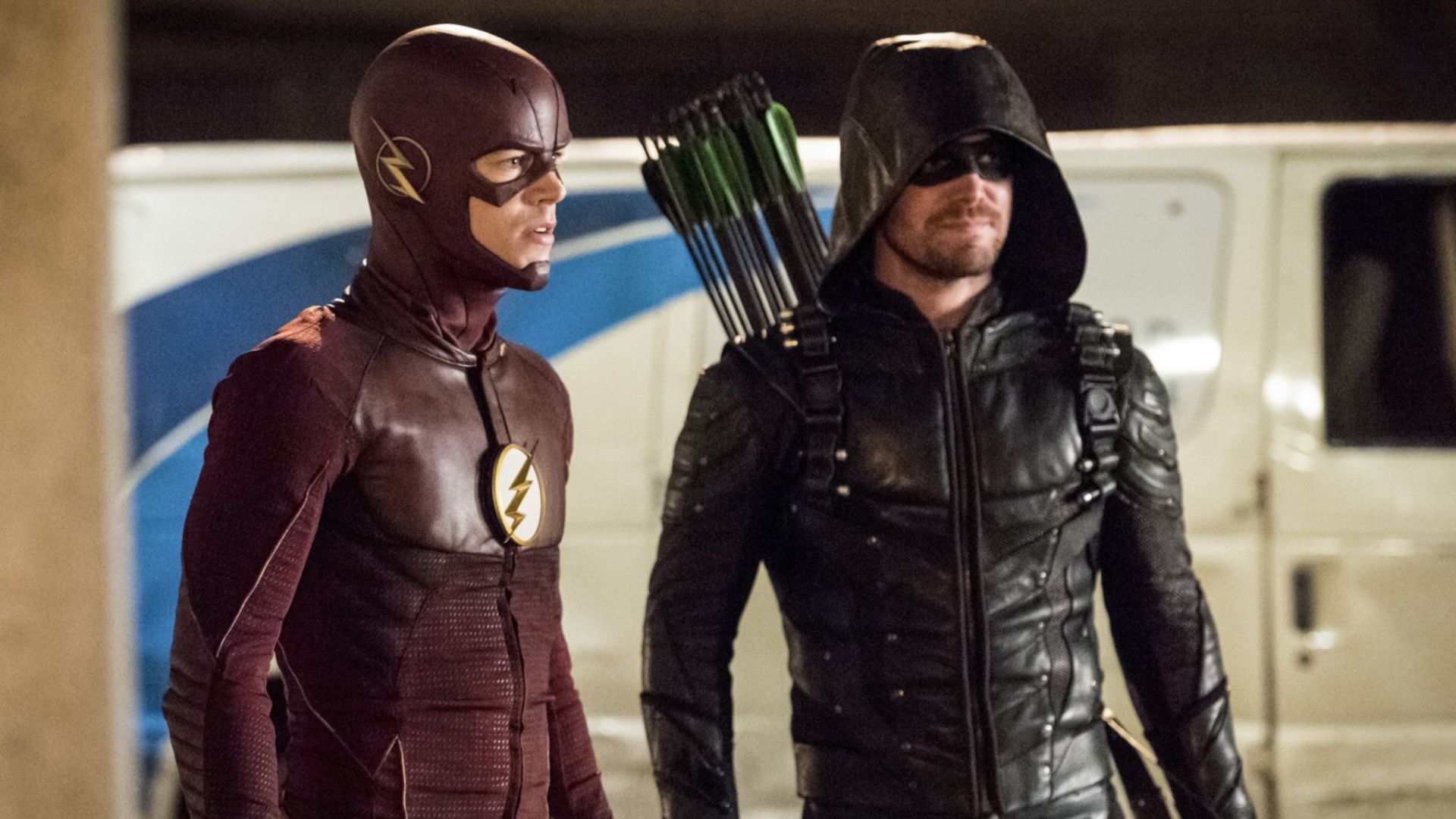
Currently, the most talked-about DC Comics TV show is Lanterns, coming to HBO in August. However, The CW used to be the go-to place for DC action, largely due to the Arrowverse. This connected universe consisted of six shows, all starting with the original series, Arrow. Because these shows aired simultaneously, The CW was able to create large-scale crossover events, even adapting the well-known Crisis on Infinite Earths storyline from the comics. Now, several years after the Arrowverse concluded, just one show continues to improve in quality.
The Arrowverse included several superhero shows on The CW, such as Arrow (2012-2020), The Flash (2014-2023), Supergirl (2015-2021), Legends of Tomorrow (2016-2022), Black Lightning (2018-2021), and Batwoman (2019-2022). For a period, all of these shows aired around the same time. Arrow and The Flash were the most connected, with Legends of Tomorrow also sharing the same universe. Bringing Supergirl and Batwoman into the overall story usually required special crossover episodes. Black Lightning didn’t officially become part of the main Arrowverse until the “Crisis on Infinite Earths” event in late 2019.
Both Arrow and The Flash had long runs, lasting eight and nine seasons, respectively. However, despite being perhaps the most famous shows from The Arrowverse, Legends of Tomorrow has actually aged better. Though it wasn’t widely appreciated during its six seasons, it’s proving to be the most enduring series from the franchise.
DC’s Legends Of Tomorrow Is Aging The Best Out Of All Arrowverse Shows

Out of all the shows in the Arrowverse, Legends of Tomorrow was the most surprising success. Unlike other series, it didn’t focus on a major, well-known DC Comics character. The original cast included Sara Lance, who had a history on Arrow; two lesser-known villains from The Flash; Ray Palmer, whose storyline in Arrow revolved around a love triangle; Arthur Darvill, famous for his role as a companion in Doctor Who; and Victor Garber. The show, which followed a team of time-travelers trying to correct historical errors, initially struggled to find an audience.
The first season felt too bleak and serious considering the show’s overall concept, and it didn’t have the solid foundation needed to succeed like Arrow did. It also lacked the lightheartedness and fun that initially made The Flash so popular. Luckily, Legends of Tomorrow got a second season, because that’s when the show really found its footing – embracing humor and becoming one of television’s funniest series for viewers who were open to enjoying a wild ride.
Unlike other shows from the Arrowverse that might feel old by 2026, Legends of Tomorrow‘s time travel element keeps it fresh. Because the show’s technology – the Waverider – isn’t based on anything real, and the team travels to the past often, it doesn’t seem odd that events take place between 2016 and 2022 without disrupting a future timeline. The mix of heroes and villains in the cast also created compelling dynamics. Plus, Legends had more freedom to bend the rules compared to other Arrowverse series.
While not every season of Legends of Tomorrow was amazing, the show gets significantly better as it goes, making it worth pushing through the first season. Luckily, all seven seasons are currently available on Netflix, so you can easily binge-watch the beginning if you prefer, instead of waiting for each episode like viewers did when it originally aired.
Why The Flash Is Still The Arrowverse’s Best Series Overall

While Legends of Tomorrow improved over time, The Flash remains the strongest show in the Arrowverse. The Flash effectively introduced superpowers to this universe, largely thanks to Grant Gustin’s engaging performance and Barry Allen’s genuinely heroic nature – a contrast to the darker motivations of Oliver Queen in Arrow. Throughout its run, Barry was consistently likable even with his flaws. The show also handled time travel relatively smoothly and fared better than many others during the major “Crisis on Infinite Earths” storyline.
The success of The Flash was crucial to the growth of The CW’s DC television universe, allowing it to expand to six shows. Although Arrow had moments that were arguably stronger than The Flash, its fourth season introduced problems with the Damien Darhk storyline from which it never truly recovered, and often lacked a lighthearted touch.
What truly sets The Flash apart from other Arrowverse shows is its satisfying conclusion. Unlike Arrow, which stumbled through several episodes after Oliver Queen’s abrupt death in “Crisis” and a weak attempt to launch a new series, The Flash provided a good ending for its main characters after nine seasons of ups and downs.
The show delivered satisfying conclusions, and The Flash successfully wrapped up storylines in its final episodes, avoiding a disappointing end to the Arrowverse. Considering this also marked the end of an era for scripted shows on The CW, The Flash deserves praise for finishing strong.
2026-07-26 02:08