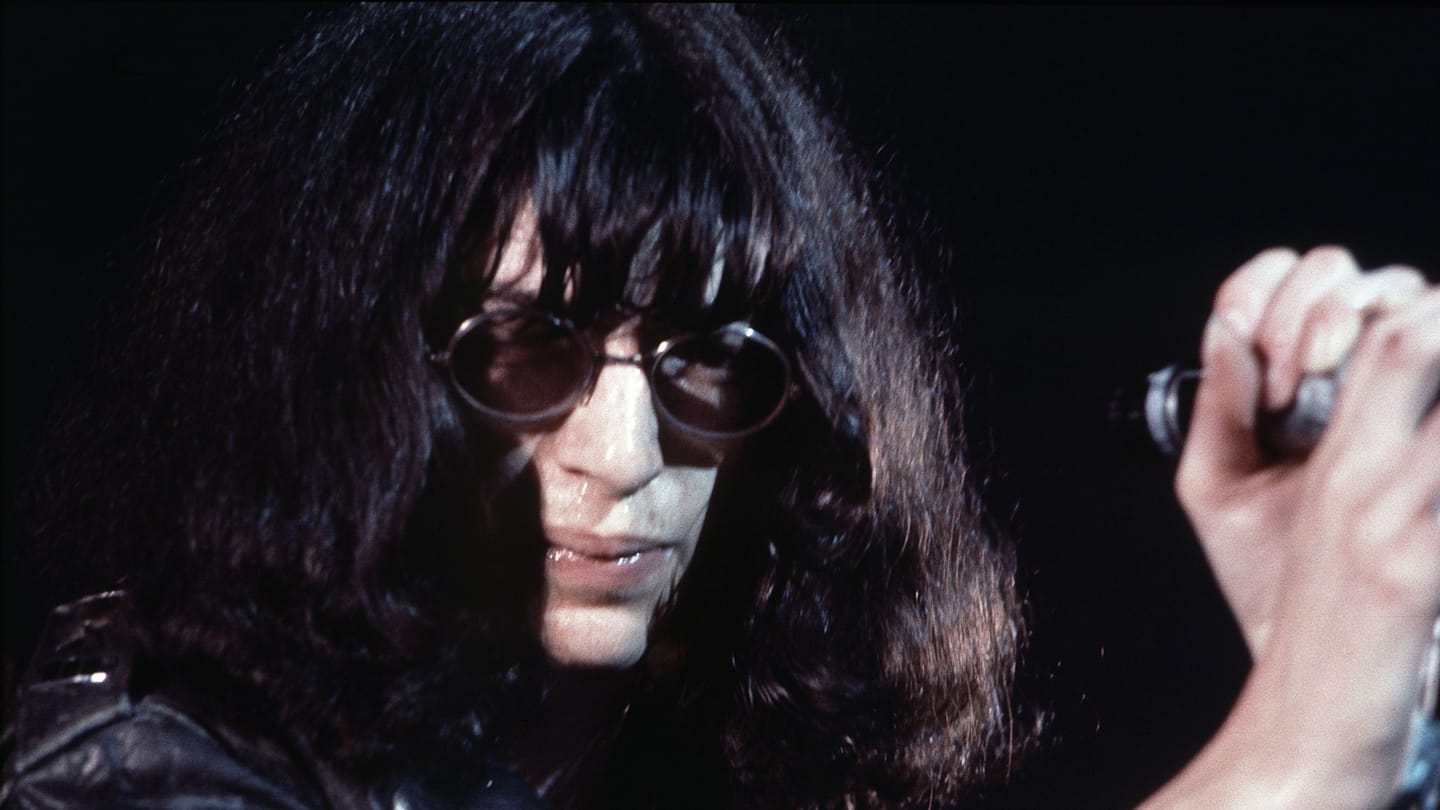
“One, two, three, four!”
We all knew how to count before April 23, 1976, but that date changed how music fans heard those numbers forever. Dee Dee Ramone’s rapid-fire count-in to “Blitzkrieg Bop” wasn’t just fast—it felt incredibly urgent. It captured a vital energy, and music seemed like the only way to express it.
You know, it’s funny, I actually heard Dee Dee, Joey, and the rest of the Ramones – those four guys from New York and the surrounding areas – blasting “Blitzkrieg Bop” for a couple of months before their first album even came out. Their label, Sire, put it out as a single in February, but honestly, nobody really scooped it up. Ramones singles just weren’t big sellers, ever.
Their music and concerts had a huge influence on both the music industry and popular culture, and for many fans, it all started fifty years ago with the iconic opening count-in: “One, two, three, four.”
Ramones turns fifty, but remains a teenager at heart
The question of whether the Ramones’ album was the first punk record often sparks debate online. I recently listened to the second volume of the ‘Nuggets’ compilation, released in the mid-1960s, which is actually labeled as a ‘Punk’ collection. It features a song by The Vagrants, along with tracks like “Strychnine” and “Spazz” – and to me, they definitely sound like early punk music.
People often debate who truly started punk – some say The Monks, The Kinks, MC5, Iggy Pop, or another band of your choosing. But arguing about the ‘first’ punk band misses the point, because punk isn’t just a musical style. It’s something bigger than that.
I previously taught film history, and I’ve always seen a connection between punk rock and film noir. Film noir, which became popular after World War II, was a way of expressing deep frustration with how things were. The more you study film noir, the more you realize it’s less about specific storylines or styles and more about a particular pessimistic outlook on life.
Punk rock isn’t just a musical style—it’s an attitude, a way of saying things. While it built on what came before, the band Ramones really defined that statement and brought it to life.
It’s built into the fast pace of Dee Dee’s introductions. The songs are short and to the point – none last longer than three minutes, and many are under two.
The power of the music lies in its simplicity – just a few chords and words repeated. It’s also incredibly energetic, making you want to dance and sing. Though the band was American, their sound had a distinctly British, working-class feel – a bit like ‘Oi!’ music. They were punk, but with a heavier, almost metal edge.
To see why the Ramones’ first album truly marks the start of punk rock, pay attention to the words in their songs.
“Now I wanna sniff some glue
Now I wanna have something to do.”
I’m just here with nothing to occupy my time, and all I can do is think about you. But you’re trapped, and she’s trapped too – there’s no escape.
On 53rd and 3rd streets, I’m trying to earn some money. On 53rd and 3rd, you’re always overlooked. Doesn’t that bother you?
Songs like “Now I Wanna Sniff Some Glue,” “Chain Saw,” and “53rd and 3rd” really defined a particular feeling for a generation, a vibe that set them apart from earlier rock and roll. While Dee Dee’s “53rd and 3rd” does mention the Vietnam War, that was unusual. The Ramones weren’t generally a political band; they didn’t typically write songs about war, the economy, or politics.
Dee Dee and Joey, the main songwriters for the band, wrote songs about what it was like to grow up in America during the 1970s. After the energetic opener, “Blitzkrieg Bop,” the album features two standout tracks – “Beat on the Brat” and “Judy is a Punk” – both penned by the band’s lead singer, Joey.
What truly sets them apart is their complete lack of meaningful contributions to discussions about people who grew up in the 1970s.
While “Beat on the Brat” could be seen as a glimpse into the more extreme side of modern evangelical beliefs, it’s definitely not good advice for raising children. As for Judy, the band jokingly suggests she join the Ice Capades – a truly memorable and funny line from the 1970s.
The Ramones weren’t known for their technical skill, but they offered something many earlier bands didn’t. Their first album featured drummer Tommy (Thomas Ederlyi), who quickly transitioned from performing to a successful career as a record producer.
Johnny, also known as John William Cummings, was a hugely influential rock guitarist, despite his simple playing style. He typically used only a few chords per song and rarely played traditional guitar solos. However, he’s celebrated for the unique way he approached the instrument and the impact he had.
Man, Johnny had this incredible energy – his sound, the way he played, the speed… it just created some of the most exciting music I’ve ever heard. You always see him on those ‘best guitarist ever’ lists, but people always add that he wasn’t about showing off technical skill; it was about the feeling he put into it.
This holds true for the band overall. While they were highly influential with their debut album, it didn’t quite reach the impact of Richard Hell’s “Blank Generation,” released shortly after. And though important, their influence wasn’t as pivotal as the Sex Pistols’ Never Mind the Bullocks…, which came out around the same time.
I always thought the Ramones were something special, especially compared to bands like Richard Hell or the Sex Pistols. Those guys burned bright but faded quickly. The Ramones, though, they really lived punk rock. They stuck with it, even with a few changes in the band, and watched it evolve. What’s really amazing is they actually improved over time, proving that even if you start out rough and self-taught, you can really grow into something incredible.
When I showed films professionally, I once screened the classic, low-budget horror movie The Texas Chainsaw Massacre at the American Film Institute theater near Washington, D.C.
I started by pointing out that the filmmakers, Tobe Hooper and his team, couldn’t have predicted the way their movie would be received or interpreted when they first made it. Also, just for the record, the song “Chain Saw” actually takes its inspiration from The Texas Chainsaw Massacre.
I’ve written so much about the Ramones now, it exceeds the number of words actually on their first album. It’s probably time to finish up. Let’s get back to the core question: what made the Ramones so special, and why did they emerge when they did?
It’s easy to see why the 1970s were a turning point. Like the late 1940s, it was a time when classic American films were challenged, reflecting a nation exhausted by conflict – both war (World War II and Vietnam) and social upheaval (the Great Depression and Watergate). People were tired and began to seriously doubt the values and institutions they’d once trusted.
Young people in the 1930s and 1960s had clear issues to protest. But after the wars ended in the mid-1940s and mid-1970s, they were left feeling…empty. A deep sense that things would never improve settled in, creating widespread gloom and a feeling of defeat – a mood that singer Leonard Cohen later captured in his song “Everybody Knows.”
Punk rock didn’t come from a desire to cause chaos, but from a feeling of listlessness and boredom. All that pent-up energy needed an outlet, and it found one in fast-paced, energetic music – a simple “One, two, three, four…” and then letting it rip.
It’s hard to say exactly why the Ramones resonated so strongly. They weren’t necessarily the most skilled musicians, and the band members didn’t always get along. Yet, despite their differences, they persevered and kept playing, forging a unique connection that felt like family.
Check out Jason Ringenberg’s 2019 song “God Bless the Ramones.” It’s a tribute to the band, and Ringenberg recalls when his band, Jason & the Scorchers, opened for them back in the early 1980s.
Here’s to the Ramones – a band that didn’t achieve mainstream success. Many people never knew their music, or didn’t take them seriously. But they stayed true to themselves, refusing to compromise their sound for commercial gain or corporate radio control. They remained authentic, and that’s something to celebrate.
Even after fifty years, a simple count like “One, two, three, four…” can still move people, and that’s what makes it truly artistic, regardless of anyone’s high-society standards.
Read More
- The Division Resurgence Best Weapon Guide: Tier List, Gear Breakdown, and Farming Guide
- Last Furry: Survival redeem codes and how to use them (April 2026)
- GearPaw Defenders redeem codes and how to use them (April 2026)
- Clash of Clans Sound of Clash Event for April 2026: Details, How to Progress, Rewards and more
- Guild of Monster Girls redeem codes and how to use them (April 2026)
- eFootball 2026 “Countdown to 1 Billion Downloads” Campaign arrives with new Epics and player packs
- Gold Rate Forecast
- After THAT A Woman of Substance cliffhanger, here’s what will happen in a second season
- Total Football free codes and how to redeem them (March 2026)
- Wuthering Waves Hiyuki Build Guide: Why should you pull, pre-farm, best build, and more
2026-04-09 17:01