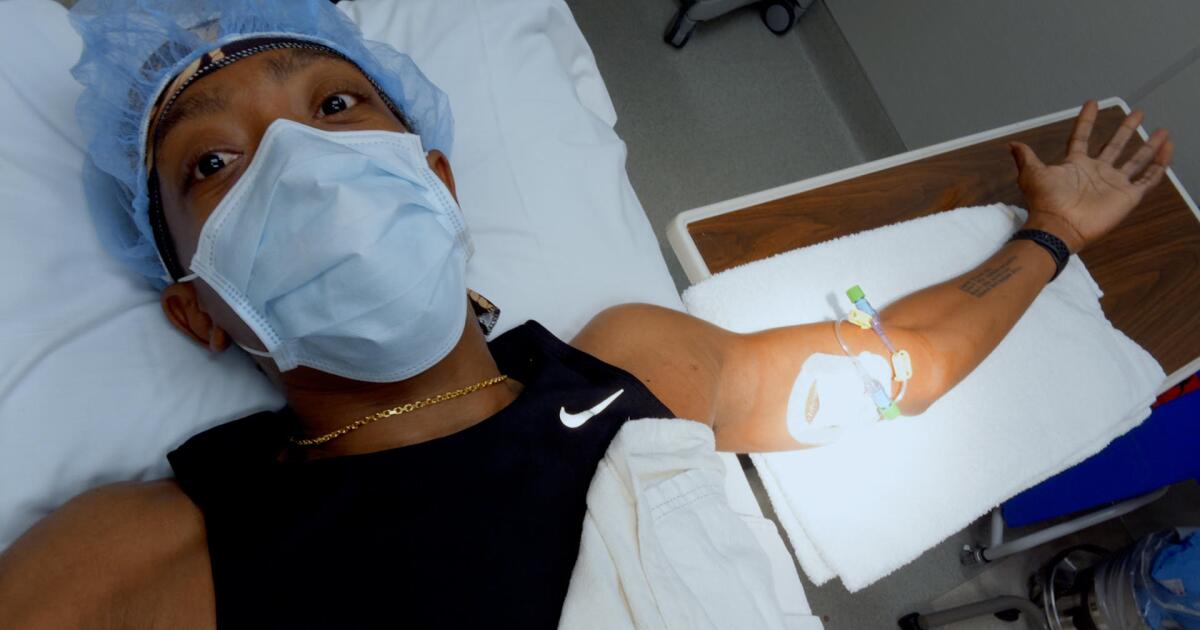
Jared Snow typically goes to the hospital because he’s in a lot of pain, and he always hopes to feel better quickly. However, dealing with sickle cell disease as a Black man in the United States often makes that hope difficult to maintain.
Comedian and actor, originally from Compton, has lived with sickle cell disease since childhood. Dealing with frequent hospital stays and pain has always been a part of his life. Now, he’s sharing his experiences in a new documentary called “You Look Fine,” exploring how he manages the condition while working as a performer in an industry focused on appearances.
Working with Marlon Wayans, Snow created the film to shed light on sickle cell disease and its effects on Black communities.
Sickle cell disease affects roughly 100,000 people in the U.S., and disproportionately impacts the Black community, accounting for over 90% of cases, according to the Centers for Disease Control and Prevention. It occurs in about 1 in 365 Black or African American births. The disease causes red blood cells to become crescent-shaped due to a genetic mutation. These abnormally shaped cells can block blood flow, leading to ongoing pain, strokes, lung issues, infections, and kidney problems.
The almost 90-minute documentary shows Snow filming his own experiences in hospital rooms – including nurses drawing blood and even him working on his comedy while in bed. It also features interviews with people close to him.
Snow insisted on showing the raw reality of his illness in the film – including graphic images of needles and blood, and footage of him in agonizing pain during hospital stays, as well as the long waits for effective pain relief. While he often uses humor to cope, the film also reveals the exhausting, heartbreaking, and emotionally draining toll his condition takes on him. These difficult moments are balanced with clips of his stand-up performances and his efforts to enjoy life through travel, skydiving, and even a snowy day in New York City.
The Times interviewed Snow and Wayans about their movie, discussing themes of emotional openness, the importance of Black men’s health, and how to find humor even in difficult times.

I was struck by the handwritten notes with title ideas. Tell me where “You Look Fine” comes from?
I often hear people dismiss my pain, and it’s a common experience within the Black community. It feels like a form of gaslighting – when you’re clearly struggling, people focus on superficial things, like complimenting your appearance instead of acknowledging your suffering. There’s also a strange dynamic when seeking medical care. If I try to look presentable, it feels like it diminishes the seriousness of my condition. But if I dress too casually, I risk being perceived as unreliable or homeless, making it even harder to get help. It’s a delicate balance. This experience is shared by many with sickle cell disease and other chronic or mental illnesses, and it’s important to recognize it as a form of manipulation.
What was your motivation to do this documentary now?
I wanted to highlight the humor, strength, and resilience that exist within this experience. That was my main drive. Growing up, there wasn’t much discussion about it, especially among men, and I wanted to break that pattern and offer a different perspective.
I was drawn to this project because it aligns with my comedic style – I like to find humor even in difficult subjects. I believe laughter is important for everyone, no matter what they’re going through, and I try to bring that into my work. Growing up as an African American, sickle cell disease was something we were all very aware of, even in personal matters like dating. My mother always stressed the importance of knowing a potential partner’s status. Sadly, I’ve lost four friends to sickle cell, including two just this past year. It’s a challenging disease, and I want to support those affected, raise awareness, and help my friend Jay achieve success.
In the movie, your character, Jared, says, “I just want to see what my body can do.” I found that line incredibly powerful. Could you talk about how your relationship with your body has changed since filming that scene?
I’ve really changed how I think about taking care of myself. When people comment on me eating a salad, I honestly think about it as something that could actually save my life. It’s not about trends; it’s about survival. And when I stretch or do yoga, it’s not because I’m trying to become a yoga expert. It’s because I know my joints need oxygen, and movement helps get it there. I’m focused on staying healthy for the long haul, and I’ve seen firsthand what happens when people, whether they have sickle cell or not, don’t move their bodies enough as they get older. It’s a real wake-up call.

It’s often difficult for Black people, particularly Black men, to have their suffering – whether physical or emotional – acknowledged or treated with respect. Can you talk about what it’s been like to share your own struggles publicly?
It’s been really tough. It took me a long time to feel comfortable talking about this publicly, especially working in the entertainment industry where there’s a lot of pressure to project a certain image. It’s hard when your pride gets in the way of admitting you’re struggling, and there’s a stigma around admitting illness. People might not want to work with you if you’re open about health issues, and I’ve definitely experienced that – I’ve even lost jobs while hospitalized. Eventually, I reached a point where I had to be honest. The constant pressure and frequent hospital visits meant I was either going to be seen as unreliable, or I had to explain what was really going on and deal with the consequences.
I find that I do my best work when I’m grappling with pain and allowing myself to be vulnerable. Losing my parents was incredibly difficult, and I felt it was important to address that grief in my work. It takes courage to be so open, but I also believe it’s essential for honest creation.
What was going through your mind when you first saw that footage of [Snow] in the hospital?
I was really struck by this guy. He was facing a lot, and someone even questioned if he was exaggerating things, but he was determined to document it all – he had cameras everywhere, even on his foot! Honestly, it made me proud. I admire anyone with that kind of drive and passion, especially when they’re going through something tough. It takes incredible courage to create and share art while you’re hurting, and I believe it’s a powerful thing. Seeing him express himself through art felt like a form of healing, both for him and for anyone who watches. I truly think his work is unique and important, and that’s why I support him wholeheartedly. It feels like something the world needs to see.
How has this film changed your relationship to your understanding of masculinity and strength?
For me, this project feels authentic and consistent with who I am. It hasn’t changed my beliefs, but it’s reinforced them. I’ve always been open about my feelings, and I actively work through them – through therapy, walks, prayer, and reading. I believe life involves suffering, and we all need healthy ways to cope. Art, and especially this project, are part of that for me. Having a platform allows me to express myself and process difficult emotions. It’s incredibly rewarding when I can take something painful and turn it into something that brings joy or entertainment to others. That’s why I fully support this work, because it aligns with my personal beliefs and what I want to share with the world.
I believe true strength comes from embracing vulnerability, not avoiding it. It’s easy to stay on the surface, but real power lies in confronting both your best and worst moments, and taking ownership of them. That’s where you discover who you truly are and what you’re capable of – for yourself and for others. It leads to fearlessness. This experience showed me I can achieve anything I set my mind to. I feel a new sense of energy because I pushed myself. I spent eleven months relentlessly editing a film I had on hard drives, and now I have my first feature film. I was brave enough to try, and I didn’t worry about what others would think. Knowing my time is limited also helped me focus on what truly mattered: making movies that make people laugh and inspire them to pursue their own dreams. Letting go of outdated ideas about what it means to be ‘masculine’ was key to unlocking that.

The movie is charming overall, but I especially appreciated the well-placed humor and how genuinely funny it was. It made me wonder: how do Black people manage to find those moments of joy and lightness, especially when they’re going through difficult times?
For Black people, there’s a long history of collective trauma—stemming from things like slavery and family separation—that comes before individual family issues. Despite all of that, we’ve often found a way to laugh, and I think that’s been key to our resilience. Humor has truly been a lifesaver, helping us navigate incredibly difficult times. It’s amazing to me that we can find something to laugh about even when we’re hurting the most. I always encourage people to seek out that humor in their pain, because it can lighten the load. It’s a powerful feeling to laugh and cry at the same time.
Sometimes, when life feels overwhelming – whether from difficult experiences, past trauma, or just plain pain – even a small laugh can be incredibly helpful. It’s like a quick breath of fresh air, giving you the energy to keep going, to start problem-solving, and to ask yourself, ‘What’s the next step?’ It provides that much-needed moment of relief and resilience.
Read More
- Gold Rate Forecast
- Limbus Company 2026 Roadmap Revealed
- After THAT A Woman of Substance cliffhanger, here’s what will happen in a second season
- Last Furry: Survival redeem codes and how to use them (April 2026)
- GearPaw Defenders redeem codes and how to use them (April 2026)
- Genshin Impact Version 6.5 Leaks: List of Upcoming banners, Maps, Endgame updates and more
- Wuthering Waves Hiyuki Build Guide: Why should you pull, pre-farm, best build, and more
- XO, Kitty season 3 soundtrack: The songs you may recognise from the Netflix show
- Guild of Monster Girls redeem codes and how to use them (April 2026)
- The Division Resurgence Best Weapon Guide: Tier List, Gear Breakdown, and Farming Guide
2026-02-24 02:02