This article contains spoilers for Season 2, Episode 9 of “The Pitt.”
About halfway through the second season, the “The Pitt” storyline really resonated with me, finally making me understand why everyone loves this show so much. It tackled issues relevant to today’s digital world in a compelling way.
I completely get why everyone is so captivated by this HBO Max medical drama – and why it’s been recognized with awards. It’s a fast-paced show that follows the daily grind of an emergency room in Pittsburgh, features a fantastic cast, and bravely tackles the problems with our healthcare system. Plus, it highlights the importance of compassion, and Noah Wyle delivers an incredibly inspiring performance as Dr. Michael “Robby” Robinavitch – a truly uplifting character to watch.
After recently spending nearly six hours in my local emergency room, experiencing intense pain and vomiting while waiting for the next shift to begin – and feeling helpless as staff explained they couldn’t help yet – I’ve been critical while watching “The Pitt.” The show’s frequent scenes of crowded waiting rooms often portray patients as a faceless, troublesome group, rather than individuals in need, which feels insensitive given my experience and the dedication of medical staff.
Working in an emergency room is incredibly challenging, especially when you’re dealing with personal struggles like family pressures, loss, addiction, or concerns for loved ones. But it’s important to remember that many patients in the waiting room are also facing their own difficult life circumstances, on top of experiencing intense pain and fear.
I’m just saying.
The second season really turned things around with “The Pitt.” The episode focuses on Robby’s last day before a three-month leave, and introduces his replacement, Dr. Baran Al-Hashimi (Sepideh Moafi). Dr. Al-Hashimi previously tried to get patients to manage their own online accounts and now proposes using artificial intelligence to help doctors with administrative tasks.

Television
R. Scott Gemmill, who created and runs HBO Max’s “The Pitt,” discussed the show’s surprising popularity, his plans for the next season, and the reason he chose to set it around the Fourth of July.
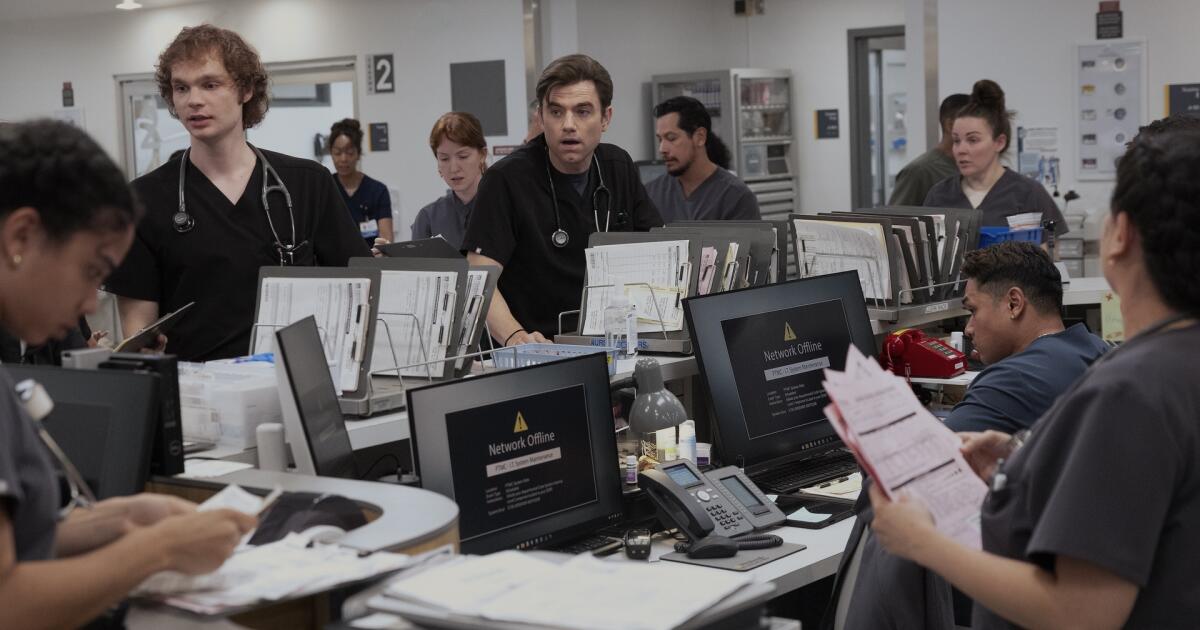
Robby strongly disagrees with the plan, and predictably, things go wrong quickly. This is mostly because he’s usually right, and the writers won’t admit AI could be a problem. It starts with a transcription of medical notes containing critical errors, followed by a complete system failure.
When a local hospital suffers a ransomware attack, management chooses to protect its systems by completely shutting them down. This forces staff to revert to manual processes, relying on paper and clipboards to manage everything.
The transition is messy, and there’s been a lot of joking about younger staff struggling with older technology like fax machines and paper files. Experienced nurses, like the tireless Dana Evans (Katherine LaNasa), remember when things ran smoothly without everyone relying on iPads. Still, Dana smartly asks for help from Monica Peters (Rusty Schwimmer), a former clerk who’s been brought back to assist.
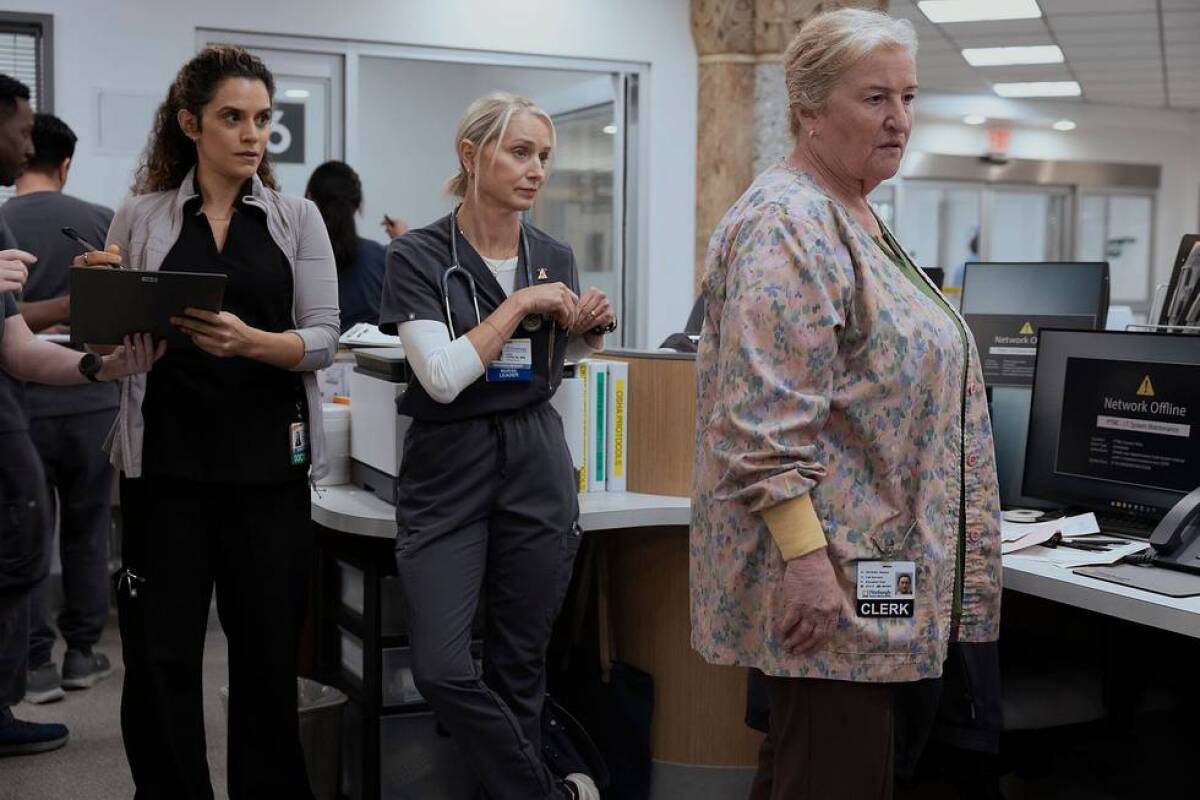
“I didn’t retire, I was let go because of technology,” Monica clarified. “So, how’s all this digital stuff treating you these days?”
I felt a surge of excitement right here. I enjoy the digital world as much as anyone – I’m writing this on a computer, communicating with my editors online, and won’t see the finished piece in print for a while. But like everyone else, I’ve had my share of tech troubles and frustrating glitches. It also feels like I’m expected to do the work of many people, all with a few extra keystrokes.
Of course, that’s not quite true. A keypad can’t do anything by itself, and neither can your fingers. Both need someone to control them – someone who can think through a task and make it happen. This means being able to use complicated and often confusing technology to find and share information, all while still understanding the core of the work itself.
The story highlights the physically demanding nature of emergency medical care, often referred to as ‘The Pitt.’ It shows that many healthcare workers struggle to efficiently manage and prioritize these physical tasks without digital assistance and clear instructions on a screen.
That’s why someone like Monica is so valuable – she represents many support workers who truly understand the job because they’ve done it themselves. She can handle all kinds of questions, quickly address urgent issues, ensure nothing gets overlooked, and connect with people in a friendly, helpful way.
This shutdown seems designed to highlight the drawbacks of relying too much on AI. It also serves as a stark reminder of how quickly we’ve replaced valuable people like Monica – and her expertise – with technology that doesn’t need paychecks, benefits, or breaks.
It’s crucial to remember that computers are meant to be tools, not replacements for people. However, many companies across all industries are significantly reducing their skilled workforce and instead assigning more work – often requiring considerable thought and effort – to employees who are already overburdened, such as doctors and nurses.
But hey, you get a company iPad!

Increasingly, tasks that used to be done by healthcare staff are now being asked of patients themselves, often through online portals. This is particularly challenging for those in emergency rooms – like at UPMC Presbyterian Hospital (“The Pitt”) – who may be unwell and struggling to complete detailed medical history forms or create secure passwords.
Medical dramas, such as those set in emergency rooms like “The Pitt,” often highlight the conflict between working quickly and providing compassionate patient care. This struggle between efficiency and humanity is becoming more common in many areas of life, though it’s not always as critical as it is in healthcare.
We’re used to getting what we want immediately thanks to smartphones and the internet. However, when things go wrong online, we still need a real person to assist us. But, as the busy staff at the Pitt hospital are finding out, it’s becoming harder and harder to reach someone who can help, as companies are cutting back on staff – even dedicated nurses like Dana can’t handle everything on their own!
Dr. Al-Hashimi, along with others, thinks that patient portals and AI note-taking could free up doctors and nurses to spend more time directly with patients. However, Dr. Robby and Dana consistently point out that the real solution is simply hiring more staff.
I’ve always thought it’s silly to rush getting tickets or using an app to save a little time, only to end up stuck for hours trying to get real help when something goes wrong. What’s the point of a quick start if support is impossible to find later on? It just feels counterproductive, honestly.
It’s definitely true in healthcare that technology hasn’t solved some basic problems. Many Americans still face long waits to see a doctor or get emergency care, and it’s not unusual to be treated in a hospital hallway by rushed staff. The U.S. is currently experiencing a serious shortage of hospital workers – particularly nurses – and this problem has gotten worse since the pandemic, often because healthcare professionals are burned out.
As a total cinema lover, I was really struck by how much time the staff at “The Pitt” dedicate to each patient – it felt incredibly heartwarming, but also a little bit like a perfect ideal. It almost felt as unbelievable as the sheer kindness and insight of Dr. Robby himself! It’s beautifully done, but definitely leans into a sort of hopeful, almost unrealistic level of care.
I’ve been thinking about all these challenges we face, and it strikes me that no amount of technology – not even AI – is going to magically fix them. It’s almost silly to think we can. We haven’t found a way to make time stretch further, or to need less sleep, and those fundamental limits will always be there. It really comes down to us, doesn’t it?
Besides hospitals, everywhere I’ve been recently could really use more staff who are well-trained and get paid fairly, particularly people who can troubleshoot when technology doesn’t work.
As soon as Monica arrives in the emergency room and takes charge, the atmosphere immediately improves. She clearly knows what needs to be done, understands the reasons behind it, and can effectively get things moving. Importantly, she also recognizes that patients prioritize receiving good care over how quickly it’s delivered.
In the ER and everywhere else.
Read More
- Invincible Season 4 Episode 4 Release Date, Time, Where to Watch
- Physics Proved by AI: A New Era for Automated Reasoning
- How Martin Clunes has been supported by TV power player wife Philippa Braithwaite and their anti-nepo baby daughter after escaping a ‘rotten marriage’
- Goddess of Victory: NIKKE 2×2 LOVE Mini Game: How to Play, Rewards, and other details
- CookieRun: OvenSmash coupon codes and how to use them (March 2026)
- American Idol vet Caleb Flynn in solitary confinement after being charged for allegedly murdering wife
- Total Football free codes and how to redeem them (March 2026)
- Gold Rate Forecast
- Olivia Colman’s highest-rated drama hailed as “exceptional” is a must-see on TV tonight
- Nicole Kidman and Jamie Lee Curtis elevate new crime drama Scarpetta, which is streaming now
2026-03-06 06:32