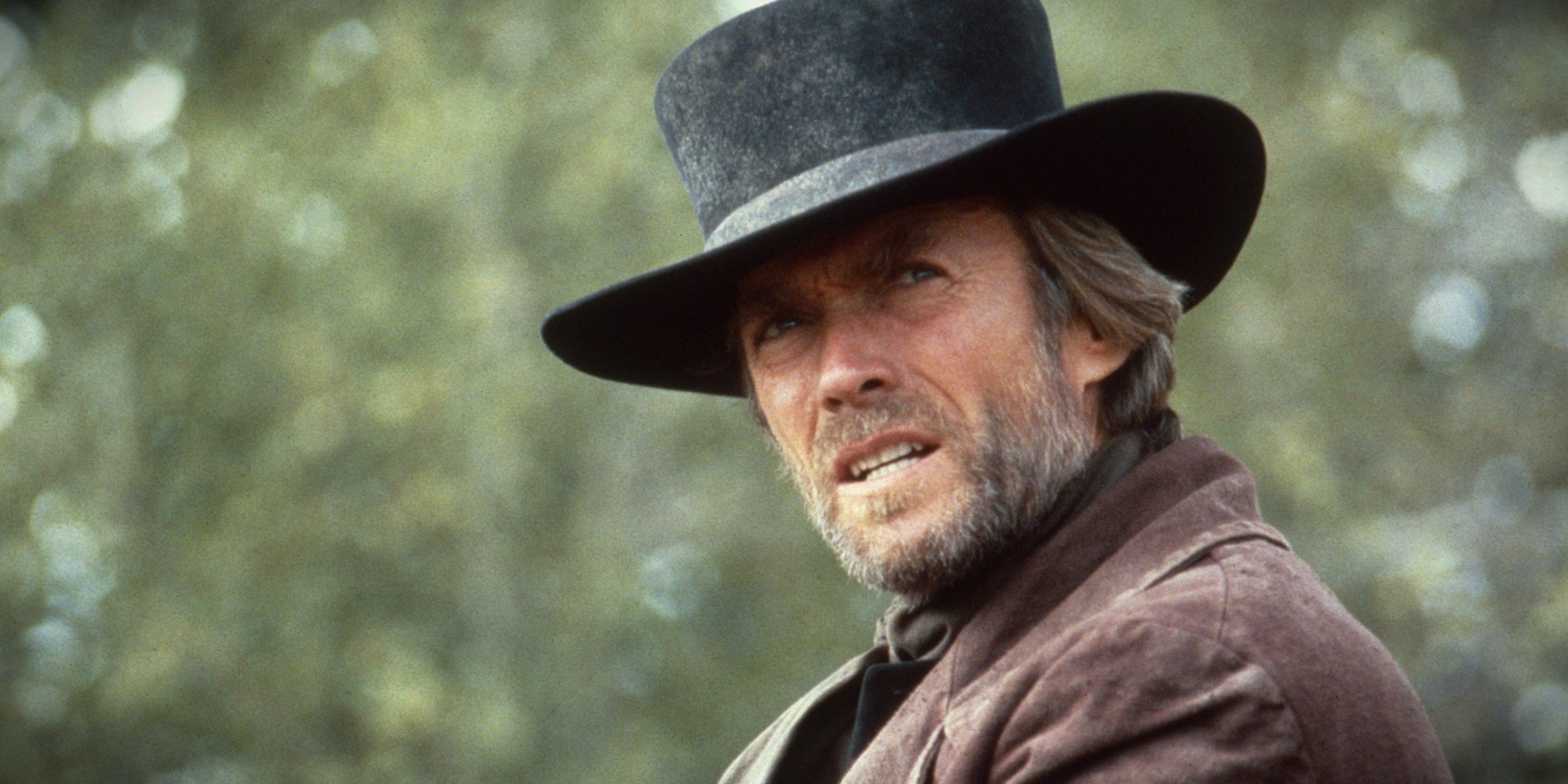
Clint Eastwood became the defining star of Westerns after his breakthrough performance as The Man With No Name in Sergio Leone’s A Fistful of Dollars. He’s famous for his unique take on the genre, seen in films like those in the Dollars Trilogy and Unforgiven. Interestingly, despite his success, he only made one Western in the 1980s, but that film set a new personal best and solidified his legendary status.
In 1965, Clint Eastwood and director Sergio Leone collaborated on A Fistful of Dollars, a film heavily inspired by Akira Kurosawa’s Yojimbo. It cleverly connected the themes of Western gunslingers with those of Japanese samurai, portraying the main character as a wandering bounty hunter guided by a strong moral compass. The film’s success launched both Eastwood and Leone into prominent careers that would define much of the late 20th century. While Eastwood explored other genres like crime and comedy, he remained most known for his Westerns. However, during the 1980s, he largely moved away from Westerns, focusing on war and action films, and only made one gunslinger movie during that decade: Pale Rider.
Why Eastwood Took A Step Back From Westerns
By the 1980s, both Clint Eastwood and Hollywood in general shifted towards more lighthearted and mainstream movies. The Western genre had lost its popularity since the mid-1970s, with audiences now preferring science fiction, thrillers, adventures, and comedies. Many directors observed that the overall feel of 1980s films was a stark contrast to the darker, more realistic movies of the previous decade. Eastwood adapted to this change, appearing in comedies like Any Which Way You Can and lighter dramas such as Bronco Billy, City Heat, and Pink Cadillac. While he did have some successes during the decade, the 1980s are often considered a low point in his career, with only a few standout projects.
Clint Eastwood’s growing relationship with Warner Brothers likely motivated him to explore different types of films. As a director, he proved to be even more versatile than as an actor, creating everything from touching dramas to large-scale war movies. He intentionally moved away from Westerns, which had defined his work in the 1970s, to broaden his appeal, even though this initially impacted his box office success. While it took until the 1990s for his career to fully rebound, the turning point began with the film Pale Rider.
The failure of recent Westerns signaled to studios that the genre’s popular run was over. With big franchises dominating the box office, even stars and filmmakers known for Westerns began to explore other types of movies. This was true for Clint Eastwood, both as an actor and a director. While films like Silverado attempted to recapture the classic Western feel, increasing production costs and falling ticket sales ultimately damaged the genre.
Pale Rider Is A Biblical Revenge Western
Megan turns to prayer when a ruthless landowner, Coy LaHood, begins terrorizing her community. The townspeople are trying to make a living by mining, but LaHood wants to force them off their land so he can take it all for himself, using hired men to scare them. Her prayers are answered with the arrival of a mysterious stranger known as the Preacher, who rides into town on a pale horse. When Megan’s mother and her fiancé offer him shelter, the Preacher becomes a defender of the town, contributing through hard work and encouraging the people to fight back against LaHood’s bullying.
When word of The Preacher’s bravery reaches LaHood, a ruthless group of marshals is sent in to stop him, led by a man named Stockburn. Stockburn starts to believe The Preacher is someone he thought he’d killed years ago. With no other choice, Eastwood’s character rides into town to face the marshals, resulting in a massive shootout. After the hero avenges his attempted murder and rescues the miners, Megan confesses her love for him as he rides away into the mountains, leaving his future uncertain.
Just as Clint Eastwood revisited and updated High Noon with High Plains Drifter, he used Pale Rider to offer a supernatural twist on the classic Western. The film stars Alan Ladd as a former gunfighter trying to start over as a farmworker, but he’s quickly drawn into protecting settlers from a greedy landowner named Rufus Ryker. Eastwood takes the familiar Western hero and transforms him into a mythical figure – a spirit of divine retribution. In doing so, he improved upon elements of films like Shane, creating a more contemporary and authentic epic that feels deeply rooted in its time and genre.
Eastwood Gave The ’80s Its Most Greatest Western
When Pale Rider came out, it was Clint Eastwood’s most financially successful Western film. Before Young Guns in 1988, it was also the highest-grossing Western of the 1980s. Despite having a lower budget than Young Guns, Pale Rider actually performed better, earning six times its production cost compared to Young Guns‘ five times return. While Eastwood had previously found success with films like The Outlaw Josey Wales and The Good, the Bad and the Ugly, Pale Rider‘s $41 million in earnings marked the high point of his career directing Westerns.
Clint Eastwood’s films from the 1980s were a bit of a mixed bag – creatively daring, but not very successful or well-known. While most movie fans remember titles like Gran Torino and Dirty Harry, films such as Tightrope, Bronco Billy, and Honkytonk Man haven’t become classics. Pale Rider was a turning point, both helping to launch a new era of action-packed Westerns, including films like Tombstone and Young Guns, and boosting Eastwood’s box office appeal. When looking specifically at traditional Westerns, his success rate was remarkably consistent.
The film Pale Rider demonstrated something important: while other actors could lead a successful Western, a major star like Clint Eastwood was still essential for driving the film’s success. It’s not surprising that after Eastwood moved away from Westerns in 1992, it became harder to make profitable films in the genre, even with Kevin Costner trying to fill his role. Pale Rider‘s success – it became the most popular Western of the 1980s – reinforced the strong connection between Eastwood and the Old West, a pairing that defined both his career and the genre itself.
How Eastwood Helped Save Westerns
Besides Pale Rider, the Western genre was struggling in the 1980s. Audiences were captivated by franchises like Star Wars, Back to the Future, and Indiana Jones, and had largely lost interest in Westerns. While Heaven’s Gate attempted to revive the grand Western epic, Clint Eastwood demonstrated that the genre’s future lay in smaller, more character-driven stories. To this day, most successful Westerns follow that same, more intimate approach.
Clint Eastwood’s Pale Rider proved Westerns could still be successful at the box office, and Young Guns built on that momentum a few years later. In 1992, Eastwood directed Unforgiven, a final, reflective Western that challenged and redefined the classic gunfighter story. The film won an Academy Award and was a huge commercial success, effectively bringing Westerns back into the spotlight for the 1990s, much like Pale Rider had done for the 1980s.
Found an error? Send it so it can be corrected.
Read More
- ‘Project Hail Mary’s Unexpected Post-Credits Scene Is Worth Sticking Around
- Beyond Accuracy: Gauging Trust in Human-AI Teams
- Gold Rate Forecast
- The most surprising Hannah Montana cameos: From John Cena to Dwayne Johnson and even a Coronation Street soap star as show celebrates its 20th anniversary
- Limbus Company 2026 Roadmap Revealed
- EMEA Masters Winter 2026 introduces official Qualifier for Esports World Cup
- Genshin Impact Version 6.5 Leaks: List of Upcoming banners, Maps, Endgame updates and more
- Brawl Stars Sands of Time Brawl Pass brings Sandstalker Lily and Sultan Cordelius sets, along with chromas and more
- Total Football free codes and how to redeem them (March 2026)
- Brawl Stars Brawl Cup Pro Pass arrives with the Dragon Crow skin and Chroma, unique cosmetics, and more rewards
2026-03-14 23:37