
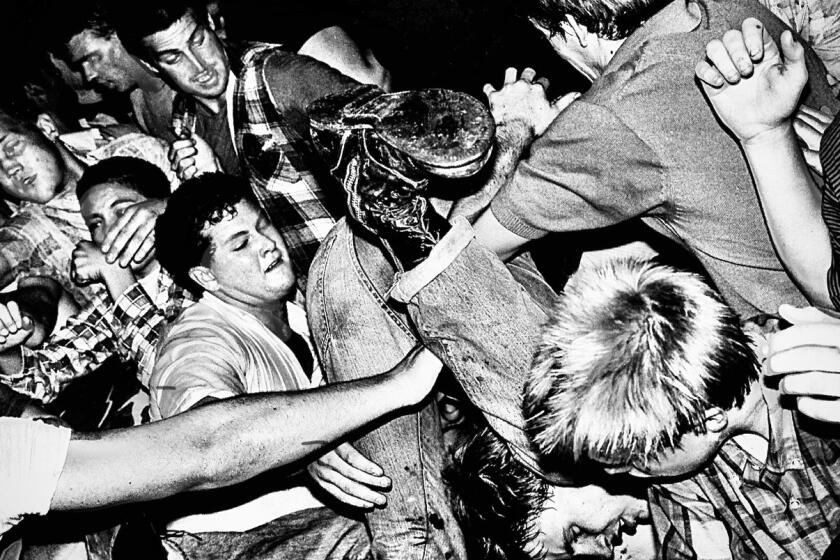
For nearly 30 years, Chain Reaction was a legendary, intimate music venue in Anaheim that truly captured the energy of live performance. Covered inside with band stickers and tees, and featuring a quirky, graffiti-filled alleyway, it became a cornerstone of the Orange County music scene, hosting punk, ska, hardcore, emo, and other genres and building a dedicated fanbase for local bands across generations.
This Friday will be the last night for a legendary venue, once called “the CBGBs of the West Coast” by OC Weekly. Since opening in 1996, Chain Reaction helped launch the careers of bands like Touché Amoré, Atreyu, Thrice, Throwdown, and Eighteen Visions. It also became a popular stop for major touring acts including Paramore, Fall Out Boy, Jimmy Eat World, Dashboard Confessional, Yellowcard, My Chemical Romance, and The Used.
After years of declining attendance and a significant impact from the COVID-19 pandemic, Chain Reaction was struggling. Even adding a bar – something the venue had never done before – couldn’t save it, and they announced its closure on Instagram last week.
It wasn’t an easy decision, but after a lot of consideration, we’ve decided to close down. We want to express our sincere gratitude to all the bands, fans, and everyone who came to our shows. We’re also incredibly thankful for the support of the music community over the past three decades, and for the friendships and memories created within our club. Thank you for standing by us, especially during tough times. CHAIN REACTION FOREVER.
The shutdown of a beloved venue—a key part of the alternative music world—highlights how much the scene has struggled recently. It’s a sign that things aren’t going well for a community that was once very vibrant.
Tim Hill, the founder of the Anaheim club that’s closing, noted the coincidence that its final show will be on his 68th birthday. Hill, now living in Oregon, originally moved to Villa Park, in Orange County, from Maywood in 1996, just before opening the venue. He was able to pursue his passion for live music thanks to the financial stability he’d gained from owning a thriving automotive electrical business.
In 1996, he lent a friend, Charlie Meloncamp, $10,000 to help start a concert venue in Anaheim. The agreement was that he would receive 10% of the profits, but just a few months later, Charlie gave up on the project.
According to Hill, Charlie was the creative force behind the venture, while Hill handled the business side. Although Charlie initially conceived the idea, he ultimately decided against pursuing it when he realized it wasn’t financially viable. Hill was comfortable with this, as he had sufficient personal wealth to sustain the business even if it operated at a loss for an extended period.
The club held its first concert over Labor Day weekend in 1996. It was originally called Public Storage Coffee Lounge, and the stage was just one foot high at the time.
According to Hill, the event had to be shut down by city officials about an hour in – likely after the first or second band – because Charlie hadn’t obtained the necessary entertainment license. To make up for the inconvenience, everyone was given a voucher for a future show.
Getting the permits for a live music venue open to all ages took many months of hard work and careful effort.
The building previously housed a bar that was closed after a shooting occurred there. The city of Anaheim deemed it unsafe, revoked the bar’s operating permit, and we had to begin the permitting process all over again, according to Hill. This involved multiple appearances before the City Council, landscaping the parking lot, adjusting the number of parking spaces—including adding a handicap spot—and ensuring all signage met city regulations. There was a lot of paperwork involved, and we also needed the approval of the police chief at the time to get the new permit.
It was a significant undertaking. Having a lot of teenagers at a concert always carries risks. However, Hill understood that Orange County needed a venue where people of all ages could enjoy live music. He felt it was crucial to provide a safe and positive space for young people.
After finishing his regular job, Hill always worked the ticket booth for every show. As more people discovered the club as a safe space for all ages, it quickly went from losing money to becoming a popular success.
The club started becoming really profitable. I developed a fair system for paying the bands. When up-and-coming punk and hardcore groups like Throwdown and Eighteen Visions played at Showcase Theater, the owner would only give them around $200. I decided to cover my staff costs first, and then give the bands about 60% of the remaining door money. Essentially, the more people who came to see a band, the more money they made. These were smaller bands, but the music scene was thriving. Almost every show was sold out, and we were hosting shows three to five times a week – everything from punk and ska to hardcore and emo.

Hill believes the enduring popularity stems from creating a secure and welcoming environment where teens can gather and feel at home.
I really wanted the venue to be all-ages. I thought it was great to have a safe space for kids. Parents often approached me, concerned about their teenagers attending shows alone. I’d suggest they come with their child, sit at the back during the performance, and then decide if they felt comfortable letting their child return on their own.
The club quickly became popular, hosting sold-out shows night after night. In 1999, Rolling Stone magazine featured it, and it played host to intimate, unpublicized performances for bands like the Offspring, New Found Glory, and even Billie Joe Armstrong’s band Pinhead Gunpowder. Celebrities would occasionally stop by too.
I don’t recall exactly when I first met him, but Jason Schwartzman was a regular customer,” Hill explained. “His band, Phantom Planet, even played a show there once. One night, I shared a cigar with Gary Busey in the parking lot after a performance. Billy Ray Cyrus and his wife also visited once, and their son’s band played there several times – they’d often come in through the back. I had opportunities to sell Chain Reaction for a good amount of money, but I wanted to preserve its unique atmosphere. That’s why I ultimately sold it to Andy [Serrao].
Andy Serrao started working as a booking agent for Chain Reaction in 2006. In 2015, he bought the club from Tim, who then retired and moved to Oregon.
We’d been doing this for years, and it was incredibly demanding. I often worked eighteen-hour days, going straight from my main job to Chain to manage the ticket sales until the last customer left – usually between midnight and 1 a.m. Then I’d have to be back at work by 7 a.m. Andy had been booking local bands for us for a long time, so I simply asked if he’d be interested in buying Chain, and we quickly reached an agreement. It was a straightforward transaction.
Jeremy Bolm, the lead singer of the band Touché Amoré, is a great person to ask about Chain Reaction. His band played there twelve times between 2009 and 2019, including their first headlining show in May 2010, which featured Joyce Manor as the opening act.
It’s easy to take places for granted until they’re no longer around. I’ve always been a bit of a collector, so I keep all my concert ticket stubs. That’s how I still have the one from my first time at Chain – it was September 22, 2001, and Eighteen Visions and Taken were playing.
Just before the COVID-19 lockdowns began, Touché Amoré played their last show at Chain Reaction while celebrating the 10th anniversary of their debut album, “…To the Beat of a Dead Horse.”

When planning the West Coast portion, we focused on the three venues that immediately come to mind as legendary: Che Cafe, Gilman, and Chain,” Bolm explained.
Ever since the location closed, people from across the country and around the world have been sharing their sadness online, especially on platforms like Reddit.
I was really struck by a comment I saw online – someone from San Diego mentioned that Chain was a huge part of their local music scene growing up. What really got me, though, was that their husband, originally from upstate New York, shared that seeing a show at Chain was actually his childhood dream! It just goes to show how much of an impact that venue had on people, even those from far away.
Even though I live in Florida and have never visited Southern California, I know how famous that venue was. It’s sad to hear about its loss – it was a truly special place, and we’ve lost someone great.”
Greg Katz, of the band Cheekface, shared how influential the Chain Reaction venue was in shaping his identity within the music scene, noting he grew up in Irvine.
Chain record store introduced me to the world of independent music and helped me become involved in the local indie scene. I discovered a love for both local and touring bands, and the band t-shirts displayed on the walls were a great way to find new music I’d enjoy. Even more importantly, the friendships I formed outside the store have lasted a long time.
It’s disappointing to see Chain Reaction close its doors without a clear successor. It likely marks the end of a significant chapter for independent music in Orange County. While other venues exist, nothing quite compares to what Chain Reaction offered.
Read More
- Clash Royale Best Boss Bandit Champion decks
- Vampire’s Fall 2 redeem codes and how to use them (June 2025)
- Mobile Legends January 2026 Leaks: Upcoming new skins, heroes, events and more
- World Eternal Online promo codes and how to use them (September 2025)
- Clash Royale Season 79 “Fire and Ice” January 2026 Update and Balance Changes
- Best Arena 9 Decks in Clast Royale
- Best Hero Card Decks in Clash Royale
- Clash Royale Furnace Evolution best decks guide
- FC Mobile 26: EA opens voting for its official Team of the Year (TOTY)
- Clash Royale Witch Evolution best decks guide
2025-12-18 23:02