Teaching Robots to Walk: A New Approach to Humanoid Control

Researchers are closing the gap between simulated training and real-world performance with a framework that leverages large-scale pretraining and physics-informed world models.
Researchers are closing the gap between simulated training and real-world performance with a framework that leverages large-scale pretraining and physics-informed world models.

A new philosophical analysis argues that consciousness isn’t created by complex systems, but is a fundamental property of reality, placing inherent limits on the potential for genuine artificial sentience.

Researchers have created the first macro-scale rotary motor built from folded structures and powered by electrostatic forces, opening up new possibilities for deployable robotics.
A new wave of generative AI tools is enabling unprecedented creative possibilities, but also raising critical ethical questions around consent, safety, and the future of intimate imagery.
Successfully integrating artificial intelligence requires more than just technology – it demands a fundamental shift in organizational practices and a focus on human-centered design.
A new approach combines machine learning with life cycle assessment to accelerate the development of materials that are both high-performing and environmentally sustainable.
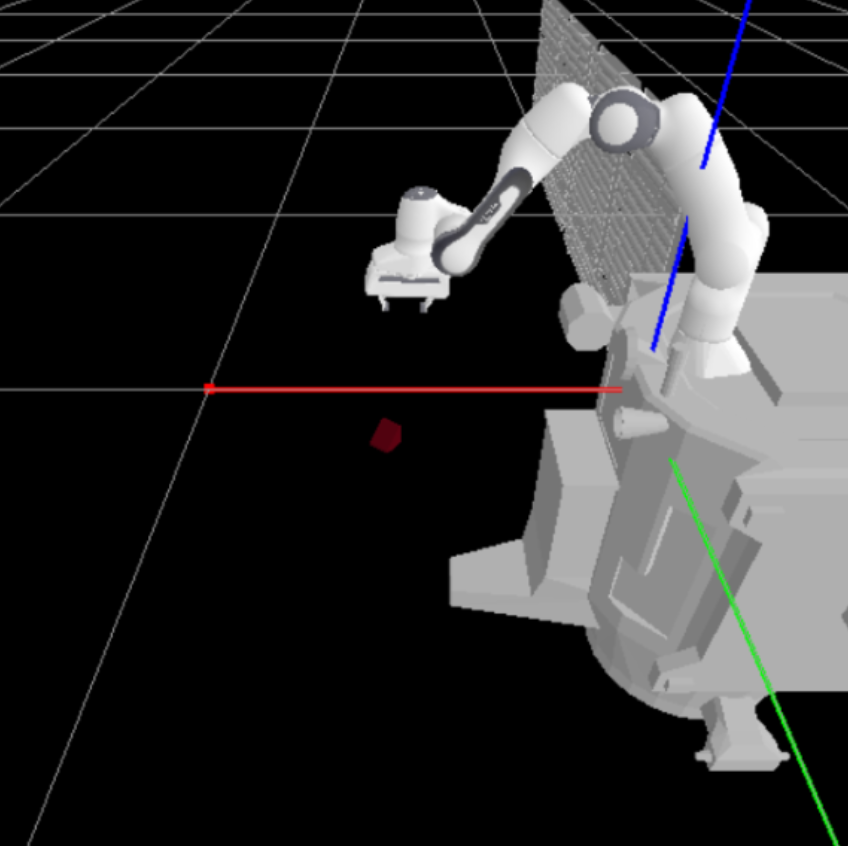
New research demonstrates a pathway to more robust and efficient robotic manipulation in dynamic environments, crucial for off-world operations and beyond.
![The study demonstrates that a multilayer perceptron (MLP) trained on the discrete group [latex]D_{30}[/latex] exhibits a structured representation, as evidenced by linear probe accuracy corresponding to alternating and rotational subgroups-a pattern not consistently observed in a transformer network trained on [latex]S_5[/latex], suggesting differing capacities for learning and representing group symmetries within these architectures.](https://arxiv.org/html/2601.21150v1/subgroup_probe_mlp_dihedral.png)
New research explores whether narrow neural networks can learn the underlying algebraic principles of finite groups simply by predicting their operations.
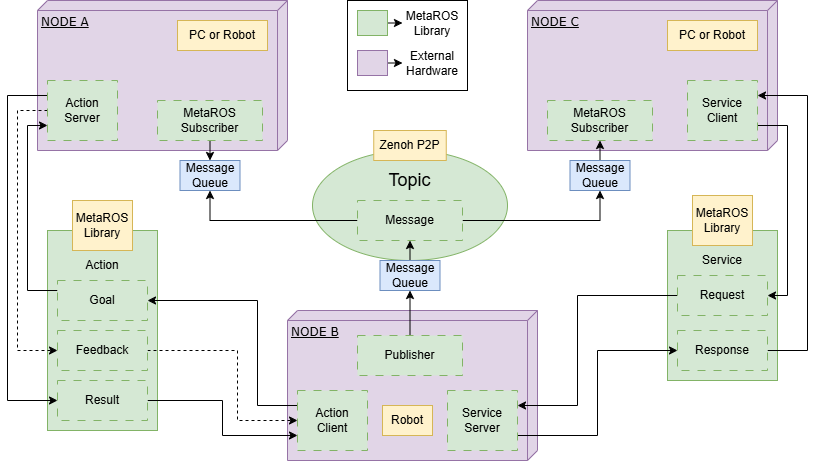
A new middleware architecture aims to unlock the full potential of robotic systems through enhanced communication and cloud integration.

A new framework merges active inference with distributional reinforcement learning, allowing agents to master complex tasks without building explicit world models.