Skip to content

BBG NEWS

  • Science
  • Who is Denis Avetisyan?

Science

Folding into Motion: A New Origami-Inspired Motor

30.01.2026 by ebaster

An electrostatic origami motor has been assembled, demonstrating a pathway toward creating micro-scale actuators with foldable, self-assembling designs.

Researchers have created the first macro-scale rotary motor built from folded structures and powered by electrostatic forces, opening up new possibilities for deployable robotics.

Categories Science

The Algorithmic Muse: Exploring AI and Sexual Content Creation

30.01.2026 by ebaster

A new wave of generative AI tools is enabling unprecedented creative possibilities, but also raising critical ethical questions around consent, safety, and the future of intimate imagery.

Categories Science

Beyond the Algorithm: Building AI-Ready Organizations

30.01.2026 by ebaster

Successfully integrating artificial intelligence requires more than just technology – it demands a fundamental shift in organizational practices and a focus on human-centered design.

Categories Science

Designing a Greener Future: AI-Powered Materials Discovery

30.01.2026 by ebaster

A new approach combines machine learning with life cycle assessment to accelerate the development of materials that are both high-performing and environmentally sustainable.
Categories Science

Robotic Grasping: Mastering the Unknown in Space

30.01.2026 by ebaster

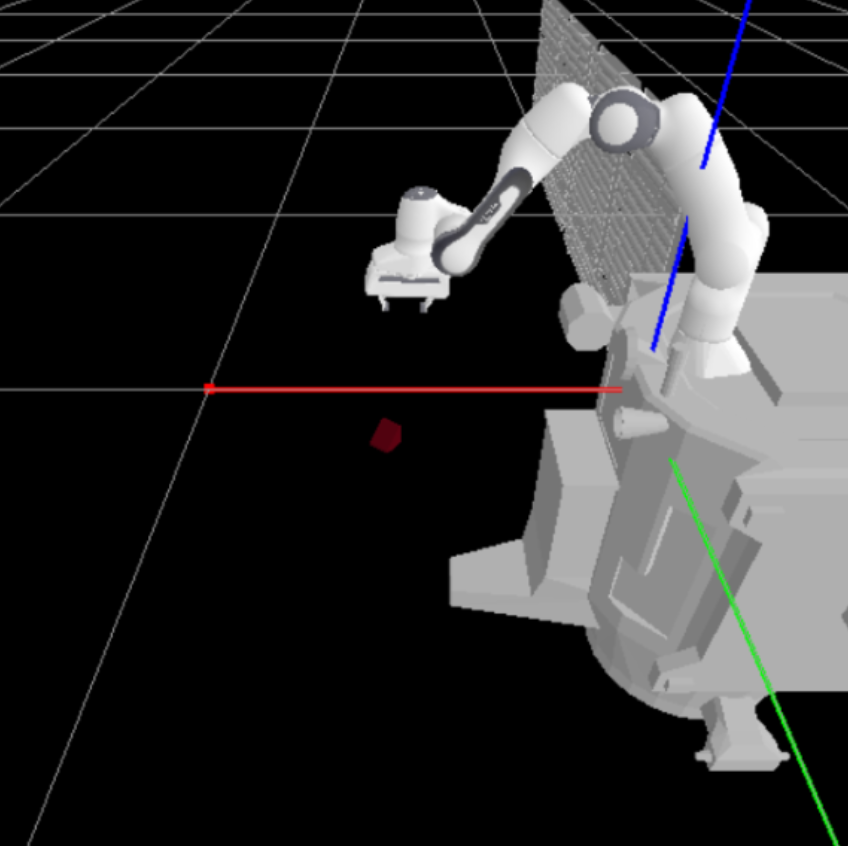
The study demonstrates a simulated low-fidelity space-based robotic grasping setup, establishing a foundational environment for the development and validation of grasping algorithms in extraterrestrial contexts.

New research demonstrates a pathway to more robust and efficient robotic manipulation in dynamic environments, crucial for off-world operations and beyond.

Categories Science

Decoding Group Theory with Neural Networks

30.01.2026 by ebaster

The study demonstrates that a multilayer perceptron (MLP) trained on the discrete group [latex]D_{30}[/latex] exhibits a structured representation, as evidenced by linear probe accuracy corresponding to alternating and rotational subgroups-a pattern not consistently observed in a transformer network trained on [latex]S_5[/latex], suggesting differing capacities for learning and representing group symmetries within these architectures.

New research explores whether narrow neural networks can learn the underlying algebraic principles of finite groups simply by predicting their operations.
Categories Science

Beyond ROS: Building Scalable Robotics with Meta-ROS

30.01.2026 by ebaster

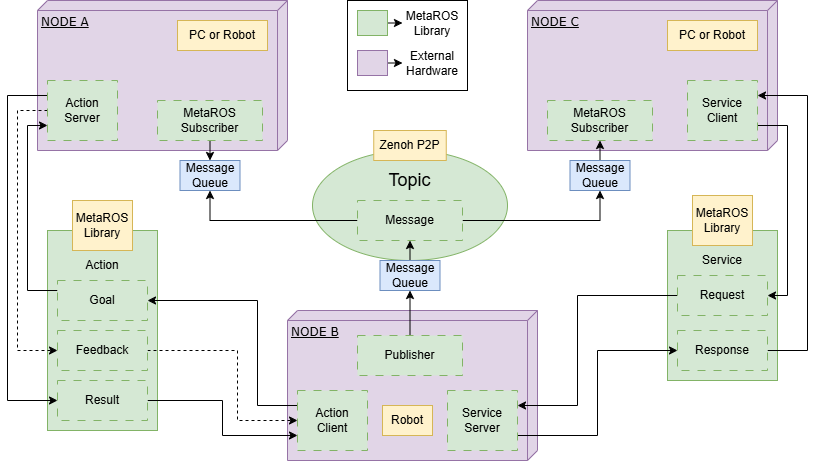
A modular robotic operating system leverages interfaces-encompassing topics, services, and actions-to facilitate comprehensive communication and interaction between its components.

A new middleware architecture aims to unlock the full potential of robotic systems through enhanced communication and cloud integration.

Categories Science

Beyond Prediction: Active Inference Learns to Control Its World

30.01.2026 by ebaster

When transition dynamics are simple, a distributional approach to reinforcement learning achieves performance comparable to one leveraging a dynamic attention-based inference framework (DAIF); however, as problem complexity increases and a latent manifold begins to govern system dynamics, DAIF demonstrably outperforms both distributional and model-based reinforcement learning strategies.

A new framework merges active inference with distributional reinforcement learning, allowing agents to master complex tasks without building explicit world models.

Categories Science

Robots That React: Teaching Machines to Hear and Act

30.01.2026 by ebaster

The research introduces a progressive series of robotic manipulation tasks-SonicStow, SonicInteract, and Bi-Sonic Manipulation-each demanding increasingly complex skill sets, from basic navigation, picking, and placing to articulated object interaction involving door opening and sink closure, ultimately testing an agent’s ability to sequentially manipulate two objects to achieve a goal.

New research explores how robots can move beyond pre-programmed instructions to respond dynamically to real-world events triggered by sound.
Categories Science

Untangling Data: A New Approach to Causal Inference

30.01.2026 by ebaster

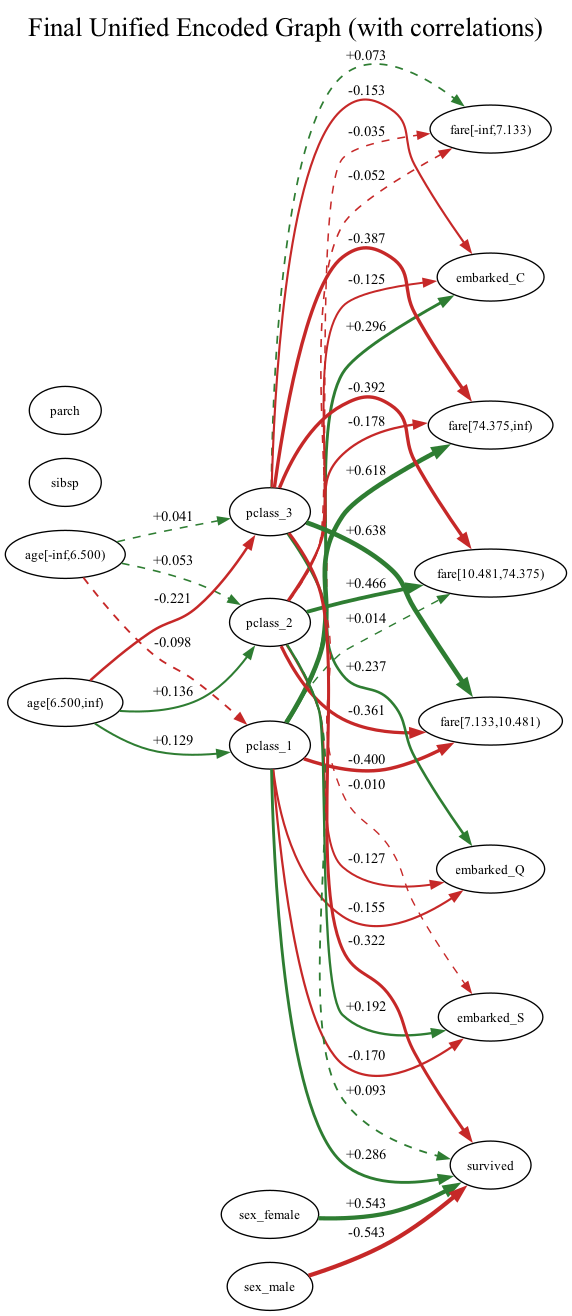
The system distills causality from the Titanic dataset by merging encoding-specific graphs-a process achieved through majority voting and correlation weighting-to construct a unified representation of underlying relationships, acknowledging that even complex systems reveal structure when viewed as interconnected components subject to inherent dependencies.

Researchers have developed a dual-encoding method to stabilize causal discovery when dealing with mixed data types, leading to more reliable and interpretable AI explanations.

Categories Science
Older posts
Newer posts
← Previous Page1 … Page149 Page150 Page151 … Page173 Next →
© 2026 BBG NEWS • Built with GeneratePress