Skip to content

BBG NEWS

  • Science
  • Who is Denis Avetisyan?

Science

Can Chatbots Pass the Test? Evaluating Automated Quality Control
17.02.2026 by ebaster

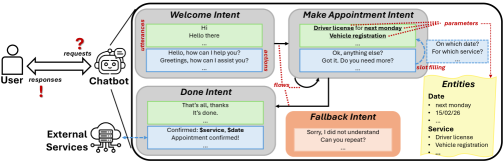
A task-based chatbot architecture prioritizes functional decomposition, enabling specialized modules to address distinct conversational objectives and fostering a system where dialogue isn't merely reactive, but actively pursues defined goals.

A new review examines the current state of automated testing methods for task-based chatbots and highlights the challenges in ensuring their reliability.
Categories Science

Beyond Prompts: How Skill Sets Unlock Agent Potential

17.02.2026 by ebaster

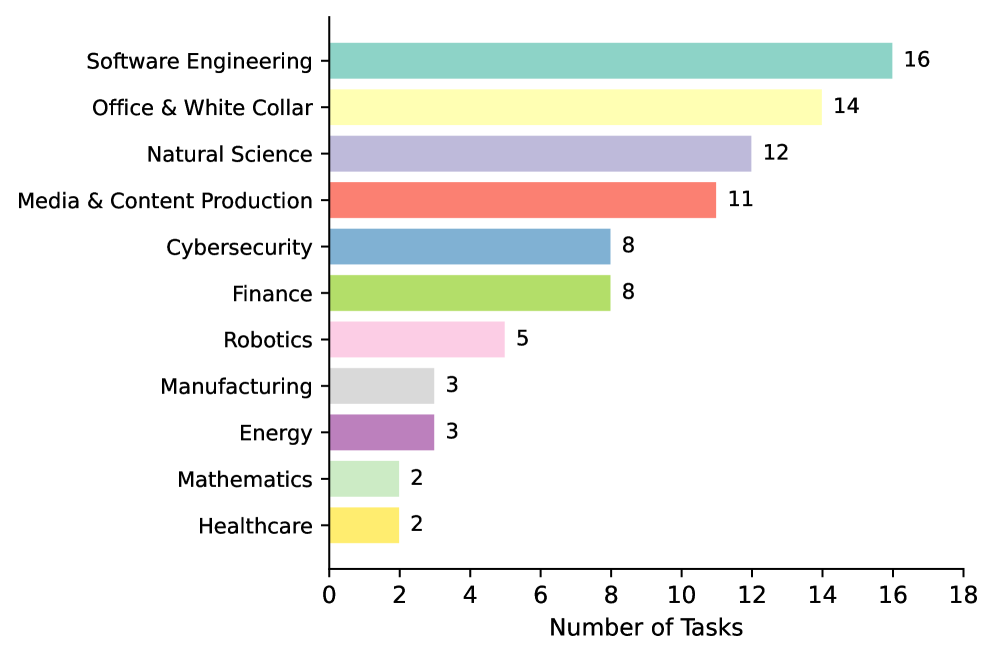
SkillsBench consolidates a diverse skillset assessment by encompassing tasks distributed across eleven distinct domains.

New research demonstrates that equipping AI agents with curated skills dramatically boosts performance across diverse tasks, offering a significant leap beyond simple prompt engineering.

Categories Science

Beyond Connection: Why AI Companions Aren’t a Loneliness Cure for Everyone

17.02.2026 by ebaster

New research reveals that the effectiveness of AI companions in alleviating loneliness is heavily influenced by individual attachment styles and age groups.
Categories Science

From Words to Workflows: The Rise of Intent-Driven Manufacturing

17.02.2026 by ebaster

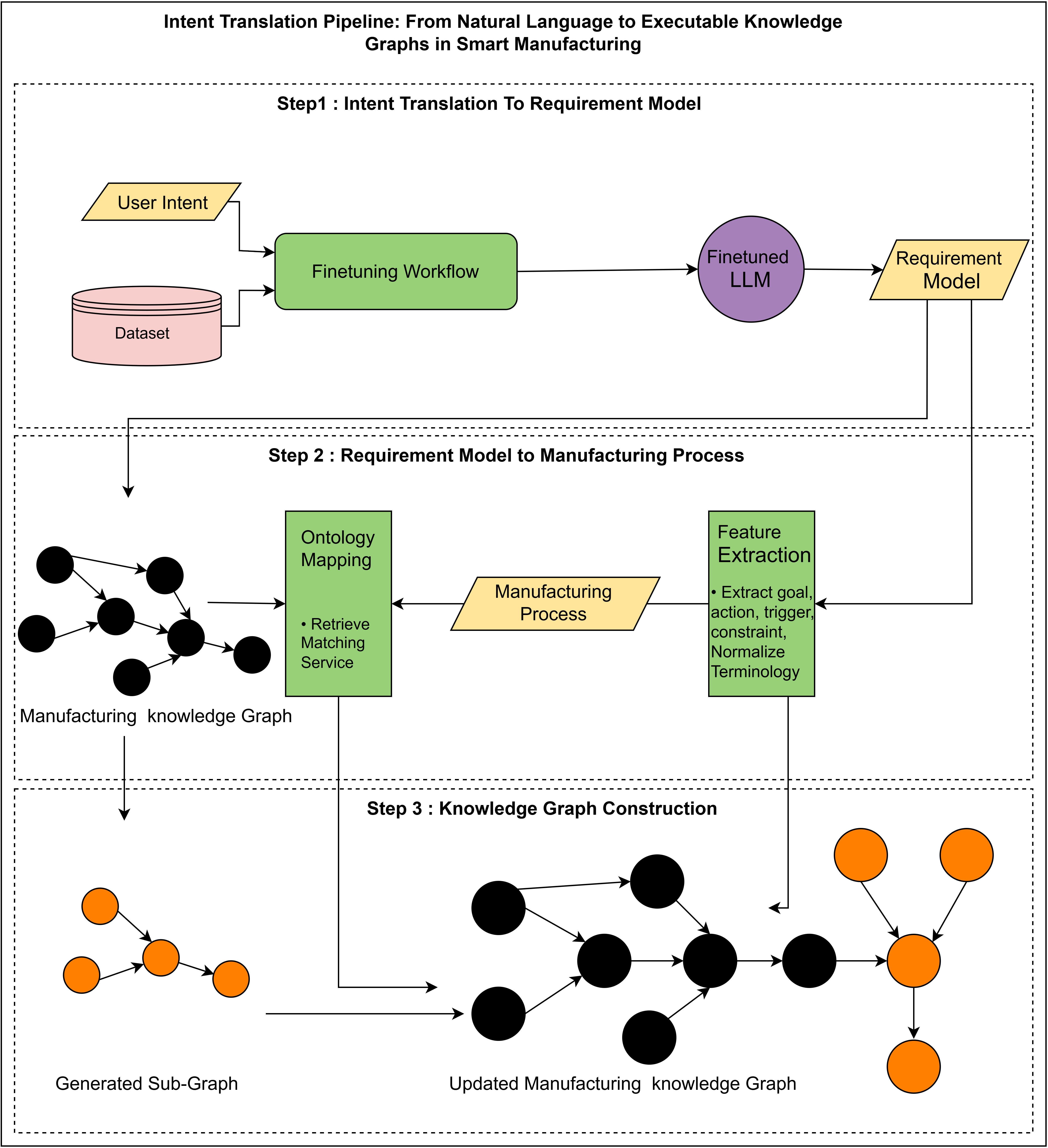
A system translates natural language directly into a structured requirement model, effectively reverse-engineering intent from communication.

A new framework translates natural language instructions into executable manufacturing plans, promising more adaptable and intelligent production systems.

Categories Science

Coordinated Learning: Boosting Multi-Agent AI with Shared World Models

17.02.2026 by ebaster

The method constructs a multi-agent reinforcement learning framework by integrating a learned world model-informed by state-action embeddings-with decentralized agent value networks enhanced by SALE, and then aggregates these through a QMIX-style mixing network operating under the CTDE paradigm, effectively building a system where predictive understanding of the environment drives coordinated action.

A new framework improves how multiple AI agents learn and collaborate by enabling them to build and share a unified understanding of their environment.

Categories Science

Smarter AI, Smaller Footprint: Optimizing Inference at the Edge

17.02.2026 by ebaster

A real-world testbed demonstrates co-inference with quantization-aware Lightweight Attention-based Instance Modulation, pushing the boundaries of efficient on-device machine learning.

A new framework balances performance and efficiency for deploying large AI models in real-world embodied systems.
Categories Science

Robots Learn by Watching: Closing the Skills Gap with Human Video

17.02.2026 by ebaster

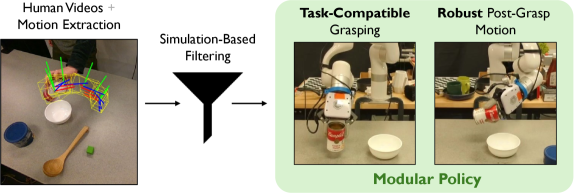
The system dissects robotic manipulation into modular stages-grasping and post-grasp motion-recognizing that while human demonstrations excel at teaching the latter, they fall short with non-humanoid grippers; consequently, a novel approach utilizes simulation-based filtering and a learned grasp scoring model to overcome the limitations of existing modular policies and ensure the acquisition of robust, task-appropriate grasping skills even with imperfect motion data.

A new framework allows robots to acquire complex manipulation skills simply by observing human demonstrations in video, bypassing the need for time-consuming and expensive robot-specific training.

Categories Science

Building Trust: A Blueprint for Explainable AI Systems

17.02.2026 by ebaster

Driven by the challenges of deploying Explainable AI (XAI), a reference architecture is presented alongside SemanticLens-an interactive explanation system-both informed by defined quality attributes for effective XAI systems.

Researchers present X-SYS, a comprehensive architecture designed to bridge the gap between explainable AI research and real-world application.

Categories Science

Flow Control: Guiding Robots to Safe and Seamless Motion

16.02.2026 by ebaster

A new approach combines learned movement models with real-time optimization to enable robot manipulators to plan safe and efficient trajectories.

Categories Science

Decoding Starlight: Machine Learning Reveals PAH Secrets

16.02.2026 by ebaster

The ratio of emission intensities at 11.2 and 3.3 micrometers-a proxy for molecular complexity-correlates with the number of carbon atoms in polycyclic aromatic hydrocarbons (PAHs), as demonstrated by analysis of a dataset of 15,022 neutral PAHs-including a subset of 81 identified by Maragkoudakis et al. (2020)-and refined using a 6 eV cascade model, yielding a robust fit-indicated by [latex]R^{2}[/latex] values-that suggests a predictable relationship between molecular size and infrared spectral features.

A new machine learning technique accurately identifies the size and charge of polycyclic aromatic hydrocarbons in space by analyzing their infrared light signatures.

Categories Science
Older posts
Newer posts
← Previous Page1 … Page140 Page141 Page142 … Page208 Next →
© 2026 BBG NEWS • Built with GeneratePress