Cooperative Robots Master the Art of the Push
Researchers have developed a new approach to coordinating teams of robots to collaboratively manipulate objects in complex environments using a blend of planning and learning.

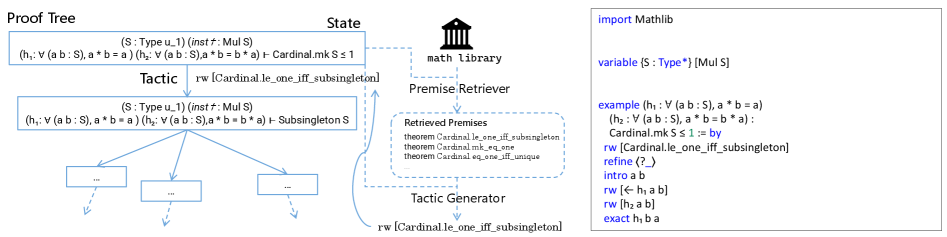
Early experiments reveal that GPT-5 is capable of dramatically accelerating research across diverse scientific fields, from theorem proving to identifying hidden symmetries.
A new methodology optimizes the base positioning of collaborative robots like the Fanuc CRX10iA/L to improve performance despite inherent placement inaccuracies.

A new study uses simulated medical specialists to investigate how pre-existing beliefs and the order of information impact diagnostic conclusions in large language models.
As artificial intelligence systems grow more capable, their escalating computational demands threaten to outpace energy efficiency gains, raising serious questions about long-term sustainability.

As artificial intelligence becomes increasingly sophisticated, this review examines the potential psychological and ethical risks associated with forming attachments to AI companions.
Researchers are leveraging principles of natural movement and a novel control technique to create legged robots with remarkably energy-efficient gaits.
As artificial intelligence evolves, the question of legal status – and whether AI systems should be considered anything more than property – is rapidly becoming a critical concern.

Researchers have developed a new approach to automatically identify long-term, repeating sequences of actions, offering insights into how people structure their days and detect unusual behavior.
A new experiment details the creation of an artificial academic identity to explore the challenges and implications of AI-generated research.