
“The Nutcracker” is a classic introduction to ballet for many children, and PBS is offering families a way to experience that tradition this holiday season with a special presentation.
Can’t make it to a live ballet performance this December? The English National Ballet’s stunning new production of “Nutcracker” offers a wonderful way to enjoy this holiday favorite. It will be shown on PBS Tuesday at 8 p.m. Pacific time, and streamed on PBS.org and the PBS app as part of the “Great Performances” series. This production, which premiered in London last year, combines the classic elements many remember with a fresh, innovative take on the beloved ballet that first debuted in Russia in 1892.

Entertainment & Arts
Here’s a guide to 16 different performances of the classic holiday ballet ‘The Nutcracker’ happening across the Los Angeles and Orange County areas, including shows in downtown LA, Long Beach, Pasadena, Irvine, and Anaheim. Some productions feature Tchaikovsky’s original score, while others offer unique interpretations.
David Horn, executive producer of “Great Performances,” describes the production as visually stunning. He believes it will introduce many viewers to ballet for the first time and feels it’s a wonderful way to mark the holiday season.
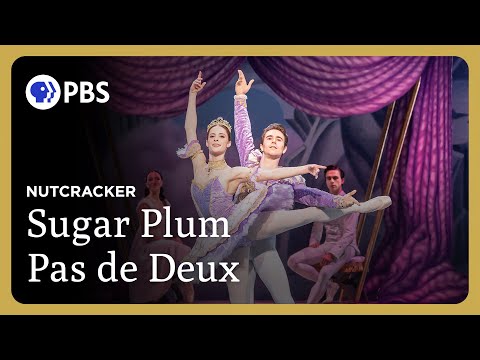
Tchaikovsky’s beautiful music and the classic story remain central to this production of The Nutcracker. We still follow a young girl who receives a nutcracker from her godfather, Herr Drosselmeyer, and is then transported to a magical world filled with characters like the Ice Queen (Anna Nevzorova) and the Sugar Plum Fairy (Emma Hawes). However, this version immediately stands out with its fresh take on the tale. It’s subtly set in the Edwardian era, and you’ll notice details like dancers carrying signs advocating for women’s suffrage – a nod to the period.
 ×
× As a film buff, I’ve always felt Clara’s story was a bit…distant. It’s her story, sure, but she often feels more like a bystander than someone actively driving the plot. As costume and set designer Dick Bird put it, it’s frustrating – you get to the second act and realize everyone’s just watching things happen. It feels too passive, you know? Like they’re not really in the story.
This new production of The Nutcracker offers a fresh take by focusing on the character of Clara. A significant change is the use of two dancers to portray her, showing her growth from childhood to adolescence as everything around her – even the rats and the Christmas tree – appears larger. Choreographer Aaron S. Watkin explains that this Clara is grappling with the limitations placed on young women in Edwardian London. However, within her dreams, she finds freedom and empowerment. Unlike traditional versions, she isn’t simply rescued by the Nutcracker Prince; she takes control and actively shapes her own destiny, becoming whoever she wants to be in this fantastical world.

When the Nutcracker Prince and Clara ride off in the seahorse sleigh, Clara takes the reins. Director Watkin explains this detail is significant, saying it wasn’t the original plan – the Nutcracker initially seemed like the natural driver. However, they realized having Clara drive sent a more powerful message. These small choices, Watkin notes, can have a big impact.
Ivana Bueno, who plays the adult Clara, enjoyed working with Watkin and choreographer Arielle Smith on this reimagined story. She describes her character as strong and assertive, saying, “She’s not afraid to fight for what she wants, and she leads the battle.” Bueno found it empowering and fun to portray such a confident character.

Television
Our TV critic helps you navigate the many holiday shows and movies you can enjoy at home.
This adaptation includes more scenes with the character Drosselmeyer, played by Junor Souza. The story begins with young Clara, played by Delilah Wiggins, and her mother shopping for treats at Drosselmeyer’s candy shop. Director Smith explains, “It was important for the audience to understand Drosselmeyer’s role from the beginning.”
Throughout the show, sweets play a key role, and in the second act, they come to life as symbols of different countries. For example, audiences will see Ukrainian makivnyk (poppy seed cake), Middle Eastern sahlep (hot chocolate), Spanish turrón (nougat), and Chinese tanghulu (candied fruit), along with other treats.
Bird explains that this approach lets them move beyond typical, predictable ways of representing national identity. Instead, they can express it through the sweets and drinks of different countries. This is exciting for design because it opens up more creative possibilities – they can consider how a candy or beverage looks in motion, not just traditional clothing or symbols.

The costumes and dances were perfectly synchronized, requiring a great deal of careful planning. For instance, the costumes for the red and white marzipan dancers featured a single leg with red and white stripes, and a lot of effort went into ensuring that striped leg moved in time with all the dancers. As Bird notes, “Figuring out these solutions is really interesting.”
The makivnyk dancers are wearing eye-catching black and white suits and carrying matching umbrellas. Smith describes the look as ‘very striking’ and says it was a wonderful opportunity to build the dance moves around such a strong visual design.
Instead of the traditional scene with dancers appearing from under Mother Ginger’s large skirt, this production offers a fresh take. Young dancers now appear dressed as different kinds of English licorice, emerging from a huge box of licorice allsorts.
According to Bird, licorice is the most popular candy in Britain, known for its unique and vibrant shapes and colors. Looking back at the licorice segment of the show brings back fond memories of the creative process. Bird explains that the job involved coming up with wildly imaginative ideas, which were then brought to life by a dedicated team who took those ideas just as seriously.
The children performing in the licorice-themed segment come from two dance programs: English National Ballet’s Ballet Futures and Adagio School of Dance in Essex. According to choreographer Smith, the performance was designed to be appealing to all involved, and the audience immediately connected with the young dancers when they appeared on stage.
The dancers’ choreography is impressively intricate, especially considering how young they are. According to Smith, “They’re performing moves that are genuinely challenging for their age.” What’s particularly enjoyable is that the children are actively involved – they aren’t just there as decoration, but are truly dancing and participating.”
What really gets me about Clara in each scene is her genuine curiosity. She tastes the candy, and then just throws herself into the dancing! Director Bueno pointed out that’s actually key to what makes the choreography so captivating. Clara is fully engaged in every dance – she’s unstoppable, and it really shows her strength as a character. It’s a wonderful thing to watch.
Bueno wants young viewers to learn a valuable lesson: that they are worthy and capable just as they are, and to grow up with strong self-confidence – something everyone desires.
Read More
- Clash Royale Best Boss Bandit Champion decks
- Vampire’s Fall 2 redeem codes and how to use them (June 2025)
- Mobile Legends January 2026 Leaks: Upcoming new skins, heroes, events and more
- World Eternal Online promo codes and how to use them (September 2025)
- Clash Royale Season 79 “Fire and Ice” January 2026 Update and Balance Changes
- Best Arena 9 Decks in Clast Royale
- M7 Pass Event Guide: All you need to know
- Clash Royale Furnace Evolution best decks guide
- Best Hero Card Decks in Clash Royale
- How to find the Roaming Oak Tree in Heartopia
2025-12-16 14:32