Author: Denis Avetisyan
New research explores how intelligently suggesting follow-up questions can unlock more expressive and exploratory interactions with generative AI models.
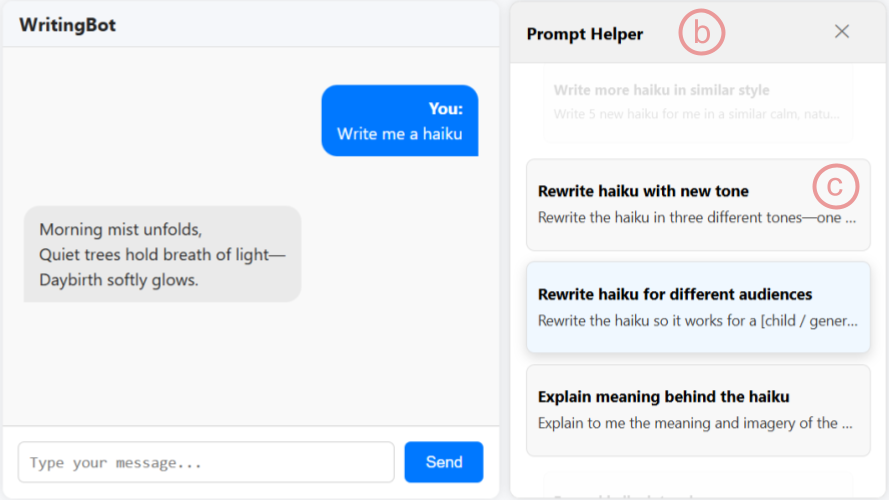
This paper introduces Prompt Recommender Systems and demonstrates their ability to increase perceived exploration and expressiveness in human-AI interaction without increasing cognitive load.
While generative AI offers unprecedented creative potential, users often struggle to navigate the prompt space and fully realize a model’s capabilities. This paper introduces PromptHelper: A Prompt Recommender System for Encouraging Creativity in AI Chatbot Interactions, which explores prompt recommendation as a means of scaffolding exploratory interaction with large language models. Results from a within-subjects study ([latex]\mathcal{N}=32[/latex]) demonstrate that surfacing semantically diverse prompt suggestions increases perceived exploration and expressiveness without increasing cognitive load. How might such systems further empower users to articulate their intent and unlock novel creative outcomes in collaborative AI environments?
The Erosion of Creative Space in Generative Systems
Despite the remarkable capacity of generative AI systems to produce text, users frequently encounter difficulties when attempting to navigate a broad spectrum of creative possibilities. These systems, while adept at fulfilling specific requests, can inadvertently narrow the scope of exploration, often favoring predictable outputs based on training data. This limitation stems from the inherent challenge of translating the nuanced, associative thinking characteristic of human creativity into algorithmic parameters. Consequently, users may find themselves trapped in iterative refinement of a limited set of ideas, struggling to break free from the system’s implicit biases and discover genuinely novel or unexpected directions – a phenomenon that can stifle originality and diminish the potential for truly expansive creative work.
The promise of generative AI hinges on the quality of input it receives, making effective prompt engineering a foundational skill-and a considerable challenge. Achieving consistent, desired results isn’t simply a matter of phrasing a request; it demands nuanced understanding of the AI’s capabilities and limitations. Current systems often interpret ambiguous language unpredictably, requiring users to refine their prompts through iterative trial and error. This process isn’t merely technical; it’s a cognitive exercise in translating abstract creative visions into precise, machine-readable instructions. The difficulty lies in anticipating how the AI will interpret a prompt, rather than simply executing it, and this unpredictability can significantly impede creative exploration and the realization of a specific artistic intent.
The iterative nature of prompt engineering with generative AI systems often precipitates cognitive overload, subtly stifling creative exploration. As users refine prompts to achieve desired outputs, a demanding cycle of trial and error emerges, requiring sustained mental effort. This constant adjustment can deplete cognitive resources, hindering the user’s ability to envision novel concepts or experiment freely with different creative avenues. Consequently, while the technology possesses immense potential, the process of unlocking it can paradoxically diminish overall expressiveness, as the mental burden of optimization overshadows the joy of genuine creative discovery.
Augmenting Ideation: A Prompt Recommendation System
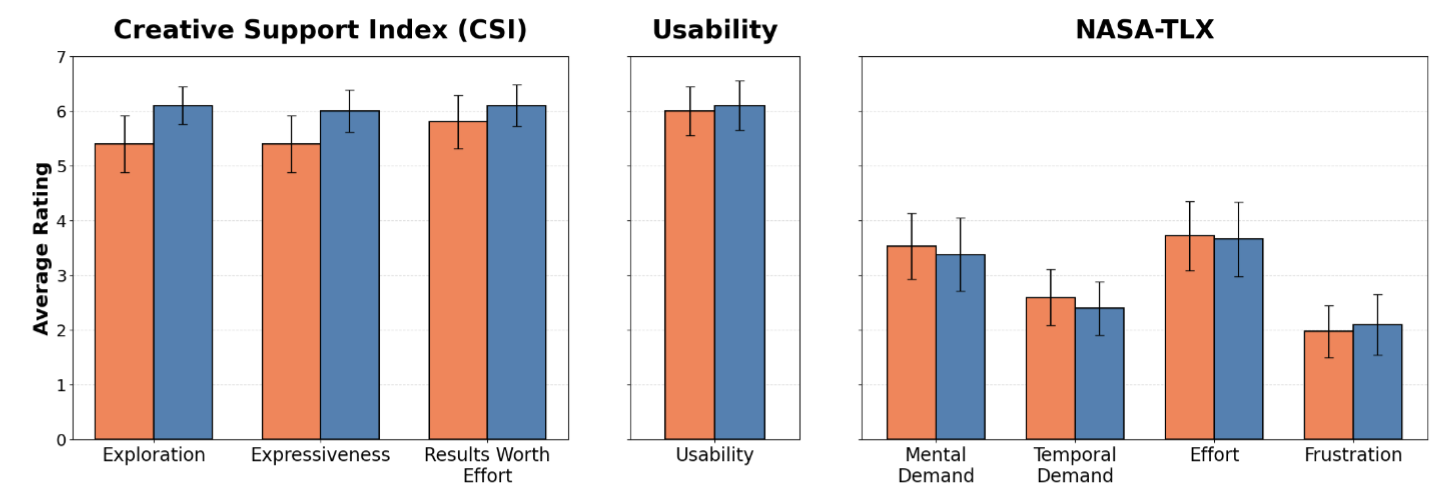
A Prompt Recommender System has been implemented within an AI-assisted writing environment to facilitate prompt variation and exploration. This system functions by generating suggestions for alternative prompts based on the user’s current writing context. The integration is designed to be non-disruptive, offering prompt recommendations directly within the existing writing interface. Users are presented with these alternative prompts, allowing for immediate testing and comparison to their initial prompt. The system is intended to broaden the scope of user ideation and support more diverse outputs from the AI writing tool.
The Prompt Recommender System utilizes Contextual Awareness by analyzing both the current writing task and the user’s interaction history within the AI-assisted writing environment. This analysis includes parsing the existing text to determine the subject matter, style, and intent, as well as tracking previously used prompts, accepted suggestions, and user edits. This data is then used to build a user profile and a task representation, which are employed to identify prompts likely to be relevant and stimulate further ideation. The system doesn’t rely on keyword matching alone; instead, it uses natural language processing techniques to understand the semantic context of the user’s work and provide recommendations aligned with their ongoing creative process.
The Prompt Recommender System is fundamentally designed to facilitate iterative refinement of user ideas. This is achieved by providing a series of alternative prompts based on the current writing context, allowing users to rapidly test different approaches without extensive manual re-formulation. The system does not aim to provide a ‘best’ prompt, but rather a diverse set of options to encourage exploration and adjustment of the initial concept. This rapid experimentation cycle – prompt generation, evaluation, and subsequent refinement – is intended to accelerate the creative process and enable users to converge on optimal phrasing for their desired output.
Evidence of Enhanced Creativity and Reduced Cognitive Strain
A fully within-subjects study design was employed to evaluate the impact of the Prompt Recommender System on writing performance. This methodology ensured that each participant served as their own control, completing writing tasks both with and without system assistance. This approach minimizes the influence of individual differences in writing ability and baseline creativity, allowing for a more precise assessment of the system’s effect. Participants were randomly assigned the order in which they completed tasks with and without prompts to mitigate order effects. Data collected from all participants under both conditions were then compared to determine statistically significant changes in creativity and cognitive load.
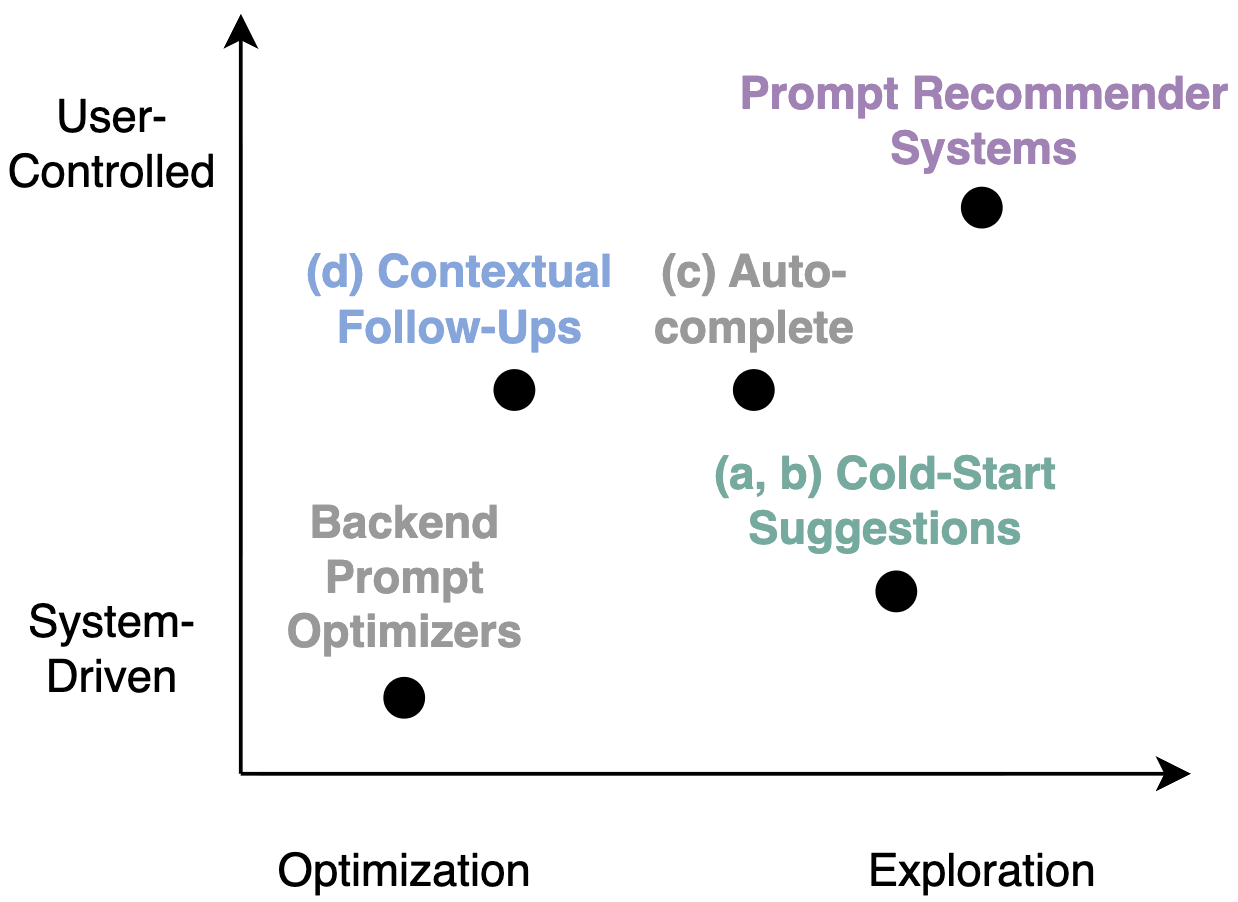
Quantitative assessment of creative output was achieved through the use of the Creativity Support Index (CSI). The CSI measures dimensions of creative performance, specifically focusing on Exploration – the generation of diverse ideas – and Expressiveness – the elaboration and detail within those ideas. Data collected via the CSI provided numerical scores for each participant’s writing samples, both with and without the Prompt Recommender System. These scores allowed for statistical analysis, enabling a determination of whether observed differences in creative output were statistically significant and attributable to the system’s influence. The CSI methodology provides an objective metric, moving beyond subjective evaluations of creativity.
Subjective cognitive load was quantified using the NASA Task Load Index (NASA-TLX), a widely validated, multidimensional assessment tool. Participants rated their perceived mental demand, physical demand, temporal demand, performance, effort, and frustration levels following writing tasks both with and without the Prompt Recommender System. The NASA-TLX yields a total cognitive load score, allowing for a comparative analysis of the system’s impact on user mental effort. This metric provides insight into the user experience beyond purely creative output, indicating whether the system assists or hinders the writing process from a cognitive perspective.
Statistical analysis of user data indicates a significant improvement in both perceived exploration and expressiveness when utilizing the Prompt Recommender System. Specifically, exploration scores demonstrated a statistically significant increase (p < .001, partial eta-squared = .293), indicating a substantial effect size. Expressiveness also improved significantly (p = .011, partial eta-squared = .193), though with a smaller effect size. These improvements were accompanied by observed increases in user agency and the frequency of prompt modification, suggesting the system supports user creativity by enabling iterative refinement of initial prompts.
Toward a Symbiotic Future for AI and Human Creativity
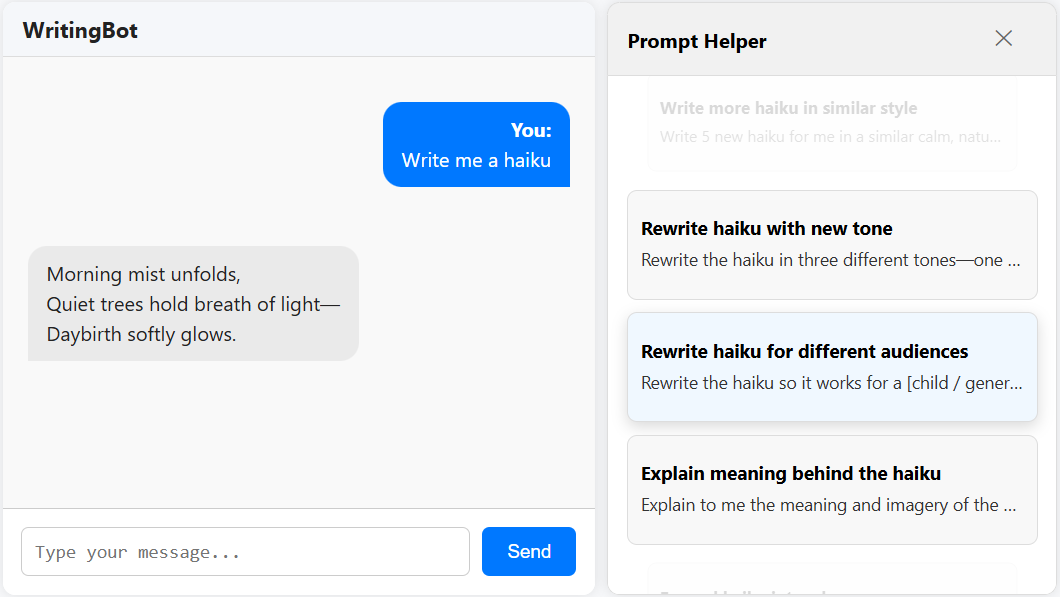
Research indicates that Prompt Recommender Systems hold significant promise for improving writing across diverse genres. These systems don’t simply generate text; instead, they offer carefully curated suggestions – prompts – designed to stimulate thought and guide the writing process. Studies reveal that users, whether crafting scholarly articles or pursuing creative endeavors, experience a measurable increase in both the quality and speed of their work when utilizing these tools. The benefits extend beyond mere productivity; the systems encourage exploration of novel ideas and perspectives, potentially leading to more insightful and original compositions. By intelligently suggesting alternative phrasing, relevant concepts, or unexplored avenues of thought, these recommender systems function as a dynamic partner, augmenting human creativity and accelerating the path from initial concept to polished final draft.
Prompt Recommender Systems offer a significant advantage to writers by alleviating the burden of constant ideation and decision-making, effectively reducing cognitive load. This lessened mental strain frees up valuable resources, allowing individuals to focus on the nuances of language and the development of complex ideas. More than simply easing the writing process, these systems actively foster exploration by suggesting novel avenues and perspectives that a writer might not otherwise consider. This expanded creative space encourages experimentation with different styles, themes, and approaches, ultimately empowering users to transcend conventional boundaries and unlock previously untapped potential within their writing. The result isn’t merely assistance, but a catalyst for genuine creative breakthroughs.
Ongoing research aims to refine prompt recommendation systems by tailoring suggestions to individual writers and their unique stylistic preferences. This involves developing algorithms capable of analyzing a user’s past writing – encompassing vocabulary, sentence structure, and thematic inclinations – to predict prompts that will resonate most effectively. Future iterations will move beyond generalized recommendations, instead focusing on dynamic adaptation; the system will learn and evolve alongside the writer, recognizing shifts in their creative focus and adjusting prompt suggestions accordingly. This personalized approach promises to unlock even greater gains in both writing quality and efficiency, transforming these systems from helpful tools into intuitive collaborators capable of anticipating and supporting the creative process.
The evolving landscape of artificial intelligence in writing suggests a move beyond simple automation of text generation. Current research indicates a potential transformation, positioning AI not as a replacement for human creativity, but as a collaborative partner. This reframing envisions AI systems functioning as idea generators, offering nuanced suggestions, and reducing the cognitive burden associated with the writing process, thereby empowering users to explore a wider range of expressive possibilities. Rather than producing finished content independently, these systems aim to augment human capabilities, fostering a synergistic relationship where AI and the writer work in tandem to achieve more compelling and innovative results. This shift promises to unlock new levels of creative potential and redefine the very nature of authorship in the digital age.
The pursuit of sustained creative interaction, as detailed in this study of Prompt Recommender Systems, mirrors the inevitable entropy inherent in all complex systems. The paper posits that PRS can mitigate the decline into repetitive chatbot responses by continually offering novel prompts, fostering a sense of ongoing exploration. This echoes John von Neumann’s observation: “There is no exquisite beauty… without some strangeness.” The ‘strangeness’ here isn’t chaotic unpredictability, but the continual introduction of variation-the recommended prompts-that prevents the system, and the user’s interaction with it, from succumbing to predictable stagnation. The system attempts to delay decay, maintaining a phase of ‘temporal harmony’-prolonged creative engagement-through intelligently managed suggestion.
What’s Next?
The architecture of suggested prompts, as demonstrated by this work, merely postpones the inevitable entropy of interaction. Every failure in a generative exchange is a signal from time-a testament to the finite capacity of any model, any prompt, any human attention span. The system extends the initial burst of novelty, but does not, fundamentally, create it. Future iterations will undoubtedly refine the recommendation algorithms, striving for ever-greater relevance and reduced cognitive load. Yet, the true challenge lies not in minimizing friction, but in acknowledging its necessity.
A critical, and largely unaddressed, aspect is the temporal dimension of ‘exploration’. Current metrics often treat interaction as a static snapshot. A more nuanced understanding requires tracking how perceived expressiveness evolves over repeated turns, and how the PRS itself shapes-or constrains-the user’s creative trajectory. Refactoring is a dialogue with the past; each suggested prompt is an implicit judgment on prior contributions, a subtle steering of the unfolding narrative.
Ultimately, the success of prompt recommendation systems may not be measured by their ability to enhance creativity, but by their capacity to reveal its inherent limitations. The system, as a mirror, reflects the boundaries of the possible, the fading echoes of originality within a closed loop. The task, then, is not to build an engine of infinite invention, but to understand the graceful decay of imagination.
Original article: https://arxiv.org/pdf/2601.15575.pdf
Contact the author: https://www.linkedin.com/in/avetisyan/
See also:
- Invincible Season 4 Episode 4 Release Date, Time, Where to Watch
- Physics Proved by AI: A New Era for Automated Reasoning
- How Martin Clunes has been supported by TV power player wife Philippa Braithwaite and their anti-nepo baby daughter after escaping a ‘rotten marriage’
- CookieRun: OvenSmash coupon codes and how to use them (March 2026)
- Goddess of Victory: NIKKE 2×2 LOVE Mini Game: How to Play, Rewards, and other details
- Gold Rate Forecast
- Total Football free codes and how to redeem them (March 2026)
- American Idol vet Caleb Flynn in solitary confinement after being charged for allegedly murdering wife
- Only One Straw Hat Hasn’t Been Introduced In Netflix’s Live-Action One Piece
- Nicole Kidman and Jamie Lee Curtis elevate new crime drama Scarpetta, which is streaming now
2026-01-23 10:56