Author: Denis Avetisyan
Researchers introduce Lantern, a new open-source robotic platform prioritizing minimalist design and haptic feedback to advance studies in human-robot interaction.
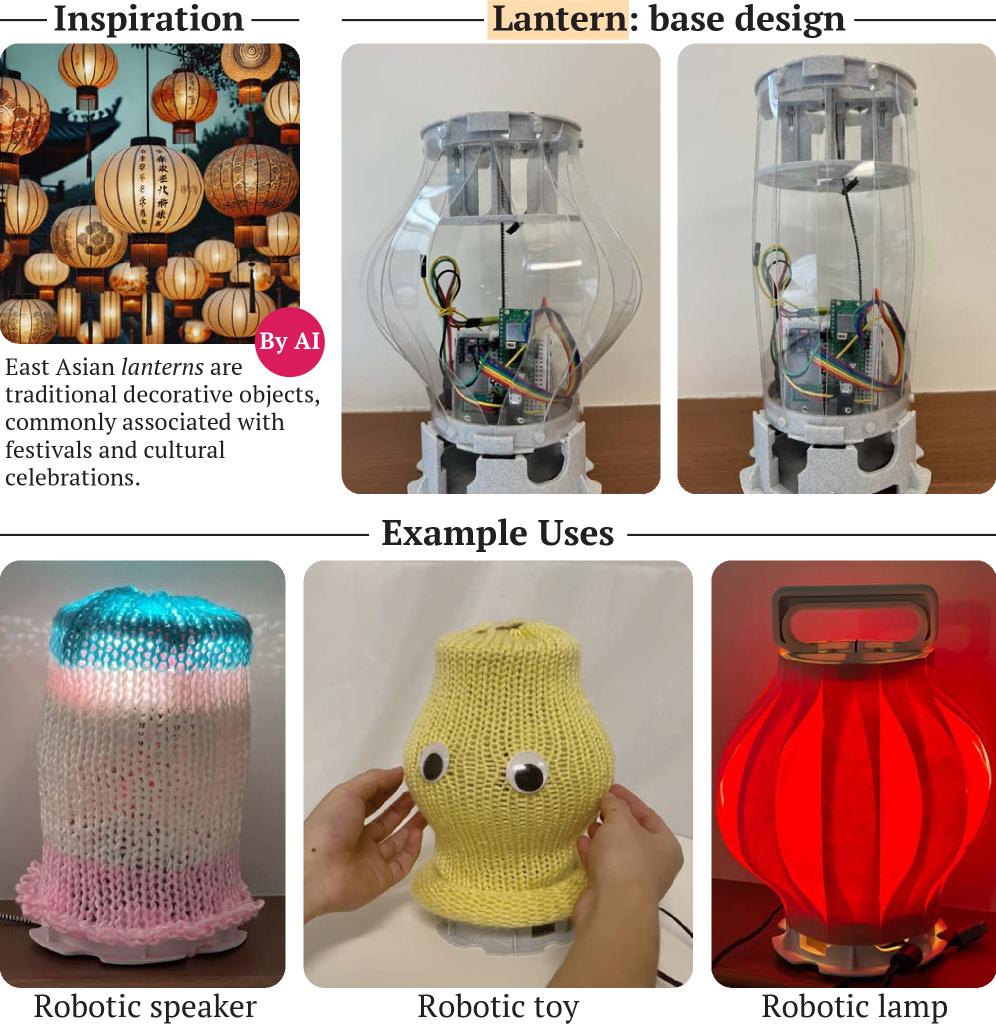
Lantern is a low-cost, adaptable robotic object designed to explore the potential of minimalist, haptic-rich designs for social robotics.
While increasingly sophisticated robots dominate the field, opportunities remain to explore the potential of simple, subtly engaging robotic agents. This paper introduces ‘Lantern: A Minimalist Robotic Object Platform’, a low-cost, open-source system designed to facilitate research into human-robot interaction through minimalist design and haptic feedback. Our explorations-including co-design workshops, sensory room studies, and educational integration-demonstrate that Lantern effectively evokes engagement and supports versatile applications ranging from emotion regulation to focused work. Could such approachable robotic objects lower barriers to entry in HRI research and ultimately foster more intuitive and meaningful human-robot collaborations?
The Limits of Current Interaction: A Call for Nuance
Conventional robotics frequently struggles with the subtleties of human engagement, hindering truly meaningful interaction. These systems, often designed for repetitive tasks in controlled environments, exhibit limited capacity to interpret the complex, non-verbal cues-facial expressions, body language, tone of voice-that are integral to human communication. Consequently, interactions can feel stilted and unnatural, lacking the fluidity and responsiveness expected in social exchanges. This inflexibility stems from a reliance on pre-programmed responses and difficulty adapting to unexpected behaviors or emotional states. The result is a disconnect; while robots may successfully perform tasks alongside humans, they often fail to establish genuine rapport or build trust, limiting their effectiveness in roles requiring empathy, collaboration, or care.
Current robotic systems, while demonstrating impressive feats of engineering, often present significant hurdles for researchers seeking to tailor them for specialized investigations. The intricate design and integration of hardware and software components frequently necessitate substantial expertise and resources, driving up costs and lengthening development timelines. Furthermore, the ‘black box’ nature of many commercial robots – where internal workings are obscured and modification is restricted – limits the ability to probe specific functionalities or implement novel algorithms. This lack of modularity and accessibility can stifle innovation, forcing researchers to compromise on experimental designs or invest heavily in bespoke solutions, ultimately hindering progress in fields like human-robot interaction and cognitive science.
Creating truly interactive robots demands more than simply executing pre-programmed responses; the core difficulty resides in enabling machines to interpret and react to the constantly shifting landscape of human states. Current robotic systems frequently struggle with the subtleties of non-verbal communication – a furrowed brow, a slight hesitation in speech, or changes in body posture – all of which provide crucial information about a user’s emotional state, intent, and cognitive load. Researchers are actively exploring methods to equip robots with sophisticated sensor suites and advanced algorithms capable of discerning these nuanced cues, and then formulating appropriate, dynamic responses. This necessitates a move beyond rigid, rule-based systems toward approaches that leverage machine learning and artificial intelligence to allow robots to learn and adapt their behavior in real-time, fostering more natural and effective interactions with humans.
Lantern: A Platform for Minimalist Haptic Exploration
Lantern is a robotic platform specifically engineered to lower the barrier to entry for research in Human-Robot Interaction (HRI). Designed for versatility, it supports a wide range of HRI study types through adaptable physical configurations and customizable control schemes. The platform’s core design philosophy centers on minimizing cost – with a target unit cost of approximately $40 USD – while maximizing flexibility for researchers to rapidly prototype and iterate on interaction designs. This is achieved through the use of readily available components and a focus on modularity, allowing researchers to concentrate on the interaction itself rather than complex robotic engineering challenges.
The Lantern platform employs the Raspberry Pi Pico W microcontroller as its central processing unit, facilitating both control of haptic mechanisms and wireless communication. The Pico W’s integrated 2.4 GHz IEEE 802.11n wireless LAN capability allows for direct network connection without requiring additional shields or modules, simplifying the prototyping process. Its low cost and widespread availability further contribute to accessibility, while the readily available MicroPython and C/C++ SDKs provide flexible programming options for researchers. This combination of features enables rapid iteration and deployment of haptic interactions without significant investment in specialized hardware or complex system integration.
The Lantern platform utilizes 3D printing as a core manufacturing process to enable rapid prototyping and iterative design changes. This approach allows researchers to quickly produce and test physical components with modifications based on experimental results, reducing development time and cost compared to traditional fabrication methods. The accessibility of 3D printing technology facilitates customization of the platform’s physical form factor, enabling the creation of diverse haptic interfaces and interaction designs tailored to specific research requirements. This capability is crucial for exploring a wide range of haptic stimuli and interaction paradigms without significant delays associated with external fabrication services or complex machining processes.
Lantern is designed with a modular architecture to lower the barrier to entry for researchers in Human-Robot Interaction. This approach minimizes the need for specialized engineering expertise, allowing investigators to concentrate on the design and evaluation of haptic interactions rather than complex robotic system integration. Utilizing readily available components and a streamlined build process, the platform achieves an approximate unit cost of $40 USD, facilitating wider adoption and enabling larger-scale studies with reduced budgetary constraints. The modularity also supports easy customization and extension of the platform’s capabilities to suit specific research needs.

Haptic Communication: Enriching Interaction Through Touch
Lantern utilizes a dual-modality haptic approach, combining kinesthetic and vibro-tactile feedback to enhance user interaction. Kinesthetic feedback reproduces forces and movements, allowing users to perceive virtual object properties like weight and shape through resistance and motion. Complementing this, vibro-tactile feedback employs localized vibrations to simulate textures, impacts, and subtle surface details. This combined approach provides a more comprehensive and nuanced sensory experience than either modality alone, increasing the fidelity and realism of interactions within virtual or remote environments. The simultaneous delivery of force-based and vibration-based cues enables a richer and more immersive haptic experience for the user.
Kinesthetic haptic feedback in Lantern is achieved through the implementation of servo motors. These motors facilitate nuanced movements by precisely controlling position and velocity, allowing the device to simulate the sensation of manipulating objects with varying stiffness and resistance. The servo motors aren’t simply providing motion; they actively apply force to the user, creating a closed-loop system where the user’s actions are met with corresponding physical resistance or guidance. This force interaction is critical for simulating realistic textures, weights, and shapes, extending beyond simple vibrations to create a more comprehensive and immersive haptic experience. The precision of these motors allows for the simulation of subtle forces, enabling detailed interactions like feeling the edges of a virtual object or manipulating delicate virtual components.
Lantern utilizes the Micro Robotics Operating System (MicroROS) to facilitate advanced control and interoperability. MicroROS, a lightweight implementation of ROS 2, enables complex programming through established ROS tools and libraries, allowing developers to create sophisticated haptic behaviors and integrate Lantern with a wider range of robotic platforms and software ecosystems. This integration streamlines communication with other robotic systems, sensors, and computing resources, while also providing access to a large community and extensive documentation for support and development. The use of MicroROS also supports real-time performance and efficient resource utilization, critical for responsive and nuanced haptic interactions.
Lantern utilizes adaptive behaviors to modify haptic feedback in real-time based on user interaction. This is achieved through algorithms that analyze user input – including force, position, and velocity – and dynamically adjust the intensity, frequency, and pattern of both kinesthetic and vibro-tactile stimuli. These adjustments allow Lantern to simulate a range of textures, shapes, and resistances, and to provide appropriate responses to user actions, such as increased resistance when encountering a virtual object or subtle vibrations to indicate a successful interaction. The system’s ability to tailor the haptic experience enhances immersion and allows for more intuitive and natural user interfaces.

Refining Interaction: A User-Centered Design Approach
The development of Lantern heavily relied on collaborative design workshops, functioning as a crucial bridge between conceptualization and practical application. These sessions weren’t merely about gathering suggestions; they were dynamic environments where potential users directly engaged with prototypes, revealing unforeseen needs and highlighting areas for improvement. Through careful observation of these interactions, the design team was able to iteratively refine Lantern’s functionality and form factor, ensuring it aligned with real-world user expectations. This user-centered approach moved beyond theoretical usability, uncovering nuanced preferences and ultimately shaping a platform demonstrably more effective and intuitive than initially envisioned. The workshops facilitated a continuous feedback loop, allowing the team to proactively address challenges and capitalize on emerging opportunities throughout the design process.
A specially designed sensory room proved instrumental in meticulously evaluating how individuals interacted with Lantern. This controlled environment allowed researchers to isolate and analyze specific responses to the platform, minimizing external distractions and ensuring data accuracy. Equipped with adjustable lighting, soundscapes, and tactile elements, the room facilitated the creation of diverse interaction scenarios, enabling a nuanced understanding of user experiences. Detailed data, encompassing physiological responses and subjective feedback, was gathered within this space, revealing patterns in user behavior and informing iterative design improvements focused on maximizing Lantern’s impact and refining its human-robot interaction capabilities.
The iterative design process, fueled by ongoing studies, proved critical in shaping Lantern’s functionality and user experience. Researchers meticulously analyzed feedback gleaned from design workshops and sensory room interactions, translating observations into tangible improvements to the platform’s interface and responsiveness. This cycle of testing and refinement wasn’t merely cosmetic; it fundamentally altered how users engaged with Lantern across diverse human-robot interaction scenarios. Consequently, subsequent iterations demonstrated increased intuitiveness and efficacy, expanding the range of contexts where Lantern could be successfully deployed – from therapeutic settings to everyday companionship – and solidifying its potential as a versatile and impactful HRI tool.
Initial evaluations of Lantern demonstrate a significant positive impact on participant well-being, as evidenced by compelling Likert scale ratings. Participants consistently reported a heightened sense of calm following interaction with the system, averaging a score of 4 out of 5 on measures of immediate relaxation. Beyond this acute effect, the overall user experience also received high marks, registering an average score of 4.17 on a 5-point scale, suggesting a generally positive and engaging interaction with the platform’s design and functionality. These early findings provide encouraging evidence for Lantern’s potential as a tool for promoting emotional regulation and enhancing human-robot interaction experiences.

Expanding the Horizon: Long-Term Studies and Circadian Alignment
Researchers are initiating multi-year longitudinal studies to thoroughly evaluate the sustained impact of interaction with the Lantern robotic companion, with a particular focus on identifying potential therapeutic benefits. These studies will move beyond short-term observations, tracking participant responses – encompassing physiological data, behavioral patterns, and subjective well-being – over extended periods to determine if regular engagement with Lantern can yield lasting positive effects. Investigations will explore applications in areas such as managing stress, alleviating loneliness, and supporting cognitive health, aiming to establish evidence-based protocols for integrating socially assistive robotics into long-term care and wellness strategies. The comprehensive nature of these studies is designed not only to assess efficacy but also to illuminate the nuanced ways in which sustained human-robot interaction shapes individual experiences and overall quality of life.
Current investigations are exploring how precisely timed haptic stimulation, delivered via the Lantern platform, can influence and potentially regulate human circadian rhythms. Researchers hypothesize that gentle, patterned vibrations – mimicking natural cues like light and temperature – can entrain the body’s internal clock, even in the absence of those traditional stimuli. This work centers on the premise that peripheral sensory input, such as touch, can directly impact the suprachiasmatic nucleus, the brain region responsible for circadian control. Early findings suggest that customized haptic profiles, tailored to individual needs and preferences, may offer a novel, non-invasive approach to address sleep disorders, mitigate jet lag, or enhance daily performance by optimizing alertness and rest cycles. The study employs rigorous monitoring of physiological markers – including melatonin levels, core body temperature, and actigraphy data – to assess the efficacy of these haptic interventions and establish a deeper understanding of the neurophysiological mechanisms at play.
Lantern’s design prioritizes accessibility through an open-source framework, intentionally inviting contributions from researchers, developers, and enthusiasts alike. This collaborative approach aims to bypass traditional barriers to innovation in social robotics, enabling rapid prototyping, widespread testing, and the collective refinement of algorithms and hardware. By freely sharing design schematics, software code, and research findings, the project anticipates a surge in creative applications and a significantly accelerated pace of development – moving beyond isolated research labs to cultivate a vibrant, interconnected community dedicated to advancing the field and ensuring broader access to beneficial robotic technologies. This democratization of innovation promises not only to improve Lantern itself, but also to stimulate entirely new directions in human-robot interaction and personalized wellbeing.
The development of Lantern presents a pivotal moment in the evolving field of human-robot interaction, offering researchers an unprecedented platform to move beyond simple task execution and explore the nuances of genuine companionship. By focusing on subtle, biologically-aligned stimuli – specifically haptic feedback designed to resonate with natural circadian rhythms – Lantern facilitates investigation into how robots can positively influence human wellbeing beyond functional assistance. This isn’t merely about creating robots that do things for people, but rather about understanding how robots can be with people in a way that fosters emotional connection and supports holistic health, paving the way for robotic companions that are truly meaningful and effective partners in daily life.
![The Lantern’s design integrates a servo-driven [latex]GT2[/latex] belt within a stable base, shielded by a [latex]PET-G[/latex] exterior with a top brace and featuring a snap-on stand for enhanced stability and alignment via a pulley and belt guide.](https://arxiv.org/html/2601.22381v1/x3.png)
The Lantern platform, as detailed in the study, prioritizes essential functionality over superfluous complexity. This echoes a sentiment expressed by Ada Lovelace: “The Analytical Engine has no pretensions whatever to originate anything. It can do whatever we know how to order it to perform.” Lantern isn’t conceived as an autonomous entity, but as a responsive instrument – a physical manifestation of directed computation. The open-source nature of the platform, allowing for iterative refinement and customization, directly addresses the ‘knowing how to order it’ aspect. Minimizing extraneous features facilitates a clearer understanding of the core principles of haptic feedback and human-robot interaction, aligning with the principle that clarity is the minimum viable kindness.
The Simplest Thing Next
The proliferation of robotic complexity often obscures fundamental questions. Lantern deliberately resists that trend, but even reduction reveals limitations. The platform’s current iteration, while demonstrating the viability of minimalist haptic interaction, remains tethered to pre-defined ‘objects.’ The true challenge lies not in building more intricate robots, but in designing systems capable of accepting-and adapting to-truly novel input. A future direction necessitates a loosening of the pre-programmed affordance, allowing the robotic object to learn and respond to user-defined actions, rather than merely reacting to anticipated ones.
Furthermore, the emphasis on haptic feedback, while valuable, has largely remained within the realm of demonstrable functionality. A genuinely compelling advance requires an exploration of subtle haptic cues-nuances of texture and resistance that move beyond simple signaling and approach something akin to material empathy. The current design prioritizes what the user can do; the next iteration should explore what the object allows the user to feel.
Ultimately, Lantern’s utility rests not in its immediate capabilities, but in its potential to expose the unnecessary. The field will benefit not from adding features, but from rigorously questioning their necessity. The pursuit of robotic objects should not aim to replicate human complexity, but to distill interaction down to its irreducible essence.
Original article: https://arxiv.org/pdf/2601.22381.pdf
Contact the author: https://www.linkedin.com/in/avetisyan/
See also:
- ‘Project Hail Mary’s Unexpected Post-Credits Scene Is Worth Sticking Around
- Total Football free codes and how to redeem them (March 2026)
- Limbus Company 2026 Roadmap Revealed
- The Division Resurgence Specializations Guide: Best Specialization for Beginners
- After THAT A Woman of Substance cliffhanger, here’s what will happen in a second season
- Brawl Stars Sands of Time Brawl Pass brings Sandstalker Lily and Sultan Cordelius sets, along with chromas and more
- Brawl Stars Brawl Cup Pro Pass arrives with the Dragon Crow skin and Chroma, unique cosmetics, and more rewards
- Clash of Clans April 2026 Gold Pass Season introduces a Archer Queen skin
- XO, Kitty season 3 soundtrack: The songs you may recognise from the Netflix show
- Gold Rate Forecast
2026-02-02 10:03