Author: Denis Avetisyan
New research suggests that integrating assistive robots into universally designed workplaces can actively reduce the stigma often faced by people with disabilities in professional settings.
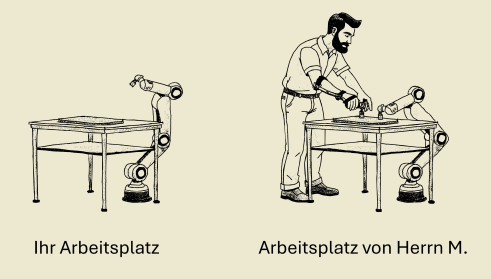
This review examines how assistive robotics, grounded in the International Classification of Functioning (ICF), impacts perceptions and promotes disability inclusion in the workplace.
Despite increasing recognition of the potential for robotic assistance in supporting workers with disabilities, the impact on social perceptions remains unclear-specifically, whether visible reliance on assistive technology might exacerbate existing stigmas. This study, ‘Assistive Robots and Reasonable Work Assignment Reduce Perceived Stigma toward Persons with Disabilities’, investigates how both robotic support and appropriate task allocation influence cognitive stigma toward coworkers with impairments. Results from a vignette study demonstrate that perceived stigma is significantly reduced when work is tailored to an individual’s abilities or augmented by assistive robotics, with a universal design approach-offering robotic assistance to all-yielding the most positive outcomes. Could proactively integrating such technologies into workplace design foster more inclusive environments and redefine perceptions of ability?
Reframing Difference: Beyond the Individual
For much of history, understandings of disability centered on the individual, framing any physical, sensory, intellectual, or psychological difference as an impairment requiring diagnosis and treatment. This ‘Medical Model’ positioned disability as a problem residing within the person, often seeking to ‘fix’ or ‘cure’ the condition through medical intervention. Consequently, research and resources were largely directed towards identifying the biological or psychological causes of impairment, with less consideration given to the ways in which societal structures might hinder participation and create barriers for individuals with differing abilities. This approach, while intending to alleviate suffering, inadvertently positioned disability as an individual failing rather than a consequence of the interaction between a person’s abilities and an often inaccessible world, shaping both clinical practice and public perception for generations.
Traditional understandings of disability frequently concentrate on an individual’s functional limitations, inadvertently minimizing the pervasive influence of external factors. A person’s difficulty navigating the world isn’t always inherent to their condition; rather, it often stems from inaccessible buildings, inadequate transportation systems, or discriminatory policies. These environmental and societal barriers – ranging from a lack of curb cuts to prejudiced attitudes – actively impede participation and create disability where impairment might not necessarily dictate it. Consequently, focusing solely on ‘fixing’ the individual overlooks the crucial need for systemic changes that foster inclusivity and remove obstacles, ultimately enabling greater autonomy and full societal engagement for everyone.
The Social Model of Disability represents a fundamental reframing of how society understands and responds to difference. Rather than locating the problem within an individual’s physical or mental characteristics – the traditional medical perspective – this model asserts that disability arises from the interaction between impaired individuals and disabling barriers within society. These barriers encompass a wide range of factors, including inaccessible environments, discriminatory policies, and attitudinal prejudices. Consequently, a person’s impairment does not inherently limit their participation; it is the presence of these societal obstacles that creates the experience of disability. This perspective shifts the focus from ‘fixing’ individuals to transforming systems, advocating for inclusive design, equitable access, and a dismantling of the social constructs that marginalize and exclude people with impairments.
A Holistic View: The ICF and Universal Design
The International Classification of Functioning (ICF), developed by the World Health Organization, moves beyond a purely biomedical model of disability to a biopsychosocial approach. It defines functioning as an interaction between a person’s body functions and structures, their activities, and participation. These components are then considered within the context of environmental and personal factors, including physical, social, and attitudinal barriers and facilitators. Specifically, the ICF categorizes health dimensions into body functions (physiological functions of body systems), body structures (anatomical parts), activities (tasks and actions), and participation (involvement in life situations). Contextual factors encompass both environmental factors – such as architecture, climate, and relationships – and personal factors like age, gender, and education. This holistic framework allows for a standardized, comprehensive description of an individual’s functioning and its relationship to their environment.
Universal Design is a design philosophy directly supported by the International Classification of Functioning (ICF) model; it centers the creation of products and environments accessible and usable by the widest range of people, encompassing those with disabilities, as well as variations in age, size, and other characteristics. Unlike designs focused solely on accommodating specific impairments, Universal Design aims to proactively address human diversity throughout the design process. This approach involves considering a broad spectrum of potential users and their functional capabilities, resulting in products and spaces that minimize the need for specialized adaptations and maximize usability for everyone, thereby promoting inclusion and equitable access.
The UN Convention on the Rights of Persons with Disabilities (UN-CRPD), adopted in 2006 and entering into force in 2008, establishes a legally binding international framework for promoting and protecting the rights of individuals with disabilities. Article 9, specifically addressing accessibility, obligates state parties to ensure that persons with disabilities have access, on an equal basis with others, to information and communications technologies, transportation, buildings, and other facilities and services. This legal mandate extends beyond physical accessibility to encompass digital accessibility, requiring governments to proactively incorporate accessibility considerations into the design and development of technologies and environments. The UN-CRPD’s emphasis on inclusion and participation provides a strong ethical and legal foundation for Universal Design principles, shifting the focus from accommodating disabilities to creating inherently accessible and usable solutions for all.
Augmenting Potential: Assistive Robotics in the Workplace
Assistive robotic technologies encompass a range of devices designed to augment the capabilities of workers with disabilities, addressing limitations in physical strength, dexterity, cognition, or sensory perception. These technologies include collaborative robots (cobots) performing repetitive tasks, exoskeletons providing support for physically demanding jobs, and intelligent systems offering guidance or error prevention. Potential applications span diverse sectors including manufacturing, logistics, agriculture, and office environments. Implementation focuses on tasks that require consistent precision, lifting, or reaching, thereby reducing strain and increasing productivity. Furthermore, these systems can be adapted to accommodate various disability types and severity levels through customizable interfaces and programmable functionalities, contributing to increased employment opportunities and workplace inclusion.
Effective work task design for assistive robotics necessitates a detailed analysis of job requirements to identify specific areas where robotic assistance can augment, rather than replace, human skills. This involves deconstructing tasks into component actions and evaluating the physical, cognitive, and sensory demands of each. Successful implementation prioritizes matching robot capabilities – such as lifting, reaching, or precision manipulation – to tasks that present challenges for individuals with disabilities, while preserving opportunities for human judgment, problem-solving, and social interaction. The design process must also account for variations in individual abilities and preferences, allowing for customizable robot configurations and adaptable work procedures to maximize user effectiveness and minimize the potential for secondary strain or ergonomic issues.
Effective assistive robotics implementation for persons with disabilities necessitates a design process rooted in the International Classification of Functioning, Disability and Health (ICF) framework. The ICF emphasizes that disability is not solely an attribute of the individual, but rather results from interactions between an individual’s health conditions and contextual factors, including the environment. Our research indicates that assistive robots, when deployed within universally designed workplaces-those proactively addressing the needs of a diverse range of users-yield a statistically significant reduction in perceived cognitive stigma towards individuals with disabilities. This suggests that optimized environmental factors, facilitated by robotic assistance, can mitigate negative perceptions related to cognitive differences in the workplace.
![The depicted conditions demonstrate how robotic assistance ([latex]I2I_{2}[/latex]) can alleviate strain in overburdened work scenarios ([latex]T1T_{1}[/latex]) and optimize task performance in lighter workloads ([latex]T2T_{2}[/latex]), ultimately enabling collaborative work ([latex]T3T_{3}&T4T_{4}[/latex]).](https://arxiv.org/html/2601.22689v1/figures/sequence_D2_spaced.png)
Uncovering Hidden Barriers: Measuring Workplace Stigma
Perceptions of an individual’s capabilities and work ethic, collectively known as cognitive stigma, frequently serve as the foundation for discriminatory actions in professional settings. This subtle bias isn’t necessarily about overt prejudice, but rather a subconscious assessment of competence, often leading to lowered expectations and limited opportunities. Even without conscious intent, assumptions about an individual’s performance can significantly impact how they are treated, influencing decisions regarding promotions, project assignments, and even day-to-day interactions. Consequently, cognitive stigma can operate as a hidden barrier, subtly undermining professional growth and contributing to systemic inequities within organizations, ultimately manifesting in tangible disadvantages for those perceived as less capable.
Behavioral stigma, the outward expression of negative attitudes toward individuals based on perceived mental health challenges, actively diminishes participation and advancement within professional settings. This manifests not as overt discrimination, but through subtle actions – exclusion from meetings, being passed over for key projects, or receiving less constructive feedback – all contributing to a hostile environment. Consequently, affected individuals may experience reduced access to networking opportunities, mentorship, and ultimately, career progression. These limitations aren’t merely individual hardships; they represent a significant loss of talent and innovation for organizations, hindering overall productivity and creating inequitable workplaces where potential remains unrealized due to preventable social barriers.
Researchers employed a vignette study, presenting participants with brief descriptions of employees performing varied tasks, to rigorously assess workplace stigma related to mental illness using the ‘Workplace Mental Illness Stigma Scale’. Statistical analysis, specifically ANOVA, revealed a substantial impact of task type on perceptions of cognitive stigma – encompassing beliefs about competence and performance [latex]F(3, 219) = 45.31, p < .001, ηp² = .383[/latex] – and a noteworthy effect on behavioral stigma, reflecting anticipated social exclusion [latex]F(3, 219) = 8.38, p < .001, ηp² = .103[/latex]. These findings demonstrate the method’s sensitivity in detecting subtle biases, highlighting how judgments about an employee’s capabilities and potential for social interaction are demonstrably shaped by the tasks they perform, even when mental health status is not directly disclosed.
The study meticulously details a reduction in perceived stigma through the implementation of assistive robotics and universally designed workspaces. This aligns with a prescient observation from Ada Lovelace: “The Analytical Engine has no pretensions whatever to originate anything.” The engine, much like the robots in this research, doesn’t create inclusion; it facilitates it. The power lies not in the technology itself, but in how it augments human capability and reshapes perception. By removing barriers to reasonable work assignment, the research demonstrates how technology can diminish prejudice, mirroring Lovelace’s understanding that machines extend, rather than replace, human potential. The core concept of the ICF – focusing on function and participation – is thus powerfully supported by practical application.
The Road Ahead
The observed attenuation of stigma through robotic assistance and universal design is not, of course, a resolution. It is merely a sharpening of the problem. The study reveals not a pathway to eradication of prejudice, but a mechanical means of circumventing its most visible manifestations. Future work must move beyond measuring perceptual shifts and address the underlying cognitive architectures that generate such biases in the first place. The International Classification of Functioning (ICF) provides a useful framework, but remains descriptive; a predictive model of stigma, capable of anticipating and mitigating its emergence, would be a far more valuable contribution.
A critical limitation lies in the artificiality of the controlled environment. The efficacy demonstrated here must be tested against the chaotic variables of real-world workplaces. Moreover, the study focuses on perception; the subjective experience of the individual with a disability remains largely unexplored. Does robotic assistance genuinely empower, or simply render disability less bothersome to others? The question is not one of engineering, but of ethics.
The ultimate goal should not be to build robots that hide disability, but workplaces that render the concept irrelevant. Perfection, in this context, is not a more sophisticated assistive device, but its obsolescence. The pursuit of technological solutions should, therefore, be tempered with a commitment to fundamental societal redesign.
Original article: https://arxiv.org/pdf/2601.22689.pdf
Contact the author: https://www.linkedin.com/in/avetisyan/
See also:
- Gold Rate Forecast
- Limbus Company 2026 Roadmap Revealed
- After THAT A Woman of Substance cliffhanger, here’s what will happen in a second season
- Genshin Impact Version 6.5 Leaks: List of Upcoming banners, Maps, Endgame updates and more
- Wuthering Waves Hiyuki Build Guide: Why should you pull, pre-farm, best build, and more
- XO, Kitty season 3 soundtrack: The songs you may recognise from the Netflix show
- Guild of Monster Girls redeem codes and how to use them (April 2026)
- GearPaw Defenders redeem codes and how to use them (April 2026)
- The Division Resurgence Best Weapon Guide: Tier List, Gear Breakdown, and Farming Guide
- Last Furry: Survival redeem codes and how to use them (April 2026)
2026-02-03 01:10