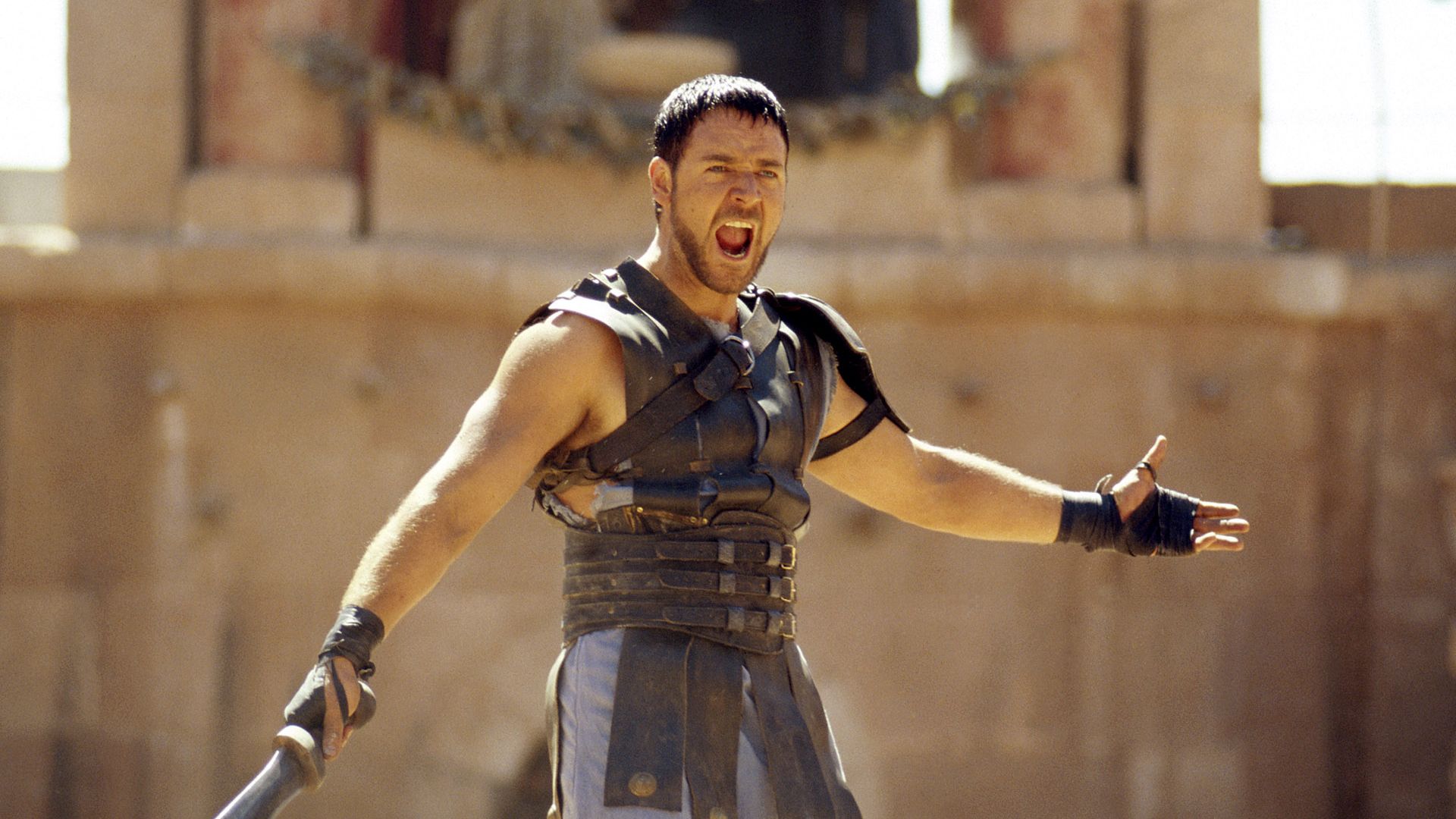
I still remember when Gladiator first came out in 2000 – Ridley Scott really delivered an epic! It quickly became one of my all-time favorite movies, and it’s amazing to me that it won five Oscars, including Best Picture. And I was so thrilled to finally see a sequel in 2024! Seeing the story continue with Maximus’ son, Lucius, brought to life by Paul Mescal, was just fantastic. It’s a testament to how much people love this film that it’s still captivating audiences after all these years.
Although Gladiator II didn’t quite reach the same level of excellence as the first Gladiator, that’s a tough act to follow. The original Gladiator was a remarkable film, combining outstanding performances, a grand story, and a special mix of practical and visual effects—a combination that hasn’t been replicated in the 26 years since its release.
Maximus Escapes From Commodus
Right from the start of Gladiator, viewers are drawn into the world and care about the main character, Maximus (Russell Crowe). While other moments in the film are even more memorable, the scene where Maximus escapes Commodus’ soldiers in the German forest is a strong and captivating introduction to the story. After refusing to pledge loyalty to Commodus, Maximus is captured and scheduled to be executed the next day.
Maximus isn’t just fighting for his own survival; he’s desperate to return to his family. His daring escape from the Roman Pretorium—from asking to die as a soldier to the final, dramatic fall of a guard—is fast-paced and exciting. The scene also hints at future events, with the close-quarters combat foreshadowing challenges to come for viewers.
Maximus Takes the Arena at Zucchabar
Throughout Gladiator, the film quietly draws parallels between the ancient gladiator contests and modern Hollywood action movies, with their artificial violence. This is especially noticeable after Maximus receives his fighting name, when we see him battle a group of opponents. He wins with ruthless skill, offering a dignified nod after each defeat, culminating in a final, graphic blow to his last enemy.
Beneath the fierce fighting of Maximus, a soldier forced into gladiatorial combat, lies a simmering anger at being made to kill simply to amuse others. This anger finally erupts after a battle when he defiantly throws his sword towards the governor’s seating, demanding, “Are you not entertained?” The crowd initially falls silent, then responds with a powerful roar of approval – a reaction mirrored by audiences watching the film. It makes you think if the question is directed as much at us, the viewers. While the violence on screen isn’t real, does that really change anything about those of us who enjoy watching it, compared to the spectators in ancient Rome?
Maximus and Lucius Connect
While the action sequences in Gladiator are memorable, Russell Crowe’s performance offers more than just strength and resolve. The film subtly suggests a deeper side to Maximus – his life as a husband and father – and Crowe skillfully portrays this tenderness, making the character even more engaging. He finds moments to show Maximus’s gentle side as a parent or his warmth as a partner.
The first time Maximus meets Lucius is a key moment in the story. When the gladiators arrive in Rome, they’re held in public cells where people can see them. Lucius spots Maximus and signals him over, leading to a conversation. Maximus playfully teases the boy but also expresses worry that Lucius is being allowed to attend the gladiatorial games. This contrast makes the scene’s shocking conclusion – when Maximus understands who Lucius really is – even more impactful.
Maximus’ Big Reveal to Commodus
Near the climax of the film, after Commodus (Joaquin Phoenix) stages a reenactment of the Battle of Zama, he demands to meet the gladiator known only as the Spaniard. This encounter is a turning point in the story, and both Russell Crowe and Phoenix powerfully portray how it affects their characters, especially Phoenix.
Before meeting Maximus, Commodus seems friendly and is reveling in the public’s adoration, giving them exactly what they want. However, his constant need for approval has become a trap. This scene marks the moment that trap closes in on him, while simultaneously offering Maximus a glimmer of hope. When Maximus declares his name and vows revenge, Commodus is torn between wanting to punish his enemy and maintaining the crowd’s affection. This conflict definitively sets the stage for everything that follows in the movie.
Maximus Tries To Leave Rome
As Maximus gains more support and the situation in Rome becomes increasingly critical, he attempts to use his popularity to bring his army back together and seize control of Rome, ultimately aiming to remove Commodus from power. True to his character, Maximus plans to relinquish power once Commodus is overthrown. Viewers likely recall the suspense of watching the film for the first time, unsure whether Maximus’s risky plan would succeed.
Initially, things go well for Maximus. Proximo supports him, and several senators join their cause. He even begins a romantic relationship with Lucilla. However, this positive momentum quickly fades when Lucilla is forced to choose between protecting her son, Lucius, and helping Maximus succeed. This difficult decision signals to the audience that Maximus’s story will not have a happy ending.
Commodus Arrives In Rome
Commodus returns to Rome after a brief trip to Germania and the death of his father, arriving with the elaborate spectacle typical of a Roman triumph. While many historical films of the 1950s and 60s portrayed these parades with vibrant colors and celebratory music, this film uses a darker palette of blues, whites, and blacks, creating a sense of foreboding. Despite this unconventional approach, the scene effectively establishes the majesty of Rome and is considered one of the film’s highlights.
The film offers brief, sweeping views of the Coliseum and Roman Forum, but quickly cuts to frantic close-ups of a restless, largely discontented crowd with only scattered moments of celebration. This contrast between Rome’s grandeur and the critical nature of its people sets up Commodus’s desire to gain the city’s approval through gladiatorial games and win their affection.
Proximo’s Takes the Stage In Zucchabar
After enduring terrible losses, the film Gladiator takes us to Zucchabar, a Roman province where Maximus is sold as a slave. Here, we meet Proximo, who buys and trains gladiators. This new setting provides a welcome change of pace and some much-needed humor following the bleak landscapes of Germania, Rome, and Spain. The vibrant colors of the sandy desert and bustling marketplace offer a lighter tone as Maximus begins this new chapter in his life.
Oliver Reed plays Proximo, a tough and direct slaver and gladiator trainer. In a memorable scene, his negotiation with another trader takes a bizarre turn when he retaliates against the trader’s inappropriate touching by grabbing him. This happens after Proximo angrily accuses him of selling him inferior slaves – calling them “queer giraffes” – in a previous deal. Despite the awkwardness, Proximo uses the situation to his advantage and successfully negotiates a good price for a new group of slaves, including the future hero, Maximus. The scene is both shocking and funny, and it’s a fantastic way to introduce audiences to the compelling character of Proximo.
Maximus Proves His Worth in the Colosseum
The reenactment of the Battle of Zama inside the Coliseum is a hugely popular event. It’s one of the first times viewers get to see the Coliseum as it originally was, experiencing the action from the viewpoints of both the fighters and the crowd. The exciting choreography, featuring chariot crashes and daring stunts, immerses the audience in the thrilling, yet dangerous, atmosphere of the battle.
The coliseum scenes were groundbreaking for their early use of computer-generated imagery. Director Ridley Scott constructed a partial, physical coliseum and then used computers to create the upper levels. Innovative shots, like the sweeping 360-degree view as the characters enter, were key to the film’s award-winning visual effects. The on-screen spectacle perfectly captured the grandeur of the original Roman games.
Maximus Puts on a Show In Africa
While many fans remember the spectacle of Maximus’s first fight in the Coliseum, his initial arena battle in Zucchabar is far more impactful. It realistically portrays the brutal and savage nature of gladiatorial combat, immediately establishing the intense fear and danger of the arena. This fight also reveals Maximus’s deep-seated revulsion towards violence, giving us a crucial understanding of his character.
The core of Gladiator isn’t just about Maximus’s battles; it’s about his unwavering desire to reunite with his family, a goal he pursues even to the very end. His fighting prowess is simply a tool to avenge the injustice done to them. The film immediately throws us into a brutal scene where Maximus and his fellow soldiers, poorly equipped, are attacked by seasoned gladiators. This chaotic and unpredictable fight establishes a high sense of danger and makes every subsequent arena battle incredibly suspenseful.
Aurelius Meets His Untimely End
From the start of Gladiator, Commodus is presented as a looming threat, impatiently expecting his father, Marcus Aurelius, to simply give him the Roman Empire. Aurelius’ mistake was his deep love and honesty towards his son, as he recognized Commodus was deeply flawed and not equipped to rule like him. The scene where father and son confront each other is powerfully acted by stage and film icon Richard Harris and…
The cozy atmosphere inside Emperor Aurelius’s tent, combined with increasingly tense violin music, creates a sense of dread as Commodus commits patricide. Powerful acting and skillful writing portray a deeply troubled relationship fueled by warped affection and ruthless ambition. During their embrace, it gradually becomes clear that Commodus isn’t simply hugging his father, but is actually suffocating him as Aurelius desperately struggles to breathe.
The Final Fight Puts Its All on the Line
Following intense battles and a desperate escape attempt, the audience deeply feels Maximus’s longing for freedom from Commodus’s rule. Just when Maximus is poised to finally confront Commodus in the arena, a shocking turn occurs: Commodus wounds him with a sneak attack. This sets the stage for a brutal, yet beautifully choreographed, fight that’s more than just a physical battle. It’s a powerful and memorable climax, cementing this scene as one of the most iconic moments in Gladiator.
Joaquin Phoenix, as Commodus, displays impressive fighting skills, while Maximus battles relentlessly to survive. The fight stands out for its realistic portrayal of armor – it’s shown as effective protection, not just a visual element. Injuries occur in believable locations, with hits either landing on vulnerable areas or resulting in glancing blows and bruises. Despite the film Gladiator featuring many intense fights, this one is particularly notable for its grounded and realistic choreography.
Proximo and Maximus Have a Heart to Heart
Oliver Reed delivers a truly remarkable performance in this scene, perfectly capturing the character of Proximo, a former gladiator who earned his freedom. He convincingly portrays Proximo’s heartfelt memories of his own time fighting, and encourages Maximus, predicting he’s destined for greatness as he prepares to enter the Coliseum.
It’s often challenging for classically trained actors to deliver the nuance needed in modern films. However, the script combined with Oliver Reed’s performance and Russell Crowe’s intense, reserved acting creates a believable and engaging connection between the two characters. This scene effectively draws the audience further into Maximus’s story.
Maximus Takes on The Gaul
When Commodus discovers Maximus’s true identity as a gladiator, he understands Maximus is becoming too popular and must be stopped. True to form, Commodus sends a skilled Gaulish gladiator to fight him, and even uses tigers, released from hidden trapdoors, specifically to attack Maximus. Staging such a scene with live animals and making it look authentic without relying heavily on computer-generated imagery is a significant challenge.
This scene impressively used real tigers alongside editing, special effects, and tiger replicas to create a convincing and dangerous fight between Maximus and a large Gaulish warrior. Both the warrior’s detailed armor and Maximus’ shield are beautifully crafted, heightening the sense of peril. What makes the scene truly remarkable is Maximus’s bold decision at the end to spare the Gaul, defying Commodus’s expectations.
Commodus’ “Busy Little Bee” Story
Joaquin Phoenix’s Academy Award nomination for his performance in Gladiator was well-deserved. He masterfully portrayed a truly chilling villain, using subtle expressions like a dark brow and unsettling smirk, along with a menacing voice, to captivate and disturb audiences. People loved to despise his character, and his performance brought a uniquely creepy and villainous energy that hadn’t been seen in Hollywood for years. This scene perfectly embodies the evil at the heart of his character.
Commodus is reading to Lucilla’s son, Lucius, when Lucilla enters. Initially, the scene appears pleasant, with Commodus describing the stories he’s sharing. However, he quickly changes the subject, subtly warning and threatening Lucilla not to cross him. He recounts a story about Emperor Claudius intimidating a potential traitor into revealing other conspirators. The change in mood and the expressions on everyone’s faces reveal that Commodus is now aware of Lucilla’s schemes, and a single misstep could endanger her son.
The Opening Battle Starts Gladiator With a Bang
As a film buff, I’ve seen a lot of big, sweeping epics come out since Gladiator, but honestly, nothing quite hits like that opening battle in Germania. It’s just… incredible. It’s not just a massive, well-executed fight – it really shows us who Maximus is. We see him as a leader, sure, but also as someone who prefers peace, not just a ruthless general. It’s a fantastic way to introduce the character and set the stage for everything that follows.
While the action – fire arrows, cavalry attacks – and the famous line, “What we do in life, echoes in eternity,” are incredibly memorable, it’s actually a quiet moment – Maximus watching a bird near the battlefield – that truly reveals his character. This subtle scene perfectly shows his inner life rather than telling us about it, making it the most powerful and emotionally resonant moment in the entire film Gladiator, and easily the best of the fifteen highlighted.
Read More
- Total Football free codes and how to redeem them (March 2026)
- Last Furry: Survival redeem codes and how to use them (April 2026)
- Pixel Brave: Idle RPG redeem codes and how to use them (May 2026)
- Clash of Clans May 2026: List of Weekly Events, Challenges, and Rewards
- Light and Night brings its beloved otome romance experience to SEA region with a closed beta test starting May 20, 2026
- Top 5 Best New Mobile Games to play in May 2026
- Gear Defenders redeem codes and how to use them (April 2026)
- Skip Bayless and Stephen A. Smith to reunite on ESPN’s ‘First Take’ for one day only
- FC Mobile 26 TOTS (Team of the Season) event Guide and Tips
- Painful truth about Alexa Demie after she vanished… then emerged with drastic new look: Insiders spill on Sydney Sweeney feud and Euphoria star’s plan for revenge
2026-04-24 19:44