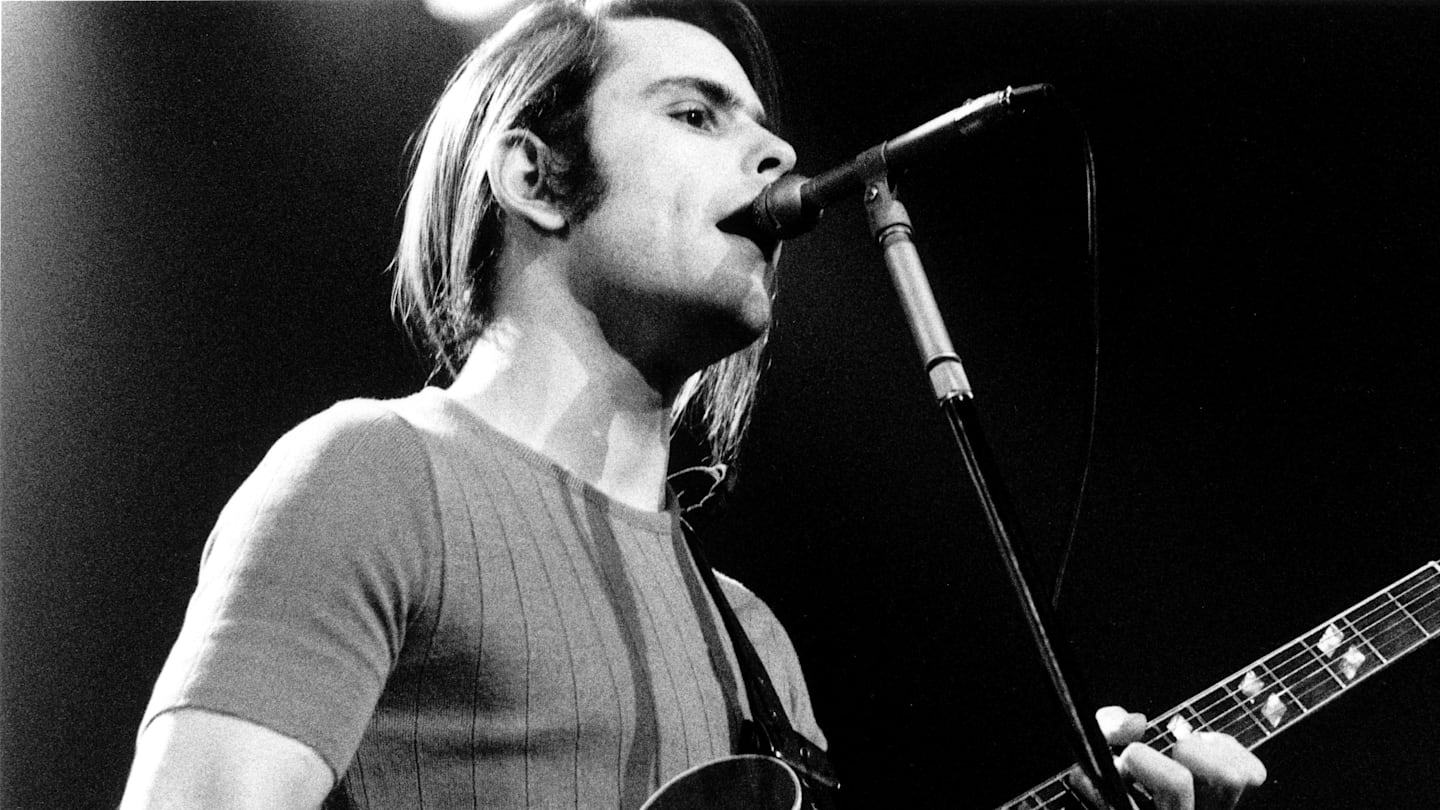
I wouldn’t call myself a Grateful Dead fan, though I did see them perform four times, including once when they opened for Bob Dylan. My college roommate and nephew were much more dedicated – my roommate even based the deadline for his thesis around the band’s tour schedule, and my nephew now plays in a Grateful Dead tribute band. Despite not being a huge fan, I’ve always had a soft spot for Bob Weir.
I grew up as the youngest of many brothers. That’s similar to the role Bob Weir, who recently passed away at 78, played in his famous band. He joined as a teenager and initially provided essential support with rhythm guitar and harmonies. With so many strong and different personalities in the group, Bobby naturally became the one who held everything together.
You know, it’s funny—the flashy guys, the lead guitarist and the singer, they never want to be the glue holding things together. In the Grateful Dead, Jerry Garcia handled pretty much everything, but usually, it falls to someone else. The bass player is often off in their own zone, so it’s almost always the drummer—like Ringo with the Beatles—or the rhythm guitarist—think Ron Wood from the Stones—who ends up keeping all the big personalities from clashing and tearing the band apart. They’re the unsung heroes, really.
I always thought of Bob Weir as the guy who held everything together for the Grateful Dead, but it turned out he was so much more than that! He wasn’t just a supporting player – he had a huge personality and a real drive to make his own music too.
Bob Weir, who emerged as the co-leader of the legendary Grateful Dead, dies at 78
Bob Weir struggled with dyslexia as a child, which made school difficult for him. He found his passion in music and became part of the vibrant music scene in 1960s San Francisco. There, he met Jerry Garcia, who was five years older, and together with Phil Lesh, Bill Kreutzmann, and Ron “Pigpen” McKernan, they formed the band that would become known as the Dead.
Lesh came from a classical music background, while Pigpen was deeply rooted in the blues, and Jerry loved bluegrass. It took time, but these different influences somehow blended together. Their first few albums weren’t particularly strong. The Grateful Dead always excelled as a live band, and that’s where they developed an incredibly devoted fanbase – arguably the most dedicated in modern music history.
As the band evolved, Robert Weir became increasingly important. By 1970, with the release of their acclaimed albums Workingman’s Dead and American Beauty, his unique blend of folk and rock was fully realized.
Bob Weir helped write and sang on two of the band’s most popular songs: “Sugar Magnolia” and “Truckin’.” While “Truckin'” didn’t reach the top 40 on the charts, it was the band’s biggest hit until 1987. Remarkably, 27 years after it was released, the Library of Congress recognized “Truckin'” as a significant piece of American culture. Weir was only 23 years old when he recorded the song.
Like the other members of the band, Bob Weir initially favored folk rock. However, starting in the 1970s, he began exploring other genres. The band’s unique blend of blues, jazz, and rock created some truly amazing music as the decade progressed.
As a huge Grateful Dead fan, I always loved how they kept experimenting with their sound. “Estimated Prophet,” the opener for Terrapin Station in 1977, had this really cool, bluesy groove. And then in 1978, “Shakedown Street” came out – it was just fantastic swamp rock, totally top-notch!
As a huge fan, I’ve always been fascinated by how the songwriting worked in the band. Bob Weir often wrote the music with John Perry Barlow, a friend he’d worked with for years. Earlier on, Weir teamed up with Robert Hunter for songs like “Sugar Magnolia” and “Truckin’,” but Hunter and Garcia just seemed to have a special connection. That’s why you see Weir and Barlow collaborating on so many of their later tunes – songs like “Cassidy,” “Throwing Stones,” and “Mexicali Blues” are just a few examples of their amazing partnership!
Bob Weir certainly had his critics, and people still argue about his skill as a guitarist. While I may be biased, I believe he was one of the greatest rhythm guitarists in rock history. He wasn’t known for playing conventionally beautiful solos. Growing up, his classmates likely teased him about his name and his dyslexia, but he ultimately turned those challenges into a unique and inventive playing style, embracing unusual and interesting chords.
Bob Dylan described his own rhythm guitar playing as unusual and hard to anticipate, but he always managed to make it complement the song. Jerry Garcia considered him one-of-a-kind. When people talk about Bob Weir’s rhythm guitar, the word “angular” comes up a lot. Basically, it wasn’t smooth – the chords moved in surprising and unexpected directions, but somehow, it all came together.
It’s inaccurate to suggest that Phil Lesh was solely responsible for the Grateful Dead’s distinctive sound. Each musician contributed their own style, and the band evolved with every lineup change – everyone played a vital role. Jerry Garcia was the band’s leader, but Bob Weir was equally essential, and he truly helped create something special and original.
The biggest criticisms of Bob Weir aren’t about his unique playing style, but about his actions following Jerry Garcia’s death in 1995. Some dedicated fans believed the Grateful Dead should have disbanded after Garcia passed away, but Weir continued the band, keeping it going after a difficult time.
Bob Weir not only founded and guided a major American music organization, but he also spent the last thirty years performing in various bands connected to the Grateful Dead. While some questioned whether this was the best way to celebrate Jerry Garcia’s memory, the millions of fans who enjoyed Weir’s music over the past three decades likely felt differently.
He described his life as a constant struggle to fit too much into too little, famously telling Brett Martin in a 2019 GQ profile called “King Weir” that it felt like ‘trying to shove ten pounds of rats into a five-pound bag.’
It sounds strange to say, but that was Bob Weir – a truly unique individual. He experienced the world directly, and over a remarkably successful career, he managed to sustain a beloved American musical legacy. Remarkably, he did this with incredible humility, especially considering his challenging start in school. Anyone who’s been the youngest in a group can probably relate to how he operated.
Read More
- Clash Royale Best Boss Bandit Champion decks
- Vampire’s Fall 2 redeem codes and how to use them (June 2025)
- Mobile Legends January 2026 Leaks: Upcoming new skins, heroes, events and more
- World Eternal Online promo codes and how to use them (September 2025)
- Clash Royale Season 79 “Fire and Ice” January 2026 Update and Balance Changes
- Best Arena 9 Decks in Clast Royale
- Clash Royale Furnace Evolution best decks guide
- How to find the Roaming Oak Tree in Heartopia
- FC Mobile 26: EA opens voting for its official Team of the Year (TOTY)
- Best Hero Card Decks in Clash Royale
2026-01-11 16:01